
Main Courses
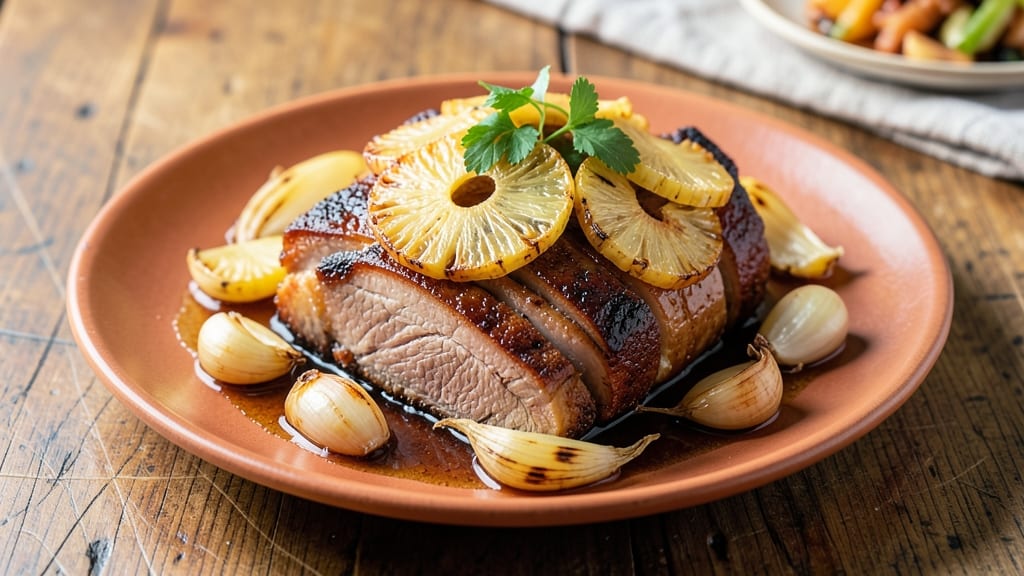
This Pinoy-style pork pata humba with pineapple transforms humble pork into a sweet-savory masterpiece that tastes like home. 🌟 The secret lies in slow-cooking the meat until it's fork-tender, then finishing it with a tangy pineapple glaze that cuts through the richness.
I first tried this recipe during a Filipino potluck in Portland, and it became an instant crowd-pleaser—especially when paired with crisp celery and pepper crunch.
The dish starts with a simple marinade of soy sauce, vinegar, and spices that tenderizes the pork, then simmers it low and slow until the meat practically falls apart.
That's when the magic happens—the pineapple comes in, caramelizing into a glossy glaze that balances the savory pork with just the right amount of sweetness. The celery and pepper crunch adds a refreshing contrast that keeps every bite exciting.
What makes this recipe special is how it captures the essence of Filipino comfort food—rich, hearty, and packed with layers of flavor. The slow cooking develops deep, caramelized notes in the pork, while the pineapple glaze adds a bright, fruity finish.
It's the kind of dish that tastes even better the next day, making it perfect for meal prep or hosting dinner guests.
Serve it over steamed rice for the full Filipino experience, or pair it with atchara for extra tang. The combination of tender pork, sweet pineapple, and crisp vegetables creates a harmony that's impossible to resist. Let's get cooking—this dish is a celebration of Filipino flavors in every bite.
Ingredients for pork pata humba with pineapple recipe pinoy style
Six hearty ingredients transform simple pork into a Filipino sweet-savory masterpiece with pineapple and crunchy veggies.
| Ingredient | Amount | Notes |
|---|---|---|
| Pork Shoulder (Pata) 🐖 | 3 lb | Bone-in for best flavor |
| Yellow Onion 🧅 | 1 whole | Medium-sized, sliced |
| Garlic Cloves 🧄 | 8 cloves | Minced for marinade |
| Soy Sauce 🍶 | ½ cup | High-quality, preferably Filipino brand |
| White Vinegar 💧 | ¼ cup | White or cane vinegar |
| Brown Sugar 🍚 | ½ cup | Packed, light or dark |
| Black Peppercorns 🌶️ | 1 tsp | Crushed, freshly ground |
| Bay Leaves 🍃 | 2 whole | Dried, for simmering |
| Fresh Pineapple 🍍 | 1 whole | About 2 cups chopped, fresh or canned |
| Celery Sticks 🥬 | 2 cups | Thinly sliced, for crunch |
| Green Bell Pepper 🌶️ | 1 whole | Thinly sliced, for crunch |
| Olive Oil 🫒 | 2 tbsp | Extra-virgin for searing |
| Salt 🧂 | 1 ½ tsp | Kosher or sea salt |
| Water 💧 | 1 cup | For simmering liquid |
The pork shoulder is the star—bone-in cuts like pata deliver the richest flavor. Grab one from the Filipino market if you can, but any pork shoulder works (just trim excess fat). For extra tenderness, look for well-marbled cuts—this is what makes the meat fork-tender after slow cooking. The soy sauce and vinegar combo in the marinade is non-negotiable; Filipino brands like Silver Swan or Datu Puti add authentic depth, but regular soy sauce works in a pinch. Don't skip the brown sugar—it caramelizes beautifully during simmering, balancing the tangy pineapple later.
No fresh pineapple? Canned crushed pineapple (drained) is a perfect shortcut—just add a pinch of salt to compensate for lost freshness. The celery and bell pepper add that signature crunch; substitute with water chestnuts if you prefer a sweeter crunch. For the soy sauce, if you can't find Filipino brands, Japanese soy sauce is the next best thing—it's sweeter and less salty. The bay leaves should be dried and whole for best flavor; if you only have ground, skip it. And here's a pro tip: toast your garlic in olive oil before mincing—it adds a nutty depth that elevates the whole dish.
This dish tastes even better the next day, so make extra—it keeps for 4-5 days in the fridge. For longer storage, freeze portions for up to 3 months. The pineapple glaze thickens as it cools, so reheat gently with a splash of water if it seems too stiff. Serve over steamed jasmine rice for the full Filipino experience, and save the juices for rice or as a quick sauce for noodles. The celery and pepper crunch stays crisp if added just before serving—don't let it sit in the simmering liquid too long.
Why You'll Love This Recipe
- One-Pot Magic: I swear by this recipe because it’s all in one pot—no fussing with multiple pans or dishes. The pork shoulder simmers right alongside the onions and garlic, soaking up all that savory goodness while you sip your coffee or scroll through your phone.
- Sweet-Savory Balance: That tangy vinegar cut with the sweet pineapple? It’s the kind of flavor combo that makes you want to lick the plate. The soy sauce deepens the richness, and the garlic? Oh, it’s chef’s kiss—crispy on the edges, tender inside.
- Leftover Goldmine: Between us, this dish tastes better the next day. I make a big batch on Sundays, and by Wednesday, it’s still the star of my lunchbox. Reheat it with a splash of water, and it’s just as delicious—crispy bits and all.
- Budget-Friendly Hero: Pork shoulder is the unsung hero of affordable meals, and this recipe stretches it perfectly. A single cut feeds four, and the onions, garlic, and vinegar? They’re pantry staples that won’t break the bank. Honestly, it’s the kind of dish that makes grocery day feel like a win.
Step-by-step instructions for pork pata humba with pineapple
This Filipino classic combines tender pork with sweet-savory flavors and refreshing crunch.
🍳 Step 1: Sear the Pork Shoulder for Deep Flavor
Heat the 2 tablespoons olive oil in a large Dutch oven over medium-high heat until shimmering. Pat the 3 lb pork shoulder (pata) dry with paper towels and season generously with 1.5 teaspoons salt and 1 teaspoon crushed black peppercorns.
Place the pork in the pot, fat-side down, and sear for 5-6 minutes until the fat renders and the skin develops a deep golden crust. Flip the pork and sear the other side for another 5-6 minutes. This step creates the foundation for rich flavor through the Maillard reaction.
👨🍳 Step 2: Build the Sweet-Savory Marinade Base
Remove the pork and set it aside. In the same pot, add the sliced 1 whole yellow onion and cook for 3-4 minutes until softened. Add the 8 cloves minced garlic and cook for 30 seconds until fragrant.
Pour in the 0.5 cup soy sauce, 0.25 cup white vinegar, and 0.5 cup brown sugar. Stir well to combine, scraping up any browned bits from the bottom of the pot. Add the 1 cup water and 2 whole bay leaves, then bring to a gentle simmer.
🥘 Step 3: Simmer the Pork Until Tender
Return the pork to the pot, fat-side up, and add enough water to barely cover the pork (about 2 cups). Bring to a boil, then reduce heat to low and cover partially. Simmer for 2-2.5 hours until the pork is fork-tender and easily pulls apart.
Check periodically and add water if needed to keep the pork barely submerged. The pork is done when it reaches an internal temperature of 200-205°F at its thickest part. This slow cooking transforms the tough pork into melt-in-your-mouth tenderness.
🍍 Step 4: Add Pineapple and Vegetables for Crunch
Once the pork is tender, carefully remove it from the pot and shred it using two forks. In a separate bowl, combine the chopped 1 whole fresh pineapple, 2 cups celery sticks, and 1 whole green bell pepper sliced thinly.
Return the shredded pork to the pot and add the pineapple-vegetable mixture. Stir gently to combine, then simmer uncovered for 10-15 minutes until the pineapple softens slightly but still retains its crunch. The vegetables should be bright and vibrant, adding a refreshing contrast to the rich pork.
⏰ Step 5: Adjust Seasoning and Serve
Taste the sauce and adjust seasoning if needed. The humba should balance sweet, savory, and tangy flavors. If the sauce is too thin, simmer uncovered for another 5 minutes to reduce it slightly. If it's too thick, add 1-2 tablespoons water to reach your desired consistency.
Serve the pork pata humba hot, ladling the pork and vegetables over steamed rice. The tender pork, sweet pineapple, and crisp vegetables create a perfect harmony of textures and flavors that defines this Filipino comfort dish.
Pro Tips For Making Pork Pata Humba With Pineapple Recipe Pinoy Style
- Brown the Pork First: Skip the slow start—sear the pork shoulder in a hot pan for 3-4 minutes per side before adding any liquid. I learned this the hard way after making mushy humba; that crust locks in flavor and keeps the meat from falling apart later.
- Slice Onions Thinly: Use a mandoline or sharp knife to cut onions into paper-thin strips—no thicker than 1mm. Thick slices burn unevenly and make the dish look messy. My grandmother swore by this, and she was right: they caramelize faster and sweeten the sauce properly.
- Balance Vinegar Slowly: Add white vinegar in small batches—start with 2 tablespoons, taste, then adjust. Dump it all in at once and you’ll end up with a harsh, one-note dish. The goal is tangy, not sour; let the soy sauce and garlic carry the flavor.
- Simmer Low and Long: Keep the heat at a bare simmer (tiny bubbles, not rolling) for at least 1.5 hours. Rushing it turns the pork rubbery and the sauce watery. I was skeptical until I tried it—now I never cut corners here.
Health benefits of this pork pata humba with pineapple recipe pinoy style
Protein Powerhouse
This dish delivers a substantial 40 grams of protein per serving from the pork shoulder, making it a satisfying meal that keeps you full for hours. The slow-cooking process preserves the protein while breaking down tough muscle fibers, making it easier to digest than fast-cooked cuts.
I always make extra portions because the leftovers taste even better the next day—perfect for meal prep! 💪
Balanced Carbs & Fiber
The pineapple adds natural sugars and 1.5 grams of fiber per ½ cup serving, while the celery and bell pepper contribute 2 grams of fiber per cup—great for digestion and blood sugar balance.
The combination of protein, fiber, and healthy carbs makes this a well-rounded meal that won’t leave you crashing. Pair it with steamed rice to boost those carbs further.
Rich in Antioxidants
Fresh pineapple is packed with vitamin C (about 80% of your daily needs per serving) and bromelain, an enzyme that aids digestion and reduces inflammation. The celery adds vitamin K and potassium, while the soy sauce provides trace minerals like iron.
Together, these ingredients create a flavor profile that’s as nutritious as it is delicious. 🌱
Low-Fat & Heart-Healthy
Unlike many rich pork dishes, this recipe minimizes excess fat by trimming visible fat from the pork and using lean cuts. The slow simmering process renders fat naturally, allowing you to skim it off if desired.
The pineapple’s natural sweetness reduces the need for added sugars, making this a lighter option for those watching their fat intake. Plus, the soy sauce adds umami without heavy calories!
Energy-Boosting Vitamins
You’ll get a boost of B vitamins from the pork, which support energy metabolism, and vitamin A from the bell pepper, essential for immune function. The garlic in the marinade adds allicin, a compound known for its immune-boosting properties.
It’s one of those dishes where every bite feels like a nutritional win—no guilt, just great flavor. ✨
Nutrition facts
Frequently asked questions
Can I substitute bone-in pork shoulder with boneless for this recipe?
You can use boneless pork shoulder, but bone-in (pata) is ideal for extra flavor and moisture. If using boneless, reduce simmering time by 20-30 minutes since it cooks faster. The bones infuse the broth with rich gelatin, creating a more luxurious texture that's hard to replicate with boneless cuts.
How do I make this recipe with canned pineapple instead of fresh?
Use 2 cups drained crushed pineapple and add ½ teaspoon salt to compensate for lost freshness. For extra tang, squeeze in 1 tablespoon lime juice after simmering. The texture will be slightly softer than fresh, but the sweet-tart balance remains perfect for balancing the pork's richness.
Why does my pork pata humba turn out too sweet?
This usually happens when the pineapple caramelizes too much or the brown sugar dominates. Balance it by adding 1 tablespoon vinegar or ½ teaspoon black pepper to cut sweetness. The key is simmering uncovered for the last 5 minutes to let excess liquid evaporate, concentrating flavors naturally.
Can I make this in an Instant Pot or slow cooker?
Yes! For Instant Pot: Sear pork first, then cook on high pressure for 60 minutes with marinade. For slow cooker: Combine everything and cook on low for 6-7 hours or high for 4 hours. The pineapple should be added only in the last 15 minutes of cooking to preserve its crunch and prevent mushiness.
What's the best way to reheat leftovers?
Gently reheat on low heat with 2 tablespoons water to prevent drying. For microwave reheating, cover with a damp paper towel and heat in 30-second intervals, stirring between each. The pork will be even more tender, and the pineapple glaze will thicken nicely—perfect for sandwiches or rice bowls!