
Breakfast & Brunch
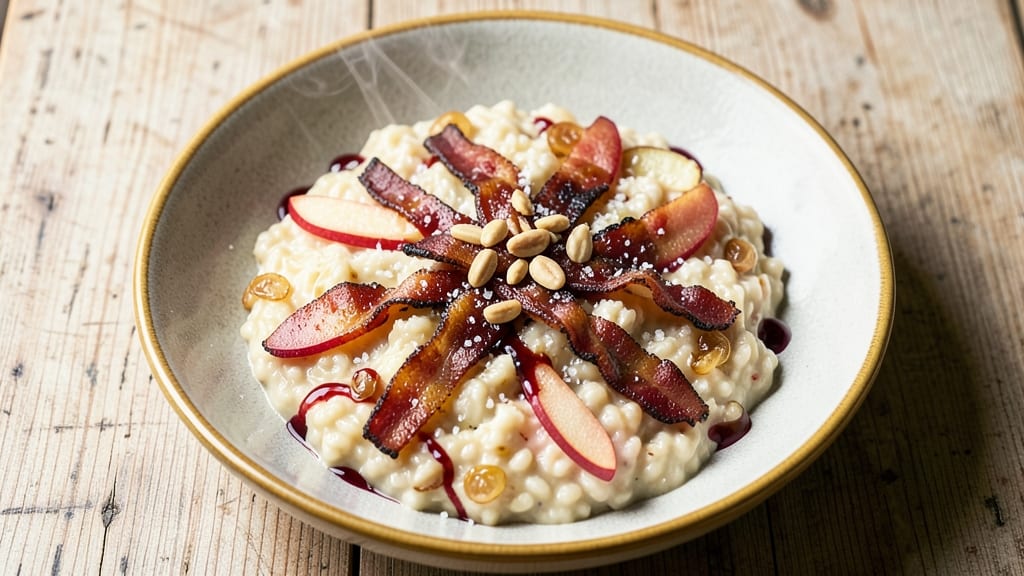
This apple bacon risotto recipe transforms a classic Italian dish into a breakfast brunch sensation—where smoky bacon and sweet apples create a perfect balance of textures and flavors. The secret lies in slow-toasting Arborio rice with apple cider and bacon fat, building layers of richness through the risotto method.
Every bite delivers creamy, velvety rice with crispy bacon and tender apple chunks that cut through the decadence.
What makes this risotto special is the harmony of sweet and savory: crispy bacon adds saltiness, while diced apples bring natural sweetness and subtle tartness.
The dish starts with a simple base—aromatic shallots, garlic, and bacon—but the magic happens when you gradually add warm apple cider and broth, allowing the rice to absorb flavors until it reaches that signature creamy consistency. No special equipment is needed, just patience and attention to heat control.
The result is a restaurant-quality risotto that’s surprisingly simple to make at home. The texture is creamy yet light, with pockets of crispy bacon and juicy apple in every spoonful.
Garnish with toasted pecans or fresh thyme for extra depth, and serve with a crisp arugula salad to balance the richness. This dish proves brunch can be both indulgent and impressive without requiring hours in the kitchen.
Perfect for weekend gatherings or a special weekend breakfast, this risotto is sure to become a favorite. The technique is foolproof once you master the balance of liquid and heat, and the flavors only improve as it sits. Let’s get cooking—your taste buds will thank you.
Ingredients for apple bacon risotto
Sweet apples, smoky bacon, and creamy Arborio rice—just 14 ingredients for brunch magic.
| Ingredient | Amount | Notes |
|---|---|---|
| Thick-Cut Bacon 🥓 | 6 oz | Thick-cut for crispiness |
| Arborio Rice 🍚 | 1 ½ cups | Unrinsed for creamy texture |
| Granny Smith Apples 🍎 | 1 ½ cups | Diced, skin-on for texture |
| Shallots 🧅 | 1 whole | Finely minced, 2 tbsp |
| Garlic Cloves 🧄 | 4 cloves | Minced, 2 tsp total |
| Apple Cider 🍏 | 2 cups | Unsweetened, room temp |
| Chicken Broth 🍲 | 3 cups | Low-sodium, warm |
| Dry White Wine 🍷 | ½ cup | Substitute apple juice |
| Butter 🧈 | 4 tbsp | Unsalted, cubed |
| Parmesan Cheese 🧀 | ½ cup | Freshly grated |
| Fresh Thyme 🌿 | ¼ cup | Chopped leaves only |
| Salt 🧂 | 1 tsp | Kosher or sea salt |
| Black Pepper 🌶️ | ½ tsp | Freshly cracked |
| Toasted Pecans 🌰 | ¼ cup | Chopped, optional garnish |
The bacon is non-negotiable—thick-cut slices give you that perfect crispy edge while rendering enough fat to make the risotto sing. Costco or Trader Joe's have the best pre-packaged thick-cut bacon, but any quality bacon works. Granny Smith apples are ideal for their tartness, but Fuji or Honeycrisp add sweetness if you prefer. The Arborio rice needs to be unrinsed—this lets the starch release properly for that signature creamy texture. If you can't find Arborio, Carnaroli is the next best thing, but it's pricier. Skip the pre-minced shallots—they oxidize fast. Fresh is best, but frozen works in a pinch if you're short on time.
No white wine? Apple juice or extra apple cider keeps the flavor profile sweet and bright. The broth should be warm but not boiling—cold broth will shock the rice. If you're using low-sodium broth, add an extra pinch of salt. Fresh thyme is ideal, but dried works at one-third the amount. For the apples, I usually leave the skin on for texture, but peel if you prefer a smoother bite. The pecans? Toast them in a dry pan for 3-4 minutes until fragrant—Trader Joe's sells them pre-toasted, which saves time. And if you're worried about the wine, don't stress—it's more about deglazing than flavor here.
This risotto tastes even better the next day—honestly, the flavors meld into something magical. Store leftovers in an airtight container for up to 3 days in the fridge, or freeze for 2 months. To reheat, add a splash of broth and warm gently on the stove, stirring until creamy. The bacon fat solidifies when cold, so reheating brings it all back together. Garnish with extra thyme or pecans right before serving—they add that final crunch. And if you make extra, trust me, it disappears fast.
Why You'll Love This Recipe
- One-Pan Magic: I swear by this—just bacon, rice, and apples in one skillet. No fancy tools, no mess, and the bacon fat cooks everything perfectly. Honestly, I’ve made risotto that took twice as long and tasted half as good.
- Sweet-Savory Balance: That crisp Granny Smith bite with smoky bacon? It’s like fall in a bowl. The shallots and garlic caramelize into something rich, but the apples cut through it—no heavy cream needed.
- Weeknight Workhorse: I double the batch on Sundays and freeze half. Reheats like a dream for lazy nights, and the texture holds up better than store-bought risotto. (Yes, even on a Tuesday night.)
- Budget-Friendly Luxury: Thick-cut bacon and Arborio rice sound fancy, but they stretch far. A single apple and shallots make this feel special without breaking the bank. My secret weapon for feeding guests without stress.
Step-by-step instructions for apple bacon risotto
Here's how to make this creamy, smoky-sweet risotto that balances rich bacon with crisp apple and nutty pecans.
Cook the Bacon Until Crispy
Place the 6 oz thick-cut bacon in a large, deep skillet over medium heat. Let it cook undisturbed for 5 minutes until the edges start to crisp. I like to press down gently on the bacon during the first minute—this prevents it from curling and ensures even contact with the pan.
Once the bacon is golden brown and crispy, use tongs to transfer it to a paper towel-lined plate. Leave the rendered fat in the skillet—this is where all the flavor lives. If you have less than 2 tablespoons of fat remaining, add 1 tablespoon of butter to the pan. The bacon should yield about 2 tablespoons of fat, which is perfect for cooking the risotto.
Sauté Aromatics and Toast the Rice
In the same skillet with the bacon fat, add the finely minced shallots and cook over medium heat for 2 minutes until they become translucent. Add the minced garlic cloves and cook for another 30 seconds until fragrant—you should smell that sweet garlic aroma filling your kitchen.
Now add the 1.5 cups of unrinsed Arborio rice, stirring to coat each grain with the fat. Toast the rice for 2 minutes, stirring frequently, until you can see the edges of the grains turning slightly translucent. This step is crucial—it builds flavor and prevents the rice from being bland. Don't walk away; you want to toast the rice until it's just starting to look slightly opaque.
Deglaze and Simmer with Apple Cider
Pour in the 0.5 cup of dry white wine and the 2 cups of apple cider, stirring constantly. The liquid should sizzle and reduce quickly. Let it cook for 3 minutes until the liquid is mostly absorbed by the rice. You'll notice the rice will start to look glossy—this is when it begins to release starch, which creates that creamy texture we're after.
Now add 1 cup of warm chicken broth, stirring gently. Bring the mixture to a gentle simmer, then reduce heat to medium-low. Let it cook uncovered for 10 minutes, stirring occasionally. The goal is to maintain a gentle simmer—the rice should be absorbing the liquid but not boiling vigorously. Add another 1 cup of warm broth after 10 minutes and continue cooking.
Add Apples and Finish with Creaminess
After the rice has absorbed the second cup of broth (about 10 more minutes of cooking), stir in the diced Granny Smith apples and the chopped fresh thyme leaves. The apples should soften slightly but still retain some bite. Cook for another 5 minutes, stirring occasionally, until the apples are tender but not mushy.
Add the remaining 1 cup of warm chicken broth and cook for another 5 minutes. The risotto should now be creamy and al dente—each grain should be tender but still have a slight bite. If it's too thick, add a splash more broth. Taste and adjust seasoning with salt and pepper if needed. The apples should add a pleasant tartness that balances the richness of the bacon and rice.
Finish with Butter and Cheese
Remove the skillet from heat and stir in the 4 tablespoons of cubed butter and the 0.5 cup of freshly grated Parmesan cheese. The butter will melt and create a luxurious, velvety texture. Stir in the crispy bacon pieces and let them warm through for about 1 minute.
Taste and adjust seasoning one final time. The risotto should be creamy, flavorful, and perfectly balanced between sweet, smoky, and savory notes. Serve immediately in warm bowls, garnished with the toasted pecans. The contrast of the crunchy pecans against the creamy risotto adds another layer of texture that makes this dish truly special.
Pro Tips For Making Apple Bacon Risotto
- CRISP THE BACON FIRST: I used to cook the bacon with the shallots and garlic, but that smokes up the kitchen and dulls the flavor. Instead, render the bacon on its own in a cold pan over medium-low heat—no rush—until it’s crisp and the fat pools deep. Then remove the bacon, leaving the fat behind for the risotto. That fat’s liquid gold for toasting the rice later.
- DICE APPLES SMALLER THAN YOU THINK: Granny Smiths stay stubbornly firm, so I learned the hard way: cut them into 1/4-inch cubes, not 1/2-inch. You want them to soften into the risotto without turning to mush or sitting like uncooked chunks. Toss them with a pinch of salt while you dice—they’ll release juice that sweetens the dish.
- STIR THE RICE CONSTANTLY: I’ve ruined more risottos than I’ll admit by letting the rice sit untouched while I chop or taste. Once you add the Arborio, stir it immediately and keep stirring—every 60 seconds—especially in the first 8 minutes. That’s when the rice absorbs the most liquid and develops its creamy texture. No stirring? You’ll end up with dry, separate grains.
- SAVE THE BACON FAT: Don’t pour that bacon grease down the drain—it’s the secret to a richer risotto. After crisping the bacon, leave the fat in the pan (or strain it if you prefer) and use it to toast the shallots and garlic. The smoky depth from the bacon fat carries through the whole dish, making the apple flavor pop even more. (Yes, even if you’re impatient like me.)
Common mistakes when making this recipe
Overcooking the Rice
Risotto is all about texture, and overcooking turns your creamy masterpiece into a mushy mess. I’ve ruined more than a few batches by walking away or letting the rice simmer too long. The key is to stir frequently and check the texture every 5 minutes after adding broth.
When the rice is al dente (tender but still firm to the bite), it’s done. If you’re unsure, taste a grain—it should have a slight resistance. 🌱
Skipping the Toasting Step
Skipping the 2-minute toasting of the rice is a rookie mistake that makes bland risotto. This step builds flavor by caramelizing the starches in the rice before adding liquid.
If you rush it, the rice won’t develop that nutty, toasty depth that balances the sweetness of the apples and smokiness of the bacon. I like to toast the rice until it’s just starting to look opaque—this is your cue to move to the next step. ⏰
Adding Cold Broth
Cold broth shocks the rice and disrupts the cooking process, leading to uneven texture. Always use warm broth (just simmered, not boiling) to maintain a steady temperature. If you’re prepping ahead, keep the broth in a thermos or warm pot.
Cold broth also dilutes the flavors, so your risotto will taste watered down. Trust me, a few minutes to warm it up saves you from a bland disaster. 🔥
Not Deglazing Properly
Deglazing with wine or apple cider is where the magic happens—it lifts all the flavorful browned bits from the pan. If you skip this step or don’t stir vigorously, you’ll miss out on layers of depth.
After cooking the bacon and aromatics, pour in the wine or cider and let it sizzle for 3 minutes until mostly absorbed. This step is non-negotiable for a rich, flavorful risotto. 🍷
Ignoring the Stirring
Stirring risotto isn’t just about preventing sticking—it’s about releasing starches that create creaminess. If you let it sit untouched, the rice can stick to the bottom or cook unevenly. Stir gently but consistently, especially when adding broth.
I use a wooden spoon to scrape up any stuck bits from the bottom of the pan. This keeps the texture even and prevents dry spots. 🥄
Overloading with Apples
Apples add sweetness and texture, but too many can make the risotto soggy. Stick to 1.5 cups diced (about 2 medium apples) and cook them just until tender.
Overloading them turns the risotto into a fruit salad. The apples should soften slightly but still hold their shape—this keeps the dish balanced. 🍎
Nutrition facts
Frequently asked questions
Can I use regular white rice instead of Arborio?
Absolutely not! Arborio rice is specifically designed for risotto because it releases starch slowly, creating that signature creamy texture. Regular white rice will turn mushy and watery. If you're out of Arborio, Carnaroli is the next best option—it has even more starch. Never substitute with basmati or jasmine.
How do I make this risotto vegetarian?
Swap the bacon for crispy tempeh bacon or smoked tofu crumbles, and use vegetable broth instead of chicken broth. Add 1 tablespoon soy sauce to the deglazing liquid for depth. For extra richness, stir in 2 tablespoons nutritional yeast at the end. The apple and thyme flavors will still shine through beautifully.
Why does my risotto turn out grainy instead of creamy?
This usually happens when you don't stir enough or add broth too quickly. Stir gently but constantly to release starches, and add broth 1 cup at a time, waiting until each addition is mostly absorbed before adding more. The rice should be al dente with a slight bite—overcooking destroys the texture. Pro tip: Use warm (not boiling) broth to maintain even cooking.
Can I make this ahead of time?
Yes, but with a few adjustments. Cook the risotto until fully tender, then stir in 1 tablespoon cold butter to create a protective layer. Let it cool completely, then refrigerate in an airtight container for up to 3 days. To reheat, add 2-3 tablespoons warm broth per cup and stir gently over low heat until creamy. The texture won't be quite as luxurious as fresh, but it's still delicious!
What's the best apple variety for this recipe?
Granny Smith apples are ideal—they hold their shape well and provide a pleasant tartness. For a sweeter version, try Fuji or Honeycrisp. Avoid overly soft varieties like Red Delicious. If using pre-cut apples, pat them dry first to prevent excess moisture in your risotto. The skin adds texture, but you can peel if you prefer a smoother bite.