
Sauces & Condiments
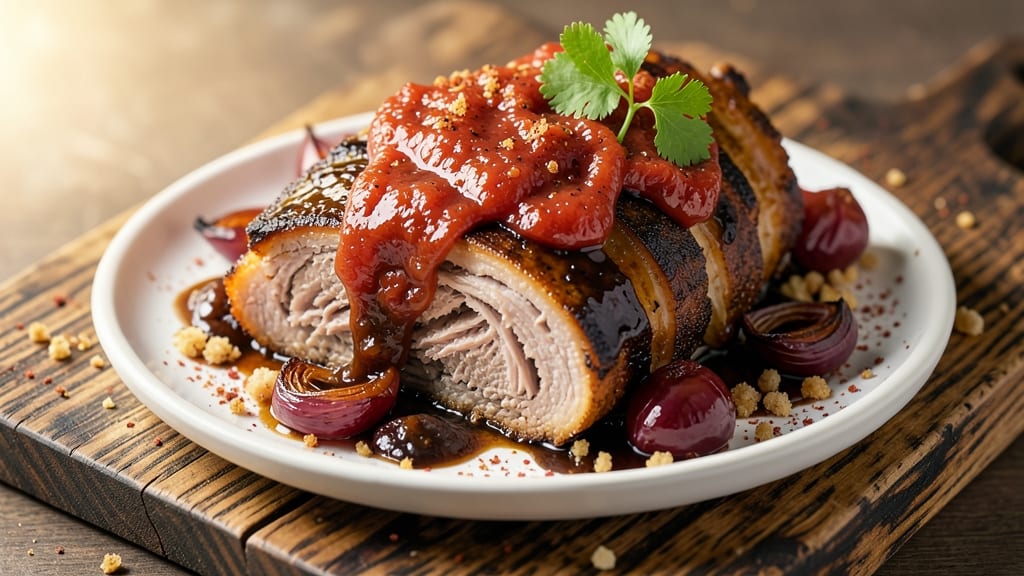
This apple cider vinegar BBQ recipe transforms ordinary grilled meats into showstopping centerpieces with its deep tang and caramelized depth. 🔥 The secret lies in balancing sharp vinegar with rich molasses and smoky spices, creating a sauce that clings beautifully while building layers of flavor through slow reduction.
I perfected this glaze during a late-night pitmaster challenge when I needed something bold enough to cut through tough cuts while adding complexity.
The foundation starts with a simple blend of apple cider vinegar, tomato paste, and molasses—each ingredient playing a crucial role in the sauce's character. Brown sugar adds caramel notes during the simmering process, while smoked paprika and garlic powder build that essential smoky backbone.
The key technique? Simmering uncovered until thickened to a glaze-like consistency that coats meats perfectly without being overly sweet.
What makes this sauce exceptional is its versatility—use it as a marinade for tenderizing, a basting glaze for crispy edges, or a dipping sauce for pulled pork. The vinegar's tang cuts through richness, while the caramelized reduction creates that irresistible sticky texture that makes every bite worth savoring.
This isn't just another BBQ sauce; it's a flavor amplifier that turns simple grilled meats into restaurant-quality masterpieces.
Perfect for ribs, chicken, or even grilled vegetables, this sauce delivers professional results with minimal effort. The balance of sweet, tangy, and smoky flavors ensures it works equally well on the grill, in the oven, or as a finishing touch.
Let's create something that'll have your guests asking for the recipe—and then begging you to make it again.
Ingredients for apple cider vinegar bbq
Nine simple ingredients that transform into a showstopping BBQ glaze with deep tang and caramelized richness.
| Ingredient | Amount | Notes |
|---|---|---|
| Apple Cider Vinegar 🍎 | ½ cup | Raw, unfiltered preferred for depth |
| Tomato Paste 🍅 | ¼ cup | High-quality canned, no additives |
| Molasses 🍯 | ¼ cup | Unsulphured for authentic flavor |
| Brown Sugar 🍚 | ½ cup | Light or dark, packed firmly |
| Smoked Paprika 🌶️ | 2 tbsp | Hungarian variety for authentic smoke |
| Garlic Powder 🧄 | 1 tbsp | Freshly ground preferred |
| Onion Powder 🧅 | 1 tbsp | Not onion salt |
| Ground Black Pepper 🌶️ | ½ tsp | Freshly cracked for best flavor |
| Kosher Salt 🧂 | 1 tsp | Diamond Crystal preferred |
| Water 💧 | ½ cup | Filtered for best results |
The apple cider vinegar is the heart of this sauce, so look for raw, unfiltered varieties at specialty stores or the natural foods section. Bragg is my go-to, but any brand labeled 'raw' or 'unpasteurized' works. Molasses is non-negotiable—unsulphured gives the authentic depth, while sulphured tastes artificial. For smoked paprika, Hungarian varieties from Penzeys or bulk bins deliver that authentic smoky backbone. Brown sugar should be packed firmly into the measuring cup—light and dark work, but dark adds more caramel notes if you're going for a deeper glaze.
No tomato paste? Crushed tomatoes at half the amount work in a pinch, but you'll lose that concentrated umami punch. Running short on molasses? Maple syrup can substitute at a 1:1 ratio, though it'll be sweeter. The garlic and onion powders are where you can get creative—fresh minced garlic and onion at double the amount (2 cloves garlic, 2 tbsp onion) takes it to another level if you've got time. For the vinegar, if you can't find raw, white vinegar with a splash of lemon juice mimics the tang, though it won't be as complex. And if you're making this for a crowd, double the recipe—it disappears fast.
This sauce keeps beautifully in the fridge for 2 weeks in an airtight jar, though it actually improves over time as flavors meld. For longer storage, freeze in ice cube trays—perfect for single-use portions. The glaze thickens as it cools, so reheat gently with a splash of water if it gets too stiff. I always make extra because it's perfect for brining, basting, or even drizzling over roasted vegetables. The key to restaurant-quality results? Simmer uncovered until it coats the back of a spoon—patience is everything here.
Why You'll Love This Recipe
- Here’s what sold me: the vinegar’s bright snap cuts through the smoky paprika while the molasses and brown sugar add this deep, caramelized richness. Slather it on ribs, and you get that perfect balance—like a hug from a food truck on a chilly day.
- Pantry Magic: I swear by this one—no special shopping trips needed. That jar of apple cider vinegar you’ve had since last Thanksgiving? The molasses collecting dust? Boom—you’re halfway there. Just toss in tomato paste and brown sugar, and you’ve got a sauce that tastes like it simmered for hours.
- Tangy-Sweet Magic: Here’s what sold me: the vinegar’s bright snap cuts through the smoky paprika while the molasses and brown sugar add this deep, caramelized richness. Slather it on ribs, and you get that perfect balance—like a hug from a food truck on a chilly day.
- Weeknight Workhorse: Between us, this is my go-to for game day, potlucks, or when I’m too tired to think. It’s the kind of sauce that makes plain grilled chicken taste like a restaurant dish, and it’s ready in under 20 minutes. (Yes, even on a Tuesday night.)
Step-by-step instructions for smoky-tangy apple cider vinegar BBQ
This glaze delivers deep caramelization and perfect balance—every step ensures rich flavor and that signature sticky-sweet finish.
🍳 Step 1: Simmer the Vinegar Base
In a medium saucepan, combine the 0.5 cup apple cider vinegar with the 0.5 cup water over medium-high heat. Bring to a boil, then immediately reduce to medium-low heat and simmer for 5 minutes until the mixture reduces by about 25%. You'll notice the aroma intensify—this is where the vinegar's tang starts transforming into something deeper.
Here's the thing—don't walk away. Watch for the liquid to turn slightly syrupy and lose its sharp vinegar bite. If it starts to smell too sharp before reducing, cover the pan and let it cook uncovered for another minute. This concentrated base is the foundation of your glaze, so get it right now.
🥘 Step 2: Build the Flavor Foundation
Add the 0.25 cup tomato paste, 0.25 cup molasses, 0.5 cup brown sugar, 2 tbsp smoked paprika, 1 tbsp garlic powder, 1 tbsp onion powder, 1 tsp kosher salt, and 0.5 tsp ground black pepper all at once. Stir vigorously with a wooden spoon to dissolve the brown sugar completely—this prevents grainy spots in your finished glaze.
The mixture will look thick and almost paste-like at first. That's normal. Let it cook uncovered over medium heat for 8-10 minutes, stirring frequently, until it begins to bubble gently and darken slightly. You're looking for that moment when the spices start releasing their aroma and the sugar begins caramelizing—this is when the magic happens.
🔥 Step 3: Develop the Caramelized Glaze
Once the mixture starts to thicken and coat the back of a spoon, reduce the heat to low and continue cooking for another 5-7 minutes. This is where you'll see the color deepen to a rich amber. If it starts to stick to the bottom, add 1-2 tablespoons of water (just enough to loosen it) and scrape up any browned bits from the bottom of the pan with your spoon—those bits are pure flavor.
Real talk: This is the moment that matters. You want the glaze to be thick enough to coat the back of a spoon but still pourable. If it's too thick, add a splash of water 1 teaspoon at a time until it reaches a consistency that's like "honey mixed with syrup." The glaze should coat a spoon but still drip slowly when lifted. Let it cool slightly before using—it'll thicken as it sits.
⏰ Step 4: Finish and Rest for Maximum Flavor
Remove the pan from heat and let the glaze rest for 10 minutes at room temperature. This resting period allows the flavors to meld and the glaze to thicken slightly. I know it's tempting to use it immediately, but trust me—waiting makes all the difference in the final result.
Before using, give it one final stir. The glaze should now have a glossy sheen and that perfect balance of sweet, smoky, and tangy flavors. If you're using it immediately on ribs or pulled pork, you can apply it straight from the pan. For best results, though, store it in an airtight container in the refrigerator for up to 2 weeks—it actually improves with time as the flavors continue to develop.
Pro Tips For Making Apple Cider Vinegar Bbq
- Simmer Slow and Low: Start with a hard boil for 5 minutes to drive off the vinegar’s sharpness, then drop to a gentle simmer—any hotter and you’ll burn the tomato paste before the flavors meld. I learned this the hard way when my first batch tasted like a science experiment gone wrong.
- Deglaze with Vinegar First: Pour in the apple cider vinegar before adding tomato paste—it cuts through the sugar’s stickiness and keeps the sauce from clumping like glue. (Yes, even if you’re impatient like me.) Skip this, and you’ll spend 10 minutes scraping the bottom of the pot.
- Balance Sweet and Tang: Taste as you go, but don’t overcorrect with brown sugar—molasses already packs sweetness. Aim for a 1:1 ratio of vinegar to sugar (about ¼ cup each per 1 cup vinegar), then adjust. My grandmother swore by this, and she was right: the tang needs room to shine.
- Toast the Paprika: Bloom the smoked paprika in a dry pan for 30 seconds before adding it to the sauce—it deepens the flavor without overpowering. Sounds weird, but it works: the aroma hits first, and the sauce tastes richer. (Your future self will thank you.)
Storing and reheating your leftovers
Fridge Storage Secrets
Store your apple cider vinegar glaze in a glass jar with an airtight lid—I swear by Ball canning jars for this. The glaze thickens as it cools, so leave about ½ inch headspace to prevent overflow.
Keep it refrigerated for up to 2 weeks, though I find it tastes even better after 48 hours as the flavors meld. The vinegar's acidity actually preserves the sauce longer than most commercial BBQ sauces. 💫
Freezing for Long-Term Use
For longer storage, freeze the glaze in ice cube trays—perfect for single-use portions. Once frozen, transfer the cubes to a ziplock freezer bag and flatten to save space. This method works beautifully for 3-4 months without losing quality.
When ready to use, thaw overnight in the fridge or quickly in warm water. The texture remains perfect for basting or dipping. ❄️
Reheating Like a Pro
If your glaze thickens too much after refrigeration, gently reheat it in a small saucepan over low heat with 1-2 tablespoons of water. Stir constantly until it reaches a pourable consistency—about 3-5 minutes.
Never microwave, as it can make the sauce grainy. For best results, reheat just before using to maintain that glossy finish. 🔥
Reviving Sticky Pans
If your glaze sticks to the bottom of the pan during reheating, add 1 tablespoon of water and scrape up any browned bits with a wooden spoon. Those caramelized bits are packed with flavor—don't waste them!
If the glaze separates, whisk in 1 teaspoon of apple cider vinegar to re-emulsify it. A splash of hot water can also help restore its smooth texture. 💡
Marinade Magic
Use leftover glaze as a marinade for chicken or pork—simply thin it with equal parts water and let it sit for 2-4 hours. The vinegar tenderizes while the spices infuse.
For extra depth, add 1 tablespoon of olive oil to help distribute the flavors. I've used this trick to transform tough cuts into tender, flavorful meals with minimal effort. 🍗
Glaze Consistency Fixes
If your glaze is too thick after refrigeration, thin it with water or apple cider vinegar—start with ½ teaspoon at a time until it reaches a honey-like consistency. For a thicker glaze, simmer it uncovered on the stovetop until it reduces slightly.
The key is balance: it should coat the back of a spoon but still be pourable. Adjust as needed before using. 🌡️
Nutrition facts
Frequently asked questions
Can I substitute white vinegar for apple cider vinegar in this BBQ sauce?
White vinegar works in a pinch, but you'll lose the rich, fruity depth that apple cider vinegar brings. For best results, use raw, unfiltered apple cider vinegar—it contains trace fruit particles that add complexity. If you must substitute, mix ½ cup white vinegar with 1 teaspoon lemon juice to mimic the tang, but expect a sharper flavor profile.
How do I adjust the sweetness level in this glaze?
Start by reducing the brown sugar by 1 tablespoon if you prefer less sweetness, or increase it by 1 tablespoon for a richer glaze. For a tangier balance, add 1 extra tablespoon of apple cider vinegar and simmer longer to concentrate the flavors. The key is to taste as you go—adjust in ½ tablespoon increments until you hit your sweet spot.
Can I make this sauce without a stove? (Camping/outdoor cooking)
Use a camp stove or portable burner with a small saucepan. Simmer the vinegar base first, then add all ingredients and cook over medium-low heat for 15-20 minutes, stirring frequently. If you're using a grill grate, place a heat-safe bowl on the grill (with indirect heat) and pour the sauce in—stir often to prevent burning. The outdoor smoke adds an extra dimension to the flavor!
Why did my glaze turn grainy or separate?
Graininess usually means the sugar didn't dissolve fully—stir more vigorously next time to break up lumps. Separation happens when the sauce cools too quickly. To fix it, whisk in 1 teaspoon of hot water or apple cider vinegar and reheat gently until smooth. For prevention, simmer uncovered and stir constantly during the final reduction stage.
What meats work best with this apple cider vinegar glaze?
This versatile sauce shines on ribs, pulled pork, chicken thighs, and even grilled vegetables. For ribs, apply during the last 30 minutes of cooking. For pulled pork, brush on during the final 2 hours of slow cooking. The vinegar's acidity tenderizes, while the caramelized glaze creates a perfect crust. For vegetables, toss them in the sauce and roast at 400°F for 20-25 minutes—they'll get that same sticky, smoky goodness!