
Sauces & Condiments
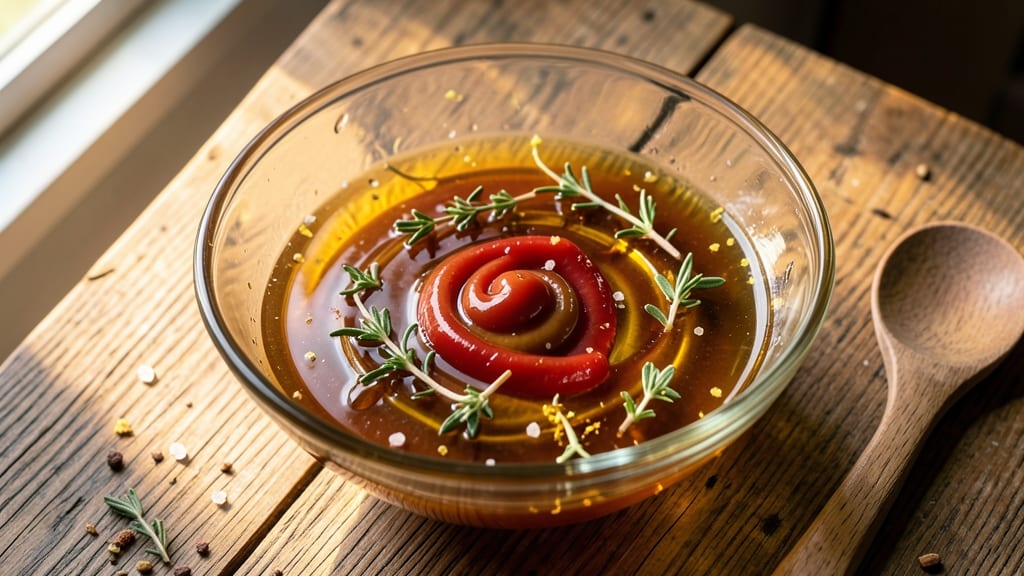
This apple cider vinegar vinaigrette dressing recipe transforms simple salads into vibrant, tangy masterpieces with just five ingredients. The secret lies in balancing sharp apple cider vinegar with smooth olive oil, creating a dressing that clings beautifully to greens while adding bright acidity.
I developed this recipe after realizing store-bought dressings never quite captured that perfect balance of tang and richness.
The foundation of this dressing is precise measurements: equal parts apple cider vinegar and extra-virgin olive oil, emulsified with Dijon mustard for stability. A touch of honey or maple syrup balances the acidity, while fresh herbs like thyme or rosemary add aromatic depth.
What makes this recipe truly professional is how it elevates any salad—from crisp arugula to hearty kale—with its bright, clean flavor profile.
What you'll achieve is a dressing that stays fresh for up to a week in the refrigerator, maintaining its vibrant color and tangy zing. The ratio of oil to vinegar ensures it won't separate, while the emulsifier guarantees a silky texture that coats every leaf perfectly.
This isn't just another salad dressing—it's the kind that transforms simple greens into a restaurant-worthy dish with minimal effort.
The beauty of this recipe lies in its versatility. Use it as-is for a classic apple cider flavor, or customize with minced shallots, garlic, or a pinch of smoked paprika for added complexity.
Whether you're prepping meals for the week or dressing a quick lunch, this dressing delivers consistent, professional results every time.
Ingredients for apple cider vinegar vinaigrette dressing
Five ingredients create a restaurant-quality vinaigrette that transforms salads into vibrant masterpieces.
| Ingredient | Amount | Notes |
|---|---|---|
| Apple Cider Vinegar 🍎 | ½ cup | Raw, unfiltered preferred for depth |
| Extra-Virgin Olive Oil 🫒 | ½ cup | Light, fruity variety for balance |
| Dijon Mustard 🌶️ | 1 tbsp | High-quality, smooth texture |
| Pure Maple Syrup 🍁 | 1 ½ tbsp | Grade A for subtle sweetness |
| Fresh Thyme Leaves 🌿 | 1 tbsp | Finely chopped, stems removed |
| Kosher Salt 🧂 | ¼ tsp | Diamond Crystal preferred |
| Freshly Ground Black Pepper 🌶️ | ¼ tsp | Cracked peppercorns preferred |
| Garlic Cloves 🧄 | 1 whole | Minced, for optional complexity |
The apple cider vinegar is non-negotiable—Bragg or Texas Pete are my go-tos for that authentic tang. Raw, unfiltered vinegar adds depth that pasteurized versions lack. For olive oil, California-grown light varieties like Bertolli or Filippo Berio maintain balance without overpowering. Dijon mustard acts as the emulsifier, so Maille or whole-grain mustard from the specialty aisle ensures smooth texture. The maple syrup should be Grade A for subtle sweetness—avoid imitation syrups that add artificial flavors. Fresh thyme from local farmers markets elevates this beyond basic dressings, but dried works in a pinch at half the amount.
No maple syrup? Honey or agave nectar works, but maple's earthy notes are ideal. Short on thyme? Fresh rosemary or tarragon at the same quantity adds different aromatic depth. Want more complexity? Add minced shallots or smoked paprika—both transform this into a gourmet dressing. For a sharper kick, increase vinegar by 1 tbsp. The garlic is optional but recommended for depth; roasted garlic adds sweetness without overpowering. Always taste before serving—adjust sweetness or acidity as needed.
This dressing stays fresh for up to 1 week in an airtight jar in the refrigerator. For longer storage, divide into ice cube trays, freeze, then transfer to a bag—perfect for meal prep. The emulsifier keeps it stable, but give it a quick shake before each use. For restaurant-quality results, whisk vigorously after adding each ingredient. The ratio of oil to vinegar ensures it won't separate, but a 10-second shake before dressing maintains that silky texture. Use within 1 week for optimal flavor.
Why You'll Love This Recipe
- Here’s what sold me: the maple syrup isn’t just sweet—it’s warm, like a hug in liquid form. The apple cider vinegar’s sharpness isn’t mean; it’s the kind that makes your taste buds play along. Honestly, I’ve tried store-bought dressings that cost three times as much, and this still wins.
- I’ll be real: I buy apple cider vinegar and olive oil in bulk anyway, so this dressing costs pennies per serving. The maple syrup stretches further than you’d think, and a few thyme sprigs last me forever if I pluck the leaves right. Leftovers? Just store them in the fridge for up to two weeks—no fuss, no waste.
Step-by-step instructions for apple cider vinaigrette dressing
This bright, balanced dressing comes together in minutes with precise technique.
Whisk Vinegar and Mustard to Emulsify
In a medium bowl, combine the 0.5 cup apple cider vinegar and 1 tbsp Dijon mustard. Whisk vigorously for 30 seconds until the mustard is fully dissolved and the mixture becomes smooth. The mustard acts as an emulsifier, helping the oil and vinegar blend seamlessly later.
This initial step is critical—if you skip it, the dressing may separate later. Use a fork or small whisk to break down any mustard lumps completely. The mixture should look uniform and slightly thickened, with no visible streaks of mustard.
Gradually Incorporate Olive Oil
With the whisk still moving, begin adding the 0.5 cup extra-virgin olive oil in a slow, steady stream. Pour it in from the center of the bowl while whisking continuously. This gradual approach prevents the oil from overwhelming the vinegar and mustard mixture.
Continue whisking for 1-2 minutes until the dressing thickens and becomes glossy. You'll notice the mixture transform from two separate components into a cohesive emulsion. If it starts to look too thick, add 1-2 teaspoons of water to adjust the consistency—this is normal and ensures the dressing clings well to greens.
Add Sweetness and Seasoning
Stir in the 1.5 tbsp pure maple syrup, 1 tbsp finely chopped fresh thyme leaves, 0.25 tsp kosher salt, and 0.25 tsp freshly ground black pepper using a spoon or spatula. The maple syrup balances the acidity of the vinegar, while the thyme and pepper add depth of flavor.
Taste the dressing and adjust the seasoning if needed. If it tastes too sharp, add a touch more maple syrup. If it needs more acidity, add a splash of apple cider vinegar. The minced 1 whole garlic clove (if using) can be added now for an optional but delicious complexity—simply press it into the dressing with the back of your spoon to release its flavor.
Final Emulsion and Resting
Return to whisking for another 30 seconds to fully incorporate all ingredients. The dressing should now be smooth, glossy, and well-balanced. Transfer it to a clean jar or airtight container and let it rest at room temperature for 10-15 minutes before using.
This resting period allows the flavors to meld and the emulsion to stabilize. If the dressing separates after resting, simply whisk it again before using. The final product should be bright, tangy, and perfectly balanced—ideal for drizzling over mixed greens, roasted vegetables, or grilled meats. Store any leftovers in the refrigerator for up to 1 week.
Pro Tips For Making Apple Cider Vinegar Vinaigrette Dressing
- Whisk in stages: Start by mixing the apple cider vinegar, Dijon mustard, and maple syrup—this keeps the mustard from splattering everywhere when you add the oil later. After it’s smooth, slowly drizzle in the olive oil while whisking constantly; the emulsion will form better if you don’t rush it.
- Use aged apple cider vinegar: Skip the cheap stuff—aged apple cider vinegar (like the kind with "mother" in the bottle) has deeper flavor and less harshness. I learned this the hard way after making a batch with the basic store brand and wondering why it tasted flat.
- Strain the thyme leaves: Tuck those thyme leaves into a tiny cheesecloth pouch or strain them out after infusing—whole leaves make the dressing look speckled, but they don’t actually release much flavor. If you’re lazy, just muddle them with a fork first to break up the stems.
- Measure oil by weight: Weighing the olive oil (about 120g for ¼ cup) guarantees consistency every time—volume measurements with oil are unreliable. I was skeptical until I tried it; now I never go back, especially when scaling recipes.
Perfect pairings for this dish
Salad Base Pairings
This dressing shines brightest on bitter greens like arugula, radicchio, or endive—its tang cuts through their intensity beautifully. I toss 4 cups baby spinach with 1 cup sliced strawberries and ¼ cup crumbled goat cheese for a perfect spring salad.
For heartier options, try kale massaged with 1 tbsp olive oil before adding the dressing—it softens the leaves while keeping the texture satisfying. 🥗
Protein Pairings
Drizzle over grilled chicken breast or seared salmon for a restaurant-worthy finish. I marinate 6 oz chicken thighs in 2 tbsp dressing for 15 minutes before grilling, then serve with the remaining dressing on the side.
The acidity in the vinaigrette complements smoked turkey slices perfectly too—try it on a warm croissant sandwich with avocado. The contrast of warm protein and cool dressing is pure magic.
Vegetable Sides
Roasted vegetables become irresistible with this dressing. Toss 1 lb asparagus or zucchini with 1 tbsp olive oil, ½ tsp salt, and ¼ tsp black pepper, then roast at 400°F for 12 minutes.
Finish with a generous drizzle of dressing—it enhances caramelized flavors beautifully. For a cold side, try shaved fennel and orange slices with a sprinkle of toasted pine nuts.
Bread and Dips
Warm fresh baguette slices in the oven for 5 minutes at 375°F, then brush with a thin layer of dressing. The crust becomes crispy while absorbing the tangy flavor. For dips, mix with ¼ cup crumbled feta cheese and serve with pita chips or carrot sticks.
The dressing also elevates deviled eggs—replace mayo with 2 tbsp dressing for a tangy twist. 🥖
Dessert Applications
Yes, dressing can be dessert! Drizzle over warm apple slices with a sprinkle of cinnamon for a simple yet elegant topping. I also use it to glaze grilled peaches or pineapple chunks—the acidity balances the natural sweetness perfectly.
For a savory-sweet combo, try it on honey-glazed carrots or roasted sweet potatoes. The possibilities are endless!
Beverage Pairings
A crisp Sauvignon Blanc or Pinot Grigio enhances the dressing's bright acidity, while a sparkling water with lemon keeps it refreshing. For beer lovers, a Belgian witbier or pilsner complements the apple cider notes beautifully.
I also enjoy it with iced herbal teas—especially hibiscus or mint green tea—for a sophisticated pairing. 🍷
Nutrition facts
Frequently asked questions
Can I substitute apple cider vinegar with white vinegar?
The flavor will be noticeably different—apple cider vinegar adds a rich, fruity depth that white vinegar lacks. For a similar tang, try balsamic vinegar (reduce by 1 tbsp to maintain balance) or rice vinegar (add ½ tsp honey extra to compensate). White vinegar works in a pinch but will taste sharper and less complex.
Why did my dressing separate? How do I fix it?
This usually happens if you didn't whisk enough or added oil too quickly. Simply whisk vigorously for 30-60 seconds to re-emulsify—Dijon mustard acts as a natural stabilizer. For extra insurance, add ½ tsp xanthan gum next time or use a blender for 10 seconds to create a silky texture. Always store in an airtight container to prevent separation.
How can I make this dressing spicier?
Add ½ tsp red pepper flakes or 1 tsp hot sauce (like Sriracha) for immediate heat. For smoky depth, include ½ tsp smoked paprika with the thyme. Pro tip: Toast 1 tsp cumin seeds in a dry pan for 30 seconds, then grind and mix in—this adds warmth and complexity without overpowering the apple cider notes.
Can I use this dressing on cooked pasta or grains?
Toss with cooked penne, farro, or quinoa for a bright, tangy twist. The acidity cuts through rich dishes like creamy risotto or buttery pasta. For grains, reduce the dressing by half (start with 2 tbsp)—they absorb liquid differently than salads. Add fresh herbs like basil or parsley at the end to keep them vibrant.
What's the best way to store leftovers?
Transfer to a clean, airtight jar or container and refrigerate for up to 1 week. For longer storage, divide into ice cube trays, freeze, then transfer to a bag—perfect for meal prep! Always give it a 10-second shake before using to restore the emulsion. Avoid metal spoons (they can react with vinegar) and use glass or plastic instead.