
Sauces & Condiments
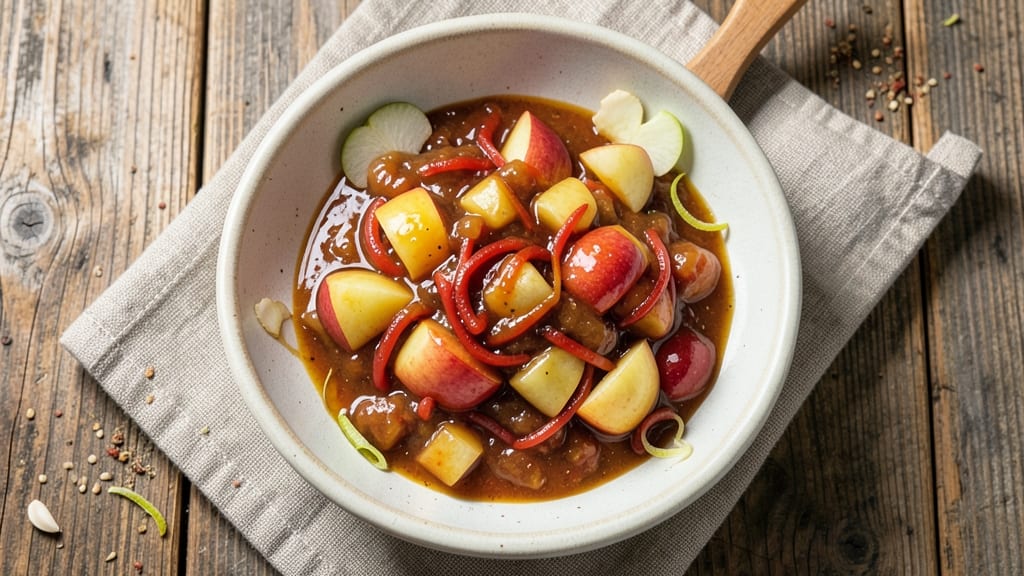
This apple kimchi sauce recipe transforms tangy, fermented kimchi into a vibrant, sweet-spicy condiment that elevates every dish. The perfect balance of crisp apple, fermented heat, and aromatic garlic creates a sauce that’s as versatile as it is addictive.
Whether you drizzle it over steamed rice, toss it with noodles, or use it as a glaze for grilled meats, this sauce brings depth and brightness to any meal.
The secret lies in the fermentation—kimchi’s natural acidity mellows slightly as it simmers, while the apples add a subtle sweetness that rounds out the spice. A touch of ginger and sesame oil deepens the flavor, while a splash of rice vinegar keeps the sauce bright and tangy.
Unlike store-bought versions, this recipe lets you control the sweetness and heat to suit your taste.
What makes this sauce truly special is its foolproof simplicity. With just 10 minutes of active prep and 20 minutes of simmering, you’ll have a batch ready to use immediately or store for up to a week in the fridge.
The texture is smooth yet slightly textured, with pockets of diced apple that add a satisfying bite. It’s the kind of sauce that turns ordinary meals into something extraordinary.
Use it as a dipping sauce for dumplings, a topping for tacos, or a marinade for tofu—this apple kimchi sauce is a game-changer for anyone looking to add a burst of flavor to their cooking. Let’s get started!
Ingredients for apple kimchi sauce
Sweet, tangy, and packed with flavor—just 10 ingredients transform kimchi into magic sauce.
| Ingredient | Amount | Notes |
|---|---|---|
| Kimchi 🥬 | 1 ½ cups | Unpasteurized for best flavor |
| Honeycrisp Apples 🍎 | 1 medium | Peeled, diced small |
| Apple Cider Vinegar 💧 | ½ cup | For tangy depth |
| Fresh Ginger 🌿 | 1 tbsp | Grated finely |
| Garlic Cloves 🧄 | 3 cloves | Minced finely |
| Sesame Oil 🫒 | 1 tbsp | Toasted sesame flavor |
| Rice Vinegar 💧 | 1 tbsp | White or seasoned |
| Maple Syrup 🍯 | 2 tbsp | Adjust for sweetness |
| Soy Sauce 🍶 | 1 tbsp | For umami depth |
| Sesame Seeds 🌰 | 1 tsp | Toasted for garnish |
Kimchi is the heart of this sauce, so pick a high-quality brand—the more fermented, the better. Trader Joe's or Korean grocery stores have the best options, but any unpasteurized kimchi works. Look for bright red color and visible garlic chunks. Honeycrisp apples are ideal (their sweetness balances the heat), but Fuji or Gala work too. The apples should be firm—avoid mealy ones. For the ginger and garlic, fresh is non-negotiable; pre-minced jars lack punch. If you're short on time, pre-grated ginger from the freezer section is a solid backup.
No kimchi? Substitute 1 cup each of sauerkraut and diced red cabbage—it won’t be identical, but it’ll work in a pinch. Short on apples? Pear or mango purée at half the amount keeps the sweetness. The maple syrup can be swapped for agave or brown sugar syrup, but maple has that perfect caramel note. For extra depth, add 1 tsp gochujang (Korean chili paste)—it’s a game-changer. The sesame oil is crucial; don’t skip it. If you’re sensitive to heat, reduce the kimchi to 1 cup and add 1 tbsp extra maple syrup to balance.
This sauce tastes even better the next day as flavors meld. Store in an airtight jar in the fridge for up to 1 week. For longer storage, freeze in ice cube trays—perfect for single-use portions. The texture thickens as it cools, so thin with 1 tsp water if needed. Garnish with toasted sesame seeds right before serving—they add crunch and visual appeal. Use within 2 weeks for best flavor, but it’ll keep for 3 months frozen. Double the batch—you’ll want seconds.
Why You'll Love This Recipe
- No-Chop Nightmare: I swear by this sauce because you can use pre-shredded kimchi and a food processor for the apples—no mandoline required. The worst part is peeling the ginger, and even that’s optional if you’re in a hurry.
- Sweet-Sour Magic: That first bite of crisp Honeycrisp apple with funky fermented kimchi? It’s like a flavor explosion. The vinegar brightens it up, but the ginger and garlic keep it from tasting like dessert—just dangerously addictive.
- Pantry Staple Upgrade: I keep this in my fridge for everything: drizzled over grilled chicken, stirred into rice bowls, or even as a dip for fries. Honestly, it’s the one sauce that makes boring meals feel special without extra effort.
- Leftovers That Last: This sauce actually improves after a few days—more mellow, deeper flavors. I make a big batch on Sundays, and it’s still my go-to when I’m too tired to cook. Plus, kimchi’s cheap, so you’re not breaking the bank.
Step-by-step instructions for apple kimchi sauce
Here's how to blend sweet, tangy, and spicy flavors into one irresistible sauce.
Prepare the Base Ingredients
Start by peeling and dicing the 1 medium Honeycrisp Apples into small, even pieces. I like to cut them into about ¼-inch cubes so they blend smoothly into the sauce. Set them aside in a bowl.
Next, finely grate the 1 tablespoon Fresh Ginger using a microplane or the fine holes of a box grater. For the 3 cloves Garlic Cloves, mince them as finely as possible—this ensures they distribute evenly without any noticeable chunks. The goal here is to create a smooth, well-balanced texture where every bite delivers the same flavor profile.
Sauté Aromatics for Depth of Flavor
Heat a small saucepan over medium heat and add the 1 tablespoon Sesame Oil. Once the oil is shimmering but not smoking, add the grated ginger and minced garlic. Cook for 2-3 minutes, stirring constantly, until the garlic becomes fragrant and the ginger starts to soften slightly.
Here's the thing—don't let the garlic brown. You're looking for aroma, not color. If it starts to darken, reduce the heat slightly. The mixture should smell rich and earthy, setting the stage for the other flavors to shine. This step builds the foundation of your sauce, so take your time here.
Combine Wet Ingredients for Balance
Add the 1.5 cups Kimchi to the saucepan along with the 0.5 cup Apple Cider Vinegar and 1 tablespoon Rice Vinegar. Stir well to combine, then increase the heat to medium-high and let the mixture simmer for 5-7 minutes. You'll see the kimchi break down and release its juices, creating a vibrant, slightly chunky base.
While it simmers, add the 2 tablespoons Maple Syrup and 1 tablespoon Soy Sauce. Stir in the diced apples and cook for another 3-4 minutes until the apples soften slightly but still retain some texture. The sauce should start to thicken as the liquid reduces. Taste as you go—this is where you can adjust the sweetness or tanginess to your preference.
Finish and Garnish
Once the sauce has thickened to your liking and the flavors have melded together, reduce the heat to low and let it simmer for an additional 2 minutes. This final step allows the flavors to settle and deepen. If the sauce is too thick, add a splash of water or apple cider vinegar to reach your desired consistency.
Remove the saucepan from heat and let it cool slightly. Before serving, toast the 1 teaspoon Sesame Seeds in a dry skillet over medium heat for 1-2 minutes until fragrant and lightly golden. Sprinkle them over the finished sauce just before serving to add a nutty crunch and visual appeal. The sesame seeds not only enhance the texture but also tie all the flavors together beautifully.
Pro Tips For Making Apple Kimchi Sauce
- Sear the Garlic: Toss those cloves in a dry pan over medium heat first—just until fragrant and golden. I learned this the hard way: raw garlic in the sauce tastes sharp and medicinal, no matter how much you blend it later. A quick sear adds depth without burning.
- Core the Apples Wrong: Skip the fancy star-shaped core—just slice off the top and bottom, then cut into wedges. You’ll save time and avoid the mess of trying to keep those thin apple slices intact while cooking. (Yes, even if you’re impatient like me.)
- Simmer, Don’t Boil: Keep the heat low enough that tiny bubbles just form at the edges, not a rolling boil. Boiling turns the sauce thin and watery, and you’ll lose that bright, tangy balance from the kimchi and vinegar. Think "gentle shimmer," not "erupting volcano."
- Strain the Kimchi Juice: After blending, pour the mixture through a fine-mesh sieve to remove any fibrous kimchi bits. I was skeptical until I tried it—the sauce stays silky smooth, and you won’t get that gritty texture no matter how much you strain later. (Your future self will thank you.)
Best sauces and condiments for apple kimchi sauce
Sweet-Spicy Glaze
Use this sauce as a bold glaze for grilled meats—especially pork ribs or chicken thighs. Brush it on during the last 5-7 minutes of grilling over medium heat for a caramelized finish.
The apple sweetness balances the kimchi’s heat, creating a sticky, flavorful crust. I love pairing it with applewood-smoked ribs for a double apple flavor punch. 🔥
Rice Bowl Elevator
Drizzle 1-2 tablespoons over steamed rice for instant flavor depth. Top with soft-boiled eggs, quick-pickled cucumbers, and sesame seeds for a Korean-inspired bowl. The sauce’s tangy-sweet profile cuts through the richness of fried rice or bibimbap.
For extra richness, add a spoonful of gochujang mixed into the sauce before serving.
Noodle Stir-Fry Sauce
Toss ½ cup of this sauce with cooked noodles like ramen or udon for a quick stir-fry. Add sliced mushrooms, shredded carrots, and tofu for a veggie-packed meal. The sauce’s natural thickness clings to noodles perfectly. For a smoky twist, add 1 tsp smoked paprika when simmering. 🍜
Dipping Sauce
Serve chilled as a dipping sauce for spring rolls, dumplings, or fried chicken. Thin with 1 tbsp water if needed for easier dipping. The balance of sweet, tangy, and spicy makes it irresistible.
For extra crunch, serve with thinly sliced radishes on the side. It’s a crowd-pleaser at parties or game day gatherings.
Marinade Magic
Use ½ cup of this sauce to marinate tofu, chicken, or shrimp for 30-60 minutes before grilling or stir-frying. The acidity tenderizes proteins while infusing them with flavor.
For extra depth, add 1 tsp grated ginger and 1 tsp soy sauce to the marinade. The sauce’s bold flavors make it a perfect stand-alone marinade or glaze.
Breakfast Twist
Add a spoonful to scrambled eggs or a breakfast burrito for a savory-sweet kick. The apple and kimchi flavors pair surprisingly well with cheddar cheese and crispy bacon.
For a quick breakfast, drizzle over avocado toast with a sprinkle of flaky sea salt. It’s a fun way to start your day with bold flavors. ✨
Nutrition facts
Frequently asked questions
Can I make this sauce without apples?
The apples provide essential sweetness that balances kimchi's heat, but you can substitute ½ cup pear purée or ¼ cup mango purée for a similar effect. The texture will be smoother, but the flavor profile will still shine. For a different twist, try ½ cup pineapple juice reduced by half for a tropical version.
How spicy will this sauce be?
The heat level depends entirely on your kimchi—milder varieties create a gentle tang, while spicy kimchi delivers noticeable kick. For control, use 1 cup kimchi instead of 1.5 cups and add 1 extra tablespoon maple syrup to balance. Taste as you simmer to adjust sweetness or acidity.
Can I make this sauce ahead of time?
This sauce tastes even better after 24 hours as flavors meld. Store in an airtight container in the fridge for up to 1 week. For longer storage, freeze in ice cube trays—perfect for single-use portions. The texture thickens when chilled, so thin with 1 tsp water if needed.
What's the best way to use leftover sauce?
This versatile sauce works as a glaze for grilled meats, a rice bowl topping, or a stir-fry sauce. For grilling, brush on during the last 5-7 minutes for caramelization. Try it with pork ribs or chicken thighs. For extra richness, mix 1 tsp gochujang into the sauce before serving.
Can I adjust the sweetness level?
Yes! Start with the recipe's 2 tablespoons maple syrup, then taste as you simmer. For less sweetness, reduce to 1 tablespoon. For more, add ½ tablespoon at a time until balanced. The apple cider vinegar also adds subtle sweetness, so adjust gradually to avoid overpowering the kimchi's tang.