
Sauces & Condiments
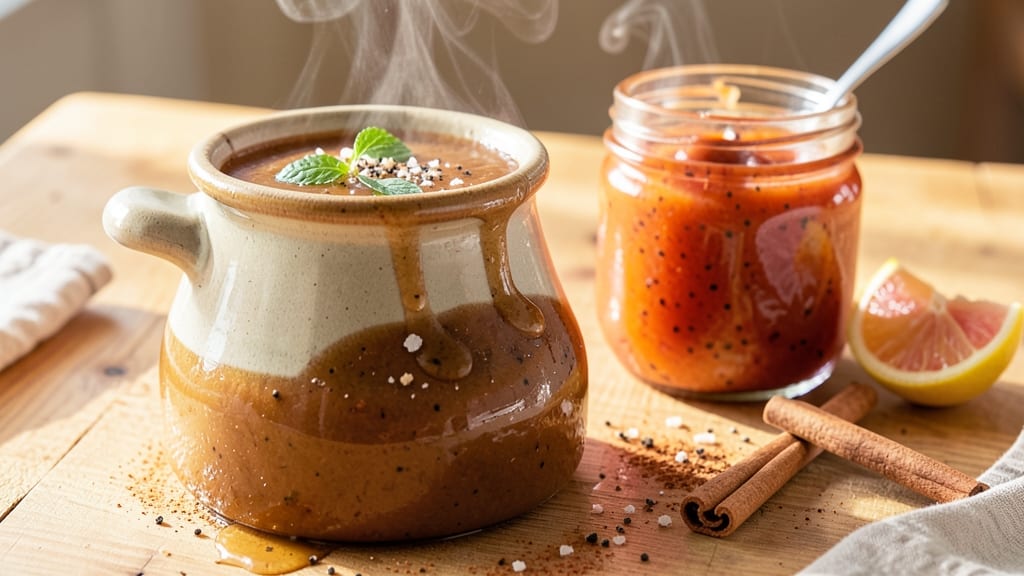
This apple sauce and apple butter recipe transforms seasonal fruit into two versatile condiments that elevate everything from toast to roasted pork. The slow-cooked process deepens natural sweetness while spices like cinnamon and vanilla create layers of warmth that linger with every spoonful.
I’ve refined this method over years of testing—balancing texture, flavor, and simplicity for home cooks who want restaurant-quality results without shortcuts.
The key difference between the two lies in technique: apple sauce blends to silky smoothness (or keeps chunks for texture), while apple butter simmers until thick and spreadable, with spices caramelizing into the fruit.
Both require minimal active time but deliver maximum flavor—perfect for meal prep or gifting. The slow cooker method ensures even cooking and concentrated sweetness, while stovetop versions offer quicker control for smaller batches.
What you’ll end up with is a pantry staple that’s far superior to store-bought: bright, aromatic apple sauce with a balance of tartness and sweetness, and velvety apple butter that’s rich enough for desserts but versatile enough for savory dishes.
The spices infuse deeply during cooking, creating depth that transforms simple toast into something extraordinary. Store both for up to 3 months in the fridge or freeze for longer shelf life.
Use the sauce as a topping for oatmeal, pancakes, or pork tenderloin, while the butter shines on waffles, cheese boards, or even as a glaze for roasted vegetables.
The recipe scales easily—double it for gifts or holiday entertaining. Here’s how to make them both in one session, with variations to customize to your taste.
Ingredients for apple sauce apple butter
Fresh apples, warm spices, and minimal effort create two pantry staples that transform ordinary meals into extraordinary ones.
| Ingredient | Amount | Notes |
|---|---|---|
| Apples (mix of sweet and tart) 🍎 | 4 lb | Peeled, cored, cut into chunks |
| Granulated Sugar 🍚 | 1 ½ cups | Adjust to taste for sweetness |
| Cinnamon Sticks 🌿 | 4 whole | For aroma infusion |
| Ground Cinnamon 🌶️ | 2 tbsp | For both recipes |
| Vanilla Extract 🍯 | 1 tbsp | Pure vanilla preferred |
| Lemon Juice 🍋 | 2 tbsp | Freshly squeezed |
| Salt 🧂 | ½ tsp | Kosher or sea salt |
| Apple Cider Vinegar 🍶 | 1 tbsp | For tangy balance |
| Water (for sauce) 💧 | ½ cup | Adjust for texture |
The apples are the foundation—mix sweet varieties like Gala or Fuji with tart ones like Granny Smith for balanced flavor. Local orchards or farmers markets often have the best selection, but grocery store apples work fine if they're firm and vibrant. Avoid bruised fruit, as it releases bitter compounds during cooking. For the sauce, you can leave the apples chunky for texture or blend them smooth—both work beautifully. The cinnamon sticks infuse deep aroma, so don’t skip them even if you’re using ground cinnamon too. Whole Foods or Trader Joe’s carry organic apples and spices that elevate the final product.
No vanilla extract? Vanilla bean paste or even a scraped vanilla bean works in a pinch—just adjust the amount to taste. Short on apple cider vinegar? White vinegar or even a splash of lemon juice keeps the tang. For the butter, simmer the apples longer (up to 4 hours) for deeper caramelization. Need a quicker version? Use a food processor to speed up the process, though the slow cooker method develops richer flavor. The sugar amount is flexible—add more for sweeter results or reduce for a tart edge that pairs perfectly with pork or poultry.
Both recipes store beautifully—apple sauce keeps for 3 months in the fridge and freezes for up to 6 months, while apple butter lasts 4 months refrigerated or 12 months frozen. Portion into small jars for gifting or meal prep. The sauce thickens as it cools, so add a splash of water if needed. For the butter, let it cool slightly before transferring to jars to prevent sticking. Both make excellent gifts—just tie a ribbon around the jar and you’re done.
Why You'll Love This Recipe
- No-Core-Mess Prep: I swear by this recipe because you just peel, quarter, and toss—no small dice, no peeling seeds. The apples soften into that perfect jammy texture while you sip coffee, and the cinnamon sticks infuse the whole pot without any extra work.
- Warm Spice Magic: That first spoonful? Pure autumn in your mouth. The mix of sweet and tart apples caramelizes into a thick, glossy spread, while the cinnamon sticks add depth you can’t get from ground powder alone. A splash of vanilla ties it all together—like dessert in every bite.
- Pantry Staple Upgrade: Honestly, this turns basic apples into something special without breaking the bank. Use it on toast, swirl it into yogurt, or drizzle it over oatmeal—it’s the kind of thing that makes your breakfast feel like a treat, even on lazy mornings.
- Lasts for Weeks: Between us, I’ve had a jar of this sit for months and it still tastes fresh. The sugar preserves it naturally, so you’re not stuck throwing out spoiled leftovers. Plus, making a big batch means you always have a quick, cozy spread ready when guests drop by.
Step-by-step instructions for slow-cooked apple sauce and apple butter
Transforming fresh apples into rich, spiced preserves requires patience and precision—here's how to do it right.
🍳 Step 1: Cook the Apple Sauce to Silky Perfection
Combine the 4 lb Apples (mix of sweet and tart), 1.5 cups Granulated Sugar, 4 whole Cinnamon Sticks, 2 tbsp Ground Cinnamon, 1 tbsp Vanilla Extract, 2 tbsp Lemon Juice, 0.5 tsp Salt, and 0.5 cup Water (for sauce) in a large pot. Bring to a boil over medium-high heat, stirring occasionally to prevent scorching. Once boiling, reduce heat to medium-low and let it simmer uncovered for 30-40 minutes, stirring every 10 minutes to break down the apples evenly.
You'll know it's ready when the apples have completely broken down and the mixture thickens to a smooth, spreadable consistency. The sauce should coat the back of a spoon and release easily when stirred. If it's too thick, add 1-2 tablespoons of water at a time until you reach the desired texture. Taste and adjust sweetness by adding more sugar if needed—remember, the flavors will concentrate as it cools.
🔥 Step 2: Simmer the Apple Butter for Deep Flavor
For the apple butter, transfer the cooked apple mixture to a food processor or blender. Process until completely smooth, scraping down the sides as needed. Return the pureed mixture to the pot and stir in an additional 1 tbsp Apple Cider Vinegar to enhance the tangy balance. Simmer uncovered over low heat for 45-60 minutes, stirring frequently to prevent sticking and allow the flavors to meld.
As it simmers, the mixture will thicken dramatically, developing a rich, caramelized depth. You're aiming for a texture that's thick enough to hold its shape but still spreadable—like a luxurious jam. The aroma should be intoxicating, with warm cinnamon notes and a subtle sweetness. If it starts to darken too quickly, reduce the heat slightly to avoid burning.
⏰ Step 3: Finish and Store for Maximum Freshness
Once both the apple sauce and apple butter reach the desired consistency, remove from heat and let them cool for 10 minutes. This resting period allows the flavors to settle and prevents condensation when you transfer them to storage containers. Skim off any excess foam or liquid that rises to the surface during cooling.
For the apple sauce, transfer to clean, sterilized jars while still warm. The sauce will thicken further as it cools, so leave about ½ inch of headspace. For the apple butter, press a piece of parchment paper directly on the surface to prevent a skin from forming. Seal both jars tightly and let them cool completely before refrigerating. They'll keep in the fridge for up to 3 weeks or can be processed in a water bath for long-term storage.
🍽️ Step 4: Test and Adjust for Ideal Texture
Before storing, taste both the apple sauce and apple butter one last time. The apple sauce should be smooth with a balance of sweetness and tartness, while the apple butter should have a velvety texture with pronounced cinnamon warmth. If either is too thin, return it to the pot and simmer uncovered for 5-10 additional minutes to thicken further.
For a restaurant-quality finish, garnish the apple butter with an extra sprinkle of ground cinnamon and a drizzle of vanilla extract before sealing. The apple sauce can be served warm with roasted meats or cold as a spread for toast. Both will reward you with layers of flavor that showcase the natural sweetness of the apples, elevated by the perfect blend of spices and acidity.
Pro Tips For Making Apple Sauce Apple Butter
- PEEL AND CORE FIRST: I learned this the hard way—skipping peels and cores just adds grittiness and extra work later. Use a sharp paring knife to slice off the skins, then cut out cores in one clean motion. A mandoline helps if you’re impatient, but be careful with those fingers.
- SIMMER LOW AND SLOW: Apple butter needs time to thicken, not burn. After the initial boil, drop the heat to a gentle simmer—think tiny bubbles, not rolling. Cover partially and let it cook for 45-60 minutes, stirring occasionally. Rushing it turns your sauce into glue.
- STRAIN THE SKINS: Even with peeled apples, tiny skin fragments sneak in and make the texture rough. After cooking, press the mixture through a fine-mesh sieve or food mill. It’s tedious, but the smoothness is worth it—no one wants to bite into apple bits in their butter.
- SWEETEN IN STAGES: Taste the cooked apples before adding all the sugar. They’ll release natural sweetness as they break down. Add half the sugar first, let it cook, then adjust. You’re aiming for balance, not candy—overdoing it masks the apple’s depth.
Regional styles of this apple sauce apple butter
New England Style
In New England, apple butter often incorporates maple syrup instead of sugar, reflecting the region's maple tradition. Use ½ cup pure maple syrup in place of sugar and add ½ tsp nutmeg for that classic autumnal flavor.
The slow-cooked version becomes a staple for Thanksgiving tables, often served with cornbread or roasted pork. I’ve found that Northern Spy apples work beautifully here—they hold their shape during cooking and add a subtle tartness. 🍁
Southern Comfort
Southern apple butter leans toward bold spices and sometimes includes pecans for texture. Add ½ cup chopped pecans during the final 10 minutes of simmering and finish with ½ tsp cloves for warmth. This version pairs perfectly with biscuits or fried chicken.
I like using Braeburn apples for their crispness, which softens into a luxurious spread. The Southern style often includes a splash of bourbon (about 1 tbsp) for depth—just simmer it off with the apples. 🌶️
Midwest Homestyle
The Midwest approach keeps things simple with fresh apples and minimal spices, often using McIntosh or Honeycrisp for their natural sweetness. Add 1 tsp allspice and ½ tsp cardamom for a subtle twist that feels nostalgic.
This version is popular for luncheon meats and sandwiches, especially during harvest season. I’ve seen families double the batch and can it for winter—just add ½ cup apple cider instead of water to enhance the tang. The texture stays chunkier than Southern styles, with visible apple pieces. 🍏
Pacific Northwest Twist
Out West, apple butter often incorporates local berries like blackberries or raspberries for a fruity depth. Add ½ cup mixed berries during the final 15 minutes of simmering and finish with 1 tsp orange zest for brightness. This version pairs wonderfully with oatmeal or yogurt bowls.
I prefer Pink Lady apples here—they balance the berries’ tartness. The Pacific Northwest style also sometimes includes a touch of ginger (about ¼ tsp) for a zesty kick. 🍒
European Influence
In Europe, apple butter often includes dried fruits like raisins or apricots and a hint of brandy (about 1 tbsp) for sophistication. The French version might use calvados (apple brandy) instead of vanilla, while German styles often include star anise for warmth.
This richer style works beautifully with cheese boards or dark chocolate. I’ve experimented with Boskop apples for their firm texture, which holds up well during long simmering. The result is a luxurious, almost jam-like spread. 🍷
Nutrition facts
Frequently asked questions
What's the difference between apple sauce and apple butter?
The key difference lies in texture and cooking time. Apple sauce is smooth (or chunky) with a thinner consistency, cooked for 30-40 minutes until apples break down. Apple butter simmers 45-60 minutes longer until thick and spreadable, with spices caramelizing into the fruit. The butter version has deeper flavor complexity and holds its shape on toast.
Can I make these without a food processor?
For apple butter, mash the cooked apples with a potato masher or fork until completely smooth. The texture will be slightly grainier but still delicious. For apple sauce, simply simmer the apples longer (10-15 extra minutes) until they naturally break down into a smooth consistency. A fork works perfectly for both!
How do I prevent apple sauce from getting too watery?
Simmer uncovered for 5-10 extra minutes to evaporate excess liquid, stirring frequently. If needed, transfer to a fine-mesh sieve and press with a spoon to remove water. For thicker results, reduce the water in the recipe by 2 tablespoons next time. The slow cooker method naturally reduces moisture better than stovetop.
What are the best apples for apple butter?
Use a mix of tart and sweet apples for balance: Granny Smith (tart), Honeycrisp (sweet), or Northern Spy (complex). Tart apples prevent excessive sweetness, while sweet varieties add natural richness. Avoid overly soft apples like Red Delicious—they break down too quickly and can make the butter too thin.
Can I use frozen apples instead of fresh?
Yes, but thaw and drain them first to prevent excess water in your recipe. Frozen apples work well for apple sauce, but for apple butter, fresh apples develop deeper caramelization. If using frozen, add 5 extra minutes of simmering time to compensate for their higher moisture content.