
Sauces & Condiments
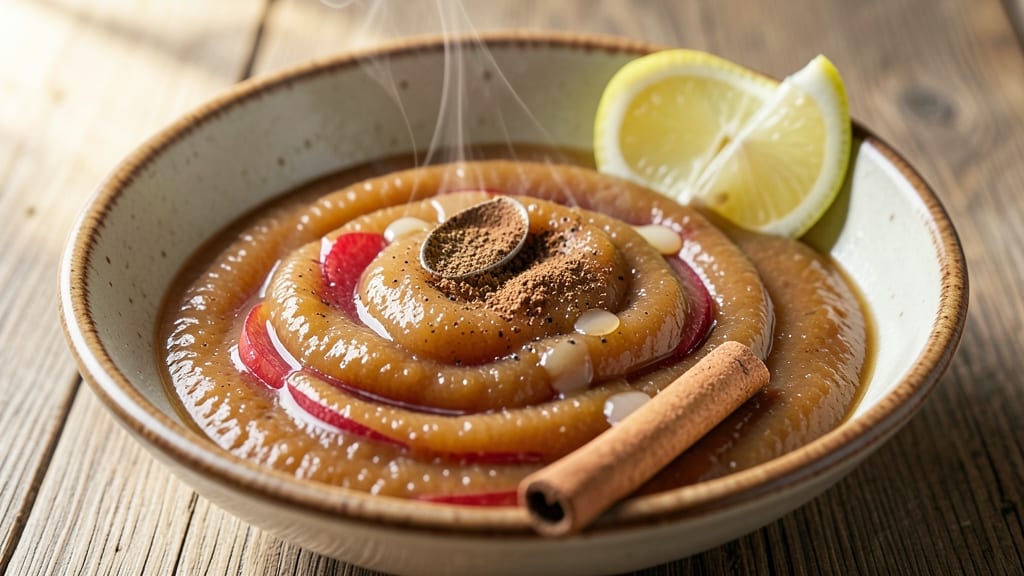
This apple sauce without sugar recipe transforms simple apples into a velvety, naturally sweetened condiment using just cinnamon and vanilla—no refined sugar needed. The process is straightforward: peel, core, and cook down the apples until they break into a smooth, fragrant puree, then finish with warm spices for depth.
What makes this version special is how the cinnamon and vanilla enhance the apples' natural sweetness while keeping it vegan and sugar-free.
Perfect for pairing with oatmeal, yogurt, or toast, this sauce delivers a rich, aromatic texture without any added sweeteners. The slow cooking method ensures a thick, spreadable consistency, while optional chia seeds or applesauce can adjust the thickness to your preference.
It’s the ideal solution for those watching sugar intake or seeking naturally sweetened alternatives.
By the end, you’ll have a versatile, pantry-friendly sauce that’s just as delicious as store-bought but far healthier. The spices infuse beautifully as the apples cook, creating a warm, comforting flavor that works in both sweet and savory dishes.
Store it in the fridge for up to a week or freeze for longer shelf life.
Whether you’re meal prepping for the week or craving a simple, naturally sweetened treat, this recipe delivers restaurant-quality results with minimal effort. Let’s get started!
Ingredients for apple sauce without sugar
Eight simple ingredients create a velvety apple sauce bursting with cinnamon and vanilla.
| Ingredient | Amount | Notes |
|---|---|---|
| Apples (Granny Smith or Honeycrisp) 🍎 | 4 medium | Peeled, cored, chopped |
| Cinnamon Sticks 🌿 | 2 whole | For infusion, removed after cooking |
| Vanilla Extract 🍯 | 1 tbsp | Pure vanilla for best flavor |
| Lemon Juice 🍋 | 1 tbsp | Freshly squeezed for brightness |
| Water 💧 | ½ cup | For even cooking |
| Ground Cinnamon 🌶️ | 1 tsp | For finishing, optional |
| Chia Seeds (optional) 🌱 | 1 tbsp | For thickening if needed |
| Sea Salt 🧂 | ¼ tsp | Enhances natural sweetness |
Granny Smith or Honeycrisp apples are the stars here—their tartness balances perfectly with the spices. Local farmers markets often have fresh, firm apples (the good stuff, not the mushy ones). If you can't find them, Whole Foods or Trader Joe's usually carry organic varieties that stay crisp longer. Look for apples that feel heavy for their size—those are the juiciest. Peeled or unpeeled? Your call, but peeling gives a smoother texture. I usually skip it for that rustic touch, but peel if you prefer a cleaner finish.
No vanilla extract? Vanilla bean paste works too, just use half the amount. Short on cinnamon sticks? Ground cinnamon at double the amount gets you close, but sticks infuse deeper flavor. The lemon juice is non-negotiable—it brightens everything and balances the apples' natural sweetness. For a thicker sauce, add the chia seeds (they absorb liquid like magic), or blend in a splash of unsweetened applesauce if you prefer a smoother texture. The salt might seem odd, but it enhances the apples' natural sweetness—trust me on this.
This sauce keeps beautifully—1 week in the fridge or 6 months frozen. I like to portion it into small jars for easy grab-and-go breakfasts. For freezing, let it cool completely first to prevent ice crystals. Reheat gently on the stove or microwave until warm. Leftovers? Perfect for oatmeal, pancakes, or even savory dishes like roasted pork—just drizzle it on top for a sweet-savory twist.
Why You'll Love This Recipe
- No-Measurement Guessing: I just toss in chopped apples, a splash of water, and a cinnamon stick—no scale, no stress. The apples soften perfectly on their own, and the vanilla and lemon juice balance the tartness without me overthinking it.
- Warm Spice Magic: That first whiff of cinnamon sticks simmering with the apples? Pure autumn in a pot. The vanilla extract adds this subtle depth, while the lemon juice keeps it bright—like dessert and breakfast had a baby.
- Breakfast to Baking: Use it on oatmeal in the morning, swirl it into yogurt, or drizzle it over pancakes. Freeze leftovers for smoothies later—it’s my go-to for when I’m out of ideas but still want something cozy.
- Budget Bulk: A few apples and a vanilla bean (or extract) stretch across days. Honestly, I’ve made this same batch last a week—spread on toast, mixed into muffins, or even as a topping for roasted pork. Minimal cost, maximum flavor.
Step-by-step instructions for apple sauce without sugar
Here's how to make naturally sweetened apple sauce that highlights the fruit's flavor.
Prepare the Apples for Cooking
Peel the 4 medium apples using a vegetable peeler or sharp paring knife, working from stem to blossom end for clean removal. Core them thoroughly with an apple corer or melon baller, ensuring no seeds remain. Chop the peeled apples into even ½-inch chunks—this ensures consistent cooking and a smooth final texture. I like to work in batches if my cutting board gets crowded, but keep everything ready to go in a large mixing bowl.
For the best flavor, I recommend using a mix of Granny Smith and Honeycrisp apples—the tartness of Granny Smith balances the sweetness of Honeycrisp perfectly. If you only have one variety, that's fine too, but be prepared to adjust the lemon juice slightly if your apples are particularly tart or sweet. The key here is even-sized pieces that will soften at the same rate during cooking.
Simmer the Apples with Aromatics
In a medium saucepan, combine the chopped apples, 2 whole cinnamon sticks, the 0.5 cup water, and the 0.25 tsp sea salt. Bring to a boil over medium-high heat, then immediately reduce to medium-low. Let the mixture simmer uncovered for 15-20 minutes, stirring occasionally, until the apples are fork-tender but not mushy. You'll know it's ready when a knife slides in easily and the edges begin to soften noticeably.
I keep the cinnamon sticks whole during cooking to infuse maximum flavor without overpowering the apple's natural taste. If you prefer stronger cinnamon flavor, you can crush them slightly before adding, but I find the subtle warmth works best. The salt enhances the apples' natural sweetness while balancing any tartness, especially important since we're not adding sugar. Don't skip this step—it makes all the difference in the final product.
Finish with Flavor and Texture
Once the apples are tender, remove the pan from heat and let it cool for 5 minutes. This resting period prevents the apples from breaking apart when you add the lemon juice and vanilla. Using an immersion blender, blend the mixture until smooth—if you prefer some texture, pulse briefly instead. If you're using the 1 tbsp chia seeds for thickening, sprinkle them in now and stir well, letting the mixture sit for 10 minutes to thicken.
Stir in the 1 tbsp lemon juice and 1 tbsp vanilla extract, then taste and adjust seasoning if needed. The lemon brightens the apples while the vanilla adds depth. For an extra touch, sprinkle with the 1 tsp ground cinnamon. If the sauce is too thick after cooling, thin it with a splash of water or apple juice. The chia seeds, if used, will create a naturally thickened sauce that's perfect for dipping or spreading without added sweeteners.
Cool and Store Properly
Transfer the apple sauce to a clean jar or airtight container and let it cool completely at room temperature. This cooling process allows the flavors to meld and the texture to set properly. Once cooled, store in the refrigerator for up to 1 week or freeze for up to 3 months. The sauce will thicken further as it chills, so if you prefer it slightly looser, reheat gently before serving.
This naturally sweetened apple sauce is perfect for pairing with cheese boards, yogurt, or oatmeal. The cinnamon and vanilla create a warm, comforting flavor that's satisfying without needing added sugar. The sea salt and lemon juice balance the natural sweetness beautifully, making it a versatile condiment that works for both sweet and savory dishes. Enjoy it warm or cold—either way, it's delicious!
Pro Tips For Making Apple Sauce Without Sugar
- PEEL AND CORE LIKE A PRO: Skip the fuss of peeling—just scrub the apples with a brush under cold water first. Core them with a sharp knife or apple corer, but leave the skins on for better texture and natural sweetness. I used to peel them, and the sauce always tasted thinner and less rich.
- SIMMER LOW AND SLOW: Start with a rolling boil to soften the apples faster, then drop the heat to a gentle simmer. Cover the pot and let it cook for 20-25 minutes—any longer, and you’ll turn your sauce into mush. I learned this the hard way when my first batch ended up like applesauce glue.
- USE LEMON JUICE LAST: Add the lemon juice only in the final 5 minutes of cooking. This keeps the bright flavor from cooking off and turning bitter. A splash (about 1 tablespoon) is enough—no need to overdo it, or you’ll regret the sharpness.
- STRAIN FOR SMOOTHNESS: If you want a silky texture, strain the cooked apples through a fine-mesh sieve after simmering. Press the pulp with a spoon to get every last drop—it’s worth the extra 30 seconds. I skip this sometimes, but the difference in consistency is noticeable.
Wine and beer pairings for this apple sauce without sugar
White Wine Pairings
A crisp, dry Sauvignon Blanc from New Zealand is my go-to pairing for this apple sauce—its bright acidity and citrus notes complement the cinnamon and vanilla beautifully. Look for wines with 12-13% ABV like Cloudy Bay or Kim Crawford to balance the sauce's natural sweetness without overpowering it.
Serve slightly chilled (45-50°F) to enhance the refreshing contrast. 🍷
Sparkling Wine Options
For a festive touch, a Prosecco or Cava adds effervescence that cleanses the palate between bites. The bubbles help cut through the richness of the apple sauce while highlighting the vanilla's aromatic qualities.
I recommend La Marca Prosecco or Freixenet Cordon Negro Cava—both have enough acidity to stand up to the spices. Chill these to 40-45°F for optimal enjoyment.
Beer Pairings
A Belgian witbier like Hoegaarden or Stella Artois works surprisingly well with this sauce. The coriander and citrus notes in these beers mirror the lemon juice and vanilla, creating a harmonious flavor bridge.
For something more robust, try a honey ale (like Allagash Honey Farmer)—the subtle sweetness enhances the apple's natural flavor without competing. Serve beers at 45-50°F for the best balance.
Non-Alcoholic Options
For a refreshing non-alcoholic match, sparkling apple cider (like Martinelli's Sparkling) mirrors the sauce's flavors while adding a celebratory fizz. Alternatively, a ginger beer (such as Feather Ginger Beer) provides a spicy kick that contrasts nicely with the cinnamon.
Both options should be served chilled (40-45°F) to highlight their crispness. 🍏
Coffee Pairing
If you prefer coffee over wine or beer, a light roast with cinnamon notes (like Peet's Major Dickason's Blend) creates a delightful synergy. The natural sweetness of the apple sauce enhances the coffee's caramel undertones, while the cinnamon ties the flavors together beautifully.
Brew it as a light pour-over for a clean, aromatic cup that complements the sauce's texture.
Nutrition facts
Frequently asked questions
Can I use this apple sauce in baking recipes?
This naturally sweetened apple sauce works beautifully in muffins, cakes, or breads. For best results, replace up to ½ cup of oil or butter with the same amount of sauce, adjusting other liquids as needed. The cinnamon and vanilla will add warmth to your baked goods, while the natural sweetness keeps it balanced.
What if my apples are too tart or not sweet enough?
Adjust the lemon juice first—start with ½ tbsp and taste as you go. For extra sweetness, add a pinch of vanilla bean powder or a dash of maple syrup (just ½ tsp max). Tart apples? A sprinkle of ground cinnamon or 1 tsp of orange zest can help round out the flavors.
How do chia seeds affect the texture?
Chia seeds act as a natural thickener—they absorb liquid and create a pudding-like consistency. Use them if you want a spreadable texture for toast or pancakes. If the sauce feels too thick after adding chia, thin it with 1-2 tbsp of water or apple juice. Stir well and let it sit for 5 minutes to thicken fully.
Can I make this recipe without an immersion blender?
Yes! Transfer the cooked apples to a food processor or blender and pulse until smooth. For a chunkier texture, mash with a potato masher. If you don’t have either, simmer the apples longer until they break down naturally, then use a fork to mash them to your preferred consistency.
Why does my apple sauce taste bland?
Blandness usually means the spices or salt weren’t balanced. Boost flavor by adding ½ tsp more cinnamon or a pinch of nutmeg. A splash of lemon juice or vanilla extract can also brighten it up. If the apples were overcooked, try simmering them for 10-15 minutes next time to preserve their natural sweetness.