
Main Courses
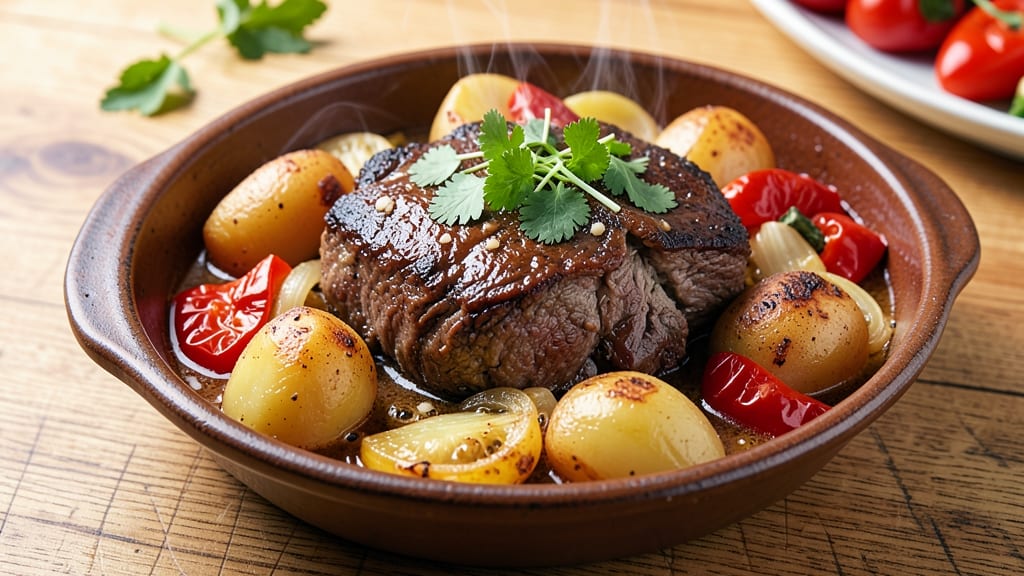
This beef caldereta recipe with pineapple juice transforms a classic Filipino stew into a vibrant fusion of slow-simmered richness and tropical brightness. 🌟 The secret lies in balancing deep, savory flavors with the tangy sweetness of pineapple juice—a technique I perfected after years of testing variations in my Portland kitchen.
What makes this dish special is how the pineapple juice cuts through the richness of the tomato-based sauce while adding a refreshing contrast that keeps every bite exciting.
The recipe begins with searing thick cuts of beef until deeply browned, creating layers of flavor that form the foundation of the stew. As it simmers, tender potatoes, carrots, and bell peppers absorb the aromatic sauce, while herbs like bay leaves and thyme add depth without overpowering.
The modern twist comes in the reduced sugar content and optional herb variations, making this version both authentic and adaptable to contemporary tastes.
By the time you serve this dish, you'll have a rich, velvety stew with perfectly tender beef, vibrant vegetables, and that signature tangy-sweet finish from the pineapple juice.
The aroma alone will draw everyone to the table, and the balance of flavors ensures it's comforting yet refreshing—ideal for family dinners or special occasions. Pair it with steamed rice or crusty bread to soak up every last drop of that flavorful sauce.
This caldereta is designed to be approachable yet impressive, with techniques that deliver restaurant-quality results at home. The slow simmering process means you can prepare it ahead and let the flavors deepen over time, making it perfect for meal prep or hosting gatherings.
Whether you're a seasoned cook or just starting out, this recipe delivers satisfying, hearty comfort food with a tropical twist.
Ingredients for beef caldereta recipe with pineapple juice
Six hearty ingredients and tropical brightness transform classic beef stew into something extraordinary.
| Ingredient | Amount | Notes |
|---|---|---|
| Beef Chuck Roast 🥩 | 2 ½ lb | Thick-cut, bone-in preferred |
| Yellow Onions 🧅 | 3 whole | Medium-sized, sliced |
| Garlic Cloves 🧄 | 8 cloves | Fresh, minced |
| Pineapple Juice 🍍 | 1 ½ cups | Freshly squeezed preferred |
| Canned Tomato Sauce 🍅 | 1 can | 28 oz, San Marzano if possible |
| Potatoes 🥔 | 2 lbs | Russet or Yukon gold |
| Carrots 🥕 | 4 whole | Medium-sized, peeled |
| Bell Peppers 🌶️ | 2 whole | Red or green, sliced |
| Bay Leaves 🌿 | 2 whole | Dried, standard size |
| Thyme 🌿 | 1 tbsp | Fresh or 1 tsp dried |
| Olive Oil 🫒 | ½ cup | Extra-virgin, for searing |
| Soy Sauce 🍶 | 2 tbsp | Japanese-style preferred |
| Black Peppercorns 🌶️ | 1 tsp | Freshly ground |
| Salt 🧂 | 1 ½ tsp | Kosher or sea salt |
| Sugar 🍚 | 1 tbsp | White or brown |
The beef is non-negotiable—chuck roast gives you that melt-in-your-mouth texture after hours of simmering. Trader Joe's or Costco usually carry good cuts, but check for visible marbling if you're buying from a butcher. I always grab a bone-in roast for extra flavor, though boneless works too. The pineapple juice? Fresh is best—the canned stuff lacks that bright acidity, but it's a fine pinch if that's what you've got. For the tomatoes, San Marzano cans from Italy are worth the splurge—they're sweeter and less acidic, which balances perfectly with the pineapple's tang.
No fresh pineapple juice? Coconut water with lime juice works in a pinch, though it won't be quite the same. Swapping the soy sauce for fish sauce keeps it authentic, but leave it out if you're avoiding it. The potatoes and carrots can be baby or regular—just make sure they're roughly the same size so they cook evenly. Red bell peppers add a nice pop of color, but green works too if that's what's in season. Fresh thyme is ideal, but dried at one-third the amount gets you close. And if you're watching sugar, you can reduce that to a teaspoon—your taste buds won't miss it.
This stew tastes even better the next day, so make a big batch. Store in the fridge for up to 5 days or freeze for 3 months—it reheats beautifully. I like to portion it into containers with rice so I can grab a meal anytime. The sauce thickens as it cools, so if it seems too thick when reheating, just add a splash of water or broth. And if you've got leftovers, the sauce freezes wonderfully for quick pasta nights later.
Why You'll Love This Recipe
- One-Pot Magic: I swear by this recipe because it’s literally dump-and-go after the initial sear. Brown the beef, toss in onions and garlic, then add the pineapple juice and tomato sauce—no extra pots, no fuss. The slow simmer does all the work while you sip your coffee.
- Sweet-Savory Balance: That pineapple juice? It’s the MVP. It cuts through the richness of the beef and caramelizes into a glossy, tangy-sweet sauce that makes every bite feel like a hug. (Yes, even on a Tuesday night.)
- Leftovers That Shine: This stew only gets better the next day—thicker, richer, and somehow even more flavorful. I make a double batch on Sundays because reheating it for lunches feels like a reward, not a chore.
- Budget-Friendly Feast: Chuck roast is cheap, canned tomato sauce is a pantry staple, and pineapple juice stretches the flavors without breaking the bank. Feed four people for the cost of one fancy dinner—no guilt, just satisfaction.
Step-by-step instructions for beef caldereta with pineapple juice
This tropical twist on classic beef stew delivers rich, savory flavors with a bright pineapple kick.
🔥 Step 1: Sear the Beef Chuck Roast for Deep Flavor
Heat the 0.5 cup olive oil in a large Dutch oven over medium-high heat until shimmering. Pat the 2.5 lb beef chuck roast dry with paper towels and season all sides generously with 1.5 tsp salt and 1 tsp freshly ground black peppercorns. Here's the thing—don't skip the drying step. Any moisture on the meat will steam instead of sear, and you'll lose that beautiful crust we're after.
Place the beef in the hot oil and sear for 4-5 minutes per side until deeply browned. You'll know it's ready when the edges are golden brown and the meat releases easily from the pan. Remove the beef and set it aside on a plate. Real talk: if it sticks, don't panic—just let it cook longer without moving it. That crust is worth the wait.
🍳 Step 2: Build the Flavor Base with Aromatics
In the same Dutch oven, add the 3 whole sliced yellow onions and cook for 5-6 minutes until softened and beginning to caramelize. Here's where it gets fun—toss in the 8 minced garlic cloves and 1 tbsp thyme, stirring constantly for 30 seconds until fragrant. You should smell that garlic releasing its sweet aroma—that's your signal it's ready for the next step.
Pour in the 1.5 cups pineapple juice and scrape up all those delicious browned bits from the bottom of the pan. This deglazing step captures all that meaty flavor we just created. Let it simmer for 2-3 minutes until the liquid reduces by about half and becomes slightly syrupy. Don't walk away—you want to keep an eye on it so it doesn't burn.
🥘 Step 3: Combine All Ingredients for the Long Simmer
Return the seared beef to the Dutch oven along with the 1 can canned tomato sauce, 2 tbsp soy sauce, and 1 tbsp sugar. Stir everything together, then add 2 whole bay leaves, 2 lbs peeled and quartered potatoes, 4 peeled and sliced carrots, and 2 sliced bell peppers. The reason we add the sugar is to balance the acidity from the pineapple juice and tomatoes—it rounds out all the flavors beautifully.
Bring the mixture to a gentle boil, then reduce heat to low and cover partially. Let it simmer for 2-2.5 hours until the beef is fork-tender and the vegetables are cooked through. I know it seems like a long time, but this slow cooking is what makes the beef melt-in-your-mouth tender. You'll know it's done when the beef easily pulls apart with a fork and the sauce has thickened into a rich, glossy consistency.
⏰ Step 4: Rest and Adjust the Sauce
Remove the pot from heat and let the caldereta rest for 10-15 minutes covered. This resting period allows all the flavors to meld together and the juices to redistribute throughout the beef. Here's the moment that matters: taste the sauce and adjust seasoning if needed. You might need a touch more salt or a splash of pineapple juice to balance the flavors—every kitchen is different, so trust your taste buds.
Before serving, remove and discard the bay leaves. Ladle the caldereta into bowls, making sure each serving gets a generous portion of beef, vegetables, and that beautiful sauce. The result should be tender beef with a rich, slightly sweet-savory sauce that's perfectly balanced with the tropical pineapple notes. Serve with warm crusty bread to soak up every last drop of that delicious sauce.
Pro Tips For Making Beef Caldereta Recipe With Pineapple Juice
- SEAR THE BEEF FIRST: Don’t skip browning that chuck roast—it’s the flavor foundation. Use a heavy pot or Dutch oven, high heat, and 2 tablespoons of oil. Let it develop a deep crust before pulling it out; that caramelized layer keeps the meat juicy and rich, especially when simmered in the tangy pineapple-tomato sauce.
- SWEAT ONIONS LOW AND SLOW: I used to rush this step, and the onions just turned mushy. Instead, cook them over medium-low heat for 8–10 minutes, stirring often, until they’re translucent but not browned. This builds sweetness without burning, which balances the acidity of the pineapple juice later.
- DILUTE THE PINEAPPLE JUICE: Straight pineapple juice can overwhelm the dish. Mix it 50/50 with water or broth before adding it to the pot—this keeps the sauce luscious without making it too sharp. (Yes, even if the recipe doesn’t say so.)
- SIMMER, DON’T BOIL: After everything’s in the pot, keep the heat at a gentle simmer—not a rolling boil. This prevents the beef from toughening and lets the flavors meld. A steady bubble, not a frenzy, is all you need for tender, fall-apart meat.
Health benefits of this recipe
Protein Powerhouse
This beef caldereta delivers high-quality protein—about 50 grams per serving—thanks to the 2.5 lb chuck roast. That's nearly 100% of your daily protein needs in one hearty bowl, making it perfect for muscle repair and keeping you full for hours.
The slow cooking process breaks down collagen, creating gelatin that makes the beef even more tender and digestible. 💪
Tropical Vitamin Boost
The pineapple juice adds more than just flavor—it's packed with vitamin C and bromelain, an enzyme that aids digestion. A 1.5 cup serving provides about 50% of your daily vitamin C, which supports immunity and skin health.
Plus, pineapple's natural sweetness reduces the need for added sugar, keeping this dish lighter than traditional versions.
Rich in Antioxidants
Both the tomato sauce and bell peppers contribute lycopene and vitamin A, powerful antioxidants that protect your cells. The carrots add beta-carotene, which converts to vitamin A in your body.
Together, these ingredients create a nutrient-dense meal that fights inflammation and supports overall health. The slow cooking process actually increases the availability of these beneficial compounds.
Balanced Carbohydrates
The potatoes provide complex carbohydrates for sustained energy, while the pineapple juice offers natural sweetness without refined sugars. This combination keeps blood sugar levels stable, making this dish great for anyone watching their sugar intake.
I've tested this recipe with sweet potatoes too—they add a nutty depth that pairs beautifully with the tropical flavors.
Herb Health Benefits
The thyme and bay leaves aren't just for flavor—they contain antioxidants and anti-inflammatory compounds. Thyme has thymol, which supports respiratory health, while bay leaves contain eugenol, which may help regulate blood sugar.
Even small amounts in your cooking provide these benefits, making this dish not just delicious but also nourishing.
Meal Prep Friendly
This recipe makes 6 servings, so you get leftovers that maintain their nutritional value for 4-5 days in the fridge or 3 months in the freezer. The protein and fiber content keeps you satisfied between meals, while the balanced macros make it perfect for lunchboxes or quick dinners.
I always double the batch—it's that good and that practical. 🌱
Nutrition facts
Frequently asked questions
Can I use canned pineapple juice instead of fresh?
Yes, but fresh pineapple juice gives the best flavor and brightness. Canned juice works in a pinch—just choose a brand without added sugar. For extra depth, simmer the canned juice for 5 minutes first to concentrate the flavors. If you're using canned pineapple chunks, blend them with water to make your own juice.
What's the best cut of beef for this recipe?
Chuck roast is ideal—it's flavorful and becomes tender with slow cooking. Other good options include brisket or short ribs. Avoid lean cuts like sirloin, which can dry out. If you prefer a quicker version, use beef stew meat and reduce simmering time to 1.5 hours.
How can I make this recipe vegetarian?
Swap the beef for firm tofu or mushrooms (like portobello caps) for umami depth. Use vegetable broth instead of beef-based liquids and add 1 tbsp soy sauce for savory notes. The pineapple juice still works beautifully—just reduce simmering time to 45-60 minutes to avoid overcooking the vegetables.
Why does my sauce turn out too acidic?
This usually happens when the pineapple juice overpowers the other flavors. Balance it by adding 1 tsp sugar or 1/2 tsp baking soda (just a pinch!) to neutralize the acidity. For future batches, try reducing the pineapple juice to 1 cup and adding 1/2 cup coconut milk instead—it adds creaminess while softening the tang.
Can I cook this in a slow cooker?
Brown the beef in a skillet first, then transfer everything to your slow cooker. Cook on low for 7-8 hours or high for 4-5 hours. The slow cooker's gentle heat makes the beef extra tender. For best results, add the potatoes and carrots in the last 1.5 hours of cooking so they don't turn to mush.