
Main Courses
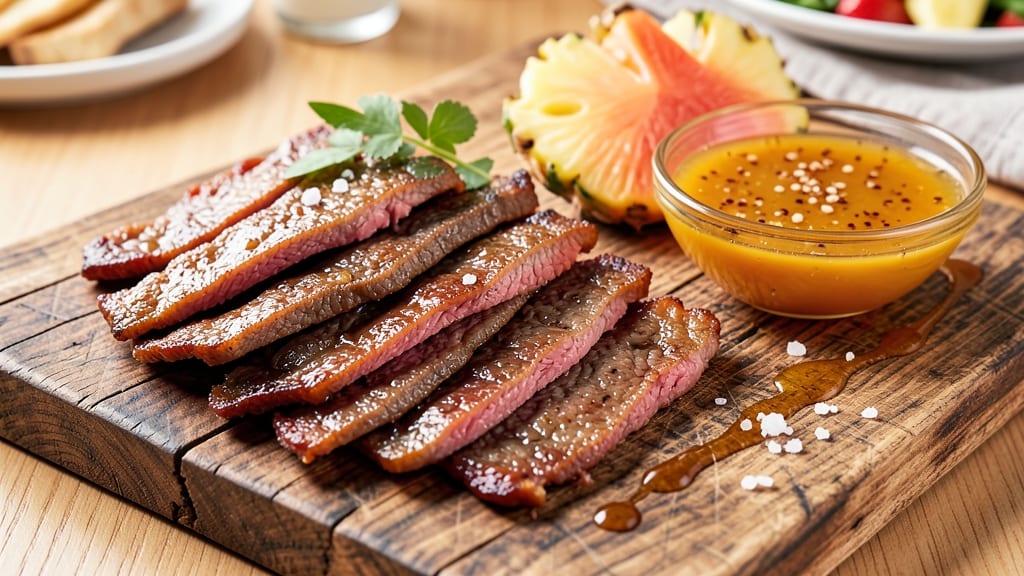
This beef jerky recipe with pineapple juice transforms tough cuts into tender, sweet-tart strips in just 6 hours. I discovered the magic when my dehydrator broke, and I needed a solution that didn't sacrifice flavor.
The pineapple juice tenderizes the meat while adding a bright, tropical twist that sets this apart from traditional recipes.
The secret lies in the marinade—pineapple juice breaks down proteins for maximum tenderness, while soy sauce and brown sugar create a caramelized crust. You'll work with lean cuts like flank steak or top round, slicing thinly against the grain for that perfect chewy-yet-tender texture.
This method works in an oven, dehydrator, or even a smoker, giving you flexibility for any kitchen setup.
By the time you're done, you'll have jerky that's dangerously addictive—sweet from the pineapple, tangy from the vinegar, and rich from the spices. It's the kind of snack that disappears in minutes, perfect for camping trips, hiking snacks, or just satisfying that salty-sweet craving.
The best part? It keeps for weeks in the pantry, so you can make a big batch and enjoy it all season.
Whether you're a jerky novice or a seasoned maker, this recipe delivers restaurant-quality results without the guesswork. Let's get started—your taste buds (and hiking companions) will thank you.
Ingredients for beef jerky recipe pineapple juice
Sweet-tart marinade meets lean protein for jerky that's restaurant-quality in hours.
| Ingredient | Amount | Notes |
|---|---|---|
| Flank Steak 🥩 | 1 ½ lb | Sliced thinly against grain |
| Pineapple Juice 🍍 | 1 ½ cups | Freshly squeezed preferred |
| Soy Sauce 🥢 | ½ cup | Low-sodium for control |
| Brown Sugar 🍚 | ¼ cup | Light or dark variety |
| White Vinegar 🍶 | ¼ cup | For tangy brightness |
| Garlic Powder 🧄 | 1 tbsp | Freshly ground preferred |
| Onion Powder 🧅 | 1 tbsp | For depth of flavor |
| Ground Black Pepper 🌶️ | 1 tsp | Freshly cracked preferred |
| Smoked Paprika 🌶️ | 1 tsp | For subtle smokiness |
| Salt 🧂 | 1 tsp | Kosher or sea salt |
| Lemon Juice 🍋 | 1 tbsp | Freshly squeezed |
| Olive Oil 🫒 | 1 tbsp | For even coating |
The flank steak is your secret weapon here—its lean fibers slice beautifully against the grain for that perfect chewy-yet-tender texture. Grab a center-cut piece from the butcher counter (they'll slice it for you), or ask for pre-sliced jerky steak if you're short on time. Costco or Whole Foods usually carry pre-sliced packs, but I always opt for the whole cut to slice myself—it's fresher and more consistent. Look for good marbling; it won't add fat, but it does indicate better quality meat. If you can't find flank, top round works too, though it's slightly tougher and needs extra marinating time.
No pineapple juice? Coconut water or extra apple juice will work in a pinch, though the flavor won't be quite as vibrant. The soy sauce is non-negotiable for that umami depth, but if you're avoiding sodium, use coconut aminos instead at double the amount. Brown sugar can be swapped for coconut sugar or maple syrup for a slightly different flavor profile. Fresh garlic and onion powders make all the difference—Penzeys or Spicewalla are my go-tos for quality, but the bulk bins at Trader Joe's are a budget-friendly alternative. The olive oil might seem unnecessary, but it helps the marinade cling to the meat like magic.
This jerky keeps for weeks in the pantry if stored properly—wrap it tightly in parchment paper first, then in plastic wrap, and finally in a resealable bag to prevent drying. For extra long storage, freeze it for up to 6 months. The flavor actually improves after a few days as the sugars caramelize. I always make a double batch—one for immediate snacking and one to stash in my car for emergencies. Pro tip: if you're using an oven method, line your trays with parchment paper for easy cleanup, and prop the door open with a wooden spoon to let steam escape—prevents soggy jerky.
Why You'll Love This Recipe
- Pantry Magic: That’s right—no fancy marinades or obscure spices. Just flank steak, pineapple juice (the secret weapon), soy sauce, and a splash of vinegar. Honestly, I keep these ingredients stocked anyway, so it’s like making jerky from what’s already there.
- Sweet-Savory Bomb: The brown sugar caramelizes into the meat while the pineapple juice tenderizes it just enough—no rubbery texture here. Between us, the tangy-sweet balance makes it taste like a cross between a snack and a dessert. (Yes, even my picky husband asks for seconds.)
- No-Fuss Prep: Slice the steak thin, toss it in the marinade, and let it sit for a few hours. No peeling garlic, no chopping herbs, no waiting for the oven to preheat. I’ve made this on a camping trip with just a cooler and a knife—it’s that unfussy.
- Budget Snack Hero: A pound of flank steak stretches into enough jerky to pack lunches for the week. The pineapple juice adds a bright twist that makes it feel special, but the cost? A fraction of store-bought. My kids call it “fancy jerky,” and I call it a win for my wallet.
Step-by-step instructions for sweet-tart pineapple beef jerky
Transform tough flank steak into irresistibly tender jerky with this tropical twist—no dehydrator required!
Prep the Meat for Maximum Tenderness
Remove the flank steak from the refrigerator and let it sit at room temperature for 15 minutes. This ensures even cooking. Pat the meat completely dry with paper towels—moisture is the enemy of crispy jerky. Using a sharp knife, slice the steak thinly against the grain into strips about ¼-inch thick. The thinner the slices, the faster they'll cook and the more tender the final jerky.
Here's the thing—if you slice with the grain, you'll end up with chewy jerky. The muscle fibers run parallel to the grain, so cutting perpendicular ensures each bite is fork-tender. Arrange the slices on a plate and set aside while you prepare the marinade. I like to work in batches if I'm making a lot, but for this recipe, one layer will do just fine.
Whisk Together the Tropical Marinade
In a large bowl, combine the 1.5 cups pineapple juice, 0.5 cup soy sauce, 0.25 cup brown sugar, and 0.25 cup white vinegar. Stir until the sugar dissolves completely—this is your base marinade. The pineapple juice brings that bright, sweet-tart flavor while the vinegar adds tangy depth that cuts through the richness of the meat.
Add the 1 tablespoon garlic powder, 1 tablespoon onion powder, 1 teaspoon ground black pepper, 1 teaspoon smoked paprika, and 1 teaspoon salt. Give it a thorough whisk to distribute all the spices evenly. The smoked paprika adds a subtle smokiness that pairs beautifully with the tropical flavors, while the garlic and onion powders build complexity. Taste the marinade—it should be sweet, tangy, and just slightly spicy. If it needs more salt, adjust now before adding the meat.
Marinate the Meat for Deep Flavor
Pour the marinade over the sliced steak, ensuring every piece is fully coated. Transfer everything to a resealable plastic bag and massage the marinade into the meat for 30 seconds—this helps it penetrate faster. Seal the bag and refrigerate for at least 4 hours, but I recommend overnight if you can. The longer it marinates, the more tender and flavorful the jerky will be. If you're short on time, 4 hours will still give you great results, but overnight is ideal.
Here's a pro tip: If you're using a glass container, cover it loosely with plastic wrap to prevent spills. The acidity in the marinade will start breaking down the meat fibers almost immediately, so don't skip this step. The pineapple juice contains enzymes that tenderize the meat naturally, making it even more delicious than traditional jerky.
Cook the Jerky to Perfect Texture
Preheat your oven to 175°F—this is the magic temperature for jerky. It's low enough to cook the meat gently without drying it out, but high enough to eliminate bacteria. Line a baking sheet with parchment paper and arrange the marinated steak slices in a single layer, ensuring they don't overlap. This allows air to circulate evenly and prevents soggy jerky.
Bake for 4 to 6 hours, depending on the thickness of your slices. You'll know it's done when the jerky is dry to the touch and no longer moist in the center. To test, pick up a slice—it should feel firm and leathery, not sticky or rubbery. If it's still slightly damp, return it to the oven for another 30 minutes. The edges should be slightly darker than the center, indicating even cooking.
Finish with a Bright Citrus Kick
Once the jerky is fully cooked, remove it from the oven and let it cool completely on the baking sheet. This step is crucial—cooling prevents the jerky from becoming gummy. While it cools, whisk together the 1 tablespoon lemon juice and 1 tablespoon olive oil in a small bowl. This final mixture adds a bright, citrusy finish that balances the sweetness of the pineapple and enhances the smokiness.
Drizzle the lemon juice and olive oil mixture evenly over the cooled jerky. Let it sit for 10 minutes to absorb, then store in an airtight container in the refrigerator for up to 2 weeks or freeze for up to 3 months. The lemon juice not only adds flavor but also acts as a natural preservative. Serve with your favorite dips or enjoy it straight—this jerky is so tender and flavorful, you won't believe it's homemade!
Pro Tips For Making Beef Jerky Recipe Pineapple Juice
- Trim the Fat First: Flank steak’s fat layer won’t render into jerky—it’ll stay soggy. Grab kitchen shears and slice off every visible fat strip before slicing, even if it feels like you’re over-trimming. I learned this the hard way when my first batch turned out greasy and chewy instead of clean and firm.
- Marinate Overnight, Not Hours: The pineapple juice and vinegar need at least 12 hours to break down the beef fibers properly. I used to rush it to 6 hours, and the jerky always ended up rubbery. Set a reminder—your future self will chew with gratitude.
- Reduce the Juice First: Simmer the pineapple juice, soy sauce, brown sugar, and vinegar together for 5–7 minutes until it thickens slightly. This concentrates the flavors and prevents a watery marinade. I skip this step sometimes, but the jerky tastes noticeably flatter when I do.
- Slice Thin and Even: Use a sharp knife and cut the meat against the grain into strips about ¼-inch thick. Thicker slices won’t dry properly, and thinner ones burn fast. I used to eyeball it—now I measure with a ruler for consistency. (Yes, it’s weird, but it works.)
Make-ahead tips for this recipe
Marinade Prep Ahead
Make your marinade up to 3 days in advance and store it in an airtight container in the fridge. The flavors meld beautifully over time, and the acidity from the pineapple juice and vinegar will continue breaking down the meat fibers—just give it a quick stir before using.
I often make a double batch for future jerky projects, especially since the ingredients are shelf-stable except for the lemon juice, which I add fresh when ready to use. 🍍
Meat Prep Efficiency
Slice your flank steak 2 days ahead and store it in a resealable bag or airtight container in the fridge. The meat will firm up slightly, making it easier to slice evenly when you're ready to marinate.
I like to label the bag with the date and store it on the bottom shelf to avoid cross-contamination. This step saves time on the day you plan to cook, especially if you're making a big batch for camping trips or gifts. 🥩
Overnight Marinating
For maximum tenderness, marinate the meat overnight in the fridge. The longer the marinade sits, the more the enzymes in the pineapple juice and the acidity work to tenderize the meat.
I usually set a reminder on my phone to take it out of the fridge in the morning so it's ready to cook by lunchtime. If you're short on time, even 4 hours will give you great results, but overnight is ideal for that melt-in-your-mouth texture. ⏰
Batch Cooking Strategy
Double or triple the recipe and cook the jerky in two batches if needed. This ensures even drying and prevents overlapping, which can lead to soggy jerky. I use this strategy when making jerky for a large group or for long-term storage.
After the first batch cooks, simply repeat the process with the remaining marinated meat. Store the finished jerky in resealable freezer bags with the date labeled—this way, you can pull out exactly what you need without thawing the whole batch. 💫
Freezer-Friendly Packaging
Portion your finished jerky into single-serving bags before freezing for easy grab-and-go snacks. I use quart-sized freezer bags and squeeze out all the air to prevent freezer burn. Label each bag with the date and flavor profile—this makes it easy to grab a bag for hiking trips or emergency snacks.
The jerky will keep its quality for up to 6 months in the freezer, making it a perfect make-ahead snack for any season. ❄️
Reheating Leftovers
If you have leftover jerky that’s lost some of its crispness, revive it by placing it on a baking sheet and warming it in the oven at 175°F for 5-10 minutes. This gently re-dries the surface without overcooking the meat.
I also like to reheat jerky in a toaster oven on low heat for a few minutes—it’s quicker and still effective. Just avoid high heat, which can make the jerky tough and dry. 🔥
Nutrition facts
Frequently asked questions
Why does pineapple juice make beef jerky more tender?
Pineapple juice contains natural enzymes called bromelain that break down meat fibers, making it significantly more tender than traditional recipes. The acidity also helps tenderize while adding that signature sweet-tart flavor. For best results, use freshly squeezed juice—canned versions lack the same enzyme potency.
Can I use a dehydrator instead of an oven?
Dehydrators work beautifully for this recipe—just arrange the marinated strips on dehydrator trays with 1-inch spacing between pieces. Set to 160°F and dry for 4-6 hours, checking periodically. The key difference is dehydrators circulate air more efficiently, reducing cooking time by about 30 minutes compared to ovens.
What's the best way to store homemade pineapple jerky?
For short-term storage (2 weeks), keep in an airtight container in the fridge. For long-term storage, wrap tightly in parchment paper followed by plastic wrap, then vacuum-seal or use a freezer bag. It stays fresh for 6 months in the freezer or 3 months in a cool pantry (below 60°F). The pineapple juice's natural sugars help preserve flavor longer than traditional recipes.
Can I make this jerky without soy sauce?
Yes, but you'll lose that umami depth. Try coconut aminos (double the amount) or liquid smoke (1 tsp) for a smoky alternative. For a completely soy-free version, use extra pineapple juice (add 0.5 cup) and 1 tbsp fish sauce (if you eat seafood). The flavor will be lighter but still delicious—just more dependent on the tropical notes.
How do I fix jerky that's too chewy?
If your jerky turns out tough, it likely didn't dry enough. For immediate results, slice it thinner next time or cook at 175°F for 10-15 minutes longer. For existing jerky, try this trick: place it on a baking sheet at 200°F for 5 minutes—this re-dries the surface while keeping the interior tender. The pineapple marinade helps prevent this, but thinner slices are always key!