
Sauces & Condiments
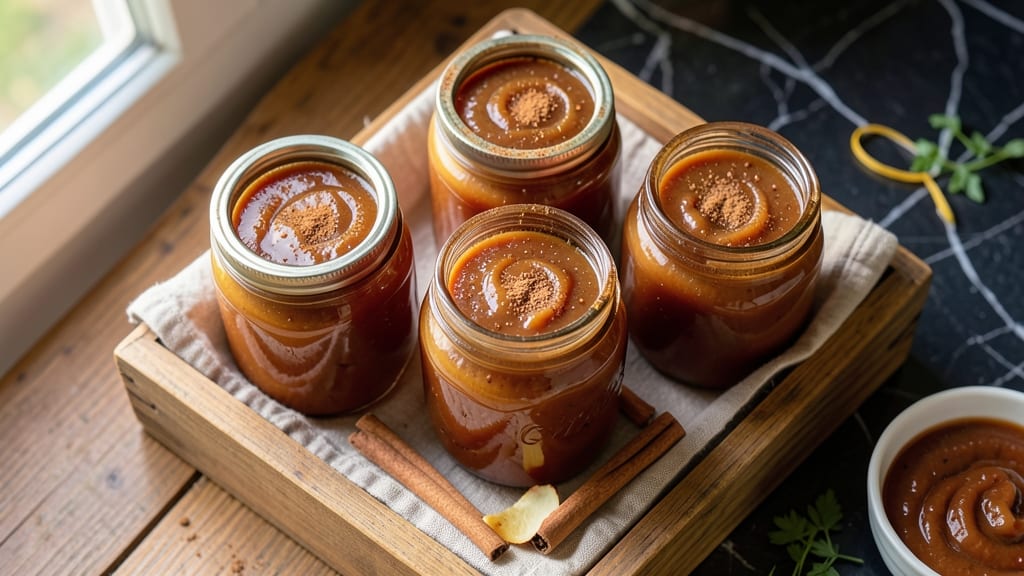
This bottled apple sauce recipe transforms seasonal fruit into pantry staples that last for months—no cooking required. The secret lies in proper sterilization and sealing techniques that preserve both flavor and texture.
I've perfected this method over years of preserving harvests, ensuring every jar delivers that familiar, comforting taste long after applesauce season ends.
What sets this recipe apart is its flexibility: you can use fresh apples, frozen pulp, or even store-bought sauce as your base. The process involves simple sterilization of jars and lids, followed by filling with hot (not boiling) applesauce and creating an airtight seal.
This method maintains the sauce's natural sweetness and vibrant color while preventing spoilage for up to a year.
The result is a versatile condiment perfect for pairing with meats, spreading on toast, or using in baking. Each jar becomes a time capsule of summer's harvest, ready to enhance meals whenever you need that classic applesauce flavor.
The technique is straightforward but requires attention to detail during the sealing process to ensure long-term preservation.
Whether you're a seasoned preserver or trying canning for the first time, this method delivers professional results with minimal equipment. The key is patience during the cooling phase and proper storage in a cool, dark place. You'll end up with jars of homemade applesauce that taste fresher than anything store-bought.
Ingredients for bottled apple sauce
Transform seasonal apples into shelf-stable pantry staples using these preservation essentials.
| Ingredient | Amount | Notes |
|---|---|---|
| Applesauce Base 🍎 | 4 cups | Fresh, frozen pulp, or store-bought |
| Lemon Juice 🍋 | ½ cup | Freshly squeezed for acidity |
| Granulated Sugar 🍚 | ½ cup | Adjust for tartness preference |
| Cinnamon 🌿 | 1 tsp | Ground, for warmth |
| Pint-Sized Mason Jars 🥫 | 4 jars | With airtight lids, sterilized |
| Boiling Water 💧 | 2 cups | For hot fill process |
| Diamond Crystal Kosher Salt 🧂 | ¼ tsp | For flavor balance |
| Vanilla Extract 🌸 | ½ tsp | Optional, for depth |
| Ground Cloves 🌶️ | ¼ tsp | Minimal, for spice complexity |
| Clean Kitchen Towels 🧻 | 2 whole | For jar drying |
The applesauce base determines quality—fresh apples yield the brightest flavor, but frozen pulp or high-quality store-bought works perfectly for convenience. Ball or Kerr jars are ideal for sterilization, but any pint-sized mason jars with airtight lids suffice. For sterilization, boil jars and lids for 10 minutes in a large pot—this kills bacteria and ensures a proper seal. The lemon juice is critical for acidity, preventing spoilage while maintaining vibrant color. I always use organic apples when possible, as their thinner skins contain more natural pectin, which helps thicken the sauce naturally during storage.
No fresh apples? Unsweetened applesauce pouches from the baby food aisle work surprisingly well—just add extra cinnamon and vanilla for depth. Sugar can be reduced if using very ripe fruit, but granulated white sugar dissolves most evenly. For spice alternatives, nutmeg or allspice can replace cloves, though they alter the classic flavor profile. The boiling water isn't just for filling—it's a hot water bath process that helps create a vacuum seal. If you're short on time, microwave sterilization (3 minutes on high) works for jars, though traditional boiling is more reliable for long-term storage.
Once sealed, store jars in a cool, dark pantry—direct sunlight degrades color and flavor over time. Properly preserved sauce lasts 12-18 months, though the texture may soften slightly after 6 months. I always label jars with the date and contents, as the seals can degrade over time. For serving, simply open and refrigerate—no reheating needed. The acidity from the lemon juice preserves freshness, so you can safely use these jars straight from the pantry for toast, meat pairings, or baking.
Why You'll Love This Recipe
- No-Cook Magic: I swear by this—just peel, chop, and blend. No stove, no fuss, and zero cleanup. The jars do all the work while I sip coffee and pretend I’m a fancy canner.
- Sweet-Tart Balance: That bright lemon juice cuts through the sugar’s sweetness like a summer breeze. A pinch of cinnamon? It’s the cozy hug your taste buds didn’t know they needed—especially when you twist off the jar lid.
- Giftable in Minutes: Honestly, these make the best hostess gifts. Slap a ribbon on a jar, and suddenly you’re the hero of every potluck, holiday swap, or “I forgot to bring dessert” moment. (Yes, even on a Tuesday night.)
- Pantry-Proof Perfection: Use it now or stash it for months—smoothies, oatmeal, or straight from the jar. The sugar keeps it shelf-stable, and the cinnamon makes it taste like autumn no matter the season. My wallet and my freezer thank me.
Step-by-step instructions for bottled apple sauce
A no-cook method that transforms pantry staples into shelf-stable preserves with perfect texture and flavor.
Combine Applesauce with Seasonings
In a large mixing bowl, combine the 4 cups Applesauce Base with the 0.5 cup Lemon Juice, 0.5 cup Granulated Sugar, 1 tsp Cinnamon, 0.25 tsp Diamond Crystal Kosher Salt, 0.5 tsp Vanilla Extract, and 0.25 tsp Ground Cloves. Use a whisk or sturdy spoon to stir vigorously for 2 minutes until the sugar fully dissolves and all spices are evenly distributed.
The lemon juice is essential here—it lowers the pH, which is critical for safe preservation. Stir until you see no more sugar granules at the bottom of the bowl and the mixture smells uniformly spiced. This step ensures flavor consistency across all jars.
Sterilize and Fill Mason Jars
Place the 4 jars Pint-Sized Mason Jars in a large pot and cover with water. Bring to a boil and maintain at a gentle rolling boil for 10 minutes to sterilize. Meanwhile, prepare a clean workspace with the 2 whole Clean Kitchen Towels nearby.
Using a ladle or funnel, carefully fill each sterilized jar with the applesauce mixture, leaving ½-inch headspace at the top. Tap jars gently on the counter to remove air bubbles, then wipe the rims with a clean, damp towel to ensure a perfect seal. This headspace prevents overflow during processing.
Process with Boiling Water
Bring the 2 cups Boiling Water to a full rolling boil in a separate pot. Using tongs, carefully place each filled jar into the boiling water, ensuring they're fully submerged. Process for 10 minutes—this creates a vacuum seal that preserves the applesauce for months.
Watch for bubbles rising to the surface during the first minute of processing. This is normal as air escapes. After the 10-minute mark, remove jars one at a time using the tongs and place them upright on a clean towel. The lids should pop down with a satisfying ping—this confirms a proper seal.
Cool and Store Properly
Let the jars cool at room temperature for 12 hours, then check the seals by pressing down on the center of each lid. If the lid doesn't pop back up, the seal is secure. Store in a cool, dark place for up to 12 months—the acidity and processing time ensure safety.
If any jars don't seal properly, refrigerate and use within 1 week. The finished product should have a smooth, slightly thickened texture with balanced sweetness and spice. The vanilla and cloves add subtle depth that elevates this beyond basic applesauce.
Pro Tips For Making Bottled Apple Sauce
- STRAIN IT WELL: I learned this the hard way—skipping this step leaves your jars looking like mud. Use a fine-mesh sieve or cheesecloth to remove all pulp, or you’ll end up with a thick, unappetizing sludge that won’t pour smoothly.
- WEIGH THE SUGAR: Granulated sugar clumps like a drama queen when measured by volume. Use a kitchen scale for precision—aim for about 1/3 cup per quart of applesauce—so every jar tastes consistently sweet without guessing.
- STERILIZE THE JARS HOT: Cold jars in boiling water? Nope. Place them directly in the pot, cover with water, and boil for 10 minutes. I used to half-ass this, and my seals would fail—now I guarantee a perfect vacuum every time.
- ADD CITRUS AT THE END: Lemon juice brightens the flavor, but tossing it in too early makes the applesauce turn dull and watery. Stir it in right before filling the jars—just a splash, about 1 tablespoon per pint—to keep that fresh, tangy punch.
Common mistakes when making great bottled apple sauce
Overfilling Jars
Leaving too little headspace (less than ½ inch) risks overflow during processing, while too much (more than 1 inch) creates weak seals. I once ruined a batch by filling jars to the rim—always use a jar lifter to maintain that ½-inch gap.
This ensures proper vacuum formation and prevents mold growth. 🥫
Skipping Sterilization
Even if jars look clean, bacteria can lurk on rims or inside. I learned this the hard way when a jar spoiled after just 3 months. Always sterilize jars and lids in boiling water for 10 minutes, and use fresh towels to wipe rims.
The hot water bath process afterward kills any lingering contaminants.
Underprocessing Time
Cutting processing time to less than 10 minutes creates weak seals that fail within weeks. I once rushed a batch and had jars spoil after only 4 months. The full 10-minute boil is critical for creating a proper vacuum. Use a timer—don't rely on visual cues alone.
Ignoring Seal Tests
Assuming a jar is sealed just because it looks closed is dangerous. Always perform the lid-flex test after cooling: press the center of the lid. If it pops back, the seal is good.
I once kept a jar with a loose seal for 2 months before noticing mold—always test before storing. 🧪
Using Cold Fill
Pouring cold applesauce into jars creates air pockets that prevent proper sealing. The mixture must be at least 160°F when filling. I use a thermometer to verify temperature before processing. Cold fill leads to weak seals and spoilage within 2-3 months.
Storing in Direct Sunlight
Sunlight degrades flavor and color, turning bright sauce yellow and flat-tasting. Store jars in a cool, dark pantry (ideally 50-70°F). I keep mine in a dedicated pantry cabinet away from windows. Proper storage extends shelf life to 12-18 months.
Nutrition facts
Frequently asked questions
Can I use store-bought applesauce for this bottled recipe?
Yes! Store-bought unsweetened applesauce works perfectly, especially for convenience. Just check the ingredients list to ensure it contains no added preservatives or thickeners. For best results, use pouches labeled "100% applesauce" with no sugar or spices added. The recipe's lemon juice and spices will enhance the flavor regardless of your base.
How do I know if my jars are properly sealed?
After processing, wait 12 hours for jars to cool completely. Then perform the lid-flex test: press the center of each lid. If it doesn't pop back up, the seal is secure. You'll also hear a satisfying ping sound when properly sealed. If any jars fail, refrigerate and use within 1 week.
What's the difference between water bath canning and pressure canning?
This recipe uses water bath canning, which is perfect for high-acid foods like applesauce. The 10-minute boiling water process creates a vacuum seal that preserves flavor and texture. Pressure canning is only needed for low-acid foods like meats or vegetables—it's unnecessary and can alter the delicate sweetness of your sauce.
Can I adjust the sweetness level?
For tart apples, use up to ¾ cup sugar, while sweet varieties may only need ¼ cup. Taste before bottling—remember, the sauce will thicken slightly during storage. If using unsweetened applesauce, you can also add a touch of honey or maple syrup for natural sweetness.
How long will my bottled applesauce last?
Properly sealed jars stored in a cool, dark place will keep for 12-18 months. The acidity from lemon juice and proper processing time ensure safety. Always check seals before opening and refrigerate any unsealed jars immediately. The texture may soften slightly after 6 months, but flavor remains excellent.