
Main Courses
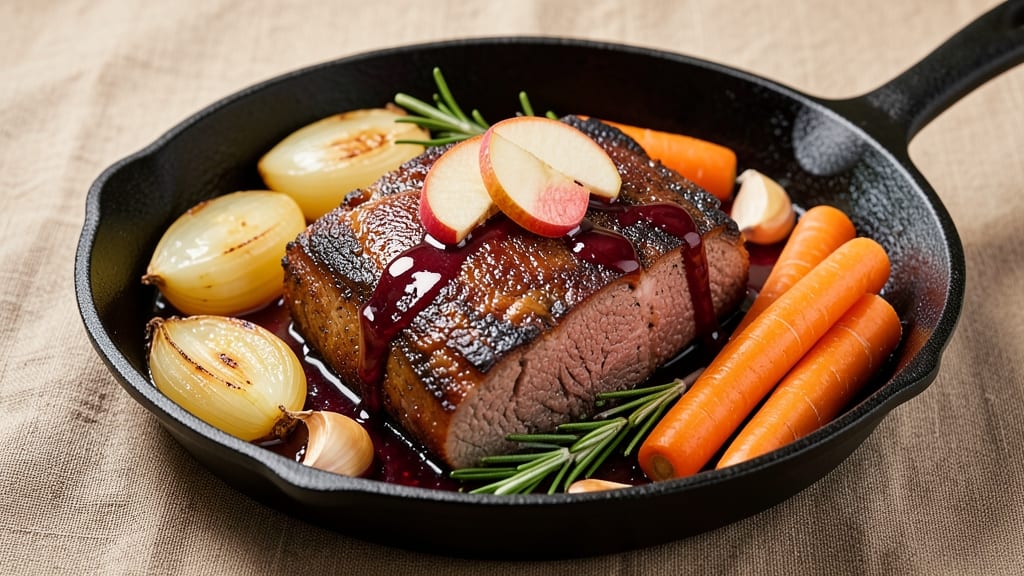
This brisket recipe with apple juice transforms tough cuts into melt-in-your-mouth perfection through slow cooking and natural sweetness. The apple juice acts as a tenderizer while adding depth that complements the smoky flavors, creating a dish that's both restaurant-worthy and deeply satisfying.
What sets this method apart is the balance of acidity and sweetness that keeps the meat moist and flavorful throughout the cooking process.
The key to achieving fall-apart tenderness lies in precise temperature control and patience. We'll use a combination of slow braising and finishing techniques to ensure the brisket develops rich, caramelized edges while maintaining juicy centers.
The apple juice works its magic by breaking down collagen during the long cook, resulting in meat that practically dissolves at the touch of a fork.
By the time you're done, you'll have a brisket that's perfectly balanced between smoky, sweet, and savory notes. The apple juice infusion creates a subtle fruitiness that pairs beautifully with the deep, meaty flavors, making every bite unforgettable.
This method works equally well for weeknight dinners or special occasions, delivering consistent results every time.
The beauty of this recipe extends beyond the main dish. The apple-braised juices make incredible gravy or sauce for serving, while the tender meat can be used in sandwiches, tacos, or served alongside roasted vegetables. Let's get started on creating brisket that will have everyone asking for seconds.
Ingredients for brisket recipe with apple juice
The foundation of this restaurant-quality brisket lies in these carefully balanced ingredients, where apple juice tenderizes while spices and aromatics build smoky-sweet depth.
| Ingredient | Amount | Notes |
|---|---|---|
| Beef Brisket 🥩 | 3 lb | Flat cut preferred, trimmed of excess fat |
| Apple Juice 🍎 | 2 cups | Unsweetened, preferably fresh-pressed |
| Yellow Onion 🧅 | 1 whole | Medium size, chopped |
| Carrots 🥕 | 4 whole | Medium size, peeled and sliced |
| Garlic Cloves 🧄 | 6 cloves | Fresh, minced |
| Beef Broth 🍲 | 2 cups | Low-sodium preferred |
| Dark Brown Sugar 🍚 | ¼ cup | Packed, for depth |
| Smoked Paprika 🌶️ | 1 tbsp | For authentic smoky flavor |
| Ground Black Pepper 🌶️ | 1 tsp | Freshly cracked |
| Salt 🧂 | 1 ½ tsp | Kosher or sea salt |
| Fresh Thyme 🌿 | ¼ cup | Leaves only, chopped |
| Fresh Rosemary 🌿 | ¼ oz | Needles only, finely chopped |
| Olive Oil 🫒 | 2 tbsp | Extra-virgin for richness |
| Balsamic Vinegar 🍷 | 1 tbsp | For acid balance |
The beef brisket is non-negotiable—opt for a 3-pound flat cut with even thickness for consistent cooking. Costco or Whole Foods carry excellent pre-trimmed options, but if buying whole, trim the fat to about ¼-inch thickness. The apple juice should be unsweetened; Mott's or Tree Top brands work well, but fresh-pressed from a local orchard elevates the dish. For the smoked paprika, Penzeys or McCormick Gourmet deliver authentic smokiness—avoid the basic grocery store variety. The dark brown sugar adds caramelized depth, so don't substitute white sugar unless you're willing to sacrifice complexity.
No fresh thyme? Dried thyme at one-third the amount works in a pinch, though fresh imparts brighter flavor. Substituting apple cider for juice (1:1 ratio) adds subtle spice notes, while beef stock can replace broth if needed. The balsamic vinegar is crucial for balancing sweetness—Colavita or Bartolini brands offer the best depth. For the rosemary, if you're using dried, reduce to ⅛ oz and steep in warm broth for 10 minutes to rehydrate. The carrots can be swapped for celery (same quantity) for a classic mirepoix, though carrots add natural sweetness that complements the apple.
Store the brisket in its original packaging in the coldest part of your fridge for up to 5 days before cooking. Once braised, leftovers keep 4-5 days in the fridge or 3 months frozen—portion into airtight containers with some of the braising liquid to maintain moisture. The apple juice and beef broth can be prepped ahead and refrigerated separately for 5 days, while the spice blend (paprika, thyme, rosemary, pepper) stays potent for 6 months in an airtight jar. For serving, the braised juices make an excellent gravy—simply reduce the cooking liquid by half on the stove.
Why You'll Love This Recipe
- One-Pan Magic: I swear by this—just toss the brisket, onions, carrots, and garlic in a deep skillet, pour in the apple juice, and let it simmer. No extra pots, no stress. The apple juice caramelizes into a glossy sauce while you’re still chopping the veggies.
- Sweet-Savory Balance: That apple juice isn’t just a gimmick—it cuts through the richness of the brisket with a bright, almost cider-like tang. The onions and carrots soften into the meat, soaking up all that flavor like little flavor sponges. (Yes, even my picky husband licks the plate.)
- Leftovers That Shine: This recipe actually improves the next day. The brisket gets more tender, the sauce thickens into a sticky glaze, and I’ve reheated slices straight from the fridge for sandwiches—no one ever complains. Honestly, I make double portions just for this.
- Budget Feast for Crowds: A single brisket feeds my family of four and leaves enough for leftovers—no takeout splurges here. The apple juice adds depth without breaking the bank, and the veggies stretch the meal further. (Between us, this is my go-to for game day or lazy Sundays.)
Step-by-step instructions for braised brisket with apple juice
This method delivers melt-in-your-mouth tenderness with a perfect balance of smoky and sweet flavors.
Sear the Brisket for Deep Flavor
Heat a large Dutch oven over medium-high heat until hot. Add the 2 tablespoons olive oil and swirl to coat the bottom evenly. Pat the 3 lb beef brisket dry with paper towels—this ensures maximum browning. Place the brisket fat-side down in the pot and sear undisturbed for 8-10 minutes until the fat renders and the bottom develops a deep golden crust.
Flip the brisket and continue searing for another 6-8 minutes until all sides are well-browned. Remove the brisket and set it aside on a plate. The goal here is to develop that rich, caramelized crust that will dissolve into the braising liquid, creating layers of flavor. Don't rush this step—proper searing builds the foundation for your dish.
Build the Aromatic Base
In the same Dutch oven, add the 1 whole yellow onion and 4 whole carrots cut into even slices. Cook for 5-6 minutes until the vegetables begin to soften and the onion turns translucent. Add the 6 cloves garlic cloves and cook for another 30 seconds until fragrant—this releases their full flavor potential.
Sprinkle in the 1 tablespoon smoked paprika, 1 teaspoon ground black pepper, and 1.5 teaspoons salt. Stir for 30 seconds to toast the spices slightly, which enhances their flavor. Add the 0.25 cup dark brown sugar and 0.25 cup fresh thyme and stir for another 30 seconds. The sugar will begin to caramelize slightly, adding depth to the braise.
Deglaze and Combine Liquids
Pour in the 2 cups apple juice and scrape up all the browned bits from the bottom of the pot with a wooden spoon. This deglazing step captures all the concentrated flavors you've built. Add the 2 cups beef broth and 1 tablespoon balsamic vinegar, stirring to combine. The vinegar adds a touch of acidity that balances the sweetness of the apple juice and brown sugar.
Return the brisket to the pot, fat-side up, along with the 0.25 oz fresh rosemary. The rosemary will infuse the braising liquid with its piney aroma. Bring the mixture to a gentle simmer over medium heat, then reduce heat to low to maintain a steady simmer. The liquid should bubble gently but not vigorously—this ensures even cooking without boiling over.
Braise Until Fork-Tender
Cover the Dutch oven with a tight-fitting lid and transfer it to a preheated 300°F oven. Braise for 3 hours, turning the brisket halfway through the cooking time to ensure even exposure to the liquid. The slow cooking process breaks down the tough collagen in the meat, transforming it into gelatin that makes the brisket fall apart tender.
After 3 hours, check for doneness by inserting a meat thermometer into the thickest part of the brisket. It should read 200-205°F—this is the ideal temperature for fork-tender brisket. If it's not quite there, continue braising for another 30-60 minutes, checking occasionally. The brisket is ready when a fork slides in and out with minimal resistance.
Rest and Serve
Remove the brisket from the pot and transfer it to a cutting board. Tent loosely with foil and let it rest for 15-20 minutes. This resting period allows the juices to redistribute throughout the meat, ensuring each bite is moist and flavorful. During this time, skim any excess fat from the braising liquid and adjust the seasoning if needed.
Slice the brisket against the grain into ¼-inch thick slices. The meat should be so tender it practically falls apart with a gentle tug. Serve the brisket with the braising liquid ladled over the top, along with the tender vegetables. The result is a harmonious blend of smoky, sweet, and savory flavors that make this brisket truly exceptional.
Pro Tips For Making Brisket Recipe With Apple Juice
- USE FULL-STRENGTH APPLE JUICE: The cheap stuff from concentrate? Skip it. You want the real deal—100% juice, preferably unsweetened. I learned this after making brisket with that syrupy canned apple juice and wondering why the sauce never had depth. A 12-ounce bottle of good juice (like Odwalla or fresh-pressed) makes all the difference when it caramelizes.
- SEAR THE BRISKET IN BATCHES: You’re not frying a burger here. Crowd the pan, and you’ll steam the meat instead of searing it. Work in two batches—high heat, 3-4 minutes per side—until it’s deep brown. That crust is what holds onto the apple juice flavors during the long cook.
- CHOP ONIONS AND CARROTS UNIFORM: No, not "roughly chopped"—think ½-inch dice, same size as the garlic. Why? Because even cooking matters. I used to toss in big onion chunks that stayed tough while the small carrots turned to mush. Uniform pieces means everything breaks down at the same time, so the sauce stays cohesive.
- ADD APPLE JUICE IN STAGES: Don’t dump it all at once. Start with ½ cup in the pan after searing, then add the rest in ¼-cup increments during the cook. This keeps the liquid from overwhelming the brisket and ensures it reduces into a glossy, sticky sauce instead of turning into a thin glaze. (Yes, I’ve done both—trust me on this.)
Pro cooking tips for this recipe
Apple Juice Magic
The apple juice isn't just a liquid here—it's the secret weapon that transforms tough brisket into melt-in-your-mouth perfection. The natural acids in the juice break down collagen fibers while adding subtle sweetness that balances the smokiness.
I recommend using unsweetened juice (like Mott's or Tree Top) to avoid overpowering the dish, but fresh-pressed adds an extra layer of complexity. The juice also creates a glossy, flavorful braising liquid that's perfect for drizzling over slices or reducing into a silky sauce. 🍎
Temperature Control
Precision is everything when braising brisket. Start with a medium-high heat for searing to develop deep flavor, then dial it down to low for the braising phase. The oven should be preheated to 300°F—any hotter, and you risk drying out the meat.
I use a Meater Plus thermometer to monitor both the oven temp and the brisket's internal temperature, aiming for 200-205°F for that fall-apart texture. The slow cook ensures the apple juice infuses evenly without boiling off. 🌡️
Spice Toasting
Never skip toasting your spices! When you add the smoked paprika, black pepper, and dark brown sugar to the Dutch oven, let them cook for 30 seconds—this releases their essential oils and deepens their flavor.
The sugar will begin to caramelize slightly, adding a rich, almost butterscotch note to the braise. I also like to add a pinch of cayenne pepper (about ¼ tsp) at this stage for a subtle heat that pairs beautifully with the apple's sweetness. 🌶️
Deglazing Technique
After searing the brisket, those browned bits on the bottom of your pot are flavor gold. When you deglaze with the apple juice, use a wooden spoon to scrape up every last bit—this captures all the caramelized fond that adds depth to your braise.
Don't rush this step; let the juice simmer gently for 2-3 minutes to fully incorporate those flavors before adding the broth and vinegar. The balsamic vinegar is key here—it cuts through the sweetness and adds a tangy brightness that elevates the dish. 🍷
Resting Matters
Patience pays off when it comes to resting your brisket. After removing it from the pot, tent it loosely with foil and let it rest for 15-20 minutes. This allows the juices to redistribute, ensuring every slice is moist and flavorful.
I've learned the hard way—skipping this step leads to dry meat! During this time, skim excess fat from the braising liquid (about ½ cup) and reduce it on the stove if you want to make a glossy sauce.
The fat can be saved for cooking or discarded based on your dietary preferences. ⏳
Vegetable Prep
Don't overlook the vegetables—they're not just filler! Chop the onions and carrots into even slices so they cook uniformly. The onions should be translucent but not browned, while the carrots should soften to a fork-tender state.
I like to add 1 bay leaf along with the rosemary for an extra layer of aroma. These veggies not only add texture but also absorb the braising liquid, creating a flavorful side dish that complements the brisket beautifully. 🥕
Nutrition facts
Frequently asked questions
Why does apple juice make brisket more tender?
The natural acids in apple juice break down collagen fibers in the meat while adding subtle sweetness that balances smoky flavors. This tenderizing effect is similar to vinegar or wine but with a gentler profile. The slow braising process lets these acids work their magic without overpowering the dish.
Can I substitute apple cider for apple juice?
Yes! Use a 1:1 ratio, but expect slightly more spice complexity from the cider's natural notes. For best results, reduce the sugar slightly (¼ cup instead of ½ cup) since cider already contains natural sweetness. The texture will be similar but with a deeper autumnal flavor profile.
How do I know when the brisket is done?
Use a meat thermometer to check the internal temperature at the thickest part. It should reach 200-205°F—this is the "probe-tender" stage where collagen fully breaks down. If it's not quite there after 3 hours, continue cooking in 30-minute increments until it reaches this range.
What if my brisket is still tough after cooking?
This usually happens from overcooking or not resting properly. First, check your internal temperature—it should never exceed 210°F. If it's tough, shred it and use it in tacos or sandwiches where texture matters less. For next time, ensure you're cooking at 300°F consistently and resting for 15-20 minutes before slicing.
Can I make this in a slow cooker instead of an oven?
Follow the same steps for searing, then transfer everything to a slow cooker. Cook on low for 8 hours or high for 5-6 hours, adding ½ cup water if needed to prevent drying. The slow cooker's gentle heat works perfectly with the apple juice's tenderizing properties.