
Main Courses
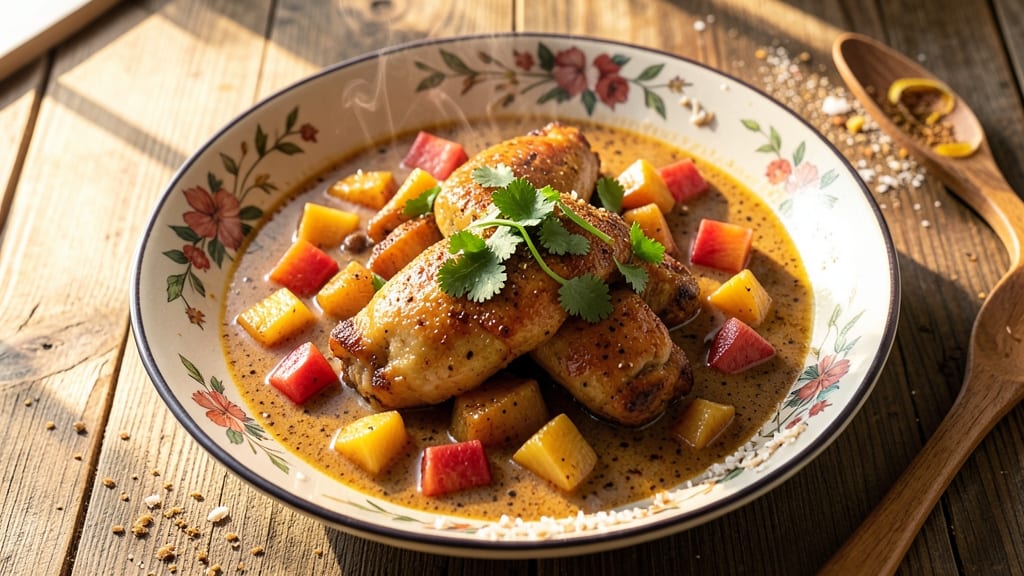
This chicken pineapple Indian curry recipe delivers the perfect balance of sweet, spicy, and creamy flavors in every bite—juicy chicken and tender pineapple pieces swimming in a rich coconut-based sauce. 🌟 The secret lies in marinating the chicken with yogurt and aromatic spices, which tenderizes the meat and infuses it with depth.
I developed this recipe after years of perfecting Indian curries, ensuring the flavors are authentic yet approachable for home cooks.
The curry begins with a fragrant blend of ginger, garlic, and garam masala, sautéed to release their full potential before adding coconut milk for a velvety texture. Pineapple chunks caramelize beautifully in the sauce, adding just the right amount of sweetness to complement the spice.
The dish is foolproof—simmering on low heat ensures the chicken stays tender while the flavors meld together harmoniously.
What you’ll end up with is a vibrant, aromatic curry that’s rich and satisfying, with perfectly balanced heat and sweetness. The sauce clings to the chicken and pineapple, creating a dish that’s as visually appealing as it is delicious.
Serve it over steamed basmati rice or with warm naan for a complete meal that feels like a restaurant-quality experience.
This recipe is perfect for weeknight dinners or special occasions, and it scales beautifully for a crowd. The flavors only get better as it sits, making it ideal for meal prep. Let’s get cooking!
Ingredients for chicken pineapple curry indian
Juicy chicken and sweet pineapple meet aromatic spices in this rich coconut curry—just 15 ingredients for bold flavors.
| Ingredient | Amount | Notes |
|---|---|---|
| Boneless Chicken Thighs 🍗 | 1 ½ lb | Cut into 1-inch pieces |
| Plain Yogurt 🥛 | 1 cup | Full-fat preferred for marinade |
| Fresh Pineapple Chunks 🍍 | 1 ½ cups | Fresh or canned in juice |
| Coconut Milk 🥥 | 1 can | Full-fat, 13.5 oz can |
| Garam Masala 🌶️ | 1 tbsp | Ground, for authentic flavor |
| Ground Ginger 🧄 | 1 tbsp | Freshly grated preferred |
| Garlic Cloves 🧄 | 4 cloves | Minced for aromatic base |
| Green Chilies 🌶️ | 2 whole | Fresh, seeded and chopped |
| Tomato Paste 🍅 | 2 tbsp | High-quality for depth |
| Lemon Juice 🍋 | 1 tbsp | Freshly squeezed |
| Salt 🧂 | 1 ½ tsp | Kosher or sea salt |
| Black Pepper 🌶️ | ½ tsp | Freshly ground |
| Fresh Cilantro 🌿 | ¼ cup | Chopped, for garnish |
| Olive Oil 🫒 | 2 tbsp | For sautéing |
| Basmati Rice 🍚 | 1 cup | Uncooked, for serving |
The coconut milk makes this curry velvety and rich—full-fat canned coconut milk gives the best texture. I always grab Thai Kitchen brand from the international aisle, but any full-fat can works. Fresh pineapple is ideal for texture, but canned pineapple in juice (not syrup) saves time. The chicken thighs stay juicier than breasts during the long simmer—bone-in, skin-on if you want extra flavor. For garam masala, MDH or Everest brand from the Indian grocery section delivers authentic warmth.
No garam masala? Mix 1 tsp each of cumin, coriander, and turmeric for a close substitute. Fresh ginger and garlic are non-negotiable for depth, but powdered versions at half the amount work in a pinch. The yogurt marinade tenderizes the chicken—Greek or full-fat plain yogurt both work. If you can't find green chilies, jalapeño or serrano peppers add heat. For the tomato paste, San Marzano in a squeeze tube eliminates waste and keeps well. The rice? Basmati or jasmine both pair perfectly—just don't skip the steaming.
This curry tastes even better the next day as flavors meld. Store in an airtight container in the fridge for 4-5 days. Freezes beautifully for 3 months—portion into single servings before freezing. Garnish with fresh cilantro right before serving to keep it vibrant. The sauce thickens as it cools, so add a splash of water or coconut milk when reheating. I always make double batches—leftovers reheat perfectly for quick lunches.
Why You'll Love This Recipe
- No-Fuss Protein Boost: I swear by marinating the chicken thighs in yogurt for just 20 minutes—no fancy prep, just toss and let it sit. The yogurt tenderizes them perfectly while keeping the kitchen mess to a single bowl.
- Sweet-Spicy Magic: That first bite? The garam masala and coconut milk create this velvety depth, while the fresh pineapple cuts through with bright, tangy punch. It’s the kind of flavor that makes you pause mid-bite—honestly, I’ve caught myself eating straight from the pan.
- Meal Prep MVP: This curry tastes even better the next day, which is perfect because I make double batches on Sundays. Reheat with a splash of water, and it’s like you’re eating fresh—no sad leftovers here.
- Budget Bright Spot: Chicken thighs and pineapple stretch this recipe far without breaking the bank. I’ve served it to friends who raved about the taste but never noticed the price tag—now that’s a win.
Step-by-step instructions for chicken pineapple Indian curry
Here's how to create a rich, aromatic curry with tender chicken and sweet pineapple in a spiced coconut sauce.
🍳 Step 1: Marinate and Sear the Chicken
In a large bowl, combine the 1.5 lb boneless chicken thighs (cut into 1-inch pieces), 1 cup plain yogurt, 1 tbsp garam masala, 1 tbsp ground ginger, 1.5 tsp salt, and 0.5 tsp black pepper. Mix gently but thoroughly to coat each piece evenly. Cover and refrigerate for at least 30 minutes (or up to 2 hours).
Heat 2 tbsp olive oil in a large, heavy-bottomed pot over medium-high heat. Once shimmering, add the marinated chicken in a single layer. Let it sear undisturbed for 3-4 minutes until golden brown on the bottom. Flip carefully and sear the other side for another 3-4 minutes. Remove the chicken and set aside—it'll finish cooking later in the sauce.
🍳 Step 2: Build the Aromatic Base
In the same pot, reduce heat to medium and add 4 minced garlic cloves and 2 chopped green chilies. Sauté for 30 seconds until fragrant—you'll smell that fresh garlic aroma filling your kitchen. Be careful not to burn them; they cook quickly.
Stir in the 2 tbsp tomato paste and cook for 1-2 minutes, stirring constantly, until it darkens slightly. This creates the flavor foundation for your curry. Pour in 1 tbsp lemon juice and cook for another 30 seconds, allowing the acid to brighten the flavors.
🥘 Step 3: Simmer the Coconut Sauce
Pour in the 1 can coconut milk and bring to a gentle simmer. Add the 1.5 cups fresh pineapple chunks and return the chicken to the pot. Stir gently to combine, then reduce heat to low. Cover partially and let it simmer for 20-25 minutes, stirring occasionally, until the chicken is tender and the sauce thickens slightly.
Here's where the magic happens: the coconut milk will develop a beautiful sheen, and the pineapple will release its natural juices, creating a sweet contrast to the savory chicken. Taste and adjust seasoning—you might need a pinch more salt or a sprinkle of garam masala to balance the flavors.
🔥 Step 4: Finish and Garnish
Once the chicken is fully cooked (internal temperature should reach 165°F), stir in the 0.25 cup chopped fresh cilantro. This adds a bright, fresh finish that cuts through the richness of the coconut. Let the curry sit off heat for 5 minutes to allow the flavors to meld together.
Serve immediately over 1 cup cooked basmati rice (cooked separately according to package instructions). The rice should be fluffy and slightly sticky to soak up all that delicious sauce. Garnish with additional cilantro if desired, and enjoy the perfect balance of sweet, spicy, and creamy flavors.
Pro Tips For Making Chicken Pineapple Curry Indian
- Marinate Thighs Overnight: Skip the rush—toss chicken thighs with yogurt, a pinch of salt, and half the garam masala at least 8 hours ahead. I used to do it for 30 minutes and wondered why the meat stayed chewy; the acid needs time to work its magic.
- Sear Chicken High and Fast: Crank the heat to medium-high and sear the chicken in batches for 3-4 minutes per side until golden. After burning two batches at low heat, I learned: a quick sear locks in flavor and keeps the curry from turning greasy later.
- Blend Pineapple Roughly: Pulse fresh pineapple chunks in a food processor for 5-6 seconds—just until chunky, not pureed. Smooth pineapple makes the curry taste watery; leave texture for that tropical bite.
- Simmer Coconut Milk Low: Reduce heat to a bare simmer after adding coconut milk, or it’ll split and turn grainy. I’ve ruined three curries by letting it boil—just keep it at a whisper, and the sauce stays velvety.
Regional styles of these flavors
South Indian Style
In South India, this curry transforms into a tangy coconut gravy with a touch of tamarind paste—about 1 tbsp—added during the sauce-building phase. I swap garam masala for 1 tsp each of curry leaves and mustard seeds, toasted in hot oil until they pop.
The pineapple is often replaced with plantains for a deeper caramelization. Serve with steamed idli or dosa instead of rice for a lighter meal. 🌶️
Punjabi Butter Version
Northern India takes this curry rich and decadent by adding ½ cup melted ghee at the end of cooking. I stir in 1 tsp kasuri methi (dried fenugreek leaves) and a pinch of saffron for depth.
The chicken is marinated longer—up to 4 hours—with extra yogurt and 1 tsp amchur (dry mango powder). This version pairs perfectly with buttery naan or jeera rice. 🥥
Goan Fusion Twist
Goa's coastal influence brings coconut vinegar—about 1 tbsp—to brighten the sauce, along with 1 tsp black peppercorns toasted in the oil. I add 1 small onion finely chopped with the garlic for extra sweetness.
The pineapple is often replaced with jackfruit for texture. Serve with Goan-style bread (poi) or steamed rice with curry leaves. 🌊
Bengali Sweet-Spiced
Bengali chefs sweeten the curry with ½ cup grated coconut sautéed in the oil before adding other spices. I include 1 tsp fennel seeds and ½ tsp cardamom for warmth. The chicken is marinated with 1 tsp turmeric and 1 tsp cumin seeds for extra color.
This version is lighter on coconut milk—use ½ can—and finishes with 1 tbsp honey for balance. 🍯
Modern Fusion Adaptation
For a contemporary twist, I blend ½ cup coconut milk with 1 tbsp lime zest and 1 tsp smoked paprika for depth. The pineapple is caramelized first—tossed with 1 tbsp brown sugar and 1 tsp chili powder—before adding to the curry.
Garnish with toasted coconut flakes and lime wedges for a restaurant-worthy finish. 🌟
Nutrition facts
Frequently asked questions
Can I use chicken breast instead of thighs?
Yes, but thighs are ideal for this curry because they stay juicier during the long simmer. If using breasts, cut them into ½-inch thick pieces and reduce simmering time to 15 minutes to avoid drying out.
How can I make this curry less spicy?
Reduce the green chilies to 1 whole or swap them for ½ tsp mild chili powder. For extra mildness, omit the chilies entirely and add ½ tsp more ginger for warmth without heat. Always taste before serving!
What if I don't have fresh pineapple?
Canned pineapple in juice (not syrup) works perfectly—just drain and pat dry. For extra sweetness, add ½ tsp honey to the sauce. Fresh pineapple has better texture, but canned is a great shortcut.
Why does my curry taste too sweet?
The pineapple's natural sweetness can overpower the spices if the curry sits too long. Balance it by adding ½ tsp more garam masala or a squeeze of lemon juice. Simmer uncovered for 5 extra minutes to let excess liquid evaporate.
Can I make this curry in an Instant Pot?
Sauté chicken, garlic, and chilies as directed, then add all remaining ingredients except cilantro. Pressure cook for 8 minutes on high, then quick-release. Finish with fresh cilantro and adjust sauce consistency with water. Total time: 30 minutes!