
Main Courses
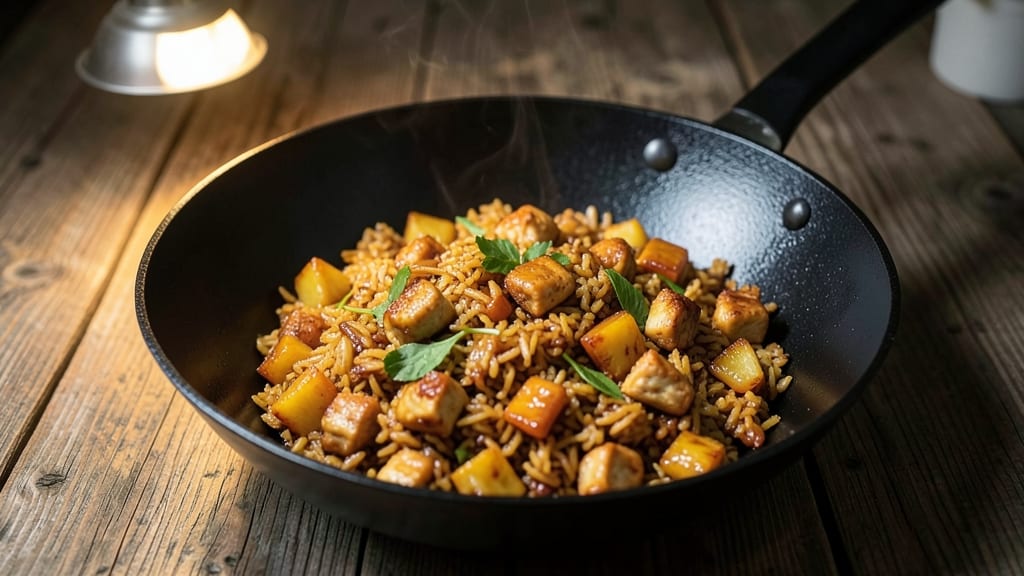
This Thai-inspired chicken pineapple fried rice delivers restaurant-quality wok magic in just 20 minutes—no shortcuts, just bold flavors. The secret lies in balancing sweet pineapple, savory chicken, and aromatic Thai spices like fish sauce and chili, all tossed with perfectly cooked jasmine rice.
I developed this recipe after years of perfecting stir-fry techniques, ensuring every bite delivers that perfect harmony of textures and tastes.
The foundation starts with high-heat stir-frying to keep the rice separate and slightly crispy, while the chicken stays juicy and the pineapple caramelizes just enough to add natural sweetness.
Traditional Thai flavors—fish sauce, coconut milk, and fresh herbs—elevate this beyond basic fried rice, creating a dish that tastes like it came straight from a Bangkok street stall. The key is timing: quick cooking preserves the vibrant colors and fresh ingredients.
What you'll end up with is a sweet-spicy, fragrant dish that's packed with protein and flavor, ready to serve with cucumber salad or egg rolls for a complete meal. The rice absorbs the aromatic sauce while maintaining its texture, and the pineapple adds a bright contrast to the savory elements.
This recipe is designed for weeknight dinners but feels special enough for guests—proof that great food doesn't require hours in the kitchen.
Once you try this version, you'll never go back to the basic fried rice you find in takeout menus. The balance of sweet, spicy, and umami makes it addictive, and the technique is simple enough for beginners but impressive enough for experienced cooks.
Let's get cooking—your taste buds will thank you.
Ingredients for chicken pineapple fried rice thai
Jasmine rice, sweet pineapple, and Thai-inspired flavors—this wok magic comes together faster than takeout.
| Ingredient | Amount | Notes |
|---|---|---|
| Jasmine Rice 🍚 | 3 cups | Uncooked, day-old preferred |
| Boneless Chicken Breast 🍗 | 1 ½ lb | Cut into 1-inch cubes |
| Fresh Pineapple 🍍 | 1 ½ cups | Diced, small cubes |
| Large Eggs 🥚 | 2 whole | Beaten for stir-fry |
| Yellow Onion 🧅 | 1 whole | Thinly sliced |
| Carrot 🥕 | 1 whole | Julienned or matchstick cut |
| Garlic Cloves 🧄 | 6 cloves | Minced |
| Fresh Thai Chili 🌶️ | 2 whole | Thinly sliced, adjust to taste |
| Fish Sauce 💧 | 2 tbsp | Red Boat preferred |
| Coconut Milk 🥥 | ¼ cup | Full-fat, canned |
| Soy Sauce 🍶 | 2 tbsp | Light or regular |
| Brown Sugar 🍯 | 1 tbsp | Packed |
| Vegetable Oil 🫒 | 3 tbsp | High smoke point |
| Fresh Cilantro 🌿 | ¼ cup | Chopped, for garnish |
| Lime 🍋 | 1 whole | Juiced, for serving |
The rice is non-negotiable—jasmine has that floral aroma that Thai fried rice demands. Cook it the night before and let it dry out slightly; it's a game-changer for texture. Chicken breast stays juicy when cut into even 1-inch cubes, so grab a ruler or eye it carefully. Pineapple should be fresh (no canned)—Hawaiian brand is my go-to, but any ripe pineapple works. The Thai chili is where the heat lives, so taste as you go. If you can't find fresh Thai chilies, sub with bird's eye chilies or even serrano peppers.
No fish sauce? Soy sauce plus a splash of Worcestershire gets you close, but you'll lose that authentic umami depth. Coconut milk adds richness—full-fat canned is best, but light works in a pinch. Brown sugar balances the acidity from the pineapple and lime. For the oil, vegetable or avocado oil handles the high heat without burning. The eggs? Beaten and scrambled quickly so they stay soft—don't overcook them! Fresh cilantro brightens everything, but dried works at half the amount if you're in a bind.
Rice keeps 3-4 days in the fridge, so make extra. Chicken stays good for 2 days prepped ahead—store cubed in the fridge until ready to stir-fry. The pineapple? Use within 2 days or freeze the diced pieces for up to 3 months. This dish reheats beautifully—just add a splash of water to the pan and toss everything together. Garnish with lime and cilantro right before serving, or it'll wilt faster than you can say 'street stall flavors.'
Why You'll Love This Recipe
- One-Pan Wonder: I swear by this—no dirty dishes, just one skillet for everything. Toss in the pre-cooked chicken, crispy pineapple chunks, and scrambled eggs, and you’re done. The jasmine rice soaks up all the sticky-sweet goodness without needing a separate pot.
- Sweet-Savory Magic: That balance? Chef’s kiss. The charred onions caramelize fast, the pineapple’s tang cuts through the richness of the chicken, and a splash of fish sauce ties it all together. It’s the kind of dish where every bite feels like a little vacation.
- Lunchbox Hero: Between us, this is my go-to for packed lunches—yes, even on a Tuesday night. The rice stays fluffy for days, the pineapple keeps its bite, and the eggs add that protein punch. Just reheat with a splash of water, and it’s like you made it fresh.
- Budget Bright Spot: Fresh pineapple might seem fancy, but a single chunk goes a long way in a big batch. Chicken breast is lean, eggs are cheap, and jasmine rice stretches forever. I’ve fed four people for under $10 with leftovers that taste just as good cold as they do hot.
Step-by-step instructions for chicken pineapple fried rice Thai recipe
Here's how to create restaurant-quality Thai-inspired fried rice with perfect texture and balanced sweet-spicy flavors.
Prepare and Parboil the Jasmine Rice
Use the 3 cups of jasmine rice as directed on the package, but with one critical adjustment: rinse it thoroughly until the water runs clear to remove excess starch. Cook the rice in a pot with water (use 1:1.5 rice-to-water ratio) until it's just barely al dente—about 80% cooked—then drain and spread it on a baking sheet to cool completely. This day-old texture is essential for proper fried rice.
While the rice cools, cut the 1.5 lb boneless chicken breast into 1-inch cubes and set aside. The rice should be completely cold before you begin frying—this prevents gummy, sticky results. If you're using freshly cooked rice, spread it on a tray and refrigerate for 30 minutes to speed up the process.
Stir-Fry the Protein and Vegetables
Heat 2 tablespoons of the 3 tablespoons vegetable oil in a wok or large skillet over medium-high heat until shimmering. Add the chicken cubes and cook for 4-5 minutes until golden brown and cooked through. Remove and set aside. In the same pan, add the remaining 1 tablespoon vegetable oil and stir-fry the 1 whole yellow onion and 1 whole carrot (julienned) for 3-4 minutes until softened but still vibrant.
Add the 6 cloves minced garlic and 2 whole sliced Thai chili, cooking for 30 seconds until fragrant. Here's the thing—don't let the garlic burn, or you'll get bitter flavors. Add the 1.5 cups diced fresh pineapple and cook for 2 minutes until heated through. The pineapple should remain bright and juicy, not mushy.
Scramble the Eggs and Build the Sauce Base
Push the vegetables to one side of the wok and add the remaining 1 tablespoon vegetable oil. Pour in the 2 whole beaten large eggs and scramble quickly over medium heat for 30 seconds until just set but still slightly moist. Stir this egg mixture into the vegetable-chicken combination.
Add the 2 tablespoons fish sauce and 2 tablespoons soy sauce, stirring well to coat everything. Pour in the 0.25 cup coconut milk and 1 tablespoon packed brown sugar, mixing until combined. Taste and adjust seasoning—you want a balance of sweet, salty, and slightly spicy. The sauce should be glossy but not watery.
Combine and Fry the Rice
Add the cold 3 cups jasmine rice to the wok and use tongs to gently break up any clumps while frying for 4-5 minutes over medium-high heat. The rice should develop a slight golden crust on the edges while remaining tender inside. If it starts to stick, add 1-2 tablespoons water to help release it from the pan.
Real talk: This is where most home cooks mess up. The key is high heat and constant motion—keep everything moving so nothing sticks or burns. The rice should be hot and fragrant with a beautiful golden hue when done. If it looks dry, add another splash of water and continue frying.
Finish and Garnish
Remove from heat and let the fried rice sit for 1 minute to allow flavors to meld. Stir in the 0.25 cup chopped fresh cilantro and juice of the 1 whole lime. The lime brightens all the flavors and cuts through the richness. Taste again and adjust seasoning if needed—sometimes another dash of fish sauce or a pinch of sugar helps balance the flavors.
Serve immediately while hot, garnished with additional lime wedges and cilantro if desired. Each bite should deliver perfect texture with sweet pineapple, savory chicken, and that signature Thai umami kick. The rice should be tender yet slightly crispy at the edges, with all the flavors perfectly balanced.
Pro Tips For Making Chicken Pineapple Fried Rice Thai
- USE COLD RICE: Day-old rice is your best friend here—it’s drier, less sticky, and fries up perfectly. If you’re making it fresh, spread the cooked jasmine rice on a tray and pop it in the fridge for 30 minutes. Trust me, the texture difference is night and day.
- CUT CHICKEN SMALL: Thin slices or small cubes cook faster and soak up flavor better than big hunks. I learned this the hard way—overcooked chicken turns rubbery, and undercooked bits are a nightmare. Aim for ½-inch pieces, and cook them until just done, not dry.
- DRAIN PINEAPPLE WELL: Fresh pineapple is juicy, and that juice turns your fried rice into soup. After chopping, toss the chunks in a colander and let them sit for 10 minutes to release excess moisture. Pat them dry if you’re really impatient—your rice will thank you.
- STIR-FRY IN BATCHES: Overcrowding the pan steams the rice instead of frying it. Cook the chicken and pineapple first, then remove them before adding the rice—this keeps everything crisp. If your pan is too full, you’ll end up with sad, soggy grains.
Pro cooking tips for great chicken pineapple fried rice thai
Wok Mastery Basics
Your wok is your secret weapon—it needs to be hot enough to sear but not so hot it burns. I use a 14-inch carbon steel wok on a gas burner set to high for maximum heat distribution.
If you're using a flat-bottomed pan, a non-stick skillet works, but the heat won't be as even. The key is getting that wok smoking hot before adding oil—swirl it around until you see a thin layer of oil shimmering. 🔥
Rice Texture Secrets
Day-old rice is non-negotiable for fried rice—it's the difference between gummy and perfect. Cook your jasmine rice 1:1.5 rice-to-water ratio until it's just al dente, then spread it on a tray to cool completely.
Pro tip: If you're short on time, spread freshly cooked rice on a tray and refrigerate for 30 minutes to dry it out faster. The rice should be cold and slightly dry before frying, or it'll turn into glue.
Protein Timing
Cook your chicken in batches if needed—overcrowding drops the pan temperature and steams instead of sears. I aim for golden brown in 4-5 minutes—use a meat thermometer to confirm it hits 165°F. Remove it immediately and set aside.
The chicken should stay juicy, not dry. For the eggs, scramble them quickly over medium heat—they should be just set but still slightly moist when you fold them into the mix.
Sauce Balance
The magic happens in the sauce: fish sauce for umami, soy sauce for saltiness, and coconut milk for richness. Taste as you go—start with the full amounts, then adjust. I often add an extra ½ teaspoon fish sauce if the dish needs more depth.
The brown sugar should caramelize slightly, balancing the pineapple's acidity. If your sauce tastes flat, a pinch of white pepper adds complexity without heat.
High-Heat Stir-Fry
Keep everything moving—this isn't the time for lazy stirring. Use a pair of heat-resistant tongs to break up rice clumps while keeping the heat high. If it starts sticking, add 1 tablespoon water at a time, but don't overdo it.
The rice should be hot, fragrant, and slightly crispy at the edges. I like to finish with a quick toss of lime juice right before serving—it cuts through the richness and brightens all the flavors. 💫
Garnish Like a Pro
Fresh herbs and citrus make all the difference. I finish with cilantro and a squeeze of lime, but don't skip the Thai basil if you can find it—it adds a floral note that's pure Thai street food magic.
For extra flair, add crushed peanuts or Thai basil leaves on top. Serve immediately while everything's hot, or the rice will lose its texture. Trust me, the first bite will make you want to make this every week.
Nutrition facts
Frequently asked questions
Can I use frozen pineapple instead of fresh?
Fresh pineapple gives the best texture and sweetness, but you can use frozen in a pinch. Thaw and drain it completely first, then pat dry with a paper towel to remove excess moisture. Too much liquid can make your fried rice soggy, so avoid overcrowding the pan. If using frozen, add it with the vegetables and cook for 3-4 minutes instead of 2 minutes to ensure it's fully heated through.
What's the best way to get crispy edges on the rice?
High heat and constant stirring are key! Use a 14-inch carbon steel wok or non-stick skillet on medium-high heat until smoking hot. Add 1 tablespoon oil and swirl to coat the pan before adding rice. Keep everything moving with tongs for 4-5 minutes, breaking up clumps. If it sticks, add 1 tablespoon water and keep stirring—this creates steam that helps crisp the edges while keeping the center tender.
How spicy should this be? Can I adjust the heat?
The recipe uses 2 Thai chilies for mild-medium heat, but you can easily adjust. For less heat, remove the seeds and membranes or use 1 chili. For extra spice, add 1 more chili or a pinch of red pepper flakes. Taste as you go—Thai food balances heat with sweetness, so the pineapple and brown sugar help mellow the burn. If it's too spicy, add a pinch of sugar or a squeeze of lime to balance.
Can I make this with leftover rice? What if it's not jasmine?
Yes! Use day-old rice (freshly cooked rice won't work—it'll be gummy). If you don't have jasmine, long-grain white rice is the next best option. Avoid sticky or short-grain rice like sushi rice, as it won't hold up to stir-frying. For extra flavor, add 1 teaspoon toasted sesame oil when frying the rice. Pro tip: If your rice is dry, sprinkle it with 1 tablespoon water before frying to restore moisture.
Why does my fried rice turn out mushy?
Mushy rice usually means one of three things: overcooked rice (use day-old or parboiled rice), too much liquid (add water sparingly), or low heat. Keep your pan on medium-high heat and stir constantly. If the rice starts sticking, add just enough water to loosen it—don't drown it. Also, avoid overcrowding the pan, which steams instead of sears. For best results, use 3 tablespoons oil total to create a proper sear.