
Sauces & Condiments
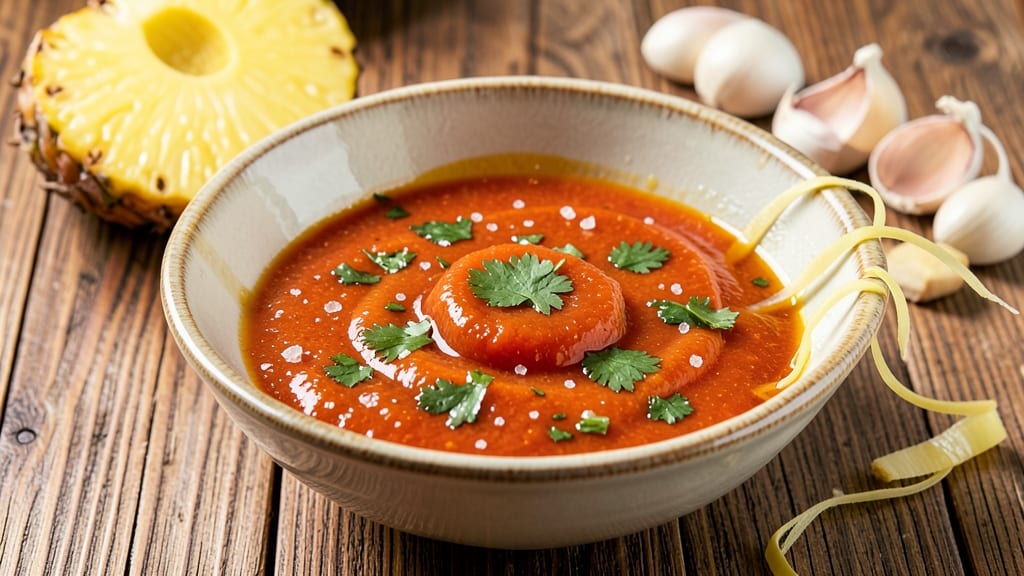
This Costco pineapple habanero sauce recipe delivers a perfect balance of sweet tropical fruit and fiery habanero heat—ideal for grilled meats, tacos, or dipping.
The secret lies in simmering fresh pineapple with habanero peppers until the flavors meld into a thick, glossy glaze that caramelizes just enough to deepen its complexity.
I developed this recipe after realizing store-bought versions lacked the vibrant freshness of homemade, so I focused on preserving the natural sweetness of the pineapple while letting the habanero shine through in controlled bursts of heat.
The process is straightforward: blend fresh pineapple, habanero peppers, vinegar, and sugar into a smooth puree, then simmer until thickened. A touch of garlic and ginger adds depth, while cumin rounds out the flavors with earthy warmth.
The sauce develops even more richness as it cools, making it perfect for storing and using throughout the week. What you’ll end up with is a versatile glaze that’s sweet enough to appeal to kids but spicy enough to satisfy heat lovers—just adjust the habanero quantity to your tolerance.
Use this sauce as a marinade for chicken or pork, a drizzle over grilled shrimp, or a bold dip for chips and veggies. The natural sweetness balances the habanero’s heat, creating a flavor profile that’s both complex and approachable.
For best results, let the sauce sit for at least 30 minutes before serving to allow the flavors to fully meld. It keeps well in the refrigerator for up to two weeks, making it a perfect make-ahead condiment for entertaining or meal prep.
One of the best aspects of this recipe is its adaptability. Reduce the habanero for a milder version, or add a splash of lime juice for extra brightness. The sauce also freezes beautifully, so you can make a big batch and have it ready whenever the craving strikes.
Whether you're grilling up a storm or adding heat to tacos, this pineapple habanero sauce will elevate your dishes with its perfect sweet-spicy punch.
Ingredients for costco pineapple habanero sauce
Sweet pineapple, fiery habanero, and tangy vinegar—this sauce is pure flavor explosion for grilling or dipping.
| Ingredient | Amount | Notes |
|---|---|---|
| Fresh Pineapple 🍍 | 2 cups | Juiced, seeds removed |
| Habanero Peppers 🌶️ | 2 whole | Seeds removed for mild heat |
| White Vinegar 💧 | ½ cup | For tangy balance |
| Granulated Sugar 🍚 | ½ cup | Adjust to taste |
| Garlic Cloves 🧄 | 3 cloves | Minced for aromatic depth |
| Fresh Ginger 🌿 | 1 tbsp | Grated, for zesty kick |
| Ground Cumin 🌶️ | 1 tsp | Earthy warmth |
| Extra-Virgin Olive Oil 🫒 | 2 tbsp | For glossy finish |
| Salt 🧂 | 1 tsp | Kosher or sea salt |
| Lime Juice 🍋 | 1 tbsp | Freshly squeezed |
The habanero is the star here, so pick the freshest, firmest peppers you can find—Mexican markets or Costco usually have the best selection. If you're sensitive to heat, remove all seeds and membranes, but leave them in for extra spice. Pineapple should be ripe but firm; Costco's fresh pineapple is perfect for this. For the sugar, I use organic cane sugar, but brown sugar adds a caramel note if you're feeling fancy. The garlic and ginger are non-negotiable—they're what turns this from a simple glaze to something truly special.
No habanero? Jalapeño or serrano peppers work in a pinch, but you'll need about twice as many for similar heat. Short on vinegar? Apple cider vinegar or lime juice keeps the tang. The sauce gets thicker as it cools, so if it's too runny after simmering, let it sit for 10 minutes before tasting. For extra richness, add a splash of coconut milk at the end—it balances the heat beautifully. And if you're making this for a crowd, double the recipe; it freezes like a dream.
This sauce keeps for 2 weeks in the fridge, but the flavors actually improve over time. Store it in a sealed jar, and the oils will rise to the top—just give it a quick stir before using. Freezes for 6 months if you want to make a big batch. I like to drizzle it over grilled chicken or use it as a dip for Costco's plantain chips. The heat mellows slightly after a day, so if you're serving kids, let it sit overnight before serving.
Why You'll Love This Recipe
- Costco’s Big Batch Magic: I swear by this sauce because it’s designed for the Costco-sized life—just toss chopped pineapple, diced habanero, and a splash of vinegar into a blender, then simmer. No fancy techniques, no stress, just 20 minutes of active time that feeds a crowd (or your freezer).
- Sweet Heat Balance: That first bite of pineapple’s tang cutting through the habanero’s fire? Chef’s kiss. The sugar caramelizes just enough to mellow the burn, while the garlic adds this deep, savory punch—like a tropical salsa had a soul.
- Taco Night to BBQ: Slather it on grilled chicken, drizzle it over fish tacos, or use it as a marinade for shrimp. Honestly, I’ve even dumped it into my oatmeal when I’m lazy—it’s that versatile. The vinegar keeps it shelf-stable for weeks, so it’s always ready.
- Zero Waste, Double Use: Between us, this sauce is my secret weapon for using up Costco’s bulk pineapple before it turns to mush. Make a double batch, freeze half, and thank me later when you’re not scrambling for dinner ideas. Plus, habaneros are cheap in bulk—this recipe stretches my grocery budget.
Step-by-step instructions for fiery-sweet pineapple habanero glaze
This vibrant sauce delivers a perfect balance of sweet, tangy, and fiery flavors—ideal for grilled meats and marinades.
Juice the Fresh Pineapple
Start by cutting the 2 cups of fresh pineapple into rough chunks, removing any seeds. I like to use a food processor or blender to extract the juice efficiently—simply blend the pineapple chunks until smooth, then strain through a fine-mesh sieve to remove any remaining pulp. You should end up with about 1½ cups of juice (the rest will be pulp). This step is crucial because the juice forms the base of your sauce, carrying all those sweet and tangy flavors.
Set the pineapple juice aside in a bowl. If you have leftover pulp, save it for smoothies or another recipe—it’s still packed with flavor! The pineapple’s natural acidity will help balance the heat from the habaneros, so don’t skip this step. If you’re short on time, you can use bottled pineapple juice, but fresh is always better for depth of flavor.
Blister and Blend the Habaneros
Heat a dry skillet over medium-high heat and add the 2 whole habanero peppers, seeds removed. Let them char slightly on all sides—this step deepens their flavor and reduces some of the raw heat. Once they’re blistered and blackened in spots (about 3-4 minutes), remove them from the skillet and let them cool slightly before handling.
Transfer the charred habaneros to a blender or food processor along with the 1½ cups of pineapple juice, 3 cloves of minced garlic, 1 tablespoon of grated fresh ginger, and 1 teaspoon of ground cumin. Blend until completely smooth, scraping down the sides as needed. The habaneros should dissolve into the mixture, creating a vibrant red-orange base. If the sauce looks too thick, add a splash of water to help it blend smoothly.
Simmer and Sweeten the Sauce
Pour the blended mixture into a saucepan and add the 0.5 cup of white vinegar, 0.5 cup of granulated sugar, 1 teaspoon of salt, and 1 tablespoon of lime juice. Stir well to combine, then bring the mixture to a gentle simmer over medium heat. Let it cook uncovered for 10-12 minutes, stirring occasionally, until it thickens slightly and the flavors meld together.
Taste the sauce as it simmers—this is where you can adjust the sweetness or heat to your preference. If it’s too sweet, add a splash more vinegar or lime juice. If it’s too spicy, stir in a pinch more sugar to balance the heat. The sauce should coat the back of a spoon with a glossy, syrupy consistency. If it’s not thick enough, simmer for another 2-3 minutes—the sugar will help it reduce naturally.
Finish with Olive Oil for Gloss
Once the sauce reaches your desired consistency, remove it from the heat and let it cool for 5 minutes. This resting period allows the flavors to settle and the sauce to thicken slightly. Stir in the 2 tablespoons of extra-virgin olive oil to give it a silky finish and enhance its glossy appearance.
Taste again and adjust seasoning if needed—this is your final chance to tweak the balance. The sauce should be sweet, tangy, and just fiery enough to complement grilled meats without overpowering them. Transfer the sauce to a clean jar or airtight container and let it cool completely before storing in the refrigerator for up to 2 weeks. This sauce is incredible on grilled chicken, pork, or even as a dipping sauce for fries!
Pro Tips For Making Costco Pineapple Habanero Sauce
- CHAR THE GARLIC FIRST: Roast your garlic cloves in the oven at 400°F (200°C) for 10–12 minutes until soft and caramelized—this adds depth that raw garlic can’t match. I used to skip this, but now I swear by it for that smoky sweetness that ties the pineapple and habanero together.
- PEEL HABANEROS AFTER TOASTING: Char the habaneros whole over a gas flame or under a broiler for 3–4 minutes first—the skin peels off like magic. I learned this the hard way after struggling with stubborn skins mid-blend, and now the sauce has a smoky edge that cuts through the sweetness.
- SIMMER LOW AND SLOW: Reduce the sauce on medium-low heat for at least 20 minutes—rushing it leaves a thin, vinegary mess. The longer it simmers, the richer the flavors meld, and the sugar caramelizes just enough to balance the heat.
- STRAIN THE PINEAPPLE JUICE: Blend the pineapple chunks, then strain out the fibrous pulp for a smoother sauce—it makes all the difference when pairing with grilled meats or tacos. I was skeptical until I tried it; the texture is silky, not chunky.
Troubleshooting this recipe
Too Thin or Runny
If your sauce isn’t thickening enough during simmering, don’t panic—this is easily fixed. The sugar in the recipe naturally helps reduce the liquid, but if it’s still too thin after 12 minutes, simmer uncovered for another 5 minutes while stirring occasionally.
For extra thickness, mash ½ a ripe banana into the sauce (trust me, it works!) or stir in 1 tablespoon of cornstarch mixed with 2 tablespoons water. Simmer for 2-3 minutes more until it reaches a glossy, syrupy consistency. 💡
Too Spicy or Harsh
The habanero’s heat can sometimes overpower the sweetness, especially if you didn’t remove the seeds. To balance it, stir in 1-2 tablespoons of honey or additional sugar while simmering. A splash of lime juice (another 1 tablespoon) also helps mellow the heat by adding brightness.
If the sauce is already cooled, blend in ¼ cup of plain yogurt or coconut milk to smooth out the spice. For a milder version next time, use 1 habanero instead of 2.
Sauce Separates or Oils Rise
This happens when the sauce cools and the natural oils separate from the liquid. Before using, give it a gentle stir to redistribute the oils, or blend it briefly with an immersion blender. To prevent separation, let the sauce cool to room temperature before refrigerating—never store it while hot.
If it’s already separated, add 1 teaspoon of xanthan gum or a pinch of salt to help emulsify it. For future batches, simmer the sauce longer to encourage a thicker, more stable consistency. ✨
Flavor Too One-Dimensional
If your sauce tastes flat or lacks depth, it might need more aromatic layers. Boost the flavor by adding ½ teaspoon of smoked paprika or a pinch of cinnamon while simmering.
A splash of soy sauce (just 1 teaspoon) adds umami, while 1 teaspoon of fish sauce deepens the complexity. For a tropical twist, blend in ½ cup of mango puree for extra fruitiness. Taste as you go—small adjustments make a big difference!
Sauce Turns Cloudy or Muddled
Cloudiness often means the sauce didn’t simmer long enough or the ingredients weren’t blended smoothly. Strain the sauce through a fine-mesh sieve to remove any pulp or sediment, then return it to the pan and simmer for another 5 minutes.
For a clearer finish, blend the sauce again after simmering. If the issue persists, the problem might be with the pineapple juice—opt for fresh, strain it well, or use bottled pineapple juice next time for a cleaner base. 🌟
Heat Level Inconsistent
Habanero peppers vary in heat, so if your sauce’s spice level is unpredictable, standardize your process. Always use 2 whole habaneros (seeds removed) for consistency, and blister them before blending to mellow the heat slightly. For a more controlled spice, substitute 1 habanero + 1 serrano pepper.
If you’re serving a crowd with varying heat tolerances, prepare two batches—one with seeds removed and one with seeds included. Label them clearly to avoid surprises! 🌶️
Nutrition facts
Frequently asked questions
Can I substitute bottled pineapple juice instead of fresh?
Yes, but fresh pineapple gives the best flavor and texture. If using bottled juice, choose 100% pure pineapple with no added sugars. For extra depth, add 1 tablespoon of lime juice and ½ teaspoon of ground ginger to compensate for the lack of freshness. The sauce will still be delicious, though slightly less vibrant.
How do I adjust the heat level for kids or sensitive eaters?
Reduce the habanero to just 1 pepper (seeds removed) or swap for 1 serrano pepper for milder heat. For extra safety, make a separate batch with no habaneros and add a pinch of smoked paprika for depth. Always taste as you simmer—you can add more sugar or vinegar to balance any lingering spice.
What's the best way to store leftover sauce?
Transfer to an airtight container and store in the fridge for up to 2 weeks. The flavors actually improve over time! For longer storage, freeze in ice cube trays for 6 months. Thaw overnight in the fridge—never microwave, as it can break down the texture. Stir before using, as oils may separate.
Can I use this sauce as a marinade?
This sauce makes an excellent marinade for chicken, pork, or shrimp. For best results, marinate for 2-4 hours (not overnight) to prevent over-softening. Use ¼ cup of sauce per pound of meat, then grill or broil. The natural sugars caramelize beautifully, creating a delicious crust.
Why does my sauce look cloudy after simmering?
Cloudiness usually means the sauce needs more simmering time or wasn't blended thoroughly. Strain through a fine-mesh sieve to remove any pulp, then simmer uncovered for another 5-10 minutes until clear. For a smoother finish, blend again after simmering. Using fresh, strained pineapple juice helps prevent this issue.