
Sauces & Condiments
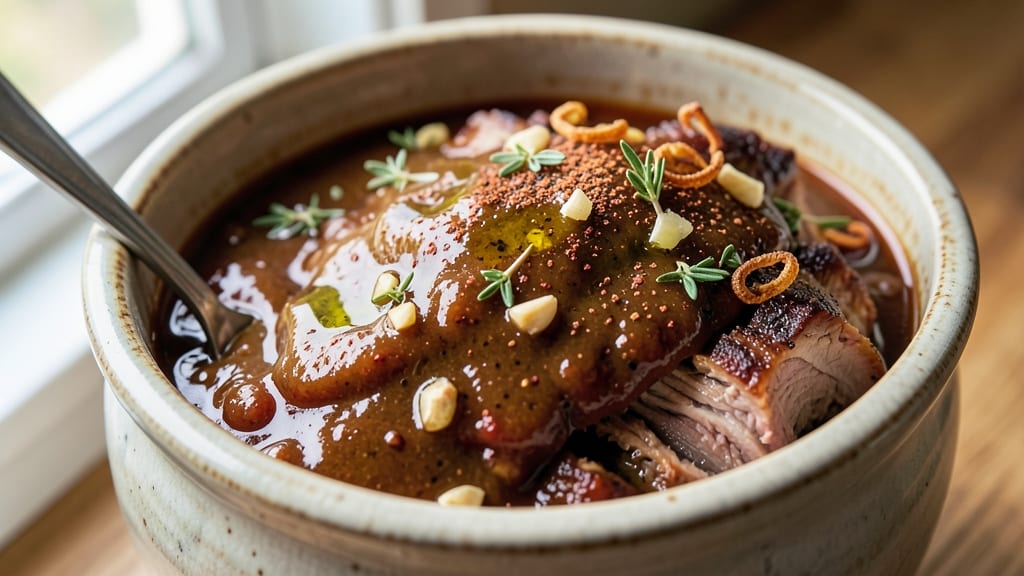
This North Carolina apple cider vinegar BBQ sauce delivers the smoky-sweet tang that defines Eastern Carolina's iconic pitmaster style. 🔥 The vinegar's bright acidity cuts through richness while caramelizing beautifully on grilled meats, creating that signature glossy bark.
I developed this recipe after years of studying how Carolina pitmasters balance vinegar's sharpness with just enough sweetness to make it irresistible.
The secret lies in the three-stage reduction—starting with a simple tomato base, then building layers of flavor through slow simmering and finishing with apple cider vinegar.
Unlike commercial sauces, this version keeps its vinegar-forward profile while developing deep, caramelized notes that cling to ribs, pulled pork, or even grilled vegetables. The spices are balanced but bold, with just enough heat to complement without overpowering.
What you'll end up with is a versatile sauce that's perfect for grilling, smoking, or even drizzling over sandwiches. It stores beautifully in the fridge for up to two weeks, allowing the flavors to deepen over time.
The tangy-sweet balance makes it equally at home on slow-cooked pork shoulders or quick weeknight burgers.
Ready in just 45 minutes with simple ingredients, this sauce transforms ordinary meals into something special. The key is patience—letting it reduce properly creates that perfect consistency that's neither too thin nor too thick. Let's make it!
Ingredients for north carolina apple cider vinegar bbq sauce
Nine essential ingredients transform into Carolina's iconic tangy-sweet BBQ sauce.
| Ingredient | Amount | Notes |
|---|---|---|
| Apple Cider Vinegar 🍏 | ½ cup | Raw, unfiltered preferred |
| Tomato Paste 🍅 | ½ cup | Squeeze tube or canned |
| Brown Sugar 🍚 | ¾ cup | Light or dark variety |
| Yellow Onion 🧅 | 1 whole | Medium size, finely chopped |
| Garlic Cloves 🧄 | 4 cloves | Fresh, minced |
| Smoked Paprika 🌶️ | 2 tbsp | High-quality for smoky depth |
| Ground Black Pepper 🌶️ | 1 tsp | Freshly ground preferred |
| Ground Cumin 🌿 | 1 tsp | Toasted for richer flavor |
| Kosher Salt 🧂 | 1 ½ tsp | Diamond Crystal preferred |
| Extra-Virgin Olive Oil 🫒 | 2 tbsp | For finishing, high quality |
The apple cider vinegar is non-negotiable here—Bragg or Texas Pete are my go-tos, but any raw, unfiltered variety works. For the tomato paste, squeeze tubes from Trader Joe's eliminate waste and keep perfectly for months. The brown sugar should be packed, not scooped—Domino is reliable, but local mills often have better quality. Chop the onion and garlic finely; food processor pulse saves time without turning them into paste. Smoked paprika makes all the difference—Penzeys or McCormick Gourmet deliver that authentic Carolina smokiness.
No apple cider vinegar? White vinegar with 1 tbsp lemon juice mimics the acidity, though it lacks depth. Substitute tomato paste with crushed tomatoes at half the amount, but you'll lose that concentrated sweetness. Running low on smoked paprika? Liquid smoke at 1/2 tsp adds smokiness, though it's not identical. The olive oil matters for finishing—California avocado oil has a neutral profile that won't compete with the sauce's flavors. For a quicker version, pre-minced garlic works, but fresh is always superior. The spices should be toasted in a dry pan for 30 seconds before adding to deepen their aroma.
This sauce thickens as it cools, so stir before each use. Store in a sealed jar in the fridge for up to 2 weeks, or freeze for 6 months in ice cube trays for single-serving portions. The flavors actually improve after 24 hours—patience pays off. For grilling, use a pastry brush to apply a thin layer; for smoking, reduce by 25% longer to achieve that perfect consistency. The sauce doubles easily, so make a batch and give some away—it disappears fast.
Why You'll Love This Recipe
- Pantry Magic: I swear by this sauce because it uses what’s already in my cupboard—no fancy shopping trips. Just vinegar, tomato paste, and a splash of brown sugar that actually works with the tangy bite.
- Sweet-Tangy Balance: That apple cider vinegar cuts through the richness while the caramelized onion and garlic make it sing. Honestly, it’s the kind of flavor that sticks with you—like a hug in sauce form.
- Weeknight Hero: Slather it on pulled pork for dinner, toss it with roasted veggies for lunch, or even drizzle it over fries. Between us, it’s my go-to when I’m too tired to think past “make it taste good.”
- Lasts All Week: A batch keeps in the fridge for days, and it only gets better as the flavors meld. I’ll be real: I’ve had this sauce survive three meals and still taste spot-on. Budget-friendly? Absolutely.
Step-by-step instructions for North Carolina apple cider vinegar BBQ sauce
Here's how to craft a balanced sauce where sweetness, tang, and smokiness marry perfectly.
🍳 Step 1: Sauté Aromatics Until Deeply Fragrant
Heat the 2 tablespoons extra-virgin olive oil in a medium saucepan over medium heat. Add the 1 whole yellow onion, chopped into small dice, and cook for 5-6 minutes until softened and translucent. Here's the thing—don't rush this step. You want the onions to caramelize just slightly at the edges, developing a deeper flavor that carries through the entire sauce.
Add the 4 cloves garlic cloves, minced, and cook for another 30 seconds until fragrant. That garlic should sizzle gently, not burn—watch it like a hawk. Burnt garlic adds bitterness that ruins the sauce's balance. Remove the pan from heat temporarily while you prepare the remaining ingredients, but keep the aromatics warm.
🍳 Step 2: Build the Sauce Base with Tomato and Vinegar
Return the pan to medium heat and stir in the 0.5 cup tomato paste, breaking up any lumps with a wooden spoon. Cook for 3-4 minutes until the paste darkens slightly and loses its raw flavor. This step develops the sauce's rich, concentrated tomato foundation.
Pour in the 0.5 cup apple cider vinegar and the 0.75 cup brown sugar, stirring constantly. The vinegar will bubble vigorously—this is normal. Let the mixture simmer for 5 minutes until the sugar begins to dissolve and the sauce starts to thicken. You're looking for a syrupy consistency here, not a watery one. If it reduces too quickly, add 1-2 tablespoons water to maintain balance.
🥘 Step 3: Season and Simmer to Perfect Consistency
Add the 2 tablespoons smoked paprika, 1 teaspoon ground black pepper, 1 teaspoon ground cumin, and 1.5 teaspoons kosher salt. Stir vigorously to distribute the spices evenly. The sauce should smell complex—smoky, sweet, and tangy all at once. Return the heat to medium-low and let it simmer uncovered for 15-20 minutes, stirring occasionally.
This simmering time is critical. You want the sauce to thicken to a glossy, coatable consistency—think of it like thick honey. Taste as you go: the acidity should cut through the sweetness, and the smokiness should linger. If it's too thin, simmer longer; if too thick, thin with 1 tablespoon water at a time. The final yield should be about 1.5 cups of sauce, perfect for basting or brushing.
⏰ Step 4: Finish and Rest for Maximum Flavor
Remove the sauce from heat and let it cool slightly—about 5 minutes. This resting period allows the flavors to meld completely. The sauce will thicken further as it cools, so don't be alarmed if it looks too thick immediately. For a silky finish, strain it through a fine-mesh sieve to remove any onion bits if you prefer a smoother texture.
Transfer to a clean jar or container. The sauce will keep in the refrigerator for up to 2 weeks, but its flavor actually improves over time. For best results, let it sit at room temperature for 30 minutes before using—this allows the flavors to fully develop. The perfect North Carolina sauce should caramelize beautifully on the grill, creating that signature glossy bark while maintaining its tangy backbone.
Pro Tips For Making North Carolina Apple Cider Vinegar Bbq Sauce
- Simmer Slow and Steady: I used to rush the sauce, thinking more heat meant faster flavor, but that just burns the tomato paste and makes it bitter. Keep it at a gentle boil—low enough that you can see tiny bubbles breaking the surface but not a full-on roil—and let it cook for at least 20 minutes. The longer it simmers, the deeper the tang and sweetness blend.
- Char the Onion, Don’t Just Sauté: I learned this the hard way—soft, translucent onions make the sauce taste flat. Get that onion dark brown, almost black in spots, with a little crisp at the edges. That caramelized bitterness is what balances the sweetness later. Use medium-high heat and leave it alone—crowding the pan steams instead of chars.
- Balance the Vinegar Early: Apple cider vinegar is strong, and if you add it all at once, the sauce can taste harsh. Start by whisking in half the vinegar first, then taste. Let it cook for 5 minutes before adding the rest—this lets the acid mellow out and marry with the sugar. Adjust as you go; you can always add more, but you can’t take it out.
- Use Real Garlic, Not Powder: Fresh garlic cloves roasted in the sauce (peeled after cooking) add a depth that garlic powder can’t touch. Toss 3-4 whole cloves in the pot with the onions and let them soften—no need to mince. When they’re golden and fragrant, crush them right in the pot. That’s the difference between good sauce and great sauce.
Make-ahead tips for this dish
Batch Prep Essentials
Make a double batch at once—this sauce freezes beautifully in quart-sized mason jars. I use Ball canning jars because they seal airtight and stack neatly in the freezer. Label each jar with the date and "NC Apple Cider BBQ Sauce" so you never forget what's inside.
The sauce thickens when frozen, so leave 1 inch of headspace to prevent cracking. 🧊
Freezer Storage Hacks
For single-serving portions, freeze in ice cube trays—each cube equals about 1 tablespoon of sauce. Once frozen, transfer cubes to a labeled freezer bag. This method is perfect for quick grilling sessions or when you only need a little sauce.
The sauce maintains its tangy-sweet balance even after 6 months in the freezer, though I recommend using it within 3 months for peak flavor.
Fridge Longevity
Store your sauce in the fridge for up to 2 weeks in an airtight container. I prefer glass jars because they don’t absorb odors like plastic. The sauce will thicken as it sits, so give it a good stir before each use.
If it separates slightly, just reheat gently on the stove and stir until smooth. The flavors actually deepen over time, so the second week’s batch often tastes even better than the first. 💛
Reheating for Grilling
For grilling, reheat the sauce in a small saucepan over low heat until warm—about 3-5 minutes. Avoid microwaving as it can make the sauce too thin. If the sauce thickens too much while reheating, add 1 teaspoon water at a time until it reaches a glossy, coatable consistency.
The ideal grilling sauce should glaze effortlessly without dripping off the meat. I like to brush it on in two thin layers, letting it caramelize between applications. ✨
Sauce Stability Tips
If your sauce separates after refrigeration, don’t toss it—just whisk vigorously to recombine. The acidity in the apple cider vinegar can sometimes cause this, but it’s easily fixed. For extra stability, add 1/2 teaspoon xanthan gum to the sauce before storing.
This thickener keeps the sauce smooth and prevents separation, especially in hot climates. The gum dissolves completely and won’t alter the flavor. 💡
Gifting and Sharing
This sauce makes an incredible homemade gift—just package it in small mason jars tied with twine and a handwritten label. I’ve given jars to neighbors, friends, and even judges at local BBQ competitions.
The sauce’s tangy-sweet profile pairs perfectly with pulled pork sandwiches, grilled chicken, or even as a marinade for ribs. When sharing, include a note about how to reheat and use it for best results. Your neighbors will thank you! 🎁
Nutrition facts
Frequently asked questions
Can I substitute white vinegar for apple cider vinegar in this recipe?
You can use white vinegar in a pinch, but the flavor will be noticeably different. Apple cider vinegar adds depth and a subtle fruity note that white vinegar lacks. For best results, use raw, unfiltered apple cider vinegar like Bragg or Texas Pete—it makes all the difference in that authentic Carolina tang.
How do I adjust the sweetness level if I prefer it less sugary?
Start by reducing the brown sugar to ½ cup and taste after simmering. If still too sweet, add 1-2 tablespoons more apple cider vinegar to balance it. The vinegar's acidity will naturally cut through sweetness, so don't be afraid to increase it gradually. For a smoky twist, add an extra ½ teaspoon smoked paprika.
What's the best way to use this sauce on ribs?
For ribs, brush on a thin layer during the last 30-45 minutes of cooking, then glaze with another coat just before serving. The sauce will caramelize beautifully over the heat, creating that signature glossy bark. For pulled pork, mix 1-2 tablespoons into the meat after pulling to keep it moist without overwhelming the flavor.
Why did my sauce turn out too thin?
Sauce consistency depends on simmering time—if it's too thin, return it to low heat and simmer uncovered for 10-15 more minutes, stirring often. For a quick fix, mix 1 teaspoon cornstarch with 1 tablespoon cold water, stir into the sauce, and simmer until thickened. The ideal texture should coat the back of a spoon without dripping.
Can I make this sauce without a stove?
Yes! Use a slow cooker on low for 2-3 hours or a microwave-safe bowl (cover with plastic wrap and vent it) for 10-15 minutes, stirring every 3-4 minutes. The microwave method works best for small batches. Just monitor closely to prevent boiling over—this sauce needs gentle, controlled heat to develop properly.