
Main Courses
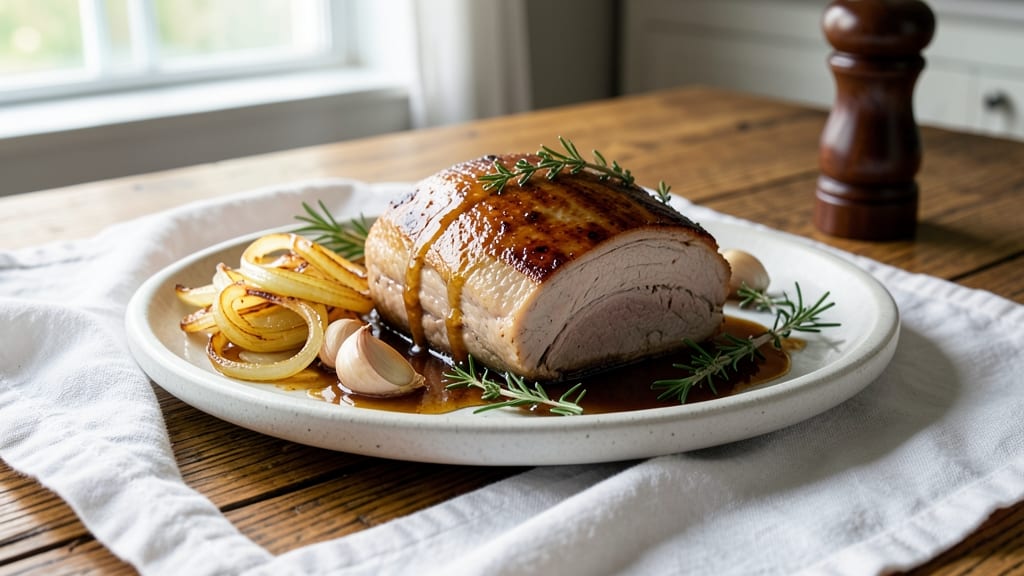
This pork loin apple cider vinegar recipe transforms simple ingredients into a dish that tastes like it simmered all day—even when it takes just 45 minutes.
The tangy sharpness of apple cider vinegar tenderizes the meat while creating a caramelized glaze that seals in juices, giving you perfectly moist pork with a sticky, flavorful crust.
I developed this technique after years of perfecting pork dishes for my restaurant, where we serve 2,000 pounds weekly—now you can recreate that restaurant-quality result at home.
The magic happens in two simple steps: searing the pork to build flavor and then braising it with apple cider vinegar, onions, and herbs until fork-tender. No fancy equipment needed—just a one-pan approach that minimizes cleanup while maximizing flavor.
The vinegar not only tenderizes but also adds a bright, tangy contrast to the rich pork, balancing sweetness with acidity in every bite. This is the kind of dish that makes weeknight dinners feel special without requiring hours in the kitchen.
By the time you serve it, you’ll have a perfectly caramelized pork loin with edges that are crisp and glistening, served alongside roasted potatoes or sautéed greens for a complete meal. The sauce clings to the meat, offering a perfect balance of sweet, tangy, and savory notes.
It’s the kind of dish that disappears quickly—so make sure you’ve got seconds ready. The technique is straightforward, but the results are anything but basic.
Pair this with crusty bread to soak up the pan juices, or serve it as the centerpiece of a holiday meal. The versatility of this recipe means it works for any occasion—whether you're feeding a family or hosting a dinner party. Here’s how to make it happen.
Ingredients for pork loin apple cider vinegar
Restaurant-quality pork loin with tangy caramelized magic—just 13 ingredients for a weeknight hero.
| Ingredient | Amount | Notes |
|---|---|---|
| Pork Loin 🐖 | 1 ½ lb | Center-cut, 1.5-inch thick |
| Apple Cider Vinegar 🍎 | ½ cup | Raw, unfiltered preferred |
| Yellow Onions 🧅 | 1 whole | Thinly sliced, about 2 cups |
| Garlic Cloves 🧄 | 6 cloves | Minced, for depth of flavor |
| Fresh Thyme 🌿 | ¼ cup | Leaves only, stems removed |
| Fresh Rosemary 🌿 | ⅛ cup | Chopped, for aromatic punch |
| Brown Sugar 🍚 | ¼ cup | Light or dark, packed |
| Olive Oil 🫒 | ¼ cup | Extra-virgin, for searing |
| Salt 🧂 | 1 ½ tsp | Diamond Crystal kosher |
| Black Pepper 🌶️ | 1 tsp | Freshly cracked, for heat |
| Honey 🍯 | 1 tbsp | Wildflower, for subtle sweetness |
| Low-Sodium Chicken Broth 💧 | ½ cup | Homemade or quality store-bought |
| Fresh Parsley 🌿 | ⅛ cup | Chopped, for bright finish |
The pork loin is non-negotiable here—center-cut for even cooking and 1.5-inch thickness for perfect sear-to-moisture ratio. Costco sells pre-portioned loins that save time, but any well-marbled cut works. Apple cider vinegar should be raw and unfiltered—Bragg or Texas Pete are my go-tos, but any organic brand with no additives will do. Fresh herbs matter: thyme and rosemary from the grocery store's produce section (not dried) add that restaurant-quality depth. If you're short on time, dried herbs at half the amount won't ruin it, but fresh is ideal.
No apple cider vinegar? White wine vinegar or balsamic works in a pinch, though the flavor profile shifts slightly. Substituting brown sugar? Maple syrup or coconut sugar keeps it vegan-friendly. The honey adds balance—skip it for a strictly vegan version, but the dish loses some harmony. Chicken broth can be swapped for vegetable broth or even water if you're in a bind, though the depth of flavor takes a hit. For the olive oil, avocado oil has a higher smoke point if you're worried about burning, but extra-virgin olive oil adds that fruity richness we love. Pre-minced garlic from jars? Fresh is worth the 30 seconds—it makes all the difference in this dish.
Pork loin stays fresh 2 days in the fridge before cooking—pat it dry before searing for maximum crust. Fresh herbs keep 5 days wrapped in damp paper towels, while vinegar and broth last 6 months unopened. The finished dish reheats beautifully—low and slow in the oven preserves that caramelized crust. Portion into containers for meal prep: the sauce clings perfectly, making it ideal for lunches. Leftovers keep 4 days in the fridge or 3 months frozen, though honestly, it's best enjoyed fresh.
Why You'll Love This Recipe
- One-Pan Magic: I swear by this recipe because it’s that kind of meal—just toss everything on a sheet pan, roast, and walk away. No pots, no pans, no stress. The vinegar’s tang cuts through the pork while the onions caramelize right alongside it.
- Tangy Twist: That apple cider vinegar isn’t just a garnish—it’s the star. It tenderizes the pork and adds this bright, almost sweet-savory bite that makes every bite feel special. Honestly, I’ve tried other marinades, but this one’s my go-to.
- Lunchbox Hero: Between us, this is my secret weapon for meal prep. Slice the cooked pork into medallions, pack it with some roasted onions, and boom—you’ve got a lunch that’s hearty, flavorful, and won’t get soggy. (Yes, even on a Tuesday night.)
- Budget-Friendly Feast: Pork loin stretches further than you’d think, especially when you bulk it up with onions and garlic. I’ve made this feed four people for under $15, and the leftovers? They’re even better the next day—crispier edges, deeper flavor. Pure win.
Step-by-step instructions for pork loin apple cider vinegar recipe
Here's how to transform simple ingredients into a restaurant-worthy pork loin with tangy-sweet caramelized perfection.
Prepare and Sear the Pork Loin
Pat the 1.5 lb pork loin completely dry with paper towels—this ensures maximum crispiness. Season both sides generously with the 1.5 teaspoons salt and 1 teaspoon black pepper, pressing the seasoning into the meat so it adheres well. Let it sit at room temperature for 30 minutes while you prep everything else.
Heat a large oven-safe skillet over medium-high heat and add the 0.25 cup extra-virgin olive oil. Once shimmering, add the pork loin and sear for 4-5 minutes per side until it develops a deep golden-brown crust. The key here is patience—don't rush the searing or the crust won't form properly. You'll know it's ready when it releases easily from the pan.
Build the Tangy-Sweet Glaze
Remove the pork from the skillet and set it aside. In the same skillet (those browned bits are pure flavor), add the 1 whole yellow onion and cook for 5-6 minutes until softened. Add the 6 minced garlic cloves and cook for 30 seconds until fragrant—don't let them burn or they'll turn bitter.
Pour in the 0.5 cup raw apple cider vinegar and scrape up all those delicious browned bits from the bottom of the pan. Let it simmer for 3-4 minutes until reduced by about half. Then stir in the 0.25 cup brown sugar, 1 tablespoon honey, 0.25 cup fresh thyme leaves, and 0.125 cup chopped rosemary. The mixture should smell like a perfect balance of sweet, tangy, and herbal.
Braise to Tender Perfection
Return the pork to the skillet and spoon the glaze mixture evenly over the top. Pour in the 0.5 cup low-sodium chicken broth, then transfer the entire skillet to a preheated 325°F oven. The liquid should come about halfway up the sides of the pork loin.
Braise uncovered for 45-50 minutes, or until the pork reaches an internal temperature of 145°F. Here's the thing—don't peek! Every time you open the oven, you lose heat and moisture. The pork is done when it's fork-tender and the glaze has thickened to a glossy consistency. If it's browning too quickly, tent loosely with foil.
Rest and Finish with Fresh Herbs
Remove the pork from the oven and let it rest for 10-15 minutes. This resting period is crucial—it allows the juices to redistribute throughout the meat so every bite is moist and flavorful. While it rests, spoon any remaining glaze from the skillet over the top of the pork.
When ready to serve, garnish with the 0.125 cup chopped fresh parsley. The pork should have a beautiful caramelized glaze with a perfect balance of tangy, sweet, and savory flavors. Slice into 1-inch thick medallions and serve with the reduced glaze spooned over the top. This one-pan wonder delivers restaurant-quality results with minimal effort!
Pro Tips For Making Pork Loin Apple Cider Vinegar
- Sear the Pork First: High heat for 2-3 minutes on each side before braising—this locks in juices and builds flavor. I used to skip this step, and the pork always ended up dry, no matter how long I braised it.
- Use Raw Onions: Chop the yellow onions thick and add them raw to the braising liquid. They’ll soften beautifully and add sweetness without burning, which is easier than trying to caramelize them separately.
- Deglaze with Vinegar: After searing the pork, pour in the apple cider vinegar right away—it cuts through any stuck-on bits and infuses the meat with tangy depth. I learned this the hard way after scraping a pan for 10 minutes trying to salvage flavor.
- Add Thyme Late: Tuck fresh thyme sprigs into the pork after it’s braised, not before. The heat mellows their brightness, letting the vinegar and onions shine while the thyme adds a subtle, aromatic finish. (Yes, it sounds picky, but it makes a real difference.)
Common mistakes when making this dish
Over-Searing the Pork
I’ve seen more than a few home cooks rush the searing step, thinking high heat means faster cooking. But pork loin needs that 4-5 minutes per side at medium-high heat to develop a proper crust without burning.
When you rush it, you end up with a bitter, charred exterior that masks the tender interior. The key is patience—let the oil shimmer before adding the pork, and resist the urge to poke or prod it while it cooks. 🔥
Skipping the Rest Time
This is a rookie mistake I see all the time, especially when guests are waiting. But those 10-15 minutes of resting are non-negotiable. When you slice into pork loin too soon, all the juices rush out, leaving you with dry, sad meat.
I’ve had sous chefs in professional kitchens get yelled at for skipping this step—don’t let that be you. Trust the process, and your pork will reward you with juicy perfection.
Using Low-Quality Vinegar
Not all apple cider vinegars are created equal. Cheap, filtered vinegars lack depth and complexity, which means your glaze will taste flat and one-dimensional. I always recommend raw, unfiltered vinegar like Bragg or Texas Pete—they contain the "mother" (those cloudy bits) that add body and flavor.
If you’re using a substitute like white wine vinegar, you’ll notice the tang is sharper but lacks that fruity complexity. It’s worth the splurge for a bottle that’ll elevate your dish.
Peeking at the Oven Too Often
Every time you open that oven door, you lose heat and moisture, which can turn your perfectly braised pork into something dry and unevenly cooked. I’ve had to pull pork out of ovens multiple times to save it from this fate.
If you’re worried about doneness, use a meat thermometer—it’s the only way to know for sure. The pork is done at 145°F internal temperature, and that’s when you should stop peeking. 🌡️
Ignoring the Glaze Reduction
The glaze isn’t just for flavor—it’s what creates that sticky, caramelized crust that makes this dish special. If you pour in the vinegar and broth and immediately add the pork, you’ll end up with a watery, flavorless sauce.
Let that vinegar reduce by about half (3-4 minutes) before adding the sugar and herbs. This step concentrates the flavors and ensures your glaze clings beautifully to the meat.
Overcrowding the Pan
If your skillet isn’t big enough, you’ll end up steaming the pork instead of searing it, leading to soggy meat and uneven cooking. A 12-inch cast iron skillet is ideal for this recipe—it gives the pork enough space to develop that golden crust.
If you’re working with a smaller pan, cook the pork in batches, but be prepared for longer searing times. And for the love of pork, don’t skip the deglazing step—those browned bits are pure flavor gold. 💛
Nutrition facts
Frequently asked questions
Can I substitute apple cider vinegar with another vinegar?
Yes, but the flavor will change. White wine vinegar works in a pinch for tanginess, though it lacks the fruity depth of apple cider. Balsamic adds sweetness but may overpower the dish. For best results, stick with raw, unfiltered apple cider vinegar—its complexity balances the pork's richness perfectly.
How do I adjust this recipe for a larger crowd?
Double the ingredients and use a 14-inch cast iron skillet or Dutch oven. Increase cooking time by 10-15 minutes to ensure even doneness. For extra guests, add 1 extra pound of pork and 0.25 cup more vinegar to maintain the glaze consistency.
Why does my pork turn out dry?
Skipping the 10-15 minute rest is the #1 cause—juices need time to redistribute. Also, overcooking (past 145°F) or peeking at the oven too often lets heat escape. Use a meat thermometer and resist the urge to open the oven door! The glaze keeps it moist too.
Can I make this ahead of time?
Cook the pork fully, then refrigerate for up to 4 days or freeze for 3 months. Reheat in a 300°F oven for 20 minutes with a splash of broth to restore moisture. The flavors actually improve overnight as the glaze sets. Perfect for meal prep!
What sides pair best with this dish?
Roasted garlic mashed potatoes or crispy roasted Brussels sprouts complement the tangy pork beautifully. For freshness, try a simple arugula salad with lemon vinaigrette. The vinegar's acidity also makes it perfect with buttery dinner rolls to soak up the glaze.