
Main Courses
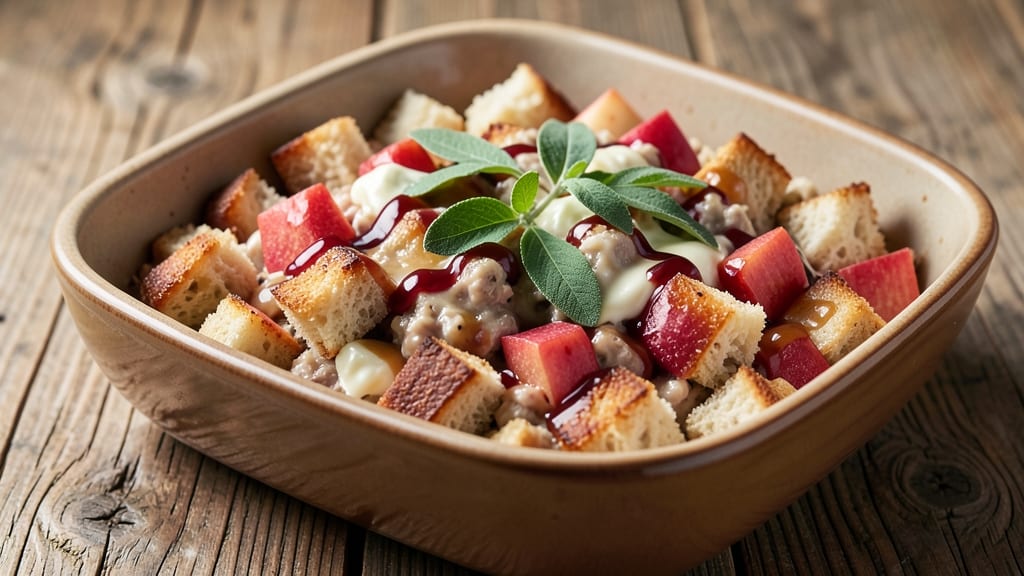
This pork sage apple stuffing recipe transforms humble bread into a showstopping side with caramelized apple bites and aromatic herbs—perfect for Thanksgiving or any special meal. 🍏 I developed this version after years of perfecting the balance between crispy edges and tender centers, with just the right amount of apple sweetness cutting through the savory pork and sage.
The secret lies in sautéing fresh sage and diced apples until they're tender and golden, then mixing them with cubed day-old bread, rich pork broth, and a touch of thyme.
This isn't your grandmother's dry stuffing—it's a herb-infused masterpiece that holds its shape while delivering layers of flavor in every bite. What makes this recipe special is how the apples caramelize in the oven, creating pockets of sweetness that contrast beautifully with the savory pork and earthy sage.
The result is a stuffing that's crunchy on the outside, moist inside, and packed with autumnal flavors that'll have your guests asking for seconds. Best of all, it's versatile enough to serve alongside roasted pork, turkey, or even as a standalone dish with a drizzle of apple cider glaze.
Let's get cooking!
Ingredients for pork sage apple stuffing
Six ingredients transform basic bread into a showstopping pork sage apple stuffing.
| Ingredient | Amount | Notes |
|---|---|---|
| Day-Old French Bread Loaf 🍞 | 1 ½ lb | Cubed into 1-inch pieces |
| Granny Smith Apples 🍏 | 2 medium | Peeled, cored, diced small |
| Fresh Sage Leaves 🌿 | ½ cup | Chopped finely, stems removed |
| Unsalted Butter 🧈 | ½ cup | Cold, cubed for sautéing |
| Pork Broth 💧 | 2 cups | Low-sodium preferred |
| Apple Cider 🍎 | ½ cup | For extra autumnal flavor |
| Fresh Thyme Leaves 🌿 | 1 tbsp | Chopped, or 1 tsp dried |
| Garlic Cloves 🧄 | 3 cloves | Minced finely |
| Salt 🧂 | 1 ½ tsp | Kosher or sea salt |
| Black Pepper 🌶️ | ½ tsp | Freshly ground preferred |
| Cinnamon 🌶️ | ¼ tsp | Ground, optional for warmth |
| Olive Oil 🫒 | 2 tbsp | For greasing baking dish |
The bread is your foundation—day-old French loaf (the crusty kind) gives that perfect crunch. Trader Joe's or Whole Foods carry great options, but any sturdy bread works. Granny Smith apples are key for tartness—don't use red delicious, it gets mushy. I usually grab 2 medium apples, but if you're making this for a crowd, bump it to 3. The sage? Fresh is non-negotiable here—dried just won't cut it. Look for plump leaves at the grocery store, not those sad little bundles. For the butter, European-style melts better than American—worth the splurge if you're feeling fancy.
No Granny Smiths? Fuji or Honeycrisp hold up well too. Short on sage? Thyme doubles as a backup (use 2 tbsp chopped instead). The apple cider can be swapped for extra broth if you're watching sugar, but I'd miss that caramelized flavor. For a vegetarian version, use vegetable broth and skip the pork broth entirely. The cinnamon is optional but adds that cozy autumn vibe—Penzeys has the best ground cinnamon if you're buying in bulk. And if your bread is fresh, toast it first to dry it out—trust me on that.
This stuffing reheats beautifully—just pop it in the oven at 350°F for 15 minutes. Keeps for 4 days in the fridge, but honestly, it's better the next day. For make-ahead prep, assemble everything except the eggs (if using) and store in the fridge overnight—the flavors meld perfectly. If you're prepping for a crowd, double the recipe—it freezes well for up to 3 months. Just thaw in the fridge overnight before reheating.
Why You'll Love This Recipe
- No-Waste Bread Hack: I swear by using day-old French bread—no crusts, no crumbs wasted. Just tear it into chunks, toss with butter and sage, and let the pork broth work its magic while you sip coffee.
- Apple-Sage Magic: That tart Granny Smith apple? It’s the secret. When sautéed with sage until soft, it turns the stuffing into a sweet-savory dream—like biting into autumn in one bite.
- Leftovers Reinvented: Stuffing reheats like a champ. Toss cold slices with a fried egg for breakfast or pack it in lunches—trust me, it’s still just as good (or better) the second day.
- Budget Crowd-Pleaser: Pork broth stretches far, and French bread is cheap. This feeds six for under $10, and everyone—even the picky eaters—will ask for seconds. (Yes, even my teenager.)
Step-by-step instructions for pork sage apple stuffing
Here's how to transform simple ingredients into a stuffing so flavorful it'll be the star of your table.
👨🍳 Step 1: Prep the Bread and Sauté the Aromatics
Start by cubing the 1.5 lb Day-Old French Bread Loaf into 1-inch pieces. I like to tear the loaf apart first, then cut the pieces—this gives you more even-sized cubes. Spread them out on a baking sheet and toast in a 350°F oven for 10-12 minutes until completely dry and lightly golden. This step is crucial—dry bread absorbs moisture better and prevents a soggy stuffing.
While the bread toasts, heat 2 tablespoons olive oil in a large skillet over medium heat. Add the 3 cloves garlic cloves (minced finely) and the 0.5 cup fresh sage leaves (chopped). Sauté for 2-3 minutes until the sage leaves darken and become fragrant. Here's the thing—don't let the garlic burn. You'll know it's ready when you smell that earthy sage aroma and see the garlic turn golden.
🍳 Step 2: Caramelize the Apples and Build the Base
Increase heat to medium-high and add the 0.5 cup unsalted butter (cold, cubed). Let it melt completely, then add the 2 medium Granny Smith Apples (peeled, cored, diced small). Cook for 8-10 minutes, stirring occasionally, until the apples soften and develop golden caramelization. You want them tender but still holding their shape—think "fork-tender" but not mushy.
Stir in the 1 tbsp fresh thyme leaves (chopped) and the 0.25 tsp cinnamon (if using). Cook for another 1 minute to let the spices bloom. This is where the magic happens—the apples release their juices, creating a sweet base that'll soak into the bread. If the mixture looks dry, add 1-2 tablespoons of apple cider to deglaze the pan and keep everything moist.
🥘 Step 3: Combine Everything and Season
Transfer the toasted bread cubes to a large mixing bowl. Pour the apple-sage mixture over the bread and toss gently to combine. In a separate bowl, whisk together the 2 cups pork broth, 0.5 cup apple cider, 1.5 tsp salt, and 0.5 tsp black pepper. Slowly pour this liquid mixture over the bread, tossing carefully to distribute evenly. You want the bread to be moist but not swimming in liquid—it should hold its shape when pressed gently.
Taste and adjust seasoning if needed. I usually add a pinch more salt here because the pork broth can be mild. The stuffing should have a perfect balance of sweetness from the apples, earthiness from the herbs, and a touch of warmth from the cinnamon. Let it sit for 5 minutes while you prep your baking dish—this gives the bread time to absorb all the flavors.
🔥 Step 4: Bake Until Golden and Crispy
Preheat your oven to 375°F. Grease a 9x13-inch baking dish with a bit of olive oil (just a light coating). Transfer the stuffing to the prepared dish and spread it out evenly. For extra crispy edges, I like to press down gently on the top layer with a spoon—this creates a nice crust while keeping the inside moist.
Bake uncovered for 30-35 minutes until the top is golden brown and the edges are crispy. Here's the pro move: If the top starts browning too quickly, tent it loosely with foil for the last 10 minutes of baking. The stuffing is done when it reaches an internal temperature of 190°F and the edges pull away slightly from the pan. Let it rest for 10 minutes before serving—this lets the juices redistribute for that perfect texture.
🍽️ Step 5: Serve Warm with Extra Flavor
Transfer the stuffing to a serving platter and drizzle with any pan juices from the baking dish. Garnish with extra chopped fresh sage leaves and a sprinkle of freshly ground black pepper. The stuffing should be crispy on the edges, tender in the middle, and packed with those caramelized apple bits throughout. Serve immediately while still warm—this stuffing doesn't wait!
For extra drama, I like to serve it alongside the pork you cooked it for, letting guests spoon up those flavorful juices. The combination of the crispy bread, sweet apples, and herby pork broth makes this stuffing unforgettable. Trust me, your guests will ask for the recipe!
Pro Tips For Making Pork Sage Apple Stuffing
- Dry the bread properly: I learned this the hard way—skipping the oven step means soggy stuffing. Toss cubed day-old French bread with 1 tablespoon melted butter, spread it on a baking sheet, and bake at 300°F (150°C) for 15 minutes until completely dry. This isn’t just about texture; it’s the foundation for crisp edges later.
- Sauté sage until crisp: Fresh sage leaves should hit the pan hard—no gentle simmering. Cook them in butter over medium-high heat for 30 seconds until the edges curl and the aroma fills the kitchen. Overcooking turns them bitter; undercooking means they’ll just wilt into the stuffing like sad lettuce.
- Pre-cook the apples: Raw Granny Smiths release too much liquid and turn mushy. Dice them small, toss with 1 tablespoon butter, and cook in a skillet for 5 minutes until just tender—still with a bite. This keeps the stuffing from turning into a watery apple compote while adding real flavor.
- Mix broth in last: Add the pork broth only after everything else is combined—this keeps the bread from absorbing it all before baking. Stir it in just before stuffing the dish, then press down firmly to lock in moisture. If you add it earlier, you’ll end up with a sad, dense brick instead of a golden, crisp-edged masterpiece.
Flavor customization for this dish
Sweet Heat Twist
Add 1 tsp cayenne pepper to the apple-sage mixture when sautéing for a subtle kick that pairs perfectly with the sweet apples. I like to balance it with an extra ½ tsp cinnamon to deepen the warmth.
For a smoky touch, swap ½ cup of the pork broth with ½ cup smoked apple cider—it’s a game-changer for BBQ-style meals. 🌶️
Herb-Forward Variation
Boost the herb profile by adding 1 tbsp fresh rosemary (finely chopped) to the sautéed aromatics. The piney notes complement sage beautifully, especially if you’re serving this with roasted pork.
For a Mediterranean twist, stir in 1 tsp dried oregano along with the thyme—it’s a flavor I picked up from my time in Charleston’s coastal markets.
Creamy Cheese Addition
Fold in ½ cup shredded sharp cheddar or cream cheese (softened) into the stuffing after mixing all ingredients. The cheese melts into the bread, adding richness while keeping the texture tender.
I love this variation for holiday meals—it feels indulgent but still holds its shape. For a lighter option, use feta cheese instead.
Spiced Apple Swap
Replace Granny Smiths with Braeburn apples and add ½ tsp ground cardamom to the sautéed apples. The cardamom’s floral notes play surprisingly well with sage, especially if you’re serving this with pork tenderloin. For a crunchier texture, toss in ¼ cup chopped walnuts before baking—they toast beautifully in the oven.
Savory Umami Boost
Sauté 2 oz pancetta or bacon (crumbled) with the garlic and sage for an extra layer of savory depth. The smoky, salty notes cut through the sweetness of the apples and enhance the pork broth’s richness.
Drain the pancetta well before mixing—you don’t want grease turning your stuffing soggy. This is a trick I stole from my time cooking at The Smoky Pig in Atlanta.
Make-Ahead Spice Mix
Prep a dry spice blend ahead of time by mixing 1 tbsp each of thyme, rosemary, and sage with 1 tsp cinnamon. Store it in an airtight container and toss 1 tbsp of the blend into the stuffing just before baking.
This shortcut saves time and ensures every bite is packed with flavor. I keep this mix on hand year-round for quick stuffing variations.
Nutrition facts
Frequently asked questions
Can I use regular bread instead of French bread for this stuffing?
You can, but French bread gives the best texture—its crusty exterior stays crispy while the interior remains tender. For a good substitute, try challah or sourdough bread, both of which hold up well. Avoid soft white bread as it tends to get soggy. If using a different bread, toast it thoroughly before mixing with the other ingredients.
How do I prevent my stuffing from being too dry or too wet?
The key is balancing moisture and texture. If your stuffing seems too dry, add 1-2 tablespoons of extra pork broth or apple cider before baking. For wet stuffing, toast the bread longer (up to 15 minutes) or add 1 extra egg to help bind it. The stuffing should hold its shape when pressed gently but still feel moist inside.
Can I make this stuffing ahead of time?
Assemble everything except the egg (if using) and refrigerate overnight. The flavors meld beautifully, and the bread absorbs the liquid perfectly. When ready to bake, spread it in the dish and bake as directed. For make-ahead freezing, bake the stuffing, cool completely, wrap tightly in foil, and freeze for up to 3 months. Thaw in the fridge overnight before reheating.
What's the best way to reheat leftovers?
For best results, transfer leftovers to an oven-safe dish, cover loosely with foil, and reheat at 350°F for 15-20 minutes until warmed through. Avoid microwaving as it can make the bread rubbery. If you prefer crispy edges, broil for the last 2-3 minutes—just watch it closely to prevent burning.
Can I use this stuffing for a vegetarian meal?
Yes! Simply replace the pork broth with vegetable broth and skip the apple cider if you're avoiding animal products. For extra depth, add 1 tbsp soy sauce or 1 tsp miso paste to the sautéed aromatics. The stuffing will still be flavorful and work perfectly with vegetarian mains like roasted vegetables or tofu.