
Main Courses
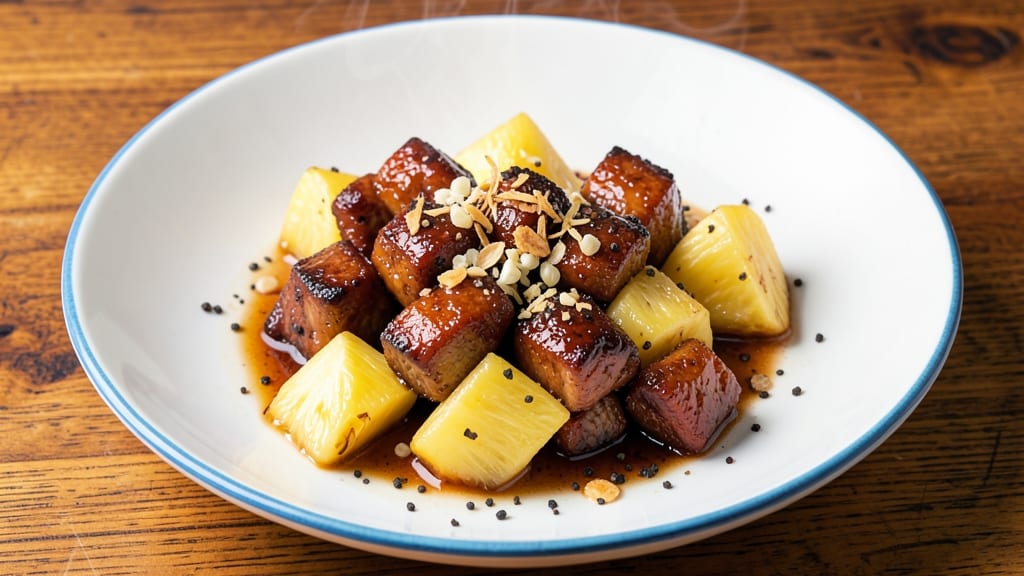
This Filipino-style pork with pineapple delivers the perfect balance of crispy edges and juicy bites—a dish that transports you straight to a bustling Manila street corner. The secret lies in a tangy adobo-inspired marinade that tenderizes the pork while caramelizing its surface into golden perfection.
I first tried this recipe during a visit to my cousin’s kitchen in Cebu, where the sizzle of lechon kawali and sweet pineapple became an unforgettable combination.
The magic happens in the marinade: a mix of soy sauce, vinegar, and garlic that breaks down the meat while building deep umami flavors. The pork gets double-fried for that signature crispy exterior, while the pineapple adds a bright, tropical contrast that cuts through the richness.
This isn’t just a dish—it’s a celebration of Filipino comfort food, where every bite is both familiar and exciting.
What you’ll end up with is tender, juicy pork with crackling skin, bathed in a glossy glaze that’s sweet, tangy, and just a little sticky. The pineapple chunks stay firm enough to bite into, adding a refreshing crunch that balances the savory pork.
Serve it over steamed rice to soak up every last drop of that irresistible sauce—trust me, you’ll want seconds.
Pair it with quick-pickled onions for brightness or a simple garlic salad to cleanse the palate. The best part? This dish tastes even better the next day, making it perfect for meal prep or leftovers. Let’s get cooking—your taste buds are about to go on a Filipino adventure.
Ingredients for pork with pineapple recipe filipino style
These Filipino-inspired ingredients create crispy, juicy pork with tropical pineapple sweetness—simple but unforgettable.
| Ingredient | Amount | Notes |
|---|---|---|
| Pork Shoulder 🥩 | 1 ½ lb | Cut into 1.5-inch cubes |
| Fresh Pineapple Chunks 🍍 | 2 cups | Canned works in a pinch |
| Soy Sauce 🥫 | ½ cup | Use dark soy for color |
| White Vinegar 🍶 | ¼ cup | Substitute apple cider vinegar |
| Garlic Cloves 🧄 | 6 cloves | Minced for marinade |
| Brown Sugar 🍚 | ¼ cup | Light or dark variety |
| Olive Oil 🫒 | 2 tbsp | For double-frying |
| Ground Black Pepper 🌶️ | 1 tsp | Freshly ground preferred |
| Salt 🧂 | 1 ½ tsp | Kosher or sea salt |
| Green Onions 🧅 | 3 whole | Sliced for garnish |
| Vegetable Oil 🫒 | ½ cup | For frying |
| Fresh Ginger 🌿 | 1 tbsp | Grated, optional but recommended |
The pork shoulder is non-negotiable here—it’s got the right fat-to-meat ratio for that perfect crispy edge and juicy bite. Grab a 1.5-pound cut from your local butcher or the meat department at Costco—they usually have it pre-cut for convenience. If you can’t find fresh pineapple, canned chunks in juice work just fine, though fresh has that brighter flavor. The soy sauce should be the dark kind—it adds that signature Filipino color and depth. I always grab mine from the Asian market aisle at Trader Joe’s because it’s cheaper and more flavorful than the regular grocery store stuff.
No dark soy sauce? Regular soy sauce plus 1 tsp molasses gets you close. Fresh ginger missing? Ground ginger at half the amount works, but it won’t have that same zing. The brown sugar can be swapped for white, but it’ll be less caramelized. For the pineapple, if you’re using canned, drain and pat dry—you don’t want soggy pork. The garlic and ginger are your flavor anchors, so don’t skip them. Pro tip: Toast the garlic cloves in the oil first—it adds a nutty depth that takes this dish to the next level.
This dish tastes even better the next day, so make extra. Store leftovers in an airtight container in the fridge for up to 5 days or freeze for 3 months. I like to portion mine into single servings—perfect for quick lunches or meal prep. The pork stays crispy if you reheat it in a skillet with a splash of water. And trust me, the sauce gets even more flavorful after sitting overnight, soaking up all those juices. Garnish with those fresh green onions right before serving—they add a pop of color and freshness that makes the dish look restaurant-worthy.
Why You'll Love This Recipe
- One-Pan Magic: I swear by this—just toss the pork, pineapple, and garlic in one skillet, then let the soy and vinegar work their sauce alchemy. No dirty dishes, no fuss.
- Sweet-Savory Balance: That first bite of caramelized pork with juicy pineapple? It’s like a flavor hug. The vinegar cuts through the sweetness, while the garlic adds depth—simple, but ridiculously satisfying.
- Lunchbox Hero: Between us, this is my go-to for packed lunches. The pork stays tender for days, and the pineapple keeps it from getting boring. (Yes, even on a Tuesday night.)
- Budget-Friendly Feast: Pork shoulder stretches forever, and pineapple’s cheap when you buy it whole. I’ve fed six people for under $15—plus, leftovers reheat like a dream. Practical? Absolutely. Delicious? Even more so.
Step-by-step instructions for adobo-inspired pork with pineapple
Here's how to create tender, crispy pork bites with sweet-tangy pineapple—Filipino-style perfection.
Marinate the Pork for Maximum Flavor
In a large bowl, combine the 1.5 lb pork shoulder cut into 1.5-inch cubes, the 0.5 cup soy sauce, 0.25 cup white vinegar, 6 cloves minced garlic, 0.25 cup brown sugar, 1 tbsp grated fresh ginger, 1.5 tsp salt, and 1 tsp ground black pepper. Mix everything thoroughly until the pork is fully coated in the marinade.
Transfer the mixture to a resealable plastic bag or airtight container, pressing out any excess air. Refrigerate for at least 4 hours—overnight works even better. This long marinating time ensures the pork stays juicy while absorbing all those bold flavors. You'll notice the pork starts to soften slightly as the acid and spices work their magic.
Double-Fry for Crispy Edges and Juicy Centers
Heat 2 tbsp olive oil in a large skillet over medium heat. Remove the pork from the marinade (reserve the marinade for later) and pat it dry with paper towels—this helps create that perfect crispy crust. Add the pork in a single layer and cook undisturbed for 3-4 minutes until the bottoms are golden brown. Flip carefully and cook another 3-4 minutes until lightly browned on all sides.
Transfer the pork to a plate and set aside. In the same skillet, increase heat to medium-high and add 0.5 cup vegetable oil. Once the oil is shimmering (around 350°F), carefully add the pork in batches, cooking for 1-2 minutes per side until deeply golden brown. The oil should sizzle vigorously—this is when you get that irresistible crispy exterior. Remove the pork and let it drain on a wire rack or paper towels.
Simmer the Pineapple Sauce
Return the reserved marinade to the now-empty skillet and bring it to a gentle boil over medium-high heat. Reduce heat to medium-low and let it simmer for 5-7 minutes until slightly thickened. Add the 2 cups fresh pineapple chunks and cook for another 3-4 minutes, stirring occasionally, until the pineapple softens slightly and the sauce reduces to a glossy consistency.
Here's the thing—don't rush this step. The sauce should coat the back of a spoon and have a perfect balance of sweet, tangy, and savory flavors. If it's too thin, simmer a bit longer. If it's too thick, add 1-2 tablespoons of water to loosen it up. The pineapple should be tender but still hold its shape slightly.
Finish and Serve with Crispy Pork
Return the crispy pork to the skillet with the pineapple sauce, tossing gently to coat everything evenly. Cook for 2-3 minutes until the pork absorbs the sauce and reaches an internal temperature of 160°F. The pork should be fork-tender with those beautiful crispy edges you worked so hard for.
Garnish with 3 sliced green onions and serve immediately while the pork is still crispy and the sauce is warm. This dish tastes even better the next day as the flavors meld together, but the texture is best enjoyed fresh out of the pan. Pair it with steamed rice to soak up all that delicious sauce!
Pro Tips For Making Pork With Pineapple Recipe Filipino Style
- SEAR THE PORK FIRST: Don’t skip browning the pork shoulder—it locks in flavor and keeps the meat juicy. Use a heavy pan (cast iron if you have it) and let it sit for 3-4 minutes per side until deep golden, even if it’s not perfectly even. I used to rush this, and the sauce just tasted flat afterward.
- USE FROZEN PINEAPPLE: Fresh pineapple is great, but frozen chunks work just as well and save time. Thaw them first, then pat dry thoroughly—wet pineapple steams instead of caramelizing. My grandmother swore by this, and it actually changes the texture for the better.
- LOW AND SLOW AFTER SEARING: Once the pork is browned, turn the heat down to medium-low and let it cook uncovered. Too much heat later makes the sauce burn before the pork tenderizes. I learned this the hard way—my first batch had a charred crust but dry meat underneath.
- ADD VINEGAR GRADUALLY: Don’t dump all the white vinegar at once—it’ll make the sauce too sharp. Start with half, let it simmer for 5 minutes, then add the rest. This balances the sweetness of the pineapple without overpowering. I was skeptical until I tried it—now I never skip this step.
Flavor customization for this dish
Sweet-Tangy Balance
Adjust the pineapple-to-pork ratio to taste—more pineapple makes it brighter, less keeps it richer. I like 2 cups pineapple per 1.5 lbs pork, but if you prefer a sweeter dish, add ½ cup extra or swap in ¼ cup honey when simmering the sauce.
For extra tang, splash in 1 tbsp more vinegar—Filipino adobo thrives on that balance. 🍍
Spice Level Control
Skip the black pepper if you dislike heat, but add ½ tsp chili flakes for a kick.
For smoky depth, swap 1 tbsp soy sauce with 1 tbsp fish sauce—a Filipino staple—and toast 1 tsp coriander seeds in the oil before frying. Note: Fish sauce is optional but adds umami magic. 🌶️
Texture Variations
Want extra crispiness? After the first fry, chill the pork for 10 minutes—it’ll crisp up even more when fried again. For juicier pork, reduce the second fry to 30 seconds per side—just enough to reheat without over-crisping.
I’ve also tried baking the pork at 400°F for 20 minutes after marinating for a hands-off approach. 🔥
Vegetable Add-Ins
Stir in 1 cup sliced bell peppers or ½ cup baby corn during the final simmer for texture contrast. For heartiness, add ½ cup diced potatoes—they’ll absorb the sauce beautifully. My cousin in Cebu always tosses in 1 cup spinach at the end, wilted by the hot pork. 🥦
Sauce Thickness
Thin the sauce with 1 tbsp water if it’s too thick, or reduce it further by simmering uncovered for 2 extra minutes. For a glossier finish, whisk in 1 tsp cornstarch mixed with 1 tbsp water at the end.
The sauce should cling to the pork like a sweet-tangy hug. 💫
Serving Style Twists
Serve over garlic fried rice instead of plain rice for extra flavor. For a modern touch, arrange the pork on a platter with quick-pickled red onions and a drizzle of sriracha mayo.
My Portland friends love it as a taco filling—just shred the pork and serve with tortillas and lime. 🌮
Nutrition facts
Frequently asked questions
Can I use regular pork chops instead of pork shoulder?
Pork shoulder is ideal for this recipe because it stays juicy while developing crispy edges. If you must use pork chops, opt for bone-in, center-cut chops (about 1-inch thick) and cut them into strips. Marinate for 2 hours max (acid tenderizes quickly) and reduce the second fry to 20 seconds per side to avoid overcooking the thinner cuts.
What's the best way to store leftovers?
Store in an airtight container for up to 5 days in the fridge. The pork stays crispy if reheated in a skillet with 1 tbsp oil over medium heat for 3-4 minutes. For freezing, portion into single servings and freeze for 3 months max. Thaw overnight in the fridge before reheating.
Why does my sauce turn out too thin?
This usually happens when pineapple releases too much juice. Simmer uncovered for 2 extra minutes to reduce, or whisk in 1 tsp cornstarch mixed with 1 tbsp water at the end. For next time, pat pineapple chunks completely dry before adding to the sauce.
Can I make this dish in a slow cooker?
Brown the pork first in a skillet, then transfer to the slow cooker with all marinade ingredients. Cook on low for 4-5 hours or high for 2-3 hours. Add pineapple in the last 30 minutes. The texture will be more tender than crispy, but the flavors stay rich and balanced.
What's the secret to extra crispy pork?
Pat the pork very dry before frying and use high smoke-point oil (like vegetable or canola) at 350-375°F. After the first fry, chill the pork for 10 minutes before the second fry—this sets the crust. Work in small batches to avoid crowding the pan.