
Sauces & Condiments
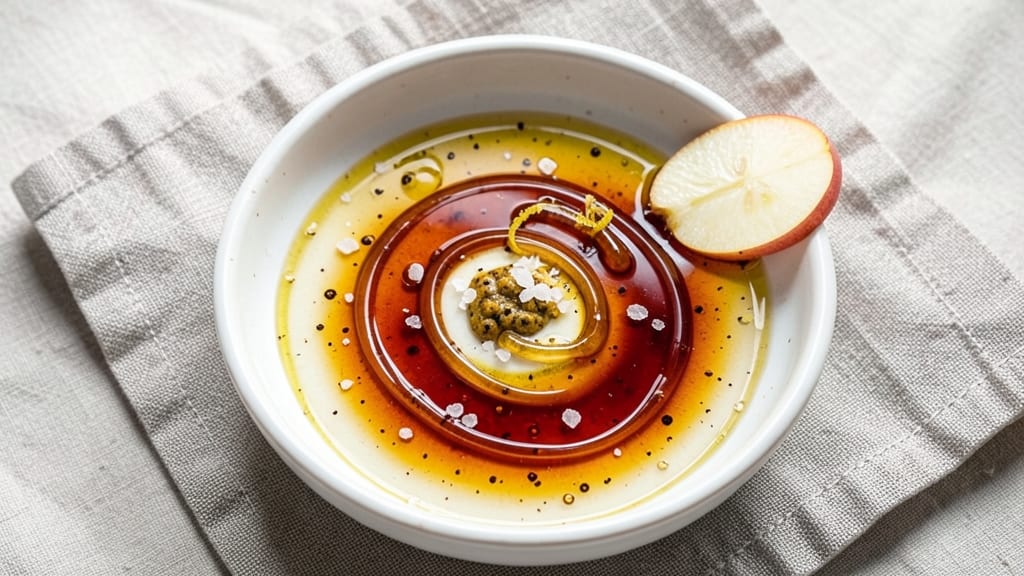
This white balsamic apple vinaigrette dressing recipe transforms ordinary salads into vibrant, flavor-packed meals with just five simple ingredients. The secret lies in balancing the sharp brightness of white balsamic vinegar with the natural sweetness of apple cider and a touch of honey—creating a dressing that’s both refreshing and complex.
I developed this recipe after craving something lighter than traditional vinaigrettes but still packed with depth, and it quickly became my go-to for everything from greens to roasted vegetables.
The beauty of this dressing is its versatility—it works equally well on crisp arugula salads, charcuterie boards, or as a finishing drizzle for roasted meats.
The white balsamic adds a subtle tang that cuts through richness, while the apple cider vinegar and honey create a smooth, honeyed sweetness that lingers on the palate. Unlike store-bought dressings, this one stays fresh for up to a week in the refrigerator, making it perfect for meal prep.
What sets this recipe apart is the textural contrast—the dressing clings beautifully to leaves without weighing them down, and its balanced flavors elevate even the simplest ingredients.
Whether you're dressing a hearty kale salad or adding a bright finish to grilled chicken, this vinaigrette delivers restaurant-quality results with minimal effort. The best part? It takes just five minutes to make, and the ingredients are likely already in your pantry.
For an extra layer of depth, consider adding a pinch of Dijon mustard or a sprinkle of fresh thyme before serving. This dressing also pairs wonderfully with goat cheese, nuts, or even as a marinade for pork tenderloin. Let’s get started—your salads (and taste buds) will thank you.
Ingredients for white balsamic apple vinaigrette dressing
Five ingredients balance sharp tang with honeyed sweetness for a dressing that elevates every salad.
| Ingredient | Amount | Notes |
|---|---|---|
| White Balsamic Vinegar 🍶 | ½ cup | High-quality, aged white balsamic |
| Apple Cider Vinegar 🍎 | ¼ cup | Unfiltered for texture |
| Extra-Virgin Olive Oil 🫒 | ½ cup | Light, fruity variety preferred |
| Raw Honey 🍯 | 2 tbsp | Local, unprocessed honey |
| Dijon Mustard 🌶️ | 1 tsp | Mild or strong to taste |
| Sea Salt 🧂 | ½ tsp | Fine grain preferred |
| Fresh Thyme Leaves 🌿 | 1 tbsp | Chopped finely for garnish |
The white balsamic is the star here—look for aged varieties at specialty stores like Whole Foods or Trader Joe's, where the flavor is deeper and less harsh than regular balsamic. Apple cider vinegar should be unfiltered for that cloudy texture that adds body to the dressing. Mott's or Bragg are reliable brands, but any organic option works. The olive oil matters too—skip anything that smells rancid. California Olive Ranch or Colavita are my go-tos for consistent quality. Honey should be raw and local if possible, but any unprocessed honey will do.
No white balsamic? Substitute with white wine vinegar plus 1 tsp balsamic glaze for a similar tang. Out of Dijon mustard? Yellow mustard at half the amount works in a pinch, but it won’t be as refined. The thyme is optional but adds a lovely herbal note—dried thyme at one-third the amount is fine if fresh isn’t available. For extra depth, add a pinch of smoked paprika or a splash of orange juice if you’re feeling adventurous. The dressing thickens when chilled, so if it’s too thin, let it sit for 10 minutes before serving.
Store in an airtight jar in the fridge for up to 1 week, though it often lasts longer. The flavors actually develop and meld beautifully over time. For meal prep, make a double batch—it’s perfect for drizzling over roasted veggies or grilled meats later in the week. If the oil separates, just give it a good shake before using. The thyme keeps best if stored separately and added fresh before serving, but tossing it in the jar works too if you’re in a hurry.
Why You'll Love This Recipe
- No-Fuss Whisking: I swear by this—just toss everything into a jar, cap it, and shake until it’s smooth. No measuring spoons out, no straining, no stress. That honey and Dijon mustard blend into the olive oil like magic, and honestly? I’ve made it while chatting on the phone.
- Sweet-Tart Magic: The white balsamic and apple cider vinegar team up for a bright, tangy kick, but the raw honey softens it just enough to feel cozy. It’s the kind of dressing that makes you take an extra bite of whatever you’re eating—salad, roasted veggies, even grilled chicken.
- Weeknight Superstar: This is my go-to for quick lunches, last-minute dinners, or when I’m prepping meals for the week. Drizzle it over greens, toss it with pasta, or use it as a marinade. Between us, I’ve even poured it over popcorn when I’m craving something fancy but don’t want to cook.
- Lasts All Week: A little goes a long way, and this keeps in the fridge for days without turning weird. I make a big batch on Sunday, and by Wednesday, I’m still reaching for it. Plus, the ingredients are cheap—no fancy pantry staples here, just basics that won’t break the bank.
Step-by-step instructions for white balsamic apple vinaigrette dressing
This dressing comes together in minutes with precise technique for perfect balance.
Whisk Vinegars and Honey for Base
In a medium bowl, combine the 0.5 cup White Balsamic Vinegar and 0.25 cup Apple Cider Vinegar. I like to use a whisk for this step—it creates tiny bubbles that help emulsify the dressing later. Add the 2 tbsp Raw Honey and whisk until fully dissolved. The mixture should look smooth and slightly syrupy, with no visible honey strands.
This is where the flavor foundation happens. The white balsamic adds that signature sweet-tart complexity while the apple cider vinegar contributes bright acidity. The honey rounds out the sharpness, creating a base that's balanced but still has room for the oil and mustard to come together.
Add Mustard and Salt for Emulsification
Next, stir in the 1 tsp Dijon Mustard and 0.5 tsp Sea Salt using a silicone spatula. The mustard acts as our emulsifier—it helps bind the oil and vinegar so they don't separate. Mix until completely combined, scraping the bottom of the bowl to ensure no mustard clumps remain.
This step is crucial for texture. The mustard's tanginess also deepens the dressing's flavor profile. I always use Dijon because its mild heat and texture work better than regular mustard for vinaigrettes. The salt at this stage enhances all the flavors while preparing the dressing to accept the oil smoothly.
Gradually Incorporate Olive Oil
With the mixture stirring continuously, very slowly drizzle in the 0.5 cup Extra-Virgin Olive Oil. Start with just a few drops at first, then increase to a thin stream as the dressing begins to emulsify. Keep whisking vigorously until all the oil is incorporated and the dressing reaches a creamy, mayonnaise-like consistency.
Patience here is key—adding oil too quickly causes separation. You'll know it's working when the dressing thickens noticeably and takes on a glossy sheen. The olive oil should disappear completely into the mixture, leaving no visible oil on top. If it does separate, simply whisk again until it recombines.
Finish with Fresh Thyme and Taste Adjustment
Stir in the 1 tbsp Fresh Thyme Leaves using a spoon to distribute them evenly. Taste the dressing and adjust the balance if needed—add a touch more honey for sweetness, a splash of vinegar for acidity, or a pinch of salt if the flavors need more depth.
The thyme adds an aromatic finish that elevates this dressing from good to exceptional. I recommend letting it sit for 5-10 minutes before using—this allows all the flavors to meld completely. The dressing should coat the back of a spoon and have a silky texture, ready to transform any salad from ordinary to extraordinary.
Pro Tips For Making White Balsamic Apple Vinaigrette Dressing
- STIR IN STAGES: Whisk the vinegars and mustard first—this emulsifies the Dijon better than dumping everything in at once. I learned this after watching my first batch separate like a sad salad; start with the acids and mustard, then slowly drizzle in the oil while stirring like you’re painting a fence.
- USE COLD HONEY: Chill your raw honey in the fridge for 10 minutes before adding it to the dressing. Warm honey thins faster than you’d expect, and you’ll end up with a syrup instead of a balanced dressing. Trust me, the texture stays thick and glossy—no sticky mess.
- MEASURE THE OIL BY WEIGHT: If you’re serious about consistency, weigh your extra-virgin olive oil (about 30% of the total volume) instead of eyeballing it. A kitchen scale takes 5 seconds and guarantees the right ratio—no more guessing whether your dressing will be too heavy or too runny.
- LET IT REST: Walk away for 15 minutes after mixing. The flavors meld better when the dressing sits, and any slight separation will re-emulsify naturally. I know, I know—you’re eager to toss it on your salad—but rushing this step means missing out on the depth of flavor. Patience here makes a real difference.
Dietary considerations for this dish
Gluten-Free Adaptation
This dressing is naturally gluten-free since it contains no wheat-based ingredients. The Dijon mustard is the only potential concern—always check labels for gluten-free certification, especially if using store-bought brands.
I recommend Annie's or French's gluten-free Dijon options. With these adjustments, it's safe for anyone managing celiac disease or gluten sensitivity. 🌾
Vegan-Friendly
The recipe is already vegan as written, using plant-based honey substitutes like agave nectar or maple syrup if needed. The olive oil, vinegars, and mustard are all typically vegan-friendly, but double-check your honey alternative.
For extra richness, consider adding 1 tbsp tahini to the final mixture—it adds a nutty depth that complements the apple flavors beautifully.
Low-Sugar Options
For a lower-sugar version, reduce the honey to 1 tbsp and add ½ tsp vanilla extract to enhance sweetness perception. Alternatively, use 1 tsp maple syrup instead of honey—it provides a similar caramel note without as much sugar.
The dressing will still maintain its balance, just with a slightly different flavor profile that works especially well with roasted vegetables or grilled fish.
Nut-Free Version
This dressing is already nut-free, but if you're serving it with nut-based dishes, consider adding 1 tsp ground flaxseed to the final mixture for a subtle nutty flavor without actual nuts.
For those with nut allergies, simply omit any garnishes that might contain nuts, like walnuts or almonds. The dressing itself remains completely safe and delicious on its own.
Dairy-Free
Being dairy-free is a non-issue here since the recipe contains no dairy products at all. However, if you're using this dressing with dairy-based dishes (like goat cheese salads), the contrast of creamy textures with this bright vinaigrette creates an amazing flavor combination.
The acidity of the dressing cuts through the richness perfectly, making it a fantastic pairing for any dairy-inclusive meal.
Allergen-Friendly
For those with mustard allergies, simply omit the Dijon mustard entirely—the dressing will still emulsify well, though it may separate slightly more easily. If you need to thicken it, add 1 tsp ground chia seeds and whisk well.
For vinegar-sensitive individuals, substitute the apple cider vinegar with lemon juice at the same quantity, though the flavor profile will shift slightly toward citrus brightness.
Nutrition facts
Frequently asked questions
Can I use regular balsamic vinegar instead of white balsamic?
The flavor will be darker and more intense, which works beautifully for hearty dishes like roasted meats or charcuterie boards. For salads with delicate greens, the white balsamic's subtle tang is ideal. If substituting, reduce to 0.25 cup regular balsamic and add 0.25 cup white wine vinegar to maintain balance.
How do I fix a dressing that's too thick or too thin?
For a thin dressing, let it sit for 10 minutes in the fridge to thicken naturally. If still too thin, add 1 tsp Dijon mustard or whisk in 1 tsp cornstarch mixed with 1 tsp water. For a thick dressing, thin it with 1 tbsp warm water or 1 tsp extra vinegar while whisking constantly.
What are the best vegetables to pair with this dressing?
This dressing shines with bitter greens like arugula or radicchio, but also works wonderfully with roasted brussels sprouts, asparagus, or sweet potatoes. The apple notes complement caramelized onions, while the acidity cuts through creamy textures like goat cheese or avocado. For a sweet-savory combo, try it with grilled pineapple or peaches.
Can I make this dressing ahead of time?
Yes! This dressing actually improves with time. Store in an airtight jar in the fridge for up to 1 week. The flavors meld beautifully, and the texture becomes even more cohesive. Give it a good shake before using, as the oil may separate slightly. For meal prep, double the batch—it's perfect for drizzling over 5-7 days of meals.
What's the secret to making it taste more complex?
Add ½ tsp grated fresh ginger or 1 tsp orange zest for brightness, or 1 tsp smoked paprika for depth. A pinch of black pepper or ground cinnamon also enhances the apple flavors. For umami, stir in 1 tsp soy sauce (reduce honey to 1.5 tbsp to balance). The key is to taste as you go and adjust gradually.