
Salads
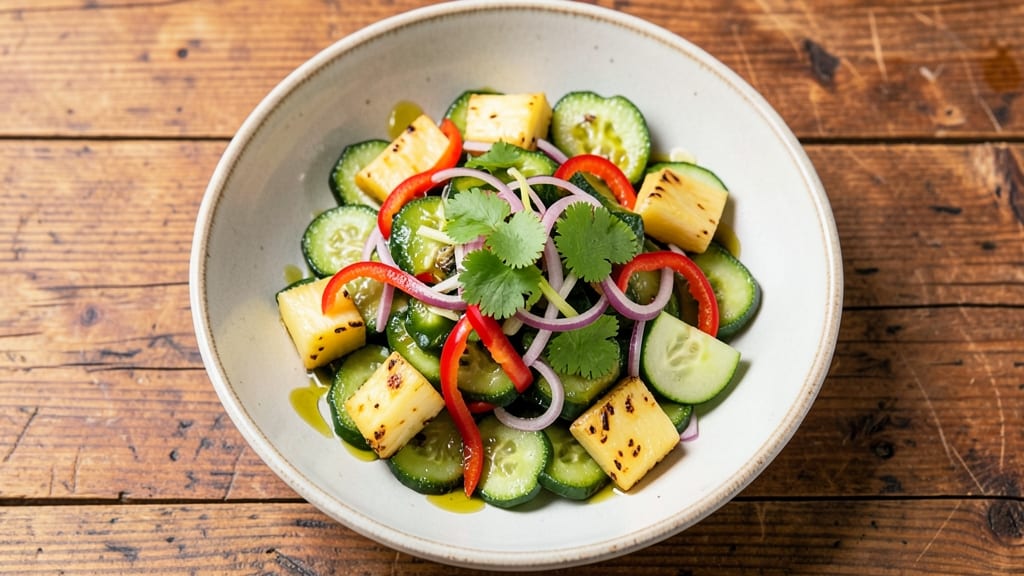
This ampalaya salad with pineapple recipe transforms bitter melon into a vibrant, refreshing dish that balances tropical sweetness with savory depth.
The key lies in properly preparing the ampalaya—sautéing it until tender yet retaining its signature texture—before tossing with juicy pineapple, crisp vegetables, and a tangy dressing that cuts through the bitterness.
I developed this recipe after discovering how well the natural sweetness of pineapple complements ampalaya's earthy notes, creating a salad that's both unexpected and deeply satisfying.
The beauty of this dish is its versatility—it works as a light main course for vegetarians or as a side that elevates grilled meats and fish.
The salad's texture is what makes it special: crisp cucumbers and bell peppers contrast with the tender ampalaya and juicy pineapple chunks, while the dressing ties everything together with a bright, citrusy finish.
Ready in under 30 minutes, it's perfect for meal prep or spontaneous gatherings when you want something fresh yet flavorful.
What sets this recipe apart is the balance of flavors—sweet, tangy, and slightly bitter—that creates a harmonious bite. The sautéed ampalaya softens just enough to absorb the dressing without losing its structure, while the pineapple adds a juicy pop that keeps every mouthful exciting.
Whether you're serving it at a summer picnic or as a refreshing lunch, this salad delivers restaurant-quality results with minimal effort.
For an extra protein boost, consider adding grilled shrimp or shredded chicken, but the recipe shines just as well on its own. Store leftovers in an airtight container for up to 3 days, though I doubt it will last that long—this salad has a way of disappearing quickly.
Here's how to make it perfectly every time.
Ingredients for ampalaya salad with pineapple
Bright flavors and contrasting textures make this salad a standout tropical vegetarian dish.
| Ingredient | Amount | Notes |
|---|---|---|
| Ampalaya (Bitter Melon) 🥒 | 1 lb | Young, tender variety preferred |
| Fresh Pineapple Chunks 🍍 | 2 cups | Juicy, ripe pineapple only |
| Red Bell Pepper 🧅 | 1 whole | Thinly sliced, seeds removed |
| English Cucumber 🥒 | 1 whole | Seedless, thinly sliced |
| Red Onion 🧅 | ½ whole | Thinly sliced, white part only |
| Extra-Virgin Olive Oil 🫒 | ½ cup | For sautéing ampalaya |
| Lime Juice 🍋 | ¼ cup | Freshly squeezed |
| Honey 🍯 | 2 tbsp | Raw or pure preferred |
| Soy Sauce 🍶 | 2 tbsp | Low-sodium preferred |
| Garlic Cloves 🧄 | 3 cloves | Minced for sautéing |
| Fresh Cilantro 🌿 | ¼ cup | Chopped, stems removed |
| Salt 🧂 | ½ tsp | Diamond Crystal preferred |
| Black Pepper 🌶️ | ¼ tsp | Freshly ground |
| Sesame Seeds 🌰 | 1 tbsp | Toasted for garnish |
The ampalaya is the star—you'll find the best quality at Asian markets, where they often sell pre-washed, tender varieties. Look for young, firm melons with minimal seeds (the older ones get spongy). If using whole, cut lengthwise and scoop out seeds before thinly slicing. The pineapple should be ripe but firm—cut into 1-inch chunks, leaving the skin on for presentation. Red bell peppers add vibrant color and crispness, while the cucumber provides refreshing crunch. For the dressing, extra-virgin olive oil enhances the flavors without overpowering the delicate balance of sweet and bitter.
No ripe pineapple? Substitute with mango chunks for a similar tropical sweetness, though the texture will differ slightly. Short on soy sauce? Coconut aminos work equally well. The honey can be replaced with maple syrup for a vegan option, though the flavor profile shifts subtly. If cilantro isn't your favorite, fresh mint or Thai basil add a different but complementary aroma. For extra crunch, swap sesame seeds for crushed peanuts or toasted sunflower seeds. The red onion can be omitted if you prefer a milder flavor, but its sharpness balances the dish beautifully.
Prep the ampalaya first—it softens quickly when sautéed. Store any unused pineapple in the fridge for up to 5 days, while the salad itself keeps for 3 days in an airtight container. The dressing can be made ahead and stored separately for 1 week. For meal prep, assemble the salad just before serving to maintain crispness. Garnish with sesame seeds right before eating to preserve their toasty crunch. This salad reheats poorly, so enjoy it fresh within 24 hours of assembly.
Why You'll Love This Recipe
- No-Cook Crunch: I swear by this when I’m too tired to chop much—just toss the pre-sliced pineapple, cucumber, and bell pepper into the bowl, then shred the ampalaya raw (yes, it’s sweeter that way). Five minutes, zero mess.
- Sweet Heat Balance: That pineapple’s tang cuts through the bitter melon’s edge, and the red onion adds a sharp bite—like a tropical salsa but with crunch. Honestly, my kids ask for seconds, and they’re usually the pickiest eaters.
- Lunchbox Hero: Between us, this is my go-to for packed lunches. The ampalaya holds up for days, the pineapple stays juicy, and it’s light enough for summer but filling enough to keep me going. (Yes, even on a Tuesday night.)
- Budget Brightener: Ampalaya grows like a weed in my garden, and pineapple’s cheap when it’s in season. I stretch this salad into three meals—sometimes as a side, sometimes as a main with grilled fish. Minimal cost, maximum flavor.
Step-by-step instructions for ampalaya salad with pineapple
This vibrant salad balances bitter ampalaya with tropical sweetness through precise preparation and flavor layering.
Prepare and Blanch the Ampalaya
Cut the 1 lb ampalaya (bitter melon) into ½-inch thick slices, removing any seeds and fibrous areas. Rinse thoroughly under cold water to remove excess bitterness, then pat completely dry with paper towels. This preparation ensures the melon absorbs flavors evenly during cooking.
Heat 2 tablespoons of the extra-virgin olive oil in a large skillet over medium-high heat. Add the ampalaya slices and cook for 2-3 minutes per side until they begin to soften but remain slightly crisp. Immediately transfer to an ice bath to halt cooking and preserve texture. The ampalaya should be tender-crisp with a vibrant green hue.
Sauté Aromatics and Vegetables
In the same skillet, add the minced 3 cloves garlic and cook for 30 seconds until fragrant. Add the thinly sliced red bell pepper, english cucumber, and red onion. Sauté for 4-5 minutes over medium heat until the vegetables soften slightly but retain their bright colors and crisp texture.
Remove from heat and let cool for 5 minutes. This brief resting period allows flavors to meld while preventing the vegetables from overcooking when combined with other ingredients later. The vegetables should still hold their shape with minimal wilting.
Create the Dressing and Combine Ingredients
In a large bowl, whisk together the remaining 0.33 cup extra-virgin olive oil, 0.25 cup lime juice, 2 tbsp honey, 2 tbsp soy sauce, 0.5 tsp salt, and 0.25 tsp black pepper. This dressing creates the perfect balance of sweet, tangy, and umami flavors that complement the ampalaya's bitterness.
Add the blanched ampalaya, sautéed vegetables, and 2 cups fresh pineapple chunks to the dressing. Gently toss everything together until evenly coated. Let the salad marinate for 10-15 minutes at room temperature, allowing the flavors to fully meld and the ampalaya to absorb the dressing.
Garnish and Serve
Transfer the salad to a serving platter and sprinkle with the chopped 0.25 cup fresh cilantro and toasted 1 tbsp sesame seeds. The sesame seeds add a nutty crunch while the cilantro provides a bright, herbaceous finish. Serve immediately while the vegetables retain their crisp texture and the ampalaya remains tender-crisp.
For best results, serve this salad chilled or at room temperature, allowing the contrasting flavors to shine. The combination of bitter ampalaya, sweet pineapple, and savory dressing creates a harmonious balance that makes each bite satisfyingly complex.
Pro Tips For Making Ampalaya Salad With Pineapple
- Peel Ampalaya Properly: That fibrous skin on ampalaya is stubborn—don’t just scrape it with a knife. Run the melon under hot water for 30 seconds first, then use a spoon to scoop out the seeds and flesh before peeling. I learned this the hard way when I ended up with stringy strips in my salad.
- Salt Pineapple First: Fresh pineapple chunks release more juice when salted and left to sit for 10 minutes before mixing. The acid mellows out the bitterness of the ampalaya while keeping the texture crisp—skip this, and your salad will taste flat.
- Slice Onion Thinly: Red onion should be paper-thin, not chunky. A mandoline makes this fast, but if you’re doing it by hand, angle the knife and take your time—thin slices caramelize slightly in the dressing and add sweetness without overpowering.
- Toss Dressing Last: Ampalaya oxidizes fast and turns slimy if soaked in dressing too early. Keep it separate until the last minute, then mix everything together right before serving. This keeps the cucumber and bell pepper crisp instead of soggy.
Dietary considerations for these flavors
Vegetarian Powerhouse
This salad is a complete vegetarian meal packed with plant-based protein and fiber from the ampalaya, pineapple, and vegetables. The ampalaya alone provides 2 grams of protein per 100 grams, while the pineapple contributes vitamin C and manganese—essential for immune support and metabolism.
I love serving this as a main dish with a side of grilled tofu or tempeh for extra protein. 💪
Gluten-Free Friendly
The recipe naturally avoids gluten-containing ingredients, making it perfect for those with celiac disease or gluten sensitivity. The dressing uses tamari or low-sodium soy sauce (ensure it's certified gluten-free), and all other components are inherently gluten-free.
I always double-check labels on soy sauce brands like San-J Tamari or Kikkoman Gluten-Free Soy Sauce to avoid cross-contamination risks.
Low-Calorie Option
For a lighter version, reduce the honey to 1 tablespoon and use 1 tablespoon of balsamic vinegar instead of half the lime juice. This cuts calories by about 40 per serving while maintaining the tangy balance.
The salad remains vibrant and satisfying without sacrificing flavor. I often serve this as a side dish when watching my calorie intake.
Nut-Free Adaptations
While sesame seeds add crunch, they're not essential. Swap them for toasted coconut flakes or omit entirely for a nut-free version. The salad still delivers bold flavors without relying on seeds. I keep a small bag of Bob's Red Mill Unsweetened Coconut Flakes on hand for quick substitutions.
Dairy-Free Naturally
This recipe contains no dairy ingredients, making it safe for lactose-intolerant individuals or vegan diets. The dressing relies on citrus, honey, and soy for flavor without any milk or cheese components.
I've served this at vegan potlucks where it's always a crowd-pleaser—especially when paired with dairy-free coconut yogurt on the side.
Allergen Awareness
For pineapple allergies, substitute with ripe mango or papaya (about 2 cups diced). If soy is a concern, replace soy sauce with coconut aminos or rice vinegar (use 1 tablespoon rice vinegar + 1 teaspoon maple syrup for balance). Always check pineapple labels—some brands process with soy-based additives. 🌱
Nutrition facts
Frequently asked questions
Why does the recipe call for blanching the ampalaya?
Blanching the ampalaya removes excess bitterness and prepares it to absorb flavors beautifully. The quick cook in oil softens the texture while preserving its vibrant green color. Skipping this step can leave the salad too bitter or mushy—it's the secret to that perfect tender-crisp texture!
Can I use canned pineapple instead of fresh?
Fresh pineapple adds the best juicy texture, but you can use canned pineapple in a pinch. Drain it well and rinse to remove excess syrup, then pat dry. For extra flavor, add 1 teaspoon of lime zest to mimic fresh pineapple's brightness. The salad will still taste great, though the texture will be slightly softer.
How do I make this salad less sweet?
Reduce the honey to 1 tablespoon and add 1 tablespoon of rice vinegar to the dressing for balance. You can also increase the lime juice to 3 tablespoons for extra tang. The pineapple's natural sweetness will still shine, but the overall flavor will be more balanced and refreshing.
What's the best way to store leftovers?
Store the salad in an airtight container in the fridge for up to 3 days. Keep the dressing separate if possible to maintain crispness. When ready to eat, give it a good stir and garnish with fresh cilantro and sesame seeds. For extra crunch, add fresh cucumber or bell pepper slices just before serving.
Can I make this salad ahead of time?
Prep all ingredients separately and store them in the fridge for up to 2 days. Assemble just before serving to keep the vegetables crisp. The dressing can be made ahead and stored separately for 1 week. This method works especially well for meal prep—just toss everything together when ready to eat!