
Sauces & Condiments
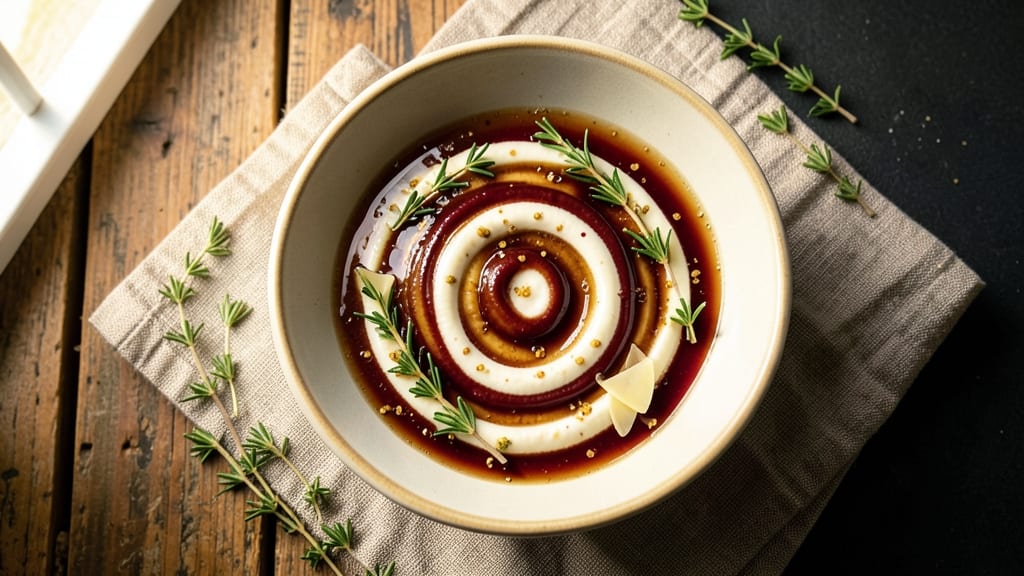
This apple balsamic vinegar dressing transforms simple salads into vibrant, flavor-packed meals with just five ingredients and 10 minutes of prep time. The secret lies in balancing sweet apple cider with tangy balsamic vinegar, creating a harmony that elevates greens, roasted vegetables, or even grilled meats.
I developed this recipe after years of searching for a dressing that could stand up to bold flavors without overpowering them.
The foundation of this dressing is a simple emulsion of olive oil, apple cider, and balsamic vinegar, sweetened just enough to complement rather than dominate. Fresh thyme and Dijon mustard add depth, while a touch of honey or maple syrup ensures the sweetness never tips into cloying territory.
The result is a dressing that's equally at home on a crisp winter salad or drizzled over warm roasted Brussels sprouts.
What makes this dressing truly special is its versatility—it works as a marinade, a dipping sauce for crusty bread, or a finishing touch for grilled chicken. The acidity of the balsamic cuts through richness, while the apple adds a subtle fruitiness that keeps the flavor profile bright and dynamic.
Best of all, it keeps well in the refrigerator for up to a week, making it a perfect make-ahead option for busy weeknights.
For those who prefer a smoother texture, blend the ingredients until fully emulsified, while a quick whisk creates a more rustic, textured finish. The dressing scales effortlessly, so double the batch if you're feeding a crowd or meal prepping for the week. Here's how to make it perfectly every time.
Ingredients for apple balsamic vinegar dressing
Five simple ingredients create a dressing that elevates salads and roasted vegetables to restaurant-quality.
| Ingredient | Amount | Notes |
|---|---|---|
| Extra-Virgin Olive Oil 🫒 | ½ cup | High-quality, fruity variety preferred |
| Apple Cider 🍎 | ¼ cup | Unfiltered for deeper flavor |
| Balsamic Vinegar 🍷 | ¼ cup | Aged at least 12 months |
| Dijon Mustard 🌶️ | 1 tbsp | Mellow, not spicy |
| Fresh Thyme Leaves 🌿 | 1 tbsp | Finely chopped, stems removed |
| Pure Maple Syrup 🍁 | 1 tbsp | Grade A or B preferred |
| Coarse Sea Salt 🧂 | ½ tsp | Diamond Crystal preferred |
| Black Peppercorns 🌶️ | ¼ tsp | Freshly cracked |
The olive oil is the base—California Avocado Ranch or Colavita brands hold up best in emulsions. Apple cider should be unfiltered for that caramel depth, and Mott's or Tree Top deliver consistent flavor. Balsamic vinegar is non-negotiable for the tang; Giovanni Rossi or Balsamic Vinegar of Modena are my go-tos. Fresh thyme is ideal, but if you're using dried, reduce to one-third the amount—it's potent stuff. For maple syrup, Grade B has more robust flavor than Grade A, though both work. The Dijon mustard should be mellow—Amoy or Maille are reliable choices.
No apple cider? Unsweetened apple juice works in a pinch, though it lacks the depth. Swap balsamic vinegar for red wine vinegar plus 1 tsp honey if you're out. Fresh thyme unavailable? Dried thyme at one-third the amount or even fresh oregano adds a different but complementary note. The maple syrup can be replaced with honey (same amount) or agave nectar (reduce by 10% due to sweetness). For a lighter texture, use light olive oil instead of extra-virgin. If you prefer a smoother finish, blend the dressing until fully emulsified—no lumps allowed.
This dressing keeps beautifully in an airtight jar in the fridge for up to 1 week. The flavors actually improve after 24 hours as everything melds. For longer storage, freeze in ice cube trays—thaw and shake to re-emulsify. The texture may separate slightly over time; just whisk before using. Double the batch if you're prepping for the week—it's perfect over roasted Brussels sprouts, grilled chicken, or a simple arugula salad. The acidity cuts through richness, while the apple and maple keep it bright.
Why You'll Love This Recipe
- Five-Ingredient Magic: I swear by this combo—just whisk those five pantry staples together, and boom, you’ve got something that tastes like autumn in a jar. No fancy techniques, no measuring cups that make you question your life choices.
- Sweet-Tart Balance: That apple cider brings a honeyed warmth while the balsamic cuts through with tangy depth—like a hug for your taste buds. Honestly, the Dijon mustard ties it all together so smoothly, you’ll forget how simple it is.
- Salad Sidekick: Drizzle it over greens, toss it with roasted veggies, or even use it as a marinade for chicken—it’s my go-to for anything that needs a little je ne sais quoi. (Yes, even on a Tuesday night.)
- Make-Ahead MVP: This keeps for weeks in the fridge, so I always have a backup for last-minute salads or quick dinners. Between us, I’ve used it to save dinner more times than I can count—no stress, no waste.
Step-by-step instructions for apple balsamic vinegar dressing
This method delivers a perfectly balanced dressing with vibrant sweet-tart depth every time.
Whisk Together Wet Ingredients
In a medium bowl, combine the 0.5 cup extra-virgin olive oil, 0.25 cup apple cider, and 0.25 cup balsamic vinegar. Use a whisk to blend them thoroughly until fully emulsified. The apple cider should be unfiltered for its deeper, more complex flavor profile that enhances the dressing's natural sweetness.
I like to use a glass or stainless steel bowl for this step—it helps me see when the mixture becomes completely smooth. The olive oil should be at room temperature to ensure proper emulsification with the acidic components. If you notice any separation after whisking, simply whisk again for another 10-15 seconds until uniform.
Add Mustard and Maple Syrup
Next, stir in the 1 tablespoon Dijon mustard and 1 tablespoon pure maple syrup using a wooden spoon. The mustard acts as an emulsifier, helping to bind the oil and vinegar mixture, while the maple syrup adds subtle sweetness that balances the tartness of the balsamic vinegar.
Here's the thing—don't rush this step. Stir in a circular motion for about 30 seconds to ensure the mustard and syrup are fully incorporated. The mixture should now have a slightly thicker consistency, indicating that the emulsification process is beginning. If it looks too thin, you can add an extra ½ teaspoon of mustard to help stabilize it.
Incorporate Seasonings and Herbs
Add the 0.5 teaspoon coarse sea salt, 0.25 teaspoon freshly cracked black peppercorns, and 1 tablespoon finely chopped fresh thyme leaves to the mixture. Stir well to distribute the seasonings evenly. The thyme leaves should be finely chopped to release their aromatic oils fully, enhancing the dressing's herbal notes.
I always crack the black peppercorns fresh for this recipe—they add a subtle, bright peppery kick that complements the sweet and tangy flavors. Taste the mixture now to check the balance. You should notice a harmonious blend of sweetness from the apple cider and maple syrup, tartness from the balsamic vinegar, and a touch of herbal complexity from the thyme.
Let the Dressing Rest
Cover the bowl with plastic wrap and let the dressing rest at room temperature for at least 15 minutes. This resting period allows the flavors to meld together and the dressing to reach its optimal consistency. I've found that resting also helps the dressing emulsify more completely, preventing any separation when you're ready to use it.
During this time, the apple cider's natural sweetness will soften slightly, and the balsamic vinegar's acidity will mellow out, creating a more nuanced flavor profile. If you're in a hurry, you can use the dressing immediately, but the flavors will be even more harmonious after resting. Once rested, give it one final stir before using to ensure everything is well combined.
Adjust and Serve
After resting, taste the dressing again and make any final adjustments. If it needs more sweetness, add a touch more maple syrup. If it's too tart, a splash of apple cider can help balance it. The dressing should coat the back of a spoon with a glossy, velvety texture—this indicates it's ready to use.
This dressing works beautifully on mixed greens, roasted vegetables, or even as a marinade for grilled chicken. I like to drizzle it over arugula and pear salad for a refreshing contrast of flavors. Store any leftovers in an airtight container in the refrigerator for up to 1 week, shaking well before each use to re-emulsify if necessary.
Pro Tips For Making Apple Balsamic Vinegar Dressing
- Whisk Like You Mean It: This isn’t just a stir—get that whisk moving in tight circles for 30 seconds after everything’s mixed. I used to half-ass it, and the dressing always ended up separating later. A little elbow grease now means smooth, emulsified goodness later.
- Reduce the Apple Cider: Simmer the apple cider first—just 3-4 minutes over medium heat—until it’s syrupy and reduced by about a third. This concentrates the flavor and thickens the dressing without adding extra oil. (Yes, even if you’re impatient like me.)
- Taste Before the Thyme: Add the fresh thyme last, but check the balance of sweet, tangy, and sharp first. The mustard and vinegar can overpower if you don’t adjust the apple cider’s acidity with a pinch of sugar or extra splash of vinegar. Trust your taste buds—this isn’t a science experiment.
- Use Aged Balsamic: Skip the cheap stuff—aged balsamic (like 10+ years) adds depth that cuts through the sweetness. I learned this the hard way after making dressing that tasted like syrup. A little goes a long way; start with 1 tablespoon and adjust.
Dietary considerations for this apple balsamic vinegar dressing
Sweetener-Free Option
Skip the maple syrup entirely and rely on the natural sweetness of unfiltered apple cider—just reduce it to 0.2 cup instead of 0.25 cup. The balsamic vinegar’s acidity will still balance the apple’s fruitiness, but you’ll avoid added sugars.
For a hint of depth, add ½ teaspoon vanilla extract—it enhances the apple’s flavor without sweetness. 🍎
Gluten-Friendly Adjustments
This dressing is naturally gluten-free, but always double-check your Dijon mustard label—some brands use gluten-containing additives. Swap for gluten-free mustard like Annie’s or Maille gluten-free if needed. The apple cider and balsamic vinegar are typically gluten-free, but verify if you’re highly sensitive. 🌾
Low-Sugar Version
Replace maple syrup with monk fruit sweetener—use ½ teaspoon dissolved in 1 teaspoon warm water to mimic syrup’s viscosity. Monk fruit adds zero glycemic impact while maintaining sweetness.
Alternatively, use stevia at ¼ teaspoon, but taste first—it’s intensely sweet. The dressing will still shine with its apple-balsamic balance without sugar spikes. 💪
Vegan and Allergen-Free
This recipe is 100% plant-based and free of common allergens like dairy, eggs, or nuts. The Dijon mustard and maple syrup are vegan-friendly, but always check labels for cross-contamination warnings.
For nut-free kitchens, ensure your olive oil is processed in a nut-free facility—brands like California Avocado Ranch are typically safe. 🌱
Keto Adaptation
To make this dressing keto-compliant, replace the maple syrup with sugar-free erythritol (½ teaspoon) or allulose (1 teaspoon). The apple cider provides negligible carbs, and the balsamic vinegar adds acidity without sugar.
Keep the olive oil base to stay under 4g net carbs per serving. It’s a perfect low-carb drizzle for cauliflower roasts or zucchini noodles. 🥦
Nutrition facts
Frequently asked questions
Can I make this dressing without maple syrup?
Skip the maple syrup and reduce the apple cider to 0.2 cup to maintain balance. For extra depth, add ½ teaspoon vanilla extract—it enhances the apple flavor without added sweetness. The balsamic vinegar will still create that perfect sweet-tart harmony.
How long does this dressing keep in the fridge?
This dressing stays fresh for up to 1 week when stored in an airtight container. The flavors actually improve after 24 hours as everything melds together. For longer storage, freeze in ice cube trays—thaw and shake to re-emulsify before using. Perfect for meal prep!
Can I use this dressing on non-salad dishes?
Yes! This versatile dressing works beautifully on roasted vegetables, grilled chicken, or even as a marinade. The sweet-tart balance cuts through richness while adding brightness to warm dishes. Try it on Brussels sprouts or as a finishing drizzle for pork tenderloin.
Why did my dressing separate?
Separation happens when oil and vinegar aren't properly emulsified. Whisk vigorously for 30 seconds or use a blender for a smoother texture. If it separates later, just whisk again before using. For extra stability, add ½ teaspoon extra Dijon mustard—it acts as a natural emulsifier.
What's the best way to store leftovers?
Transfer leftovers to a clean, airtight jar or container. Store in the fridge and shake well before each use to re-emulsify. For best results, use within 7 days. If you notice any mold or off smells, discard it—this dressing shouldn't last beyond its prime.