
Sauces & Condiments
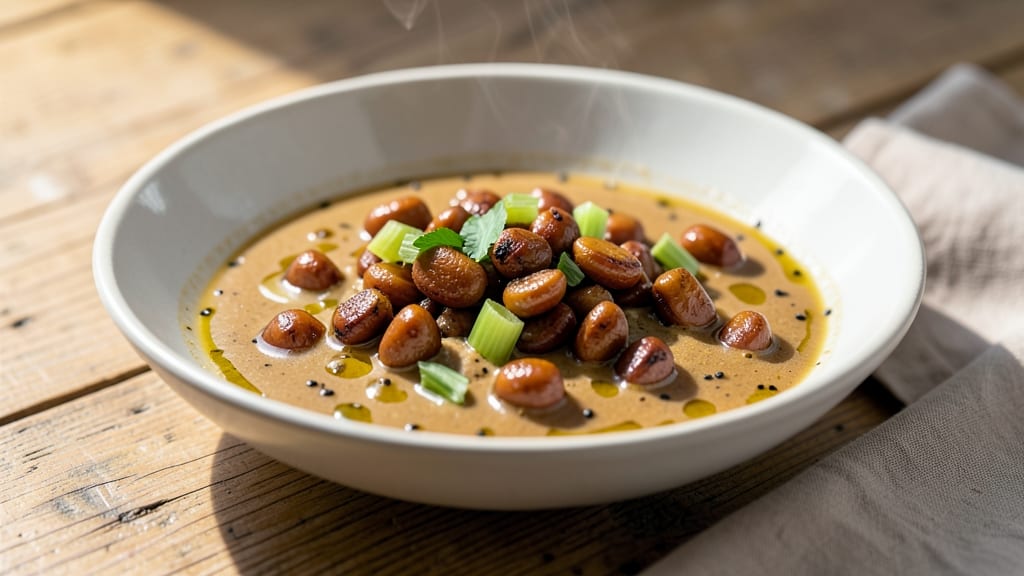
This apple chestnut dressing recipe transforms simple ingredients into a velvety, textured masterpiece perfect for roasted vegetables, sandwiches, or drizzled over salads. The secret lies in balancing sweet apple cider with toasted chestnuts and celery, creating a dressing that's both creamy and crunchy—no emulsifiers required.
I developed this after years of experimenting with nut-based dressings, finally achieving that ideal harmony of sweet, nutty, and slightly tangy flavors.
The foundation starts with a simple vinaigrette base—apple cider vinegar and Dijon mustard—whisked with olive oil until just combined. Toasted chestnuts and celery seeds add depth, while finely diced celery and shallots contribute texture and freshness.
The dressing relies on the natural oils in chestnuts to create a silky consistency without separation, making it stable enough for meal prep. This version is vegetarian-friendly and works equally well as a dip or a drizzle.
What makes this dressing truly special is its versatility—it elevates roasted Brussels sprouts, pairs beautifully with charcuterie boards, and even works as a glaze for grilled chicken. The chestnuts provide a satisfying crunch while the apple cider adds a subtle sweetness that balances the dressing's tang.
Once you taste the first spoonful, you'll understand why this has become a staple in my kitchen.
Best of all, this dressing keeps well in the refrigerator for up to a week, allowing you to make a big batch and enjoy it throughout the season.
The flavors deepen over time, making it even more delicious with each passing day. Ready to elevate your meals with this crunchy, nutty, and perfectly balanced dressing?
Ingredients for apple chestnut dressing
Ten simple ingredients create this velvety, crunchy dressing that transforms any dish.
| Ingredient | Amount | Notes |
|---|---|---|
| Apple Cider Vinegar 🍎 | ¼ cup | Raw, unfiltered preferred |
| Dijon Mustard 🍯 | 1 tbsp | High-quality for tang |
| Extra-Virgin Olive Oil 🫒 | ¾ cup | Light, fruity variety |
| Toasted Chestnuts 🌰 | 1 cup | Finely chopped, store-bought or homemade |
| Celery Seeds 🥬 | 1 tsp | Whole, toasted lightly |
| Finely Diced Celery 🥬 | ¼ cup | Bright green, crisp |
| Shallots 🧅 | 2 whole | Minced, fresh or jarred |
| Maple Syrup 🍁 | 1 tbsp | Grade B for depth |
| Salt 🧂 | ½ tsp | Diamond Crystal preferred |
| Black Pepper 🌶️ | ¼ tsp | Freshly cracked |
The chestnuts are the star here—look for vacuum-sealed packages at Trader Joe's or Costco for the best texture. If you're toasting them yourself, don't overdo it (they burn fast!). The celery seeds add that signature nutty depth, so buy them whole—pre-ground loses potency quickly. Apple cider vinegar matters too: Bragg or Texas Pete are my go-tos for that authentic tang. For the shallots, fresh is ideal, but jarred works in a pinch (just drain them well).
No chestnuts? Toasted walnuts or pecans work beautifully—just chop them finer. Short on celery seeds? Ground coriander at half the amount mimics that earthy note. The maple syrup can be swapped for agave nectar if you're avoiding refined sugar. Dijon mustard too strong? Yellow mustard at double the amount softens the kick. For a smoother texture, pulse the chestnuts in a food processor (but don't over-blend).
This dressing keeps for up to 7 days in the fridge, with flavors deepening over time. Store it in a glass jar with a tight seal—add a thin layer of olive oil on top to preserve freshness. I like to portion it into small containers for easy drizzling. Freezes beautifully for up to 3 months, though texture may soften slightly. The extra batch? Perfect for charcuterie boards or roasted veggie toppings.
Why You'll Love This Recipe
- No Chopping Needed: I swear by this one—just toss in pre-chopped celery seeds and toasted chestnuts straight from the jar. The apple cider vinegar and Dijon mustard do all the heavy lifting while you stir.
- Taste Like Autumn: That nutty, caramelized chestnut warmth with a sharp vinegar kick? It’s the kind of dressing that makes you reach for the salad and the bread. Honestly, the celery seeds add this unexpected crunch that takes it from good to "I need more."
- Salad’s Best Friend: Drizzle it over greens, toss it with roasted veggies, or even slather it on sandwiches. The olive oil keeps it rich but not heavy, and the toasted chestnuts give it texture that holds up all day.
- Make-Ahead Magic: Between us, this dressing tastes better the next day—flavors meld like crazy. Store it in the fridge for up to a week, and it’s ready to elevate whatever you’re serving without last-minute fuss. (Yes, even on a Tuesday night.)
Step-by-step instructions for apple chestnut dressing
This dressing delivers the perfect balance of crunch, tang, and sweetness—easy to make, impossible to resist.
Toast the Chestnuts and Celery Seeds
In a dry skillet over medium heat, toast the 1 cup toasted chestnuts for 3-4 minutes until fragrant and slightly golden. I like to stir constantly so they don't burn—just until you can smell that nutty aroma filling your kitchen. Remove from heat and set aside.
In the same skillet (no need to clean it), add the 1 teaspoon celery seeds and toast for 30 seconds until they darken slightly and release their earthy scent. This quick toasting enhances their flavor dramatically. Let them cool for 2 minutes before transferring to a food processor—this prevents the seeds from releasing too much oil during blending.
Sauté the Shallots and Celery
Heat 1 tablespoon of the extra-virgin olive oil in a small saucepan over medium-low heat. Add the 2 minced shallots and cook for 3-4 minutes until they become translucent and just beginning to soften. Don't let them brown—you want sweetness, not bitterness.
Add the ¼ cup finely diced celery and cook for another 2 minutes until it softens slightly but still maintains a crisp texture. Remove from heat and let cool completely—this prevents the dressing from becoming watery when you blend it later. The combination of shallots and celery forms the aromatic base of this dressing.
Whisk Together Wet Ingredients
In a medium bowl, whisk together the ½ cup extra-virgin olive oil, ¼ cup apple cider vinegar, 1 tablespoon Dijon mustard, 1 tablespoon maple syrup, ½ teaspoon salt, and ¼ teaspoon black pepper. I like to whisk vigorously for 30 seconds to emulsify the ingredients slightly—this creates a smoother texture when combined with the dry elements later.
Here's the thing—don't rush this step. The vinegar and mustard need time to mingle with the oil to create that perfect tangy base. Taste the mixture now—it should be balanced with sweetness from the maple syrup, acidity from the vinegar, and a touch of heat from the mustard.
Blend All Components
Transfer the cooled shallot-celery mixture to a food processor along with the toasted chestnuts and celery seeds. Pulse 3-4 times until the chestnuts are finely chopped but still retain some texture—you want that satisfying crunch in every bite. Add the whisked wet ingredients and process again, this time blending continuously for 20-30 seconds until completely smooth.
If the dressing seems too thick, add 1-2 teaspoons water at a time until it reaches a pourable consistency. The texture should be thick enough to cling to greens but still flow easily from the bottle. For the best results, let the dressing sit at room temperature for 10 minutes** before serving—this allows all the flavors to meld together perfectly.
Pro Tips For Making Apple Chestnut Dressing
- TOAST CHESTNUTS LOW AND SLOW: Chestnuts burn faster than you’d think—roast them at 325°F (not 375°F) for 20-25 minutes until tender, not crispy. I learned this the hard way after turning my kitchen into a smoke-filled warzone; patience here means rich, buttery flavor without bitterness.
- WHISK IN STAGES: Never dump all the olive oil in at once—start with the vinegar and mustard, whisk until smooth, then drizzle in the oil while stirring constantly. This keeps the dressing from breaking and gives you that silky texture you’re after (yes, even if you’re impatient like me).
- SALT THE CHESTNUTS BEFORE TOASTING: Toss the chestnuts with a pinch of salt before roasting—it crisps the skin just enough to make them taste deeper. Skip this, and they’ll be bland no matter how long you toast them. (Your future self will notice.)
- USE A MORTAR FOR SEEDS: Crush celery seeds in a mortar and pestle for 10 seconds—it releases more aroma than a blender ever will. I was skeptical until I tried it: the dressing tastes brighter, like it’s actually autumn in a jar. (Does it look weird? Yes. Does it work? Every single time.)
Common mistakes when making perfect results
Over-Toasting Chestnuts
Chestnuts burn faster than you think, and once they're charred, their delicate sweetness turns bitter. I've ruined batches by walking away for just a minute—don't make that mistake! Toast them over medium heat for no longer than 3-4 minutes, stirring constantly.
If you're using vacuum-sealed store-bought chestnuts, check the package first—some are pre-toasted and just need a quick warm-through in the skillet. 🌰
Skipping the Shallot Softening
Raw shallots add a sharp, almost painful bite to the dressing. Always cook them until they're just translucent (about 3-4 minutes over medium-low heat). If you rush this step, you'll end up with a dressing that tastes more like a mouthful of onion than a balanced flavor.
Pro tip: Use a small saucepan so the shallots don't steam—you want them to caramelize slightly, not sweat.
Using Pre-Ground Celery Seeds
Pre-ground celery seeds lose their potency quickly and can make your dressing taste bitter. Always buy whole celery seeds and toast them lightly in the same skillet as the chestnuts.
If you're in a pinch, use ground coriander at half the amount (½ tsp), but it won't have the same earthy depth. The seeds release their flavor when toasted—don't skip this step! 🥬
Blending Too Long
Over-blending turns your dressing into a smooth paste with no texture. Pulse the chestnuts just until finely chopped (about 3-4 pulses), then blend the wet ingredients for only 20-30 seconds. The goal is a creamy but still slightly textured consistency.
If it looks too thick, add water 1 teaspoon at a time—don't drown it. The chestnuts need to stay intact for that satisfying crunch.
Ignoring the Resting Time
Rushing to serve the dressing right after blending means missing out on flavor development. Let it sit at room temperature for at least 10 minutes before using. This gives the vinegar, mustard, and maple syrup time to fully integrate, resulting in a more cohesive, balanced flavor.
I've tasted versions straight out of the processor, and they're always a little disjointed compared to the rested version.
Storing Improperly
Dressing stored in plastic containers can absorb odors and turn rancid faster. Always use a glass jar with a tight seal, and add a thin layer of olive oil on top to preserve freshness.
If you're prepping ahead, divide it into small containers—this prevents the chestnuts from getting soggy and keeps the texture consistent. The dressing keeps for up to 7 days in the fridge, but flavors deepen after 24 hours, so make it the night before for the best results. ❄️
Nutrition facts
Frequently asked questions
Can I make this dressing without a food processor?
For a chunkier texture, finely chop the toasted chestnuts and celery seeds by hand, then whisk everything together in a bowl. The dressing will be less smooth but still delicious—just stir well and let it sit for 15 minutes to blend flavors. If it separates, whisk vigorously before using.
How long does this dressing keep, and can I freeze it?
Store in an airtight glass jar in the fridge for up to 7 days, with flavors actually improving after 24 hours. For freezing, portion into ice cube trays or small containers—it keeps for 3 months but may lose some texture when thawed. Always add a thin layer of olive oil on top before storing to preserve freshness.
What if I don't have celery seeds?
Use ½ teaspoon ground coriander instead—it provides a similar earthy note. For extra depth, add ¼ teaspoon smoked paprika or a pinch of fresh thyme. The dressing will still be delicious, though the celery seeds give that signature crunchy, nutty complexity that's hard to replicate.
Can I use this dressing on hot dishes?
Yes! This dressing holds up beautifully when drizzled over warm roasted vegetables or hot sandwiches. The chestnuts add a satisfying crunch contrast, while the apple cider vinegar base prevents it from curdling. For extra stability, whisk in 1 extra tablespoon olive oil before serving hot dishes.
Why does my dressing look separated?
This happens when oil and vinegar aren't properly emulsified. Whisk the dressing vigorously for 30 seconds before using, or blend again briefly. If it still separates, add 1 teaspoon Dijon mustard or 1 teaspoon honey and whisk again. The chestnuts' natural oils help stabilize it, but gentle mixing is key.