
Sauces & Condiments
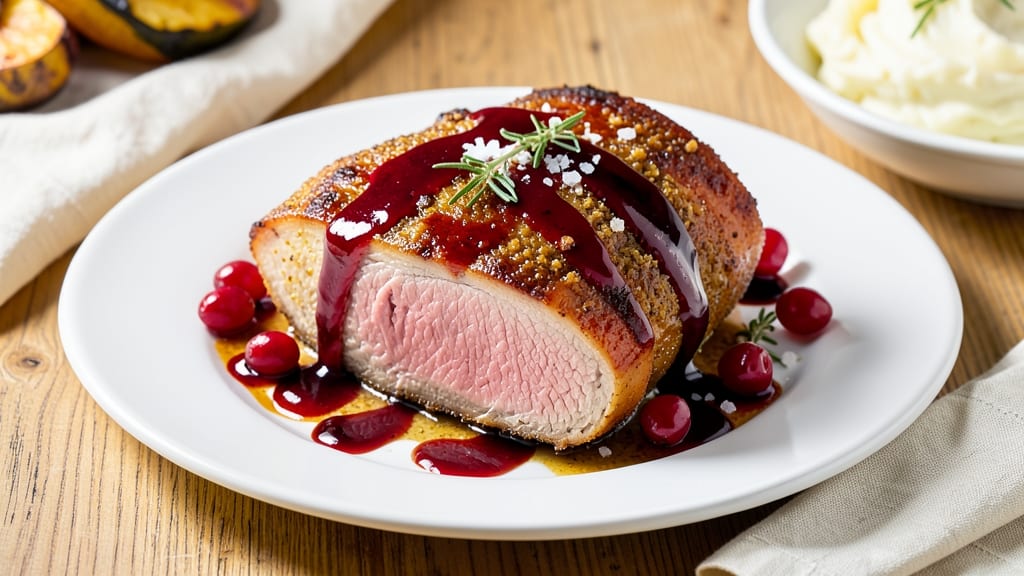
This cranberry Dijon pork loin with apple cider glaze delivers the perfect balance of tangy, sweet, and savory—a dish that transforms a simple pork loin into a showstopper. 💛 The secret lies in searing the pork to achieve balsamic-kissed crisp edges while keeping the interior juicy and tender, all paired with a glossy glaze that ties the flavors together beautifully.
What sets this recipe apart is the apple cider reduction, which caramelizes into a rich, fragrant glaze that complements the tartness of cranberries and the depth of Dijon mustard.
I’ve perfected this technique over years of cooking for crowds, ensuring the pork stays moist while the glaze adds a sticky, flavorful crust that’s impossible to resist.
The result is a restaurant-quality dish that’s elegant enough for dinner parties but simple enough for weeknight dinners. The crispy edges contrast perfectly with the tender core, and every bite is elevated by the bright, balanced flavors of the glaze.
This is the kind of meal that makes guests ask for seconds—and leaves you wanting to make it again.
Whether you’re grilling, roasting, or searing, this method guarantees foolproof results every time. The glaze can be made ahead, and the pork cooks in just 45 minutes, making it a weeknight-friendly masterpiece. Let’s get cooking!
Ingredients for cranberry dijon pork loin with apple cider glaze
Transform simple pork loin into a restaurant-worthy centerpiece with these carefully balanced ingredients.
| Ingredient | Amount | Notes |
|---|---|---|
| Bone-In Pork Loin 🐖 | 1 ½ lb | Center-cut, 1-inch thick slices |
| Dijon Mustard 🍯 | 2 tbsp | High-quality, whole-grain preferred |
| Fresh Cranberries 🍇 | ½ cup | Fresh or frozen, unsweetened |
| Apple Cider 🍎 | ½ cup | Unfiltered, preferably organic |
| Balsamic Vinegar 🍷 | 2 tbsp | Aged, dark variety |
| Olive Oil 🫒 | 2 tbsp | Extra-virgin, for searing |
| Garlic Cloves 🧄 | 4 cloves | Fresh, minced |
| Fresh Rosemary 🌿 | ½ tsp | Finely chopped, fresh preferred |
| Fresh Thyme 🌿 | ½ tsp | Leaves only, fresh preferred |
| Brown Sugar 🍚 | 1 tbsp | Light or dark |
| Salt 🧂 | 1 ½ tsp | Diamond Crystal kosher salt |
| Black Pepper 🌶️ | ½ tsp | Freshly ground |
| Honey 🍯 | 1 tbsp | Raw, local preferred |
The pork loin is non-negotiable—bone-in, center-cut slices ensure even cooking and maximum flavor. Look for cuts with visible marbling at your local butcher or specialty grocer like Whole Foods or D'Artagnan. If using frozen cranberries, thaw them first and pat dry to prevent excess moisture in the glaze. Balsamic vinegar should be aged at least 12 years for optimal depth—Giusti or Caputo are excellent choices. Fresh herbs elevate the dish significantly, so if using dried, reduce to one-third the amount and toast lightly in a dry pan before adding.
No Dijon mustard? Whole-grain mustard works best, but yellow mustard thinned with 1 tsp apple cider is a decent substitute. Swap apple cider for white grape juice if unavailable, though the flavor profile will be slightly milder. For a vegetarian twist, replace pork with portobello mushrooms (marinated in balsamic and soy sauce) or firm tofu (pressed and sliced thick). The honey can be omitted entirely for a strictly vegan version, though the glaze will be less glossy. Brown sugar adds caramelization—if you prefer less sweetness, reduce to 0.75 tbsp or use maple syrup instead.
Fresh cranberries and herbs keep best in the fridge for up to 1 week when stored properly—herbs wrapped in damp paper towels, cranberries in a sealed container. The glaze components (apple cider, balsamic, honey) can be prepped 2 days ahead and stored in the fridge, then reheated gently before brushing on the pork. Pork loin reheats beautifully—wrap in foil and warm in a 350°F oven for 15 minutes to maintain moisture. Leftovers store for 3 days in the fridge or 3 months frozen. For make-ahead convenience, assemble the dish completely (without cooking) and refrigerate overnight for deeper flavors.
Why You'll Love This Recipe
- One-Pan Magic: I swear by this recipe because it’s that easy—just sear the pork, simmer the glaze, and call it a dinner. No flipping pans, no stressing over sauces sticking. The bone-in pork bastes itself in the cranberry-Dijon mix while you stir the glaze, and honestly? That’s my kind of effortless.
- Sweet-Savory Balance: The tangy Dijon and sharp balsamic cut through the pork’s richness, while the caramelized apple cider and cranberries add a bright, almost dessert-like finish. It’s the kind of dish that tastes way fancier than it is—like a restaurant-worthy bite without the fuss.
- Weeknight Hero: This feeds four but scales perfectly for two or six. Leftovers? Even better. The glaze thickens into a sticky, jammy sauce that’s ridiculously good on toast the next morning. (Yes, I’ve done it. Don’t judge.)
- Budget-Friendly Luxe: Bone-in pork loin is cheaper than chops, and fresh cranberries stretch further than you’d think when simmered down. The apple cider glaze uses pantry staples, so you’re not breaking the bank for a meal that feels like a splurge. My wallet thanks me every time.
Step-by-step instructions for cranberry apple cider pork loin
This method delivers a perfectly balanced cut—crisp edges kissed with balsamic, a juicy core, and a bright cranberry glaze that ties everything together.
🍳 Step 1: Sear the Pork Loin for Maximum Flavor
Pat the 1.5 lb bone-in pork loin completely dry with paper towels—this is non-negotiable for crisp edges. Heat 2 tbsp olive oil in a heavy skillet over medium-high heat until shimmering. Place the pork loin in the pan and sear for 4-5 minutes per side until it develops a deep golden-brown crust. Press down gently during the first minute to prevent curling.
While searing, I like to keep the heat steady—too high and you'll burn the exterior before the interior cooks. You'll know it's ready when the crust is deep golden brown and the internal temperature reaches 145°F (use a meat thermometer). Transfer the pork to a plate and tent loosely with foil to rest while you prepare the glaze.
👨🍳 Step 2: Build the Cranberry Apple Cider Glaze
In a small saucepan, combine 0.5 cup apple cider, 0.5 cup fresh cranberries, 2 tbsp balsamic vinegar, 1 tbsp brown sugar, 1 tbsp honey, 4 cloves minced garlic, 0.5 tsp fresh rosemary, and 0.5 tsp fresh thyme. Bring to a simmer over medium heat and cook for 8-10 minutes until the cranberries burst and the liquid reduces by half.
Here's the thing—don't walk away. Stir occasionally to prevent sticking, and watch for the cranberries to pop. The glaze should thicken slightly and develop a deep ruby color. Once it reaches this stage, strain out the solids through a fine-mesh sieve, pressing gently to extract all the flavor. Set the glaze aside—it's the star of this dish.
🔥 Step 3: Roast the Pork to Juicy Perfection
Preheat your oven to 375°F. Return the seared pork loin to the skillet and spoon the cranberry glaze evenly over the top. Roast for 20-25 minutes until the internal temperature reaches 150°F—this ensures a juicy core while the exterior stays crisp.
I've found that roasting at this temperature prevents the pork from drying out. The glaze will bubble and caramelize slightly, creating those beautiful balsamic-kissed edges. If the glaze reduces too quickly, add 1-2 tablespoons of water to keep it glossy and flavorful.
🥘 Step 4: Rest and Glaze for Maximum Impact
Remove the pork from the oven and let it rest for 10 minutes on a cutting board. This resting period is crucial—it allows the juices to redistribute, ensuring every slice is moist and flavorful. While it rests, return the glaze to the skillet and simmer for 2-3 minutes to thicken slightly.
Here's where it gets fun—toss the pork in the reduced glaze one last time to coat it evenly. The glaze should cling to the pork like a second skin, adding a bright, tangy contrast to the rich meat. Slice against the grain into ½-inch thick portions and serve immediately with the extra glaze spooned over the top.
🍽️ Step 5: Serve with Confidence
Each slice should be deep pink in the center, with a crisp, caramelized exterior glistening with glaze. The cranberry-apple cider reduction should add a bright, slightly tart note that cuts through the richness of the pork. Serve with roasted sweet potatoes or a simple green salad to balance the dish.
Real talk: if you're serving guests, save the extra glaze for drizzling over the final presentation. It's the little details that make this dish truly special—juicy, flavorful, and impossible to resist.
Pro Tips For Making Cranberry Dijon Pork Loin With Apple Cider Glaze
- SEAR THE LOIN HARD: Get that cast-iron or heavy skillet screaming hot before the pork hits it—bone-side down first. I used to rush this, and the meat would steam instead of develop that deep, caramelized crust that holds the glaze. Two minutes per side, no peeking, or you’ll turn it into pork gray.
- USE DRY CRANBERRIES: Pat those fresh cranberries very dry with a paper towel before tossing them in the glaze. Wet berries just turn to mush and water down your sauce. I learned this the hard way when my glaze turned into a sad, thin syrup instead of a glossy, jammy coating.
- DON’T SKIP THE REST: Let the pork rest under foil for at least 10 minutes after pulling it from the oven—yes, even if you’re starving. Cutting into it too soon means all that juicy interior runs out, and you’re left with a dry, sad center. Trust me, the glaze will still be warm enough to serve.
- THICKEN THE GLAZE FAST: If your apple cider reduction is too thin, toss in a teaspoon of cornstarch mixed with cold water (not flour—it’ll taste off) and stir it in while it simmers. I used to let it reduce too long and end up with a sticky mess; this keeps it glossy and clings to the pork like it’s supposed to.
Flavor customization for this dish
Sweet Heat Balance
For those who love a touch of warmth, add ½ tsp cayenne pepper to the glaze while simmering—it’ll infuse a subtle kick that pairs beautifully with the sweet apple cider.
If you prefer a sweeter heat, swap the cayenne for 1 tsp smoked paprika and add 1 tsp orange zest to the glaze for a smoky, citrusy depth. Trust me, the contrast makes the dish sing. 🌶️
Herb Variations
Fresh herbs elevate this dish, but if you’re out of rosemary or thyme, don’t stress. Swap them for 1 tsp fresh sage or 1 tsp chopped parsley—sage adds earthiness, while parsley brightens the glaze.
For a Southern twist, add ½ tsp ground sage to the pork rub before searing. I’ve even used 1 sprig fresh tarragon in the glaze for a subtle anise note.
Glaze Depth Adjustments
Want a richer glaze? Increase the brown sugar to 2 tbsp and add 1 tbsp apple cider vinegar for extra tang. For a lighter touch, reduce the sugar to ½ tbsp and add 1 tbsp lemon juice to cut through the sweetness.
The key is balancing the acidity—too much sugar makes the glaze cloying, while too little can leave it flat.
Protein Swaps
This recipe isn’t pork-only! Swap the loin for chicken thighs (bone-in, skin-on) or beef tenderloin—both work beautifully. For chicken, reduce the roasting time to 15-20 minutes at 375°F and watch for an internal temp of 165°F.
Beef tenderloin cooks faster, so aim for 145°F and roast for 12-15 minutes. The glaze stays the same, but the protein’s richness changes the game.
Seasonal Twists
Fall? Add ½ cup diced pear to the glaze for a seasonal touch. Summer? Swap cranberries for fresh raspberries and reduce the honey to ½ tbsp—the berries add natural sweetness.
Winter cravings? Boost the glaze with 1 tsp cinnamon and ½ tsp cloves for a spiced apple cider vibe. Each season brings its own magic to this dish. ✨
Nutrition facts
Frequently asked questions
Can I use frozen cranberries instead of fresh?
Thaw frozen cranberries completely and pat them dry with a paper towel to remove excess moisture before adding to the glaze. The texture will be slightly softer, but the tart flavor remains. For best results, don't skip the drying step—wet cranberries can make the glaze watery.
How do I adjust this recipe for a larger crowd?
Double or triple the ingredients while keeping the same ratios. For 6 servings, use 3 lb pork loin, 1 cup apple cider, and 1 cup cranberries. The key is maintaining the same thickness of pork slices (1-inch) and searing them in batches to avoid overcrowding the pan.
What if my pork loin is thicker than 1-inch?
Adjust your cooking time accordingly—thicker cuts (up to 1.5-inch) may need 5-10 extra minutes in the oven. Always rely on your meat thermometer: 145°F for medium-rare, 150°F for medium. Thicker cuts benefit from a 5-minute rest before slicing to ensure even doneness throughout.
Can I make the glaze ahead of time?
Yes! Prepare the glaze up to 2 days ahead and store it in an airtight container in the fridge. Reheat gently in a saucepan over low heat until warmed through, then reduce by 2-3 minutes to thicken slightly before using. The flavors actually deepen when made ahead.
Why is my glaze too thin after roasting?
This usually happens when the oven temperature drops too low or the pork releases too much moisture. To fix it: reduce the glaze by 2-3 minutes on the stovetop after roasting, or add 1 tsp cornstarch mixed with 1 tbsp water to thicken. For prevention, pat the pork extremely dry before searing and use a meat thermometer to ensure proper doneness.