
Main Courses
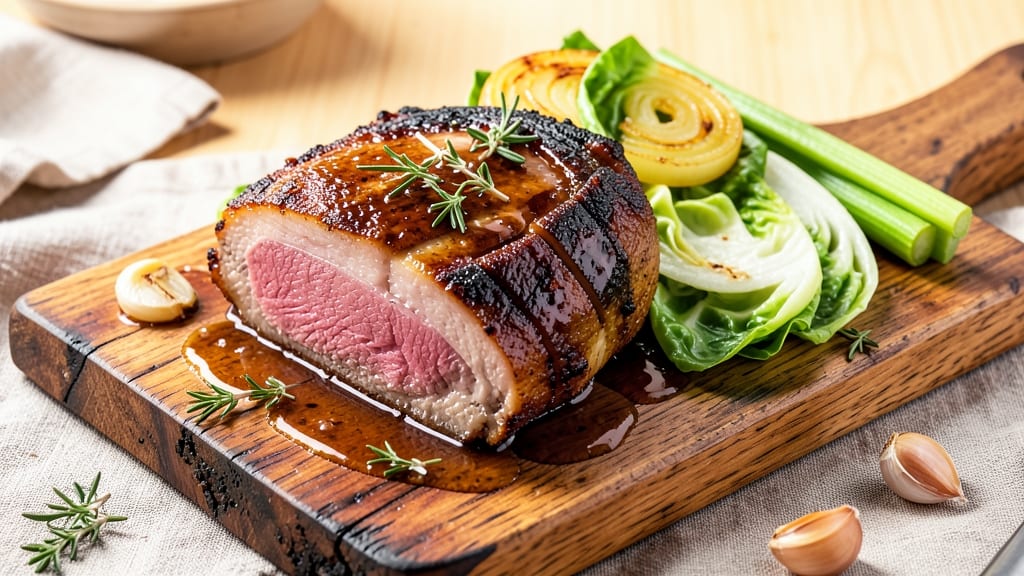
This apple cider pork roast with cabbage recipe transforms a simple pork shoulder into a showstopping centerpiece that tastes like autumn in every bite. 🍂 The secret lies in slow-braising the pork with apple cider, which tenderizes the meat while infusing it with sweet, tangy depth—no fancy equipment required.
I developed this recipe after years of perfecting pork techniques, and it's become my go-to for Sunday dinners that impress without requiring hours in the kitchen.
The magic happens when the apple cider reduces into a glossy, caramelized glaze that coats every bite, while the cabbage braises alongside until tender yet still holding its structure.
This isn't your typical heavy pork roast—it's balanced with bright acidity from the cider and subtle sweetness from the cabbage, creating harmony that's both comforting and sophisticated. The crisp celery topping adds a refreshing contrast that cuts through the richness perfectly.
What you'll end up with is pork that's impossibly tender, falling apart at the touch of a fork, with a surface glaze that's sticky-sweet and irresistibly caramelized. The cabbage becomes sweet and tender with just enough bite, while the celery topping adds a satisfying crunch.
This is the kind of dish that makes weeknight dinners feel like special occasions—no restaurant required.
The beauty of this recipe is its flexibility. You can make it ahead and reheat beautifully, or serve it immediately when the house smells like a fall harvest.
Pair it with crusty bread to soak up every last drop of that delicious cider reduction, or serve it over mashed potatoes for the ultimate comfort food experience. Let's get cooking—this pork roast is about to become your new favorite recipe.
Ingredients for apple cider pork roast with cabbage
Pork shoulder, apple cider, and cabbage—simple ingredients that create a fall masterpiece.
| Ingredient | Amount | Notes |
|---|---|---|
| Pork Shoulder 🍖 | 4 lb | Bone-in for best flavor |
| Apple Cider 🍎 | 2 ½ cups | Unfiltered for best flavor |
| Green Cabbage 🥬 | 1 ½ lb | Whole head, cut into wedges |
| Yellow Onion 🧅 | 2 whole | Peeled, quartered lengthwise |
| Celery Stalks 🥬 | 4 whole | Thinly sliced for topping |
| Garlic Cloves 🧄 | 6 cloves | Peeled, smashed |
| Fresh Thyme 🌿 | ¼ cup | Leaves only, chopped |
| Fresh Rosemary 🌿 | ¼ cup | Needles only, chopped |
| Brown Sugar 🍚 | ½ cup | Packed measure |
| Apple Cider Vinegar 🍋 | ¼ cup | For tangy balance |
| Olive Oil 🫒 | ¼ cup | For crisp celery topping |
| Salt 🧂 | 2 tbsp | Kosher or sea salt |
| Black Pepper 🌶️ | 1 tsp | Freshly ground |
| Crusty Bread 🥖 | 1 lb | For serving (optional) |
| Honey 🍯 | 1 tbsp | For finishing glaze |
The pork shoulder is the star, so look for bone-in cuts—they stay juicier. Costco or local butchers usually have the best prices, and you can ask them to trim excess fat if you're particular. Apple cider matters too: unfiltered brands like Woodchuck or Angry Orchard have more depth. The cabbage should be firm and heavy for its size—green or red both work. I always grab a whole head because it's cheaper than pre-shredded and lasts longer. For the celery, Trader Joe's sells the thick stalks that crisp up perfectly when roasted.
No bone-in pork? Bone-in ham hocks work in a pinch, but you'll need to adjust cooking time. Short on apple cider? Substitute apple juice with a splash of vinegar—it won't be identical, but close. Fresh herbs wilt fast, so dried thyme and rosemary at half the amount are fine if you're in a bind. The celery topping can be made ahead—just store it separately until ready to roast. For the bread, any crusty loaf works, but a baguette from the bakery section stays crisp longer than store-bought.
This roast tastes even better the next day—make extra for leftovers. Store in the fridge for 4-5 days or freeze portions for 3 months. The cider reduction keeps for 1 week in the fridge, perfect for drizzling over toast. I always make a double batch of the celery topping—it's great on salads too. The pork stays juicy when reheated, but add a splash of apple cider if it seems dry.
Why You'll Love This Recipe
- One-Pot Magic: I swear by this recipe when I’m too tired to deal with multiple pans. The pork shoulder, cabbage, and onions all cook together in the same pot—just add apple cider and let it simmer. Honestly, the cleanup is almost as good as the meal.
- Sweet-Savory Magic: That tangy apple cider cuts through the richness of the pork, while the cabbage soaks it up like a sponge. The onions caramelize just enough to add depth, and the celery? It’s the secret texture boost—crunchy enough to keep things interesting.
- Weeknight Hero: Between us, this is my go-to when I need something hearty but don’t want to slave over it. It’s perfect for busy nights, potlucks, or even a cozy Sunday dinner when you’ve got company. The leftovers? Even better the next day.
- Budget-Friendly Feast: Pork shoulder is a steal, and cabbage stretches it into a full meal. I’ve fed four people for under $15 with this—plus, the flavors are so rich, no one complains about the price. It’s my secret weapon for making grocery money go further.
Step-by-step instructions for apple cider pork roast with cabbage
This slow-braised pork shoulder becomes melt-in-your-mouth tender with a rich apple cider sauce.
🔥 Step 1: Sear the Pork Shoulder for Deep Flavor
Pat the 4 lb pork shoulder dry with paper towels—this helps the seasoning stick and creates a better crust. Place it fat-side down in a large Dutch oven over medium-high heat with 2 tablespoons of the olive oil. Let it sear undisturbed for 8-10 minutes until the fat renders and the skin turns deep golden brown.
Flip the pork and repeat on the other side. While it sears, sprinkle both sides with 1 tablespoon of salt and ½ teaspoon of black pepper. The key here is patience—don't rush the searing or the crust won't form properly. You'll know it's ready when the pork releases easily from the pan and the skin is crispy and mahogany-colored.
🍳 Step 2: Build the Apple Cider Braising Liquid
Remove the pork from the Dutch oven and set it aside. In the same pot, add 2 tablespoons of olive oil and place it over medium heat. Add the 2 whole yellow onions (quartered lengthwise) and 6 cloves garlic cloves (smashed), cooking for 5 minutes until softened and fragrant.
Stir in 0.25 cup fresh thyme leaves, 0.25 cup fresh rosemary needles, and 0.5 cup packed brown sugar. Cook for 1 minute to toast the herbs and caramelize the sugar slightly. Pour in the 2.5 cups apple cider and 0.25 cup apple cider vinegar, scraping up any browned bits from the bottom of the pot. Bring to a simmer.
🥘 Step 3: Braise the Pork Shoulder Slowly
Return the pork to the Dutch oven, fat-side up, and add 1 cup water to the pot. The liquid should come about halfway up the sides of the pork. Bring everything to a gentle boil, then reduce heat to low, cover tightly, and transfer to a 300°F oven.
Braise for 3 hours, turning the pork every 45 minutes to ensure even cooking. You'll know it's ready when a fork slides in easily and the internal temperature reaches 195-200°F. The pork should be fork-tender, with the meat pulling apart easily. If the liquid reduces too much before then, add a splash of water or apple cider to keep it moist.
🥘 Step 4: Prepare the Cabbage and Celery Topping
While the pork braises, prepare the cabbage. Remove the 1.5 lb green cabbage from its core and cut it into 6 wedges. In a large skillet, heat 2 tablespoons olive oil over medium heat. Add the cabbage wedges and cook for 8-10 minutes, turning occasionally, until the edges begin to soften but still hold their shape.
For the celery topping, thinly slice the 4 whole celery stalks on the diagonal. In a separate skillet, heat 2 tablespoons olive oil over medium-high heat. Add the sliced celery and cook for 3-4 minutes until crisp-tender and golden. Remove from heat and stir in 1 tablespoon honey and 1 teaspoon black pepper. Set aside.
🔥 Step 5: Finish and Serve with Crisp Topping
Once the pork is tender, remove it from the oven and let it rest for 15 minutes before carving. Skim excess fat from the braising liquid, then strain it through a fine-mesh sieve into a saucepan. Return the strained liquid to the Dutch oven and simmer over medium heat for 5-7 minutes until slightly thickened.
To serve, place a portion of the cabbage wedges on each plate, top with sliced pork, and ladle the reduced apple cider sauce over the top. Spoon the crisp celery topping over everything and serve with 1 lb crusty bread on the side. The combination of tender pork, sweet-tangy sauce, and crisp celery topping makes this dish unforgettable.
Pro Tips For Making Apple Cider Pork Roast With Cabbage
- Sear the Pork First: High heat for 3-4 minutes on each side before adding liquid—this isn’t just for looks. The crust locks in flavor and keeps the meat from turning into a mushy slab when it’s braised in apple cider later.
- Shred the Cabbage Thin: Cut the cabbage into ¼-inch slices, not wedges. Thicker pieces stay crunchy and undercooked, while thin layers soften perfectly in the cider and absorb all that porky goodness.
- Don’t Rush the Cider Reduction: Let the apple cider simmer uncovered for at least 10 minutes after adding the pork. Skim off the foam that rises—it’s bitter—and let it reduce to a syrupy consistency. This isn’t the time to walk away.
- Use the Celery Right: Finely chop the celery (1/8-inch dice) and sauté it with the onions until it’s almost caramelized. This isn’t just flavor—it’s the base that keeps the cider from tasting watery. (Yes, even if you’re impatient like me.)
Creative variations of apple cider pork roast with cabbage
Southern BBQ Twist
For a Carolina-style variation, swap the apple cider for ½ cup apple cider vinegar and ½ cup tomato paste in the braising liquid. Add 2 tbsp smoked paprika and 1 tbsp brown sugar to the pork rub before searing.
I learned this trick from my time in Charleston—it gives the pork that signature smoky-sweet profile while keeping the tender texture. Serve with pickled jalapeños on top for a spicy kick. 🌶️
Herb-Infused French Style
Transform this into a bouillabaisse-inspired pork roast by adding 1 sprig fresh tarragon, 1 sprig fresh parsley, and 1 bay leaf to the braising liquid. Replace the brown sugar with 1 tbsp Dijon mustard and reduce the honey in the celery topping to ½ tbsp.
The French touch comes from a splash of ¼ cup dry white wine (like Sauvignon Blanc) deglazed from the Dutch oven after searing. Garnish with chopped parsley instead of thyme.
Sweet & Spicy Asian Fusion
For an Asian-inspired version, stir 2 tbsp gochujang (Korean chili paste) and 1 tbsp grated ginger into the braising liquid. Add 1 tbsp honey to the cabbage while cooking and finish with 1 tsp sesame seeds on the celery topping.
Use green onions instead of thyme and rosemary. The gochujang adds a deep, umami-rich sweetness that pairs beautifully with the pork’s natural flavors. 🍜
Winter Root Vegetable Addition
Make this a hearty winter meal by adding 1 lb parsnips and 1 lb carrots, cut into chunks, to the Dutch oven with the cabbage. Toss them in 1 tbsp olive oil, ½ tsp salt, and ¼ tsp black pepper before adding to the pot.
They’ll absorb the apple cider flavors beautifully and add a natural sweetness that complements the pork. Serve with extra sauce drizzled over the roots for a complete harvest-inspired dish.
Slow Cooker Adaptation
For a hands-off version, sear the pork as directed, then transfer everything (including the cabbage wedges) to a 6-quart slow cooker. Cook on low for 8 hours or high for 5 hours, skimming excess fat halfway through.
The cabbage will soften perfectly without overcooking. Finish with the celery topping and sauce as written—it’s a game-changer for busy weeknights. ⏰
Make-Ahead Glaze
Double the apple cider reduction and freeze it in ice cube trays for quick glaze additions later. Thaw and simmer to thicken before using. I also make a batch of the celery topping ahead and store it in the fridge for up to 3 days.
The pork itself reheats beautifully—just warm it in the oven at 300°F for 20 minutes with a splash of apple cider to keep it moist. Perfect for meal prep! 💫
Nutrition facts
Frequently asked questions
Can I substitute apple cider vinegar for regular vinegar in this recipe?
The apple cider vinegar adds a unique depth of flavor that regular white vinegar can't replicate. However, if you're in a pinch, you can substitute with an equal amount of apple juice plus 1 tablespoon extra apple cider vinegar to maintain some of the tangy balance. Just know the flavor profile will be slightly milder.
How do I know when the pork shoulder is fully cooked?
The pork shoulder is done when it reaches an internal temperature of 195-200°F and is fork-tender. A meat thermometer is your best friend here—insert it into the thickest part of the meat, avoiding fat. The pork should pull apart easily when tested with two forks, and the juices should run clear.
Can I use a different cut of pork instead of shoulder?
While pork shoulder is ideal for this recipe, you can use pork butt (Boston butt) or even a bone-in ham hock in a pinch. Just be aware that the cooking time and tenderness may vary slightly. Bone-in cuts will have more flavor but may require a few extra minutes in the oven. Avoid lean cuts like tenderloin—they won't become tender enough with this braising method.
What's the best way to reheat leftovers?
Leftovers reheat beautifully! Place the pork in an oven-safe dish, cover with foil, and warm in a 300°F oven for 20-30 minutes. For extra moisture, add a splash of apple cider or broth. The cabbage and celery topping can be reheated separately in the microwave for 1-2 minutes—just be careful not to overcook the celery or it'll lose its crisp texture.
Why did my cabbage turn out mushy instead of tender?
Overcooking is the most likely culprit. Cabbage should be tender but still hold its shape—aim for 8-10 minutes of cooking time in the skillet. If you're braising it in the oven with the pork, remove it 30-45 minutes before the pork is fully done. Also,