Main Courses
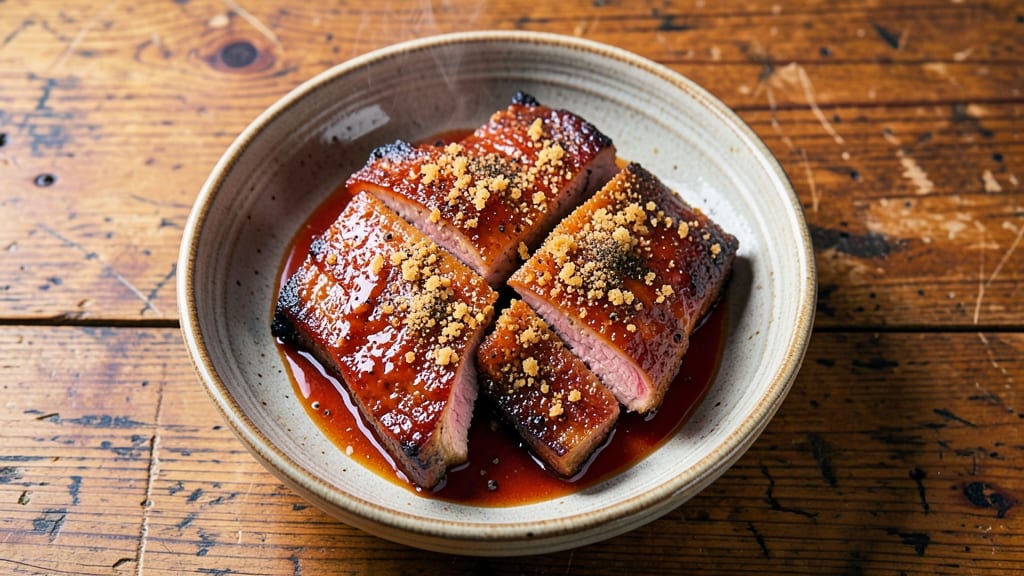
This apple juice ribs recipe transforms tough cuts into fall-apart tenderness with a caramelized glaze that balances smoky depth and sweetness. The secret lies in marinating ribs overnight in apple juice, which tenderizes the meat while infusing it with natural fruit sugars—no sticky commercial sauces required.
Professional pitmasters swear by this technique for ribs that stay juicy even after hours of low-and-slow cooking.
The process begins with a simple dry rub of salt, pepper, and brown sugar, then a 12-hour soak in apple juice (plus garlic and spices) that works magic on the meat.
When you grill or smoke them at 225°F, the apple juice reduces into a glossy, sticky glaze that caramelizes beautifully while keeping the ribs moist. Basting every 30 minutes ensures even coverage and that signature glossy finish.
What you’ll end up with is a rack of ribs where every bite delivers perfect tenderness and a complex flavor profile—smoky from the grill, sweet from the caramelized glaze, and just enough tang from the apple juice.
The texture is what makes this recipe stand out: crispy bark on the outside, melt-in-your-mouth meat on the inside.
Serve with classic sides like tangy coleslaw or buttery cornbread to round out the meal. The apple juice’s natural sweetness pairs perfectly with these staples, creating a balanced plate that’s as impressive as it is delicious. Ready to master this technique? Let’s get started.
Ingredients for apple juice ribs
Pitmaster-approved ingredients for ribs that caramelize perfectly with apple juice's natural sweetness and smoky depth.
| Ingredient | Amount | Notes |
|---|---|---|
| Pork Baby Back Ribs 🍖 | 4 lb | Bone-in, meaty ends preferred |
| Unsalted Butter 🧈 | ½ cup | Cold, cubed for rub |
| Kosher Salt 🧂 | ½ cup | Diamond Crystal preferred |
| Light Brown Sugar 🍚 | ½ cup | Packed, light molasses flavor |
| Freshly Ground Black Pepper 🌶️ | 1 tbsp | Coarse grind preferred |
| Unfiltered Apple Juice 🍎 | 2 cups | 100% apple, no additives |
| Garlic Cloves 🧄 | 6 cloves | Peeled, smashed for marinade |
| Yellow Onion 🧅 | 1 whole | Medium, sliced for marinade |
| Cayenne Pepper 🔥 | ½ tsp | Adjust for heat tolerance |
| Smoked Paprika 🌶️ | 1 tbsp | For smoky depth |
| Wooden BBQ Skewers 🔥 | 4 pieces | Soaked in water 30 minutes |
| Wood Chips (Hickory or Apple) 🌳 | 2 cups | For smoker or grill |
| Apple Cider Vinegar 🍏 | 1 tbsp | For tang in glaze |
The ribs are the foundation—bone-in baby backs with meaty ends ensure maximum flavor and moisture. Look for cuts with good marbling at Costco or local butcher shops—the higher the fat content, the more tender the final result. For the dry rub, Diamond Crystal kosher salt dissolves more easily than table salt, creating a cleaner crust. The unfiltered apple juice is crucial; brands like Mott's or Tree Top work best as they retain more natural sugars and acidity for the marinade. If using store-bought apple juice, opt for 100% juice with no added sweeteners or preservatives.
No unfiltered apple juice? Freshly squeezed apple cider works perfectly, though it may require straining. For the brown sugar, light molasses flavor is ideal, but dark brown sugar adds more depth if you prefer a richer glaze. The apple cider vinegar can be swapped for lemon juice if needed, though it won't have the same apple-forward tang. If you're missing smoked paprika, half the amount of regular paprika plus a pinch of liquid smoke mimics the effect. The garlic and onion in the marinade can be pulsed in a food processor for even distribution, but a sharp knife works fine too—just make sure they're finely chopped.
Store the ribs uncovered in the fridge for up to 24 hours before cooking to let the rub penetrate deeply. The marinade ingredients keep in the fridge for 5 days, though the apple juice and vinegar will develop more flavor over time. Once cooked, ribs reheat beautifully—wrap them in foil with a splash of apple juice and bake at 300°F for 20 minutes. For leftovers, portion into airtight containers and freeze for up to 3 months, thawing overnight in the fridge before reheating.
Why You'll Love This Recipe
- Foolproof Prep: I swear by this recipe because it’s actually simple—no fancy brining or hours in the oven. Just slather those ribs with butter, salt, and pepper, then let the apple juice do the heavy lifting while you sip wine and pretend you’re a pitmaster.
- Sweet-Savory Magic: That brown sugar glaze? It’s where the real magic happens—caramelized edges that crackle like autumn leaves, balanced by the tangy depth of apple juice. Honestly, the first bite makes me question why I ever bought dry rubs.
- Tailgate Ready: Between us, these ribs are my go-to for game days, potlucks, or when my buddy’s football team needs feeding. They’re hearty enough for a crowd but don’t require a deep fryer or a smoker—just a pan and patience.
- Leftovers That Don’t Suck: I make a double batch every time because the leftovers? Still fall-off-the-bone tender the next day. Wrap them in foil, reheat in the oven, and suddenly you’ve got a lazy Sunday lunch without the guilt of takeout. Budget win.
Step-by-step instructions for smoky-sweet apple juice ribs
Master this technique and you'll achieve ribs with a perfect balance of smoky depth and caramelized sweetness.
Prepare the Dry Rub and Marinate the Ribs
In a medium bowl, combine the 0.5 cup unsalted butter, 0.5 cup kosher salt, 0.5 cup light brown sugar, 1 tablespoon freshly ground black pepper, 0.5 teaspoon cayenne pepper, and 1 tablespoon smoked paprika. Mix thoroughly until the butter is fully incorporated and the mixture resembles coarse sand.
Pat the 4 lb pork baby back ribs completely dry with paper towels—this is critical for bark development. Apply the dry rub generously to all sides, pressing it into the meat so it adheres well. Wrap the ribs tightly in plastic wrap and refrigerate for at least 4 hours or overnight. This resting period allows the rub to penetrate deeply and develop maximum flavor.
Prepare the Apple Juice Marinade and Skewers
In a separate bowl, combine the 2 cups unfiltered apple juice, 6 smashed garlic cloves, 1 sliced yellow onion, and 1 tablespoon apple cider vinegar. Mix well and pour into a resealable plastic bag large enough to accommodate the ribs. Add the ribs to the marinade, ensuring they're fully submerged, and refrigerate for 4-6 hours or overnight.
Meanwhile, soak the 4 wooden BBQ skewers in water for at least 30 minutes. This prevents them from burning during cooking. Prepare your smoker or grill with 2 cups wood chips (hickory or apple) to create a clean, aromatic smoke environment.
Smoke the Ribs Low and Slow
Preheat your smoker to 225°F and allow it to stabilize before adding the ribs. Remove the ribs from the marinade, discarding the liquid, and place them meat-side down on the smoker grates. Smoke the ribs for 3 hours, maintaining a consistent temperature of 225-250°F.
After 3 hours, flip the ribs meat-side up and continue smoking for another 2 hours. The internal temperature should reach 165°F at this point. You'll notice the ribs beginning to develop a thin bark—this is your signal that they're ready for the glaze.
Apply the Glaze and Caramelize
Increase the smoker temperature to 275°F and brush the ribs generously with the reserved apple juice marinade. Return the ribs to the smoker and continue cooking for 1-1.5 hours, brushing with additional marinade every 30 minutes. The glaze will begin to caramelize, creating a glossy, sticky coating that clings to every rib.
Watch closely during the final 30 minutes of cooking—the glaze should darken to a deep amber color and form a thick, syrupy consistency. The ribs are done when they reach an internal temperature of 203°F and the glaze is fully caramelized. Remove the ribs from the smoker and let them rest for 15 minutes before serving.
Pro Tips For Making Apple Juice Ribs
- Trim the Fat First: Baby back ribs have a thick fat cap that can make them greasy—especially when braising in apple juice. Use a sharp knife to trim it down to about ¼-inch before seasoning. I learned this the hard way after serving ribs that felt soggy instead of tender.
- Brown Before Braising: Skip the slow start—sear the ribs over high heat for 3-4 minutes per side until deeply browned. That crust locks in flavor when the apple juice later braises them. Yes, it adds 10 minutes, but it’s worth it.
- Salt the Sugar: Mix the brown sugar with a pinch of kosher salt before applying it to the ribs. The salt cuts through the sweetness and makes the glaze stick better. (I used to just sprinkle sugar on top—big mistake.)
- Simmer, Don’t Boil: Apple juice ribs should bubble gently, not roar. If the liquid boils hard, the ribs will turn mushy. Keep the heat low enough that you just see tiny bubbles—this keeps them tender without falling apart.
Pro cooking tips for perfect results
Marinade Magic
The apple juice marinade does more than just add flavor—it tenderizes the tough rib meat through osmosis. The natural acids in apple juice break down connective tissues while the sugars caramelize during cooking.
I recommend using 100% unfiltered apple juice (like Mott's) because it retains more enzymes and natural sugars than filtered varieties. For extra tenderness, add 1 tablespoon of apple cider vinegar to the marinade—it boosts acidity for deeper penetration. 🍎
Marinate the ribs for at least 4 hours, but overnight is ideal. The longer they soak, the more the meat absorbs the juices. I like to use a resealable plastic bag for even coating—just make sure the ribs are fully submerged.
If you're short on time, a 3-hour marinade still works, but the texture won’t be as tender. Pro tip: Smash the garlic cloves instead of mincing them for more intense flavor infusion.
Temperature Control
Low-and-slow cooking is non-negotiable for ribs—aim for 225-250°F throughout the process. I use a Meater thermometer to monitor both the smoker and internal meat temperature. If your smoker fluctuates above 250°F, the bark will burn before the meat cooks through.
For best results, maintain 225°F for the first 3 hours, then raise to 275°F only when applying the glaze. 🌡️
Never rush the cooking process. Ribs need 5-6 hours total to reach 203°F internal temperature—this is when collagen fully breaks down into gelatin, creating that melt-in-your-mouth texture.
If you’re in a hurry, wrap the ribs in butcher paper after 3 hours to speed up cooking (this is called the "Texas Crutch"). Just be sure to unwrap them 30 minutes before finishing to let the glaze caramelize properly.
Glaze Application
The glaze is where the magic happens—brush the ribs every 30 minutes during the final hour of cooking. Use a silicon basting brush for even coverage and to avoid burning your fingers. The glaze should reduce to a syrupy consistency with a deep amber color.
If it’s not caramelizing, your smoker might be too cold—raise the temperature to 275°F and give it another 20 minutes. 🔥
For extra shine, add 1 tablespoon of apple cider vinegar to the glaze mixture before brushing. The acidity helps the sugars caramelize faster and adds a bright tang. Avoid over-brushing—too much liquid can steam the meat instead of caramelizing.
If the glaze starts to burn, wipe it off with a paper towel and let the ribs rest for 10 minutes before reapplying a fresh coat.
Resting Like a Pro
Resting the ribs for 15 minutes before serving is crucial—it allows the juices to redistribute, preventing them from dripping out when you cut. I like to wrap them in heavy-duty foil with a splash of apple juice to keep them warm.
If you’re serving a crowd, place the ribs on a wire rack in a 200°F oven to stay warm while you plate. 💫
For leftovers, store ribs in an airtight container with a paper towel to absorb excess moisture. Reheat at 300°F for 20 minutes—add a splash of apple juice to prevent drying.
Never microwave ribs, as it turns the meat tough and rubbery. The glaze reheats beautifully in the oven, so it’s worth the extra effort for restaurant-quality results every time.
Nutrition facts
Frequently asked questions
Can I use store-bought apple juice for this recipe?
Yes, but choose 100% unfiltered apple juice with no added sugars or preservatives. Brands like Mott's or Tree Top work best as they retain more natural sugars and enzymes for tenderizing. Avoid juice drinks or sweetened varieties—they'll make the glaze too cloying.
How do I prevent the ribs from drying out during smoking?
Keep the smoker temperature steady at 225-250°F and maintain 40-50% humidity using a water pan. Wrap ribs in butcher paper after 3 hours if needed (the "Texas Crutch"), but unwrap 30 minutes before glazing. Basting with apple juice every 30 minutes also helps maintain moisture.
What's the best wood for smoking these ribs?
Hickory or apple wood chips work perfectly—they complement the apple juice's sweetness without overpowering it. Avoid strong woods like mesquite, which can clash with the fruit notes. For a milder smoke, use fruitwood blends or cherry wood as alternatives.
Can I make this recipe on a grill instead of a smoker?
Use an indirect heat method—place ribs on the cooler side of the grill and keep the lid closed. Maintain 225°F using charcoal or wood pellets. For extra smoke flavor, add soaked wood chips to the coals. The cooking time will be similar, just monitor temperatures closely.
What if my glaze isn't caramelizing properly?
Check your smoker temperature—it needs to reach 275°F for proper caramelization. If too cold, increase heat and give it 20 minutes. For extra help, add 1 tablespoon apple cider vinegar to the glaze mixture before brushing. Avoid over-brushing, as excess liquid prevents caramelization.