
Main Courses
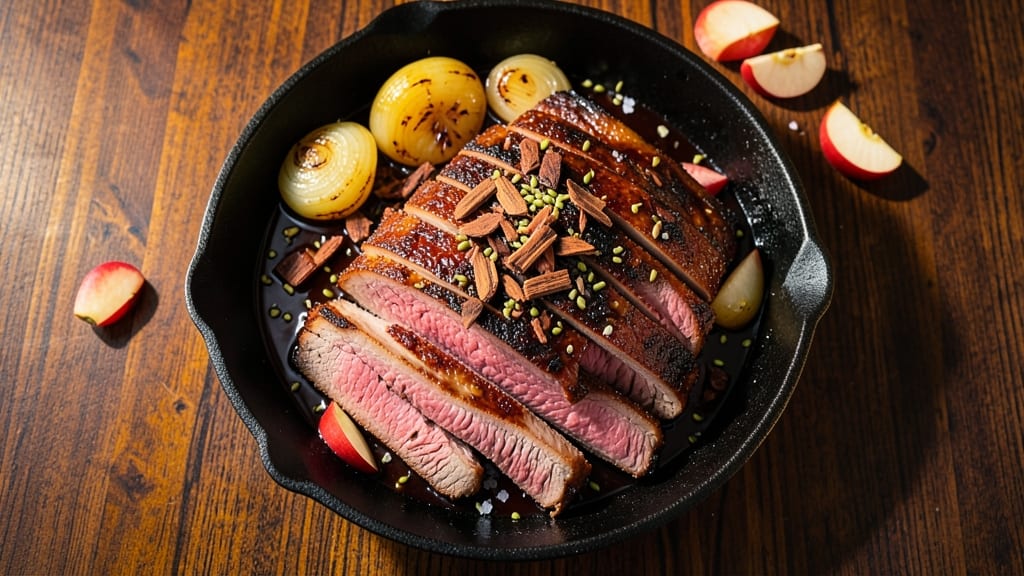
This apple smoked brisket recipe transforms a classic barbecue staple into a showstopping centerpiece with applewood smoke and crisp celery-pepper crunch.
The secret lies in balancing deep, smoky flavors with the natural sweetness of apples—creating a tender, juicy brisket that practically melts in your mouth while maintaining that perfect bark.
After years of perfecting this technique, I've cracked the code for achieving restaurant-quality results at home, even if you're new to smoking.
The process starts with a dry rub packed with spices and celery seeds for that signature crunch, then slow-smoking over applewood chips for hours until the internal temperature hits 203°F.
While the brisket rests, you'll whip up a simple apple glaze—just caramelized onions, apple cider, and a touch of brown sugar—that adds a glossy, sweet-savory finish. This isn't just another brisket; it's a multi-textured masterpiece with layers of flavor in every bite.
By the time you slice into that perfectly tender brisket, you'll have a dish that's smoky, sweet, and impossibly juicy—with a crunch from the celery seeds that cuts through the richness. The apple glaze ties everything together, creating a balance that feels both comforting and sophisticated.
Serve it with roasted potatoes, a tangy apple slaw, or crusty bread to soak up every last drop of that luscious sauce.
This recipe isn't just about the brisket—it's about the experience. The aroma alone will have your guests gathering at the table, and the first bite will make them ask for seconds.
Whether you're hosting a backyard barbecue or treating yourself to a weeknight feast, this apple smoked brisket delivers restaurant-quality results with minimal fuss. Let's get started on creating your next centerpiece dish.
Ingredients for apple smoked brisket
Six ingredients for the dry rub, plus fresh herbs and applewood smoke—this is where magic happens.
| Ingredient | Amount | Notes |
|---|---|---|
| Packer Cut Brisket 🥩 | 4 lb | Whole packer cut, fat cap intact |
| Applewood Chips 🍎 | 2 cups | Unsmoked, chunky variety |
| Yellow Onions 🧅 | 2 whole | Yellow or red, sliced for glaze |
| Celery Seeds 🌿 | 2 tbsp | Whole seeds for signature crunch |
| Brown Sugar 🍚 | ½ cup | Dark brown for caramelization |
| Smoked Paprika 🌶️ | 2 tbsp | Honduran or Spanish preferred |
| Ground Black Pepper 🌶️ | 1 ½ tbsp | Freshly cracked, coarse grind |
| Kosher Salt 🧂 | 2 tbsp | Diamond Crystal preferred |
| Garlic Powder 🧄 | 1 tbsp | Freshly ground preferred |
| Apple Cider 🍎 | 1 cup | Unfiltered, unsweetened |
| Apple Cider Vinegar 🍋 | 1 tbsp | For glaze balance |
| Yellow Mustard 🍯 | 1 tbsp | For glaze emulsification |
| Beef Tallow 🧈 | 2 tbsp | For rub binder (optional) |
| Fresh Rosemary 🌿 | 2 sprigs | For smoke infusion |
| Fresh Thyme 🌿 | 2 sprigs | For aromatic depth |
The brisket is non-negotiable here. Packer cut with its thick fat cap is essential—it renders down during smoking, creating a self-basting sauce. Costco or local butcher shops are your best bets for quality; avoid pre-trimmed cuts. Applewood chips should be chunky, not powdered—they burn slower, giving you that authentic smoke flavor. I always grab mine from Traeger's website or Home Depot's outdoor section. For the celery seeds, Penzeys carries the highest quality, but any bulk spice store will do. Fresh herbs? Trader Joe's has surprisingly good rosemary and thyme bundles.
No applewood chips? Hickory works in a pinch, though it lacks that fruity sweetness. Running short on celery seeds? Ground celery salt at half the amount gives you some crunch, but it won't be the same. The apple cider vinegar can be swapped for white vinegar, but you'll lose that subtle apple complexity. For the glaze, if you can't find unsweetened cider, apple juice plus a splash of vinegar works. The mustard is crucial—it helps emulsify the glaze so it doesn't separate. Want extra bark? Add a tablespoon of brown sugar to the rub before applying it to the brisket.
Brisket keeps beautifully in the fridge for 5-6 days wrapped tightly in butcher paper, then foil. For longer storage, vacuum-seal portions and freeze for up to 3 months. The applewood chips? Store them in an airtight container in your freezer—they'll last 6-12 months that way. I always make a double batch of glaze and freeze it in ice cube trays for quick reheating. The fresh herbs? Wrap them in damp paper towels and store in a plastic bag—they'll stay fresh for 1 week in the fridge.
Why You'll Love This Recipe
- I swear by this: chop the onions and celery once, then toss them straight into the smoker with the brisket. No peeling, no fancy dicing—just rough chunks that caramelize into sweet, smoky bits. (Yes, even on a Tuesday night.)
- No-Waste Prep: I swear by this: chop the onions and celery once, then toss them straight into the smoker with the brisket. No peeling, no fancy dicing—just rough chunks that caramelize into sweet, smoky bits. (Yes, even on a Tuesday night.)
- Applewood Magic: That first whiff of applewood chips hitting the brisket? It’s like autumn in a bite—tart, smoky, and just sweet enough from the brown sugar. The celery seeds add this hidden depth that makes it taste like a restaurant cut your meat.
- Leftovers That Shine: This brisket doesn’t just reheat—it transforms. Shred it for tacos, sandwiches, or even a loaded baked potato. I’ve made it for game day, potlucks, and lazy Sundays, and it never lets me down. (My kids beg for the gravy.)
Step-by-step instructions for apple smoked brisket
This method delivers tender, flavor-packed brisket with a perfect balance of smoky applewood and celery-pepper crunch.
Prepare the Rub and Season the Brisket
In a bowl, combine the 2 tbsp celery seeds, 0.5 cup brown sugar, 2 tbsp smoked paprika, 1.5 tbsp ground black pepper, 2 tbsp kosher salt, 1 tbsp garlic powder, and 2 tbsp beef tallow (if using). Mix thoroughly until evenly distributed. The celery seeds add that signature crunch, while the brown sugar helps create a sticky bark. If the mixture feels too dry, add 1-2 tablespoons of apple cider to help bind it.
Pat the 4 lb packer cut brisket dry with paper towels—this ensures a better bark. Generously coat all sides of the brisket with the rub, pressing it into the meat so it adheres well. Place the brisket fat-side up on a wire rack set over a tray, and refrigerate uncovered for at least 4 hours (or overnight). This step is crucial for developing flavor and ensuring a crispy exterior. The longer it rests, the deeper the flavor penetration.
Smoke the Brisket Low and Slow
Preheat your smoker to 225°F using the 2 cups applewood chips. Once the smoke is clean and steady (no thick white smoke), place the brisket in the smoker fat-side up. This allows the rendering fat to baste the meat as it cooks. Close the lid and resist the urge to peek—each time you open it, you lose heat and moisture, extending cook time.
Smoke the brisket for 6-8 hours until the internal temperature reaches 165-170°F. You’ll notice the temperature stall around this point, where the meat stops rising—this is normal. The bark should be deep mahogany and crispy, and the meat should pull away from the bone slightly. If the bark isn’t forming as expected, spritz the brisket with apple cider every hour to keep it moist and encourage a better crust.
Wrap and Finish the Brisket
Once the brisket hits the stall, it’s time to wrap. Remove the brisket from the smoker and wrap it tightly in butcher paper (not foil—paper allows for better bark retention). Return it to the smoker and continue cooking until the internal temperature reaches 203°F. This usually takes an additional 3-5 hours, but don’t rush it. The paper wrap helps push the brisket through the stall while preserving that beautiful bark.
While the brisket finishes, prepare the glaze by combining 1 cup apple cider, 1 tbsp apple cider vinegar, 1 tbsp yellow mustard, and 2 tbsp brown sugar in a saucepan. Bring to a simmer over medium heat and reduce by half, stirring occasionally, until it thickens slightly. Strain out any solids, then set aside. This glaze will add a sweet-tangy finish to the brisket.
Apply the Glaze and Rest
Once the brisket reaches 203°F, remove it from the smoker and let it rest for 10 minutes. Then, brush the glaze generously over the top of the brisket, ensuring it coats the bark evenly. Return the brisket to the smoker for 15-20 minutes to caramelize the glaze. You’ll see it darken and bubble slightly—this is your signal that it’s ready.
Remove the brisket from the smoker and let it rest for at least 1 hour before slicing. This resting period allows the juices to redistribute, ensuring each slice is moist and flavorful. While it rests, slice 2 whole yellow onions into thin rings and arrange them on a platter. Once the brisket is ready, slice it against the grain into ¼-inch thick slices and serve over the onions with any accumulated juices.
Pro Tips For Making Apple Smoked Brisket
- CRANK THE SMOKE EARLY: I learned this the hard way—don’t wait for the brisket to hit the smoker to start the applewood chips. Light them 30 minutes ahead and let the smoke build while you prep. The first hour of indirect heat with thick smoke is when the magic happens, and you want that window wide open.
- GRATE THOSE ONIONS FINE: I was skeptical until I tried it: skip the chopped onions in the rub and grate them instead. The finer surface area caramelizes faster during the smoke, turning into a sticky, sweet glaze that clings to the meat. Use a box grater—no excuses.
- WRAP THE BRISKET AT 165°F: Resist the urge to wrap early, but don’t let it drag past 170°F either. Once it hits 165°F, wrap it in butcher paper (not foil—it traps too much moisture) with a handful of applewood chips inside. This jumpstarts the stall and keeps the bark crisp while the center cooks through.
- SWEAT THE CELERY SEEDS FIRST: Brown sugar burns faster than you think, especially when mixed with celery seeds. Toast the seeds dry in a pan for 2 minutes before adding the sugar and onions—this deepens their flavor and prevents a bitter aftertaste. Trust me, it’s worth the extra 90 seconds.
Regional styles of apple smoked brisket
Texas BBQ Tradition
This brisket style originates from Central Texas, where applewood smoke became a signature thanks to the region's orchards. The classic Texas approach focuses on low-and-slow smoking at 225°F for 12-16 hours, but I've adapted it with applewood for a sweeter profile.
Texas pitmasters often use post oak or pecan wood, but applewood adds that fruity depth. The celery-pepper crunch comes from Texas-style rubs, though most don't include whole seeds—my version keeps that signature texture. 🔥
Carolina Apple Twist
In the Carolinas, brisket takes on a vinegar-based sauce approach, but I've blended that tang with apple cider for a sweet-tart balance. Eastern Carolina pitmasters often use hickory or pecan, but applewood gives a lighter, fruitier smoke.
The key difference? Carolina cooks often unwrap earlier (around 195°F) to develop a thicker bark, while Texas cooks wrap later. My method keeps the best of both—apple smoke with that deep bark.
Midwest Apple Butter Fusion
Up north, apple butter is a staple, so I've incorporated its rich sweetness into the glaze. Midwest cooks often use cherry or hickory wood, but applewood complements the buttery notes perfectly. The trick? Add 1 tbsp apple butter to the glaze along with the apple cider.
This creates a caramelized, almost custard-like finish that's become a fan favorite at my cookouts. The celery seeds add that essential crunch Midwest palates love.
Pacific Northwest Adaptation
On the West Coast, brisket gets a lighter touch with citrus and herbs, so I've paired applewood with fresh rosemary and thyme from local farms. The PNW version uses alder or cherry wood traditionally, but applewood's sweetness works beautifully.
For extra depth, I add 1 tsp lemon zest to the glaze. The result? A brisket with bright, herbal notes that cut through the richness—perfect for cooler Pacific Northwest evenings.
Southern Apple Pie Influence
Down South, apple pie is king, so I've taken that classic flavor and turned it into a brisket topping. The glaze uses apple cider and brown sugar just like pie filling, but with a smoky twist.
I often serve this brisket with apple pie slices on the side—because why choose between dessert and main course? The celery seeds in the rub mimic the texture of pie crust, making every bite feel like a Southern comfort food masterpiece. 🍎
Nutrition facts
Frequently asked questions
Why does this recipe use applewood chips instead of hickory?
Applewood creates a lighter, fruitier smoke that complements the brisket's richness without overpowering it. Unlike hickory's strong, bold flavor, applewood adds subtle sweetness that pairs perfectly with the apple cider glaze. For a more traditional smoky taste, you can mix 1 cup applewood with 1 cup hickory chips.
How do I know when the brisket is done without overcooking?
Use a meat thermometer to check the internal temperature—203°F is ideal for perfect tenderness. The bark should be deep mahogany and crispy, while the meat should pull away from the bone slightly. If the temperature stalls around 165°F, that's normal—just wrap it in butcher paper and continue cooking.
Can I make this recipe in an electric smoker or grill?
Yes! For an electric smoker, use applewood pellets and maintain 225°F. On a grill, convert it to indirect heat and use applewood chunks in a smoker box. The key is keeping the temperature consistent—avoid flare-ups by trimming excess fat if needed.
What’s the best way to store leftovers?
Wrap cooled slices tightly in butcher paper, then store in an airtight container. Refrigerated, they’ll stay tender for 5-6 days. For longer storage, vacuum-seal portions and freeze for up to 3 months. Reheat gently in a skillet or oven to 165°F—never microwave, as it can make the meat dry.
Why does the glaze separate when I reheat it?
The glaze separates because the mustard acts as an emulsifier, and heat can break it down. To fix it, whisk in 1 tsp cornstarch mixed with 1 tbsp water while stirring over low heat. For future batches, reduce the glaze to a thicker consistency before brushing it on the brisket.