
Main Courses
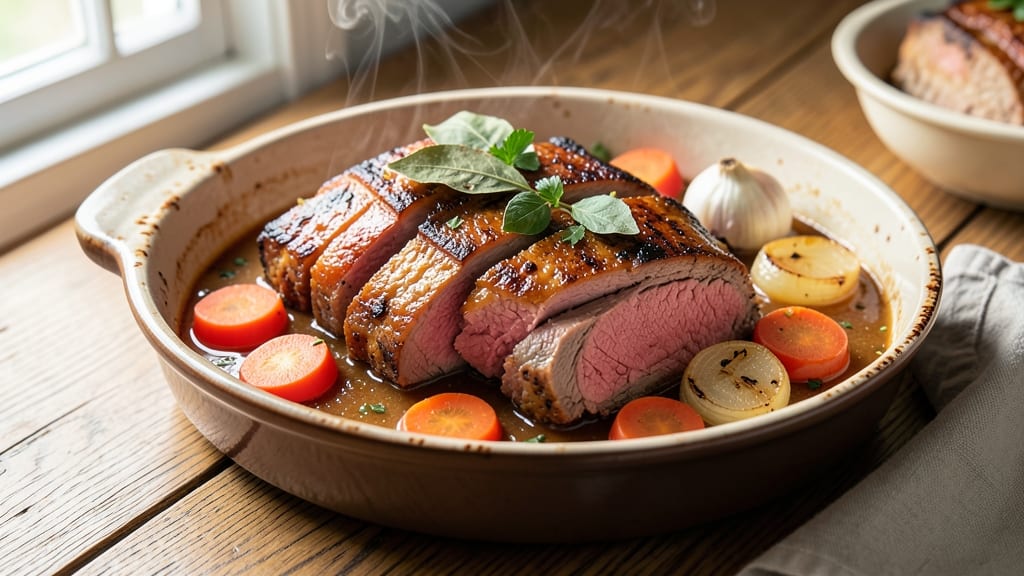
Corned beef cooked in apple juice transforms a classic brisket into something unexpectedly tender and aromatic. ✨ This method replaces traditional liquids with sweet-tart apple juice, which tenderizes the meat while infusing it with subtle fruit notes that balance the saltiness.
I first discovered this technique while adapting my grandmother's apple butter recipe to brisket—what started as an experiment became my go-to for St. Patrick's Day and beyond.
The key to success lies in the slow cook, where the apple juice works magic over 3 hours at 300°F. Unlike water or broth, the juice caramelizes slightly as it cooks, creating a glossy, flavorful sauce that clings to every bite.
The result is corned beef that's fork-tender with a beautiful pink center, not dry or overcooked. This method also reduces the need for additional seasoning—the corned beef brine already packs enough flavor.
What you'll end up with is a brisket that's perfectly juicy and infused with just the right amount of apple sweetness, creating a harmonious balance between the salty, spiced meat and the natural fruit notes.
The sauce left behind is rich enough to serve as a dipping sauce for potatoes or a glaze for carrots, making it a versatile centerpiece for any meal.
Serve with classic sides like creamy mashed potatoes, buttered cabbage, and crusty rye bread to soak up every last drop of that delicious apple-infused sauce. This approach proves that sometimes, a simple ingredient swap can elevate a dish from good to extraordinary.
Ingredients for corned beef cooked in apple juice
Sweet-tart apple juice transforms classic corned beef into something unforgettable—juicy, tender, and perfectly balanced.
| Ingredient | Amount | Notes |
|---|---|---|
| Corned Beef Brisket 🥩 | 3 lb | Pre-brined, whole cut preferred |
| Unsweetened Apple Juice 🍎 | 2 cups | 100% apple, no preservatives |
| Yellow Onion 🧅 | 1 whole | Quartered, skin on for color |
| Carrot 🥕 | 2 whole | Whole, unpeeled for texture |
| Garlic Cloves 🧄 | 4 cloves | Smashed, skin on for flavor |
| Fresh Bay Leaves 🌿 | 2 whole | Dried works if needed |
| Fresh Thyme Sprigs 🌿 | 4 whole | Stems intact for easy removal |
| Black Peppercorns 🌶️ | 10 whole | Freshly cracked preferred |
| Salt 🧂 | 1 tsp | Kosher or sea salt |
| Apple Cider Vinegar 🍏 | 1 tbsp | For brightness, optional |
| Honey 🍯 | 1 tbsp | Local if possible |
| Olive Oil 🫒 | 1 tbsp | For searing |
The brisket is the star, so pick a quality pre-brined cut—look for good marbling and even thickness. Costco or Whole Foods carry excellent options, but your local butcher might have better cuts too. Apple juice matters just as much—Trader Joe's or local orchard juice (no preservatives) gives the best flavor. The onion and carrots add sweetness and color, but don't peel them—the skins keep the veggies intact during cooking. Fresh herbs make all the difference here, but dried thyme works in a pinch if that's what you've got.
No apple juice? Unsweetened white grape juice works perfectly—just reduce it slightly since it's thicker. Short on thyme? Dried oregano at half the amount gives a similar earthy note. The honey and vinegar are optional but worth the extra minute—they balance the acidity and add depth. For the garlic, smashing the cloves (skin on) releases more flavor than mincing. And if you're feeling fancy, add a pinch of cinnamon to the pot—it pairs surprisingly well with the apple notes.
This reheats beautifully—just warm the sauce and slice the beef. The brisket keeps 3-4 days in the fridge, but honestly, it's even better the next day as the flavors meld. I always make extra sauce and freeze it in ice cube trays—perfect for glazing roasted veggies later. The cooked veggies? Toss them into salads or mash them into the potatoes for extra flavor. Leftovers? Package them with a little of the apple sauce for easy lunches.
Why You'll Love This Recipe
- One-Pot Magic: I swear by this recipe because it’s literally one pot—no chopping boards, no extra pans. Just toss in the brisket, onion, carrot, and garlic, pour the apple juice, and let it simmer. The brisket falls apart on its own, and the cleanup? A single spoon.
- Sweet-Savory Surprise: That apple juice isn’t just for flavor—it tenderizes the meat like a dream while adding this unexpected sweetness that balances the saltiness. Honestly, the first time I tried it, I thought, "Wait, is this even corned beef?" Then I took another bite and realized it was better than the salty, dry version I used to make.
- Leftovers That Don’t Suck: Between us, most corned beef leftovers turn into sad, dry slabs. Not this. The apple juice keeps it moist for days, so I can throw slices into sandwiches, reheat them in a skillet for hash, or even shred it into tacos. My lunchbox has never been happier.
- Budget-Friendly Feast: A whole brisket for under $10? Yes, please. The apple juice stretches the flavor, the veggies bulk it up, and the spices don’t cost a thing. It’s the kind of meal that makes me feel like I’m feeding a crowd without breaking the bank—(yes, even on a Tuesday night).
Step-by-step instructions for corned beef cooked in apple juice
Here's how to transform tough brisket into melt-in-your-mouth perfection with sweet-tart apple flavors.
🔥 Step 1: Sear the Corned Beef for Deep Flavor
Heat a large Dutch oven over medium-high heat until hot. Add the 1 tablespoon olive oil and swirl to coat the bottom evenly. Place the 3 lb corned beef brisket fat-side down in the pot and let it sear undisturbed for 5-6 minutes until the fat renders and the exterior develops a deep golden-brown crust.
Here's the thing—this sear creates the Maillard reaction that builds complex flavors. You'll know it's ready when you see bubbles forming and the crust looks almost caramelized. Flip the brisket and sear the other side for another 3-4 minutes until equally browned. Remove the brisket and set it aside on a plate.
🍳 Step 2: Build the Sweet-Tart Aromatic Base
In the same Dutch oven, add the 1 whole yellow onion (quartered), 2 whole carrots, and 4 smashed garlic cloves. Cook for 5 minutes until the onion softens and the carrots begin to caramelize slightly at the edges. This step develops the foundational flavors that'll infuse the meat.
Stir in the 2 whole fresh bay leaves, 4 whole fresh thyme sprigs, and 10 whole black peppercorns. Pour in the 2 cups unsweetened apple juice and bring to a gentle simmer. Add the 1 tablespoon apple cider vinegar and 1 tablespoon honey, stirring to combine. The vinegar adds brightness while the honey balances the tartness—this is where the magic happens.
🥘 Step 3: Simmer Until Fork-Tender Perfection
Return the seared brisket to the pot, fat-side up, along with any accumulated juices. Add the 1 teaspoon salt and bring the liquid to a full boil. Once boiling, reduce heat to low and cover partially with a lid, leaving a small gap for steam to escape. This gentle simmer is crucial—it prevents tough meat and allows the apple juice to penetrate deeply.
Simmer for 3-3.5 hours until the meat is fork-tender and easily pulls apart at the thickest part. Here's what to watch for: the internal temperature should reach 203°F (use a meat thermometer), and the meat should separate cleanly when tested with a fork. The cooking liquid should reduce to about 1 cup, creating a rich, concentrated sauce.
⏰ Step 4: Rest and Slice for Maximum Juiciness
Remove the brisket from the pot and transfer it to a cutting board. Tent loosely with aluminum foil and let it rest for at least 15 minutes—this crucial step allows the juices to redistribute throughout the meat. Skipping this will result in dry slices. While resting, skim any excess fat from the cooking liquid if desired, but leave enough to coat the meat.
Slice the brisket against the grain into ¼-inch thick slices. Each piece should be fork-tender with a perfect balance of sweet apple notes and savory corned beef flavors. Serve the slices with the reduced apple juice sauce spooned over the top, and garnish with fresh thyme sprigs for a pop of color and aroma. The result? Juicy, flavorful perfection that'll have everyone asking for seconds.
Pro Tips For Making Corned Beef Cooked In Apple Juice
- Parboil the Brisket First: Drop the raw corned beef into a pot of cold water and bring it to a boil before adding apple juice—this kicks off the cooking process faster and prevents a watery, underflavored braise. I used to skip this, and the apple juice would just sit there looking sad while the meat dragged along.
- Peel Those Carrots: Don’t bother peeling the carrots unless they’re waxy or blemished—peeling them wastes flavor and time. The skin softens beautifully in the apple juice, adding subtle sweetness and texture. (Yes, even if your mom told you to peel everything.)
- Don’t Rush the Apple Juice: If the liquid reduces too fast, add a splash of water or broth—not more juice. Too much liquid dilutes the apple flavor, and you’ll end up with a weak, watery sauce instead of a rich, caramelized one. I learned this after making a batch that tasted like sad, watered-down apple cider.
- Sear the Onions Low and Slow: Cook the onions on medium-low heat until deeply golden—this builds flavor without burning. High heat turns them bitter, and you’ll spend the whole cook time fishing out charred bits. (Trust me, your future self will notice the difference.)
Troubleshooting this dish
Apple Juice Too Thin?
If your apple juice feels too watery after simmering, reduce it by ¼ cup before adding the brisket. I often use a small saucepan to reduce ½ cup juice over medium-high heat for 5 minutes until syrupy.
This concentrates the flavor and creates a richer sauce. For extra depth, add 1 tsp brown sugar while reducing—it caramelizes beautifully. 🍎
Meat Still Tough?
If your corned beef isn't tender after 3.5 hours, check your internal temperature—it should reach 203°F. If it's lower, return it to the pot with an additional ½ cup apple juice and simmer 30 more minutes.
The apple juice's natural acidity helps break down collagen over time. For stubborn toughness, add a 1-inch piece of kombu seaweed (found in Asian markets) to the pot during the final 30 minutes—it tenderizes like magic. 💪
Sauce Too Tart?
Balance overly tart apple juice by adding 1 tbsp honey or 1 tsp maple syrup during the final 30 minutes of cooking. If the sauce is still too acidic, stir in ½ tsp ground cinnamon—it rounds out the flavors beautifully.
For a creamier sauce, whisk in 2 tbsp heavy cream at the end. I've also had success adding 1 tsp Dijon mustard to mellow the acidity while adding complexity. 🍯
Fat Not Rendering?
If your brisket isn't releasing fat during searing, pat it dry with paper towels first—this helps create a better crust. For stubborn fat, add 1 tbsp apple cider vinegar to the searing oil—it helps break down the fat faster.
If you're using a nonstick Dutch oven, switch to cast iron or stainless steel for better fat release. I swear by my Lodge cast iron Dutch oven—it renders fat like a dream. 🔥
Herbs Burning?
Fresh herbs like thyme and bay leaves can burn easily. To prevent this, add them after the onion and carrots have softened for 5 minutes. If you notice any browning, remove the pot from heat for 1 minute while you stir in the brisket.
For extra insurance, tie the thyme sprigs in a small cheesecloth bundle before adding to the pot—this keeps them intact and prevents burning. 🌿
Pot Sticking?
If your brisket sticks during searing, your Dutch oven isn't hot enough. Let it preheat for 10 minutes on medium-high heat before adding oil. For stubborn sticking, add 1 tbsp butter to the oil—it creates a protective layer.
If you're using a new pot, season it first by rubbing with oil and baking at 400°F for 1 hour. My All-Clad stainless steel pot never sticks, but it requires more oil. 🫒
Nutrition facts
Frequently asked questions
Why does apple juice make corned beef more tender?
The natural acidity in apple juice breaks down collagen in the meat over time, while the fruit sugars caramelize into a glossy sauce that keeps the brisket moist. Unlike water or broth, apple juice creates a sweet-tart balance that tenderizes without overpowering the corned beef's signature flavors. The slow simmer at 300°F lets these elements work their magic for perfect texture.
Can I use store-bought corned beef instead of brisket?
Pre-cooked corned beef from the deli counter works beautifully—just slice it into ½-inch thick pieces and simmer in the apple juice mixture for 45-60 minutes until heated through. The apple juice will still infuse flavor, creating a delicious sauce perfect for sandwiches or tacos. This cuts cooking time dramatically while keeping the sweet-tart profile.
What's the best way to use the leftover apple juice sauce?
This rich sauce is incredibly versatile! Use it as a glaze for roasted vegetables, a dipping sauce for mashed potatoes, or even a marinade for chicken. Freeze any leftovers in ice cube trays for easy portioning later. The concentrated flavor makes it perfect for stir-fries or as a base for gravy. Don't waste a drop—it's the star of this dish!
How do I know when the brisket is fully cooked?
Your brisket is done when it reaches an internal temperature of 203°F and easily pulls apart with a fork at the thickest part. The meat should have a beautiful pink center—no need to overcook! If using a meat thermometer isn't an option, check by inserting a fork: if it slides in effortlessly, it's ready. The cooking liquid should reduce to about 1 cup by the end.
Can I make this in a slow cooker instead of a Dutch oven?
Yes! Brown the brisket first in a skillet, then transfer it to your slow cooker with all the aromatics and apple juice. Cook on low for 8 hours or high for 5 hours, adding the vinegar and honey during the last hour. The slow cooker method is perfect for hands-off cooking, though the sauce may be slightly thinner. The result will still be tender and flavorful.