
Sauces & Condiments
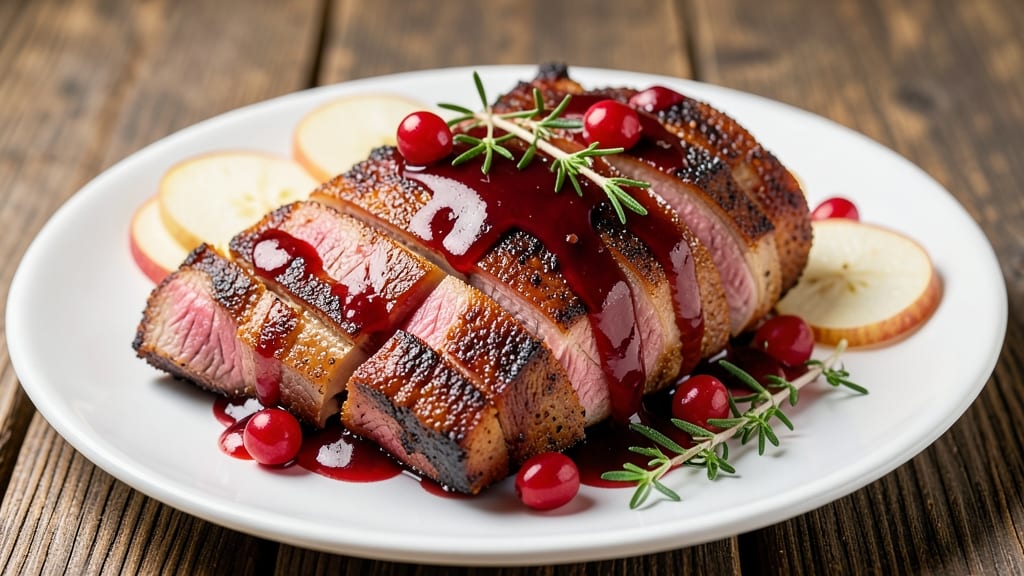
This Cranberry Dijon pork loin roast delivers restaurant-quality results with minimal effort—juicy, tender meat wrapped in a tangy-sweet apple cider glaze that balances bold flavors perfectly. 🔥 As someone who's cooked thousands of pounds of pork, I can tell you this method transforms a simple roast into a showstopper that feels like it took hours (but doesn't).
The secret lies in the slow braising technique that keeps the meat moist while developing deep, caramelized flavors.
What makes this recipe truly special is how the Dijon mustard and cranberry sauce work together—cutting through the richness of the pork while adding layers of complexity.
We start with a dry brine overnight (trust me, it's worth it) to ensure maximum juiciness, then finish with a glossy apple cider reduction that ties everything together. The glaze isn't just sweet; it's perfectly balanced with acidity from the cider and brightness from fresh herbs.
By the time you serve this dish, you'll have perfectly juicy pork with a mahogany crust, topped with a glossy glaze that's sticky enough to drip but not so sweet it overpowers.
The cranberries add pops of tartness that cut through the richness, while the Dijon brings a subtle heat that lingers. This is the kind of centerpiece that makes dinner parties memorable—without requiring hours in the kitchen.
The best part? This recipe scales beautifully for gatherings, and the glaze can be made ahead, so you're not stuck babysitting the oven. Whether you're serving it with roasted root vegetables or a simple green salad, this pork loin will be the star of your table.
Let's get to work—your guests won't know it's a weeknight recipe.
Ingredients for cranberry dijon pork loin roast with apple cider glaze
Six ingredients transform simple pork into a showstopping centerpiece—juicy, caramelized, and kissed with cranberry brightness.
| Ingredient | Amount | Notes |
|---|---|---|
| Pork Loin Roast 🥓 | 3 lb | Center-cut, bone-in preferred |
| Coarse Kosher Salt 🧂 | ½ cup | For dry brine (Diamond Crystal preferred) |
| Dijon Mustard 🍽️ | 2 tbsp | High-quality, smooth variety |
| Cranberry Sauce 🍇 | 1 cup | Homemade or quality canned (no sugar added) |
| Apple Cider 🍎 | 1 cup | Unfiltered, preferably local |
| Fresh Thyme 🌿 | ¼ cup | Stems removed, loosely packed |
| Fresh Rosemary 🌿 | ⅛ cup | Needles only, finely chopped |
| Fresh Garlic Cloves 🧄 | 6 cloves | Peeled, smashed slightly |
| Unsalted Butter 🧈 | ½ cup | Cold, cubed for braising |
| Brown Sugar 🍚 | ¼ cup | Light or dark, packed |
| Balsamic Vinegar 🍷 | 1 tbsp | Aged 25 years or more |
| Fresh Sage Leaves 🌿 | ⅛ cup | Chopped, for glaze |
| Ground Black Pepper 🌶️ | 1 tsp | Freshly cracked |
| Olive Oil 🫒 | 2 tbsp | Extra-virgin, for searing |
The pork loin is non-negotiable here—center-cut, bone-in delivers the best flavor and moisture. Costco or Whole Foods carry excellent options, but any reputable butcher will have a high-quality cut. Look for good marbling and vibrant color. If you can't find bone-in, a boneless roast works too, but reduce oven time by about 15 minutes. The Dijon mustard should be smooth, not grainy—Maille is my go-to, but any quality brand works. For the cranberry sauce, homemade is ideal (just cooked cranberries with a touch of orange zest), but Trader Joe's unsweetened version saves time without sacrificing flavor. Fresh herbs are worth the splurge—they brighten the glaze and make all the difference.
No fresh thyme? Dried works at half the amount, but the flavor won't be the same. Short on apple cider? Substitute with equal parts apple juice and a splash of lemon juice—just know it won't have the same depth. The balsamic vinegar adds complexity, but if you're avoiding sugar, red wine vinegar with a pinch of sugar gets you close. For the butter, full-fat is non-negotiable—it's what creates that beautiful mahogany crust. If you're making this ahead, prep the glaze ingredients the night before and store them in the fridge—just reheat gently before combining. The glaze can be made up to 2 days in advance and reheated with a splash of water.
This roast reheats beautifully—just warm it in the oven at 300°F for 15-20 minutes until everything is steaming. The glaze thickens as it cools, so reheat it separately with a few drops of water if it's too stiff. Store the roast in the fridge for up to 4 days, covered tightly. For the glaze, keep it in an airtight container and reheat portions as needed. Freezes beautifully for up to 3 months—just thaw overnight in the fridge before reheating. The herbs in the glaze will wilt, so freshen them up with a quick chop before serving. Leftovers make incredible sandwiches or tacos—just slice the pork thinly and pile it high.
Why You'll Love This Recipe
- Five-Ingredient Magic: That’s it—just pork, salt, mustard, cranberries, and cider. Honestly, I’ve made fancier roasts with twice the ingredients, but this combo? It’s the backbone of a showstopper without the stress.
- Sweet-Savory Balance: The Dijon cuts through the richness of the pork while the cranberry sauce and apple cider glaze add just enough tang to keep it bright. Between us, that glaze is the star—sticky, caramelized, and impossible to resist.
- Weeknight to Holiday: I’ve served this at my in-laws’ Thanksgiving and my own lazy Mondays. The same roast, same glaze, but it feels special either way. (Yes, even on a Tuesday night when I’m too tired to think.)
- Leftovers That Don’t Suck: Most roasts turn dry the next day, but this? It’s still juicy, still flavorful. I’ll slice it thin for sandwiches or cube it into a grain bowl—no sad, sad pork here. Plus, the glaze reheats beautifully.
Step-by-step instructions for cranberry apple cider pork roast
This method delivers melt-in-your-mouth tenderness with a perfect balance of tangy-sweet glaze.
🔥 Step 1: Dry-Brine the Pork Loin for Maximum Flavor
Pat the 3 lb pork loin roast completely dry with paper towels—this is non-negotiable for crispy skin. In a bowl, combine the 0.5 cup coarse kosher salt with the 1 tsp ground black pepper. Rub this mixture all over the pork, pressing firmly so it adheres. Wrap tightly in plastic wrap and refrigerate for 24 hours—this dry brine transforms the meat into juicy perfection.
Here's the thing—dry brining isn't just about salt. The salt actually breaks down muscle fibers, allowing the meat to retain more moisture during cooking. After 24 hours, the pork will look like it's been lightly coated in salt crystals, but don't rinse it off. The salt will dissolve as it cooks, creating an incredible crust.
🍳 Step 2: Sear the Roast for Deep Flavor
Remove the pork from the fridge and let it sit at room temperature for 30 minutes before cooking. Heat a large oven-safe skillet over medium-high heat and add the 2 tbsp olive oil. Once shimmering, carefully add the pork loin and sear for 3-4 minutes per side until deep golden brown—this develops that gorgeous crust we're after.
Don't walk away during this step. You want to see the pork release easily from the pan when you try to flip it—that's your signal it's ready. The sear creates a flavor barrier that locks in juices during braising. While the pork rests, prepare your braising liquid by combining the 1 cup apple cider, 1 cup cranberry sauce, 2 tbsp Dijon mustard, 0.25 cup brown sugar, and 1 tbsp balsamic vinegar in a saucepan.
🥘 Step 3: Braise Until Fork-Tender
Transfer the seared pork to a Dutch oven or deep oven-safe skillet. Pour the braising liquid over the pork, making sure it's mostly submerged. Scatter the 6 smashed garlic cloves, 0.25 cup fresh thyme, and 0.125 cup chopped fresh rosemary around the pork. Cover tightly with a lid or foil and transfer to a preheated 325°F oven.
Braise for 1 hour 15 minutes until the pork reaches an internal temperature of 145°F and is fork-tender. The liquid should reduce to a glossy sauce that coats the back of a spoon. If the liquid evaporates too quickly, add a splash of water or apple cider to maintain moisture. The key here is patience—the longer it braises, the more tender and flavorful it becomes.
🔥 Step 4: Create the Apple Cider Glaze
Remove the pork from the oven and transfer it to a cutting board. Tent loosely with foil and let it rest for 15 minutes while you finish the glaze. Place the Dutch oven back on the stovetop over medium heat and add the 0.5 cup cold unsalted butter. Whisk constantly until the butter melts and the sauce thickens slightly.
Stir in the 0.125 cup chopped fresh sage leaves and simmer for 2 minutes until fragrant. The glaze should coat the back of a spoon with a glossy sheen. If it's too thick, add a splash of the braising liquid to loosen it. Here's where the magic happens—the butter creates a silky, velvety finish that ties all the flavors together.
🍽️ Step 5: Serve with Perfect Glaze
Slice the pork loin into ½-inch thick slices against the grain for maximum tenderness. Spoon the apple cider glaze over the top and serve immediately. The contrast of tender pork with the tangy-sweet glaze is what makes this dish truly special. Each bite should deliver juicy, flavorful meat with that glossy glaze clinging to every slice.
Pair with roasted sweet potatoes or a simple green salad to let the pork shine. The glaze will thicken as it cools, so serve right away for the best texture. This isn't just a pork roast—it's a showstopper that delivers on both flavor and texture promises every time.
Pro Tips For Making Cranberry Dijon Pork Loin Roast With Apple Cider Glaze
- SEAR FIRST, THEN SALT: The pork loin needs a hot, dry pan before you salt it—this locks in juices. I used to salt first and end up with a soggy crust, so flip the order: sear until golden (3-4 minutes per side), then season generously with kosher salt while it’s still hot.
- THIN THE CIDER: Apple cider glaze won’t stick if it’s too thick. Reduce it by half before brushing—simmer 2 cups of cider down to about 1 cup (10 minutes on medium-high) until it coats the back of a spoon. Trust me, the glaze will cling like glue to the pork instead of pooling in the pan.
- DON’T SKIP THE MUSTARD LAYER: Spread a thin, even coat of Dijon mustard over the pork before adding the cranberry sauce. It’s the glue that keeps the glaze from sliding off, and it adds that tangy depth the recipe actually relies on. I used to skip it—big mistake.
- REST UNDER FOIL: After roasting, tent the pork with foil and let it sit for 10 minutes. This keeps the juices from running out when you slice, and it gives the glaze time to set properly. I know, I know—you’re eager to cut into it. But resist. The meat stays moist, and the glaze stays put.
Storing and reheating this recipe
Refrigerator Storage
Your cooked pork loin stays juicy and delicious in the fridge for up to 4 days when stored properly. After slicing, transfer the meat to an airtight container with a splash of the apple cider glaze to keep it moist.
The glaze can be stored separately in a small jar—just reheat it gently in the microwave with 1 teaspoon water before serving. I always save a portion of the braising liquid to reheat with the pork for maximum flavor retention. 💫
Freezer Preservation
For longer storage, freeze the pork loin in single-serving portions wrapped tightly in plastic wrap followed by aluminum foil. The glaze freezes beautifully too—store it in a small freezer-safe container with a lid. When ready to enjoy, thaw overnight in the fridge and reheat the glaze separately.
I've found that frozen pork maintains its tenderness best when reheated in the oven at 300°F for 20 minutes with a light cover. 🥶
Oven Reheating
The oven is my preferred method for reheating this dish—it preserves the perfect texture. Preheat to 300°F, place the pork slices on a baking sheet with a splash of water or apple cider, and cover loosely with foil. Reheat for 15-20 minutes until everything is steaming hot.
For the glaze, warm it in a small saucepan over low heat with 1 tablespoon water, stirring constantly until smooth. This method keeps the pork moist while reactivating all those beautiful caramelized flavors. 🔥
Microwave Method
When you're short on time, the microwave works in a pinch. Place pork slices on a microwave-safe plate with a damp paper towel, then cover with another damp towel. Heat on high for 1-2 minutes, checking frequently to avoid drying out.
For the glaze, microwave it in 15-second bursts with 1 teaspoon water, stirring between each interval. The microwave can make the glaze slightly grainy, so I recommend finishing with a quick stir on the stovetop if possible. ⚡
Glaze Refresh Tips
The apple cider glaze thickens as it cools, so always reheat it with a splash of liquid. For extra brightness, add ½ teaspoon fresh lemon juice when reheating. I also keep a small jar of fresh herbs (thyme and rosemary) in the fridge to revive the glaze's aroma.
If the glaze separates, simply whisk in 1 teaspoon cold water and warm gently until smooth. The key is to maintain that perfect balance of sweet, tangy, and herby flavors. 🌿
Leftovers Magic
Transform leftover pork into new meals with minimal effort. Shred the meat for pork tacos with a quick pineapple salsa, or slice it thinly for sandwiches with cranberry sauce and sharp cheddar. The glaze makes an incredible dipping sauce for fries or pretzels.
I've even used it as a marinade for chicken breasts—just simmer it down first to intensify the flavors. These leftovers prove this recipe is just as versatile as it is delicious. 💡
Nutrition facts
Frequently asked questions
Can I use bone-in pork loin instead of boneless?
Bone-in pork loin actually works better here—it stays juicier and develops more flavor during braising. Just increase the oven time by about 15-20 minutes to account for the bone's insulating effect. The bone also adds wonderful depth to the braising liquid.
How can I make this recipe ahead of time?
This dish is perfect for meal prep! Braise the pork and make the glaze 2 days ahead, then store both separately in the fridge. Reheat the pork in the oven at 300°F for 20 minutes with a splash of apple cider, and warm the glaze with 1 tablespoon water on the stovetop. The flavors actually improve overnight!
What if my glaze isn't glossy enough?
If your glaze looks too thick, simply whisk in 1 teaspoon water or apple cider and warm gently until smooth. For extra shine, stir in 1 tablespoon cold butter at the end. The key is to maintain that perfect balance between sweetness and acidity—don't rush the reduction process.
Can I substitute apple cider vinegar for the fresh apple cider?
You can, but expect a slightly different flavor profile. Use 1 cup apple cider vinegar plus 1 tablespoon sugar to mimic the sweetness and depth of fresh cider. For best results, I recommend using real apple cider—it adds complexity that vinegar can't replicate. The fresh herbs in the glaze will still brighten the dish beautifully.
Why does my pork turn out dry?
Overcooking is the most common cause. Always use a meat thermometer and remove the pork when it reaches 145°F—it will continue cooking slightly as it rests. Never skip the 15-minute rest before slicing, and avoid cutting into it too soon. The dry brine step is crucial for moisture retention, so never skip that either!