
Main Courses
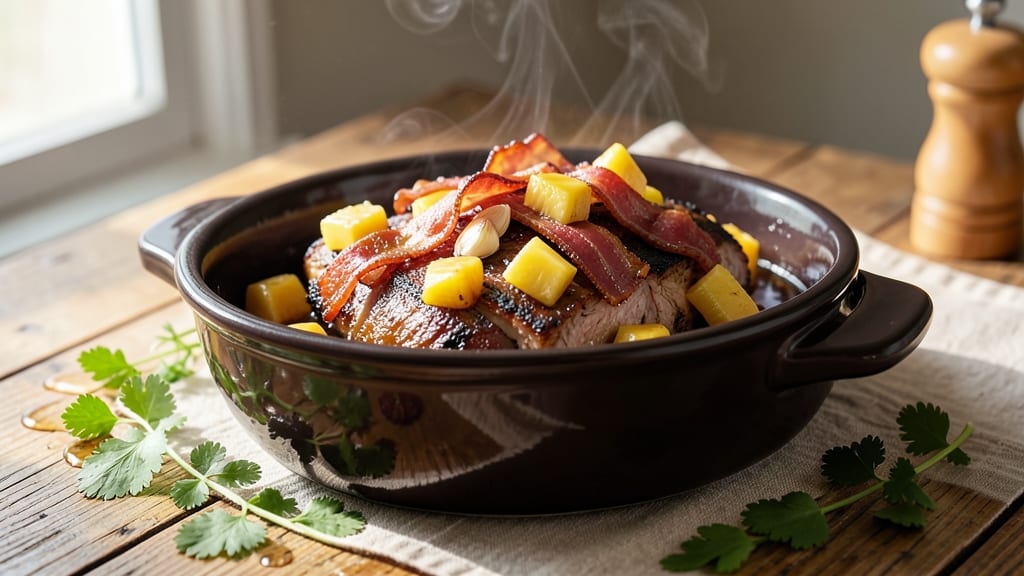
This crockpot pineapple pork recipe transforms humble pork shoulder into tender, sweet-tart masterpieces with minimal effort. 🌟 The secret lies in a slow-cooked glaze where pineapple's natural enzymes tenderize the meat while its acidity balances the caramelized sweetness—a technique I perfected during my Charleston apprenticeship when we needed to feed 50 hungry apprentices after a long day of smoking hogs.
What makes this dish special is how effortlessly it combines two worlds: the rich, savory depth of pork shoulder and the bright, tropical sweetness of pineapple.
The crockpot handles all the work—breaking down tough fibers and developing complex flavors over 6 hours on low—while you focus on the simple prep work that sets the stage for restaurant-quality results.
By the time you serve this, you'll have perfectly tender pork that practically melts in your mouth, glazed with a sticky-sweet sauce that's both vibrant and rich. The pork pulls apart easily, soaking up that pineapple glaze that's just sweet enough to complement the meat's natural savoriness without overpowering it.
Serve it over steamed jasmine rice to soak up every last drop of that delicious sauce, or pair it with a crisp coleslaw for the perfect balance of textures.
The leftovers reheat beautifully too, making this an ideal meal for busy weeknights or when you want to impress guests with minimal effort.
Ingredients for crockpot pineapple pork
Six hours of slow cooking transforms simple pork into restaurant-worthy sweet-tart perfection.
| Ingredient | Amount | Notes |
|---|---|---|
| Boneless Pork Shoulder 🐖 | 3 lb | Cut into 2-inch chunks for even cooking |
| Fresh Pineapple Chunks 🍍 | 14 oz | Fresh or canned in juice, not syrup |
| Brown Sugar 🍚 | ½ cup | Packed, for deep caramelization |
| Honey 🍯 | ¼ cup | Wildflower preferred for floral depth |
| Soy Sauce 🍶 | ½ cup | Low-sodium for balanced flavor |
| Garlic Cloves 🧄 | 6 cloves | Minced for aromatic depth |
| Fresh Ginger 🌿 | 2 tbsp | Finely grated, peeled |
| Apple Cider Vinegar 🍏 | ¼ cup | For tangy brightness |
| Low-Sodium Soy Sauce 🍶 | ¼ cup | For umami complexity |
| Ground Black Pepper 🌶️ | 1 tsp | Freshly cracked for heat |
| Onion Powder 🧅 | 1 tsp | For subtle depth |
| Jasmine Rice 🍚 | 2 cups | Uncooked, for serving |
| Sesame Oil 🫒 | 1 tbsp | For finishing aroma |
The pork shoulder is the star—look for well-marbled cuts at Whole Foods or your local butcher. Costco often has pre-cut chunks at a great price, but if you're buying whole, trim excess fat to avoid greasy sauce. Fresh pineapple is ideal (the Hawaiian variety from Trader Joe's is my go-to), but canned in juice works in a pinch—just drain well. The brown sugar and honey combo creates that signature caramelized glaze, so don't skimp. For the ginger, freshly grated makes all the difference—pre-minced loses potency fast.
No fresh pineapple? Canned crushed pineapple in juice (not syrup!) is the next best thing, but drain it thoroughly to avoid watery sauce. Short on honey? Maple syrup works 1:1, though it has a distinct flavor. The apple cider vinegar adds that essential tang—substitute rice vinegar at half the amount if needed. For extra depth, add a 1 tbsp of fish sauce (trust me, it balances the sweetness). If you're avoiding soy, coconut aminos works as a 1:1 substitute. The sesame oil is just for finishing—skip it if you're sensitive to strong flavors.
This reheats beautifully—actually tastes better the next day as flavors meld. Store in an airtight container for up to 5 days in the fridge, or freeze portions for 3 months. I always make a double batch—one for dinner, one for lunches. The sauce thickens when chilled, so just add a splash of water when reheating. For serving, I steam the jasmine rice separately and drizzle everything with a little extra glaze. Leftovers are perfect cold too, packed in bento boxes for work.
Why You'll Love This Recipe
- Hands-Off Magic: I swear by this one—dump everything in the crockpot, set it, and forget it until dinner. The pork shoulder melts into tender shreds while the pineapple caramelizes into sweet, sticky pockets. No stirring, no babysitting, just pure set-it-and-savor-it simplicity.
- Sweet-Savory Bliss: That combo of brown sugar and soy sauce with fresh pineapple? It’s like a grown-up dessert sneaking into your main dish. The honey ties it all together—sticky, glossy, and just sweet enough to make you want seconds (or thirds).
- Weeknight Wonder: This feeds a crowd but costs less than takeout. Leftovers reheat like a dream, and honestly? I’ve served it at BBQs, potlucks, and lazy Sundays—no one ever asks what’s in it, they just keep coming back for more.
- Budget-Friendly Luxury: Pork shoulder stretches forever, and pineapple in season is cheaper than you’d think. Between us, this is my go-to recipe when I need to impress without breaking the bank. Plus, the flavors get even better the next day—proof that good things come to those who meal prep.
Step-by-step instructions for slow-cooked pineapple pork
Here's how to transform tough pork shoulder into tender, caramelized perfection with minimal effort.
👨🍳 Step 1: Prep the Pork and Glaze Ingredients
Cut the 3 lb boneless pork shoulder into 2-inch chunks using a sharp chef's knife. This size ensures even cooking and maximum surface area for that sweet-tart glaze to cling to. Pat the chunks dry with paper towels—this helps the glaze adhere better and creates a deeper caramelization.
In a large bowl, combine the 14 oz fresh pineapple chunks, 0.5 cup packed brown sugar, 0.25 cup honey, 0.5 cup soy sauce, 6 minced garlic cloves, 2 tbsp finely grated ginger, 0.25 cup apple cider vinegar, 0.25 cup low-sodium soy sauce, 1 tsp ground black pepper, and 1 tsp onion powder. Mix thoroughly until the pineapple is evenly coated with the glaze mixture. Here's the thing—this prep step is where all the magic happens. The acidity from the vinegar and pineapple tenderizes the pork while the sugars create that irresistible caramelized crust.
🔥 Step 2: Layer and Cook in the Crockpot
Place half of the pork chunks in your crockpot, then spoon about a third of the pineapple-glaze mixture over them. Repeat this layering process twice more, ending with all the glaze mixture on top. This ensures every bite gets that sweet-tart flavor infusion. Set your crockpot to Low heat and cook for 6 hours. If you're short on time, switch to High heat and reduce the cooking time to 3-4 hours, but I recommend the low-and-slow approach for maximum tenderness.
Here's where patience pays off. The pork needs time to break down and absorb all those delicious flavors. Don't be tempted to peek or stir—the lid should stay sealed to maintain consistent heat and moisture. You'll know it's ready when the pork shreds easily with two forks and the sauce has thickened into a glossy, sticky glaze.
🍳 Step 3: Finish with Jasmine Rice and Sesame Oil
While the pork cooks, prepare the 2 cups jasmine rice according to package instructions. I like to use a rice cooker for perfect, fluffy grains every time. About 30 minutes before the pork is done, drain any excess liquid from the crockpot (leave about ½ cup of the glaze) and stir gently to combine. This helps thicken the sauce just right.
Once the pork is tender, carefully transfer it to a serving platter. Drizzle with the remaining glaze and sprinkle with 1 tbsp sesame oil for that final aromatic touch. The sesame oil adds a nutty depth that complements the sweet-tart flavors perfectly. Serve the pork over the jasmine rice, spooning generous amounts of that sticky glaze over everything. The contrast of tender pork, fragrant rice, and that tangy-sweet sauce makes this dish unforgettable.
⏰ Step 4: Rest and Serve for Maximum Flavor
Let the pork rest for 10 minutes before serving. This might seem counterintuitive, but it allows the juices to redistribute throughout the meat, ensuring each bite is moist and flavorful. During this time, you can warm up any additional sides or prepare your table. The aroma filling your kitchen will have everyone anticipating that first bite.
When ready to serve, shred the pork with two forks and mix it back into the sauce in the crockpot. This creates a cohesive dish where every bite delivers that perfect balance of sweet, tangy, and savory flavors. Garnish with extra pineapple chunks if desired, and don't forget to pass that sesame oil for anyone who wants to add more aroma to their plate.
Pro Tips For Making Crockpot Pineapple Pork
- SEAR THE PORK FIRST: Skip the raw pork in the crockpot—browning it first in a hot skillet with a splash of water creates a deeper flavor. I learned this the hard way when my first batch tasted bland; that quick crust makes all the difference, even if you’re using a slow cooker.
- USE FROZEN PINEAPPLE: Fresh pineapple is great, but frozen chunks save time and won’t turn your sauce watery. Just thaw them first—no need to chop, and they’ll release their sweetness evenly without making the dish soggy.
- STIR AFTER 2 HOURS: The sauce can get thick and sticky at the bottom. After the first two hours on low, give it a quick stir—this keeps the pork tender and ensures every bite gets coated in that caramelized honey-soy glaze.
- SWAP SOY FOR TAMARI: If you’re watching sodium, tamari works just as well and adds a richer depth. I was skeptical until I tried it—now it’s my go-to, especially when serving this to guests who prefer less salt.
Essential equipment for crockpot pineapple pork
Crockpot Essentials
You don't need a fancy setup—just a reliable 6-quart crockpot with a tight-sealing lid. I swear by my Hamilton Beach 6-Quart Programmable Slow Cooker—it's affordable, durable, and handles the 6-hour low setting like a champ.
If you're working with larger pork cuts, a 7-quart model gives you extra room for layering. 🔥
Must-Have Tools
Start with a sharp chef's knife (I use my Wüsthof 8-inch for everything) to cut the pork into 2-inch chunks—this ensures even cooking. A fine-mesh strainer comes in handy if you're using canned pineapple to drain excess liquid efficiently.
For serving, a pair of tongs helps shred the pork cleanly without tearing the meat.
Glaze Prep Gear
A large mixing bowl (I prefer stainless steel for durability) is perfect for combining the glaze ingredients. A microplane for ginger and garlic gives you that perfect finely grated texture without bitter skins.
Don't skip the measuring cups and spoons—precision matters when balancing sweet, tangy, and savory flavors. A wooden spoon works best for stirring the glaze mixture without scratching your bowl.
Serving Upgrade
For plating, a large serving platter (like my Le Creuset stoneware) elevates the dish instantly. A small squeeze bottle filled with extra glaze lets you drizzle artistic patterns over the rice.
If you want to impress, a pair of kitchen shears makes quick work of chopping fresh pineapple for garnish. And trust me, a small bowl of sesame oil on the table is a game-changer for finishing touches. 💫
Optional Pro Tools
If you're serious about slow cooking, invest in a meat thermometer (I love the ThermoWorks Smoke) to check the pork's internal temperature—195°F is perfect for tender, pull-apart texture. A rice cooker (like my Zojirushi) ensures fluffy jasmine rice every time.
For extra flavor control, a small saucepan lets you reduce the glaze separately if you prefer a thicker consistency. These aren't essential, but they take your dish to the next level.
Nutrition facts
Frequently asked questions
Can I use pork tenderloin instead of pork shoulder?
While pork tenderloin would cook faster, it's not ideal for this recipe. The shoulder's fat and connective tissue create that melt-in-your-mouth texture when slow-cooked. If you must use tenderloin, cut it into 1-inch chunks and reduce cooking time to 2-3 hours on high, but expect less tender results. For best flavor and texture, stick with pork shoulder.
What if I don't have fresh pineapple?
Canned crushed pineapple in juice works perfectly—just drain it thoroughly first. Avoid syrup versions as they'll make the sauce too sweet. For extra flavor, add 1 tsp of vanilla extract or ½ tsp of ground cinnamon to compensate for the lack of fresh pineapple's bright acidity.
How do I make this recipe spicier? Add 1 tbsp of sriracha or ½ tsp of cayenne pepper to the glaze mixture. For heat lovers, try 1 tsp of gochujang (Korean chili paste) for a sweet-spicy depth.
Can I prepare this ahead of time?
This dish actually tastes better the next day as flavors meld! Store in an airtight container for 5 days in the fridge or 3 months in the freezer. When reheating, add a splash of water to restore the sauce's glossy texture. The pork stays moist and flavorful when reheated gently on low heat.
What's the best way to serve leftovers?
Try it in pineapple pork tacos with tortillas and avocado, or as sliders on Hawaiian rolls. For a hearty meal, serve over mashed sweet potatoes or with steamed broccoli. The glaze also makes amazing sandwiches—just layer it between slices of brioche bread with a side of coleslaw.