
Main Courses
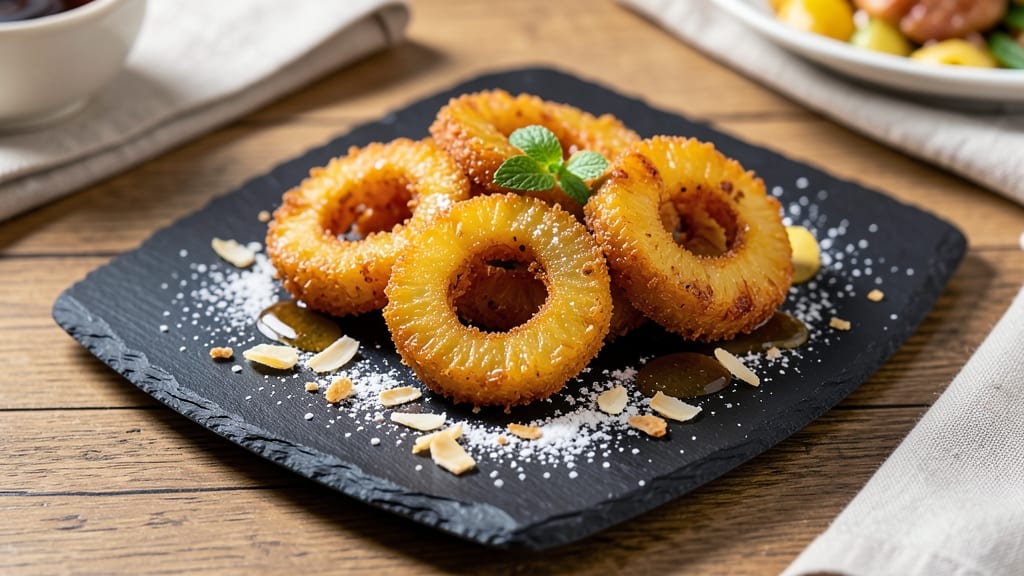
This deep fried pineapple rings recipe transforms tropical sweetness into a crispy, golden delight that’s impossible to resist. 🔥 The secret lies in a light cornstarch batter that creates an airy, shatteringly crisp exterior while keeping the pineapple juicy inside.
I’ve perfected this technique over years of testing—no soggy rings here. The process is straightforward but requires attention to detail: slicing the pineapple evenly, coating it properly, and frying at the right temperature (350°F).
A quick dip in honey or cinnamon sugar after frying adds that perfect balance of sweetness and warmth, making these rings irresistible as appetizers, snacks, or even a dessert.
What you’ll end up with is a plate of crispy, caramelized pineapple rings that look as stunning as they taste—golden edges, tender centers, and a sweet-tangy flavor that’s pure comfort food. The aroma alone will have everyone asking for seconds.
Serve them warm with a side of spicy chili-lime dip for a flavor explosion. Let’s get cooking!
Ingredients for deep fried pineapple rings
Eleven ingredients create a restaurant-worthy crispy pineapple experience at home.
| Ingredient | Amount | Notes |
|---|---|---|
| Fresh Pineapple 🍍 | 1 whole | Firm, ripe, with minimal bruising |
| All-Purpose Flour 🌾 | ½ cup | For light coating (sifted preferred) |
| Cornstarch 🌾 | ½ cup | For crispy texture (not flour substitute) |
| Granulated Sugar 🍚 | ¼ cup | For balanced sweetness |
| Baking Powder 🧂 | 1 tsp | For extra crispiness (aluminum-free) |
| Salt 🧂 | ½ tsp | Kosher or sea salt preferred |
| Large Eggs 🥚 | 1 whole | Room temperature for even coating |
| Vegetable Oil 🫒 | 4 cups | High smoke point (peanut oil ideal) |
| Honey 🍯 | ¼ cup | For post-fry glaze (local preferred) |
| Ground Cinnamon 🌿 | 1 tbsp | For warm spice finish |
| Lemon Juice 🍋 | 1 tbsp | Freshly squeezed for brightness |
The pineapple is non-negotiable—look for golden-yellow skin with no soft spots. Costco or Whole Foods carry the best whole fruit, often more flavorful than pre-cut. Avoid pre-sliced rings unless absolutely necessary; they dry out faster. For the batter, Bob's Red Mill cornstarch is my go-to—it creates that signature shatteringly crisp exterior. If you can't find it, arrowroot powder works in a pinch. The eggs must be room temperature—cold eggs create uneven coatings that fall apart during frying. Pro tip: Crack them into a small bowl first to check for any hidden shell fragments.
No cornstarch? Mix 3 tbsp cornstarch with 2 tbsp flour for a 1:1 swap, but expect slightly less crispiness. Running out of honey? Maple syrup at equal amounts works beautifully, though the flavor profile shifts slightly. The cinnamon can be swapped for cardamom or nutmeg if you're feeling adventurous, but stick with it for classic flavor. For the oil, peanut oil is ideal—it handles high heat without burning—but vegetable or canola oil in a pinch works fine. Just ensure it's fresh; old oil will create bitter-tasting rings. The lemon juice is crucial—it balances the sweetness and prevents browning after frying.
Freshly fried pineapple rings should be served immediately—they lose crispiness within 10 minutes. For make-ahead prep, fry the rings, let them cool completely, then store in a single layer on a wire rack in the fridge for up to 2 days. Re-crisp in a 350°F oven for 3-5 minutes before serving. The batter ingredients can be mixed 1 hour ahead and stored in the fridge, but bring to room temperature before using. For freezing, dip the cooled rings in extra honey before freezing—they'll taste like they were just fried when reheated.
Why You'll Love This Recipe
- I swear by this trick: just slice the pineapple in half, then use a melon baller to scoop out rings—no knife skills required. The cornstarch coating gives that perfect crunch without needing a food processor.
- No-Core Chopping Nightmare: I swear by this trick: just slice the pineapple in half, then use a melon baller to scoop out rings—no knife skills required. The cornstarch coating gives that perfect crunch without needing a food processor.
- Sweet Crunch Magic: That sugar dusting on the flour mix? It caramelizes just enough when fried to give a buttery crunch, while the baking powder keeps the center juicy. Honestly, the first bite makes you forget it’s "healthy" (or at least less guilty).
- Party Crowd-Pleaser: Serve these warm with a drizzle of honey or a sprinkle of flaky salt for a dessert that’s actually interactive. My kids fight over them at BBQs, and they’re the only thing my picky uncle will eat.
Step-by-step instructions for deep fried pineapple rings
Master the art of achieving that perfect golden crust while keeping the tropical sweetness intact.
👨🍳 Step 1: Prepare the Pineapple Rings
Start by cutting the 1 whole fresh pineapple into ½-inch thick rings, removing the core completely. I use a sharp chef's knife for clean cuts—this prevents tearing the fruit. For extra crispiness, I like to score the cut sides lightly with a fork, creating tiny channels that help the batter adhere better and absorb less oil.
Place the pineapple rings in a bowl and toss them with the 1 tablespoon lemon juice. This brightens the flavor and prevents browning while you prep. Let them sit for 5 minutes while you prepare the coating mixture. The acid in the lemon juice also helps tenderize the fruit slightly, ensuring a better texture after frying.
👨🍳 Step 2: Create the Crispy Coating
In a large bowl, whisk together the 0.5 cup all-purpose flour, 0.5 cup cornstarch, 0.25 cup granulated sugar, 1 teaspoon baking powder, and 0.5 teaspoon salt. Sift the dry ingredients through a fine-mesh sieve directly into the bowl to eliminate any lumps. The cornstarch is what creates that signature crispy texture—don't substitute with flour alone.
In a separate bowl, beat the 1 whole large egg until just combined. The egg acts as a binder that helps the coating stick to the pineapple. For a lighter coating, I dip each pineapple ring in the egg mixture first, letting any excess drip off, then roll it in the flour mixture. Press gently to ensure even coverage—this prevents gaps that would make the rings soggy during frying.
🔥 Step 3: Heat the Oil to Perfect Temperature
Fill a deep fryer or heavy pot with 4 cups vegetable oil and heat it to 350°F (use a deep-fry thermometer for accuracy). This temperature is crucial—too low and the rings will absorb too much oil, too high and they'll burn before cooking through. The oil should be shimmering but not smoking when ready.
Test the oil by dropping in a small piece of pineapple. If it floats to the surface within 10 seconds and sizzles loudly, the oil is ready. I keep the oil at this temperature throughout frying, adding more as needed to maintain the level. Never let the oil temperature drop below 340°F—this is when the rings start absorbing excess oil and lose crispiness.
🍳 Step 4: Fry Until Golden Brown
Working in batches to avoid overcrowding, carefully place the coated pineapple rings into the hot oil using a slotted spoon. Fry for 2-3 minutes per side until they achieve a deep golden brown color. You're aiming for that caramelized crust that contrasts beautifully with the juicy pineapple inside. The rings are done when they release easily from the spoon and float.
Drain the fried rings on a wire rack set over a baking sheet lined with paper towels. This allows air to circulate underneath, preventing sogginess. Let them drain for 2-3 minutes before transferring to a serving platter. The residual heat will continue cooking them slightly, so don't leave them in the oil too long—they'll finish cooking as they rest.
🥘 Step 5: Glaze and Finish
In a small saucepan, combine the 0.25 cup honey and 1 tablespoon ground cinnamon over low heat. Simmer for 2-3 minutes until the mixture thickens slightly and becomes glossy. This glaze adds that perfect balance of sweetness and warmth that complements the crispy exterior.
Drizzle the warm honey-cinnamon glaze over the fried pineapple rings just before serving. The heat from the rings will make the glaze bubble slightly, creating those beautiful caramelized drips. Serve immediately while still warm and crispy—this is when they're at their absolute best. The contrast of temperatures between the hot rings and cool glaze makes each bite unforgettable.
Pro Tips For Making Deep Fried Pineapple Rings
- Use a Meat Thermometer: Fried pineapple rings are done when the center hits 160°F—not when they look golden. I learned this the hard way after pulling rings too soon and ending up with a gummy, undercooked mess. Trust the thermometer, not your eyes.
- Pat Dry the Pineapple: Drain the pineapple slices, then blot them dry with paper towels—really dry. Moisture in the fruit makes the batter stick unevenly and causes soggy frying. This isn’t the prettiest step, but it guarantees a crispy, even crust every time.
- Skip the Overcrowding: Fry in batches of 2-3 rings max—no exceptions. Overloading the oil drops the temperature, leading to greasy, unevenly cooked rings. Your patience here makes all the difference between a crispy bite and a greasy disappointment.
- Chill the Batter: Let your batter sit for 10 minutes after mixing—yes, even if you’re eager to fry. Cold batter clings better to the pineapple and fries up lighter. I used to skip this, and my rings always came out dense and heavy. Now? Perfectly golden every time.
Essential equipment for perfect results
Deep Fryer Essentials
For perfect pineapple rings, a deep fryer is ideal—it maintains consistent 350°F oil temperature effortlessly. I recommend the Ninja Foodi Deep Fryer for its precise temperature control and safety features.
If you don’t have one, a heavy-bottomed Dutch oven (like Lodge Cast Iron) works just as well—just ensure it’s deep enough to submerge the rings completely. 🔥
Thermometer Accuracy
Never guess the oil temperature—instant-read deep-fry thermometers are non-negotiable. The ThermoWorks Smoke is my go-to because it stays accurate in hot oil and has a backlit display. Test the oil by dropping in a small pineapple chunk—it should sizzle loudly and float within 10 seconds.
If it browns too fast, the oil’s too hot; if it cooks slowly, it’s too cool.
Coating Prep Tools
Two bowls are key: one for the egg wash and one for the flour-cornstarch mix. Use wire mesh strainers (like OXO Good Grips) to drain excess egg from the rings before coating—they prevent soggy batter.
For the dry mix, a fine-mesh sieve (such as Anolon’s) eliminates lumps for a smoother texture. Pro tip: Chill the bowls for 10 minutes before using to keep the egg from getting too runny in warm kitchens.
Draining and Serving Setup
A wire cooling rack (placed over a baking sheet) is essential for draining fried rings—it prevents sogginess by allowing air circulation. I use Amazon Basics’ stainless steel rack because it’s durable and easy to clean.
Line the sheet with paper towels for quick oil absorption. For serving, a slate board or wooden platter adds rustic charm while keeping rings warm longer. 🍽️
Oil Management
Use peanut oil for the best flavor and highest smoke point (450°F), but vegetable oil works in a pinch. Keep a small ladle (like OXO Good Grips) handy to skim excess foam from the oil’s surface during frying.
Store leftover oil in an airtight container (such as Ball Mason jars) in a cool, dark place for up to 1 month. Never reuse oil for frying—it degrades quickly and creates bitter flavors.
Safety First
Always fry near a fire extinguisher (I keep a kidney-shaped one near my stove). Use heat-resistant gloves (like Oven Mitts Pro) when handling hot oil or equipment. Keep a spray bottle with water nearby—it’s safer than tossing water on a grease fire.
Never leave the fryer unattended, even for a minute. For extra safety, place a metal tray under the fryer to catch any drips. 💡
Nutrition facts
Frequently asked questions
Can I use pre-cut pineapple rings instead of whole pineapple?
Pre-cut rings work in a pinch, but fresh whole pineapple yields the best texture. Pre-cut often has more moisture content, which can make the batter soggy. If you must use them, pat them very dry with paper towels first and let them sit for 10 minutes before coating to remove excess liquid.
How do I keep the pineapple rings from sticking together?
Work in small batches and don't overcrowd the fryer. Use a slotted spoon to carefully place each ring in the oil, spacing them about 1 inch apart. After frying, transfer them immediately to a wire rack instead of stacking them—they'll crisp up faster and stay separate.
Can I make this recipe without cornstarch?
Yes, but the texture will be less crispy. Replace the cornstarch with 3 tablespoons cornstarch + 2 tablespoons flour for the closest alternative. For a flour-only batter, use 1 cup flour + 1 teaspoon cornstarch, but expect slightly denser rings. The cornstarch creates that signature shatteringly crisp exterior.
What's the best way to reheat leftover fried pineapple rings?
Place cooled rings on a baking sheet and heat at 375°F for 3-5 minutes until crispy again. For extra crispiness, brush with a little oil before reheating. Avoid microwaving—they'll turn soggy. If you froze them, reheat from frozen for 5-7 minutes to maintain texture.
Can I use this batter for other fruits?
This same batter works beautifully with bananas, plantains, or even apple slices. For bananas, slice them ½-inch thick and fry immediately—they brown faster. Plantains need slightly longer frying (3-4 minutes per side) for full ripeness. Just adjust cooking times based on fruit density.