
Main Courses
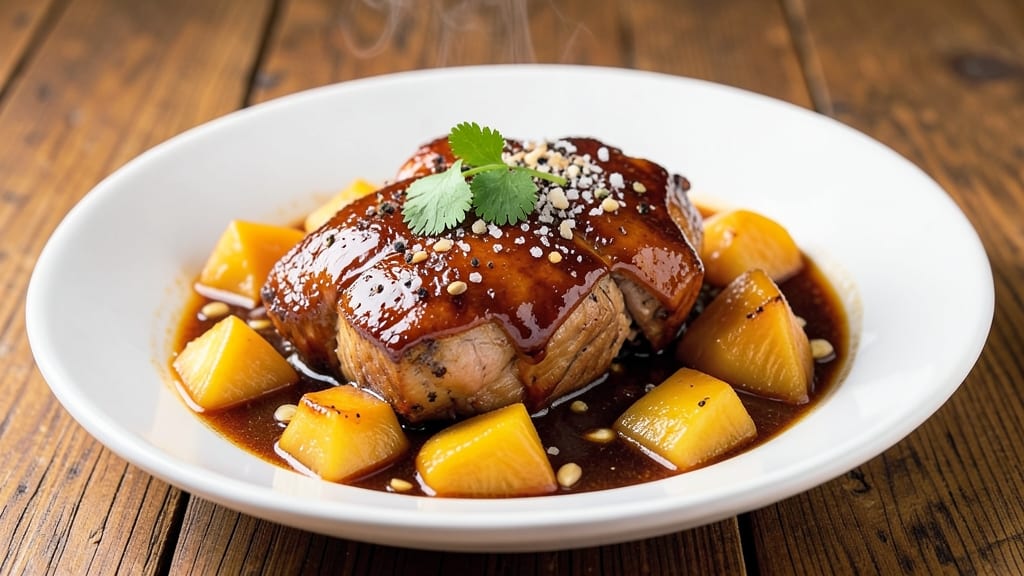
This pork adobo with pineapple recipe brings the bold flavors of Panlasang Pinoy to your kitchen table, where tangy vinegar and sweet pineapple create a perfect balance. 🌟 After perfecting this dish through countless batches, I've learned how to braise the pork until tender while preserving that signature adobo bite—then brighten it with juicy pineapple chunks that add just the right crunch.
The secret lies in slow cooking the pork in soy sauce, vinegar, and garlic until it's fork-tender, then finishing with pineapple that caramelizes beautifully in the sauce.
This isn't your average adobo—it's a fusion that keeps all the traditional flavors while adding a modern twist that'll have everyone asking for seconds. The result? Rich, savory pork with sweet-tangy sauce that clings to every bite.
What makes this recipe special is how simple yet impressive it is—just 30 minutes of active prep followed by 2 hours of hands-off cooking. The pork becomes melt-in-your-mouth tender while the pineapple adds freshness that cuts through the richness.
Serve it over steamed rice to soak up every last drop of that flavorful sauce.
This dish works perfectly for family dinners, potlucks, or when you want to impress guests with authentic Filipino flavors that feel fresh and exciting. The combination of textures and flavors makes it unforgettable—crispy edges on the pork, tender meat, and juicy pineapple in every bite. Let's make this one!
Ingredients for pork adobo with pineapple recipe panlasang pinoy
Tender pork meets sweet-tangy pineapple in this Filipino fusion dish—just 12 ingredients for bold flavors.
| Ingredient | Amount | Notes |
|---|---|---|
| Pork Shoulder 🥩 | 3 lb | Cut into 2-inch cubes |
| Canned Pineapple Chunks 🍍 | 20 oz | In juice, undrained |
| White Vinegar 💧 | 1 cup | Distilled preferred |
| Soy Sauce 🍶 | ½ cup | Light or regular |
| Garlic Cloves 🧄 | 8 cloves | Minced, not powdered |
| Brown Sugar 🍚 | ½ cup | Packed firmly |
| Black Peppercorns 🌶️ | 1 tsp | Crushed lightly |
| Bay Leaves 🌿 | 2 whole | Fresh preferred |
| Olive Oil 🫒 | 2 tbsp | For searing pork |
| Green Onions 🧅 | 3 whole | Chopped, for garnish |
| Salt 🧂 | 1 ½ tsp | Adjust to taste |
| Long-Grain White Rice 🍚 | 3 cups | Uncooked, for serving |
The pork shoulder is non-negotiable here—it stays tender while developing that signature adobo texture. Costco or local butchers often have it pre-cut, but if buying whole, ask for bone-in for extra flavor. Look for cuts with good marbling—this ensures juiciness. The pineapple should be in its own juice (not syrup) for authentic flavor, and Del Monte Gold or Dole brands are reliable choices. Fresh garlic is a must—powdered just won't cut it. For the vinegar, Heinz Distilled White is my go-to, but any 5% acidity vinegar works. The brown sugar adds depth that white sugar can't match—don't substitute.
No soy sauce? Coconut aminos work in a pinch, though the flavor will differ slightly. Running short on pineapple? Fresh pineapple chunks (about 2 cups) can replace canned, but you'll need to drain and pat them dry first. The bay leaves are optional but add that subtle earthiness—if you skip them, add an extra pinch of salt. For a smokier profile, swap half the vinegar for Filipino calamansi juice (available at Asian markets). The green onions are just for garnish, so feel free to use scallions or chives if that's what you have. The rice? Jasmine or basmati pairs perfectly, but any long-grain will do.
This sauce gets better with time—plan to make it a day ahead if possible. Store in an airtight container in the fridge for up to 5 days. The pork reheats beautifully, though the pineapple might soften slightly. For serving, I like to keep the pineapple chunks whole at the bottom of the dish so they stay juicy. If making ahead, freeze portions of the sauce (without pork) for up to 3 months. Just thaw and reheat gently. The rice? Cook it fresh—it's the perfect vessel for soaking up that rich, tangy sauce.
Why You'll Love This Recipe
- Here’s what sold me: the tangy vinegar cuts through the pork’s richness, while the pineapple adds just enough sweetness to make it ridiculously good. The garlic? Oh, it’s there—crisp and aromatic, not overpowering. It’s like adobo had a tropical makeover.
- One-Pot Magic: I swear by this recipe—just brown the pork, toss in the vinegar, soy sauce, and garlic, then let it simmer. The pineapple melts into the sauce like it was always meant to be there, and cleanup? One pot, one spatula. That’s my kind of cooking.
- Sweet-Savory Balance: Here’s what sold me: the tangy vinegar cuts through the pork’s richness, while the pineapple adds just enough sweetness to make it ridiculously good. The garlic? Oh, it’s there—crisp and aromatic, not overpowering. It’s like adobo had a tropical makeover.
- Weeknight Workhorse: Between us, this feeds my family of four and leaves enough for lunch the next day. Double the batch, store it in the fridge, and reheat it—still tastes fresh. Honestly, I make it at least twice a month, no matter what.
Step-by-step instructions for pork adobo with pineapple
Here's how to create that perfect balance of tangy, sweet, and savory in every bite.
🔥 Step 1: Sear the Pork Shoulder for Maximum Flavor
Heat a large Dutch oven over medium-high heat and add the 2 tablespoons olive oil. Once shimmering, add the 3 lb pork shoulder cut into 2-inch cubes, working in batches if needed to avoid crowding. Let each piece sear undisturbed for 3-4 minutes until deep golden brown on all sides.
This step is crucial—it develops that rich, caramelized crust that holds up beautifully through the long cooking process. Don't rush it; you want those pork cubes to develop color and texture. As they brown, remove them to a plate and set aside temporarily.
🍳 Step 2: Build the Tangy-Sweet Sauce Base
In the same Dutch oven, reduce heat to medium and add the 8 cloves minced garlic cloves. Sauté for 30 seconds until fragrant but not browned—you want aromatic, not bitter flavors. Add the 2 whole bay leaves and 1 teaspoon crushed black peppercorns, stirring for another 10 seconds to toast the spices.
Now pour in the 1 cup white vinegar and 0.5 cup soy sauce, scraping up any browned bits from the bottom of the pot. Bring to a simmer and let it reduce by half—about 5-7 minutes. This concentrated liquid forms the backbone of your adobo sauce. The vinegar's sharpness will mellow as it cooks, but it's essential for that signature tang.
🥘 Step 3: Simmer Pork with Pineapple and Sweetener
Return the seared pork to the Dutch oven along with the 20 oz canned pineapple chunks in juice (don't drain it—those juices add sweetness and moisture). Stir in the 0.5 cup packed brown sugar and 1.5 teaspoons salt, then bring everything to a gentle boil. Once boiling, reduce heat to low and cover partially, leaving a small gap for steam to escape.
Simmer for 1.5 hours, stirring occasionally, until the pork is fork-tender. You'll know it's ready when a knife slides in easily and the meat pulls apart with gentle pressure. If the sauce reduces too much, add a splash of water to maintain moisture—this dish should have a glossy, slightly syrupy sauce clinging to every bite.
⏰ Step 4: Finish with Aromatics and Rest
Once the pork is tender, discard the bay leaves and adjust seasoning if needed—this is your chance to balance sweet, salty, and tangy flavors. Stir in the 3 whole chopped green onions and let everything simmer uncovered for another 10 minutes to thicken slightly and meld flavors.
Remove from heat and let the pork adobo rest for 15 minutes before serving. This resting period allows the juices to redistribute, ensuring each tender bite is packed with flavor. The pineapple chunks will have softened slightly, their sweetness cutting through the savory pork and tangy sauce in perfect harmony.
Pro Tips For Making Pork Adobo With Pineapple Recipe Panlasang Pinoy
- Sear the Pork First: I learned this the hard way—skipping the sear means your adobo will taste like it simmered in vinegar and soy sauce, not caramelized pork. Heat your pan until it’s smoking, then brown the pork shoulder in batches for 3-4 minutes per side before anything else. That crust locks in flavor and makes the meat tender.
- Use Less Vinegar Early: The first 15 minutes of cooking are where the magic happens, and too much vinegar upfront will make your pork tough. Start with half the recipe’s vinegar, let the pork and garlic bloom in the pan, then add the rest later. You’ll get deeper flavor without the harsh tang.
- Drain and Pat the Pineapple: Canned pineapple comes swimming in syrup, and that syrup turns your adobo into a gloppy mess. Drain the chunks, then pat them dry with a paper towel—yes, even if it feels like overkill. Dry pineapple caramelizes better and doesn’t dilute the sauce.
- Simmer Low and Slow: After the initial sear and vinegar deglaze, drop the heat to medium-low and let it bubble gently. I used to rush it, and the pork would turn out stringy. Cover the pot and cook for at least 1.5 hours, stirring occasionally, until the meat falls apart. Patience here makes all the difference.
Regional styles of this recipe
Classic Filipino Adobo
The traditional version uses just pork, vinegar, soy sauce, and garlic—no pineapple. I've made this countless times with my abuela's recipe, where the pork simmers in a glossy, tangy sauce until it falls apart. The key difference?
No sweetener—just the bold flavors of white vinegar and soy sauce working together. For an authentic touch, use Filipino calamansi juice instead of vinegar if you can find it at Asian markets. 🌶️
Sweet & Tangy Pineapple Twist
This modern fusion adds pineapple chunks and brown sugar to balance the adobo's acidity. The sweetness caramelizes beautifully during the 1.5-hour simmer, creating pockets of flavor that contrast with the savory pork.
I first tried this variation after a trip to Manila, where street vendors served similar dishes with tropical fruits. The pineapple's juices also help tenderize the meat naturally.
Spicy Adobo Version
For heat lovers, add 1-2 tablespoons of adobo sauce (Filipino hot sauce) or 1 teaspoon of ground black pepper to the simmering sauce. I like to stir it in during the final 10 minutes of cooking so the flavors meld without overpowering.
This version works especially well with the pineapple—its sweetness cools the burn. For extra heat, add 1-2 slices of fresh chili (like siling labuyo) to the pot during the last 5 minutes.
Slow-Cooker Adaptation
Make this hands-off by using a 6-quart slow cooker on low for 6-8 hours. Sear the pork first in a skillet, then transfer everything to the slow cooker. The pineapple stays juicy longer this way, and the pork becomes fork-tender without drying out.
I've made this version for Sunday dinners—just add the pineapple and brown sugar at the beginning, then let it cook while you prep sides. The flavors develop more deeply in the slow cooker.
Coconut Milk Variation
For a creamy twist, stir in 1 cup of coconut milk after the pork is tender. The richness pairs beautifully with the tangy adobo and sweet pineapple. I recommend adding it during the final 10 minutes of cooking to prevent curdling.
This version works especially well with rice—every bite becomes a flavor explosion of creamy, tangy, and sweet. Serve with extra green onions for freshness and a squeeze of lime to brighten the dish.
Portland Market Swaps
At New Seasons Market, I grab local pineapple from their produce section for fresher flavor. For vinegar, I use Apple Cider Vinegar from their bulk section—it adds subtle sweetness that complements the pineapple.
If you can't find Filipino ingredients, substitute with lime juice (for tang) and honey (for sweetness), though the flavor won't be identical. The key is balancing the sweet, sour, and salty elements—just like my abuela always taught me. 🍍
Nutrition facts
Frequently asked questions
Can I use fresh pineapple instead of canned in this recipe?
Yes, but with a few adjustments! Use 2 cups of fresh pineapple chunks (about 1 medium pineapple), and pat them dry thoroughly before adding to the pot. Fresh pineapple releases more juice, so you may need to reduce the sauce longer or add 1-2 tablespoons of water if it gets too thin. The flavor will be brighter, but the texture will be slightly less tender than canned.
How do I know when the pork is fully tender?
Look for three signs:
- A knife slides in easily,
- The meat pulls apart with gentle pressure, and
- The juices run clear (not pink or bloody). For extra certainty, cut into the largest piece—if it's fork-tender, the rest will be too. If you're unsure, cook 15-20 minutes longer to ensure perfect texture.
Can I make this in an Instant Pot instead of a Dutch oven?
Sear the pork first in a skillet, then transfer everything to your Instant Pot. Cook on high pressure for 30 minutes, then do a natural release for 10 minutes before opening. The pineapple will stay juicier, and the pork will be tender without drying out. Just add the pineapple and brown sugar at the beginning with the pork and liquid.
Why does my sauce turn too thin or too thick?
Sauce consistency depends on cooking time and liquid balance. If it's too thin, simmer uncovered for 5-10 minutes to reduce it. Too thick? Add 1-2 tablespoons of water or pineapple juice and stir gently. The ideal sauce should coat the back of a spoon but still be glossy. Remember, the pork releases juices as it cooks—adjust gradually!
What's the best way to reheat leftovers?
Reheat gently in a skillet over medium-low heat with 1-2 tablespoons of water to prevent drying. Or microwave for 1-2 minutes with a damp paper towel covering the dish. For best results, reheat only what you'll serve immediately—the pineapple softens further when reheated multiple times.