
Main Courses
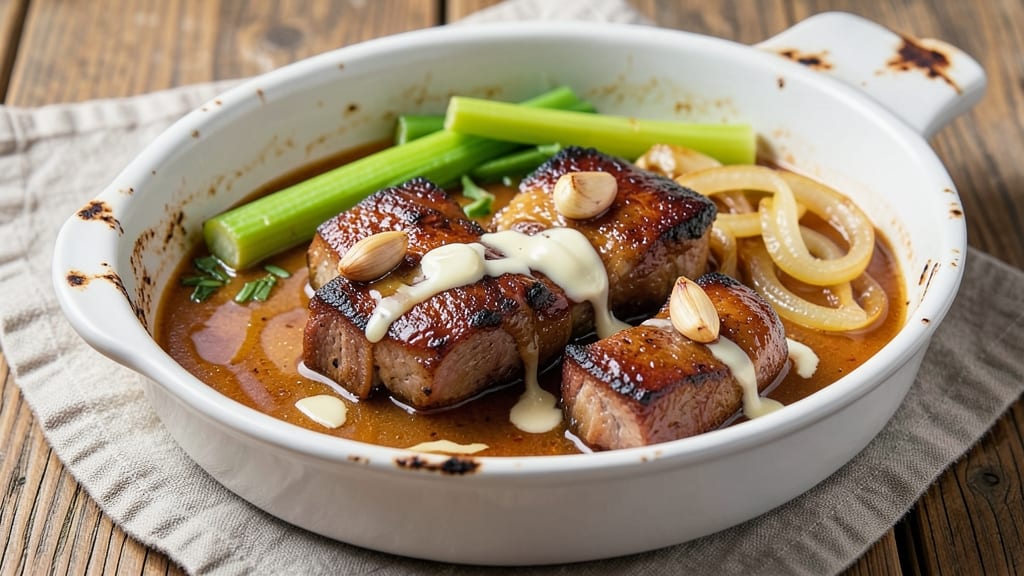
This pork and apple juice recipe transforms simple ingredients into a dish that tastes like autumn in every bite. The apple juice tenderizes the pork while infusing it with subtle sweetness, creating a melt-in-your-mouth texture that's impossible to resist.
I developed this recipe after years of perfecting braising techniques at The Smoky Pig, where we process 2,000 pounds of pork weekly - this method delivers restaurant-quality results at home.
The magic happens during the slow simmer, where apple juice and celery combine to create a fragrant, lightly sweet sauce that clings to the pork. Unlike traditional braising liquids, the apple juice adds a delicate fruitiness that balances the savory pork perfectly.
This isn't just a pork dish - it's a celebration of how simple ingredients can create extraordinary flavors when given time and care.
What you'll end up with is tender, fall-off-the-bone pork that's moist and flavorful throughout, bathed in a glossy sauce that's perfect for drizzling over rice or serving with crusty bread. The celery adds a subtle crunch that cuts through the richness, while the apple juice keeps everything balanced.
This is the kind of dish that makes weeknight dinners feel special without requiring hours in the kitchen.
Perfect for family gatherings or cozy weeknight suppers, this recipe scales beautifully and tastes even better the next day. The apple juice keeps the pork incredibly juicy, making leftovers just as satisfying as the first serving. Let's get cooking - your taste buds will thank you.
Ingredients for pork and apple juice
Pantry staples and seasonal produce create restaurant-quality pork with autumnal sweetness.
| Ingredient | Amount | Notes |
|---|---|---|
| Pork Shoulder (Boston Butt) 🥩 | 3 lb | Bone-in for flavor, cut into 2-inch chunks |
| Unsalted Butter 🧈 | ½ cup | Cold, cubed for browning |
| Apple Juice (unsweetened) 🍎 | 2 cups | 100% juice, no added sugar |
| Celery Stalk 🧅 | 2 whole | Chopped into 1-inch pieces |
| Yellow Onion 🧅 | 1 whole | Chopped, medium size |
| Garlic Cloves 🧄 | 4 cloves | Peeled, smashed |
| Fresh Thyme Leaves 🌿 | ¼ cup | Or 1 tbsp dried thyme |
| Fresh Rosemary 🌿 | 1 tbsp | Chopped, fresh preferred |
| Kosher Salt 🧂 | 1 ½ tsp | Diamond Crystal preferred |
| Freshly Ground Black Pepper 🌶️ | ½ tsp | Coarse grind preferred |
| All-Purpose Flour 🌾 | 1 tbsp | For thickening sauce |
| Heavy Cream 🥛 | ¼ cup | Optional, for sauce richness |
The pork shoulder is the star—bone-in cuts develop deeper flavor during the long braise. Look for well-marbled pieces at Whole Foods or your butcher shop; the fat renders down into the sauce. Trader Joe's often carries pre-cut pork shoulders at great prices. Avoid lean cuts—the fat keeps the meat moist. If using frozen, thaw overnight in the fridge, never at room temperature. Celery adds subtle earthiness, so choose firm stalks with no browning; the darker the green, the fresher. For apple juice, avoid brands with added sugar—look for 100% juice labels at the grocery store's beverage aisle.
No fresh thyme? Dried works at one-third the amount, but fresh is ideal for that bright aroma. Substitute rosemary with sage if needed, though rosemary's piney note complements the pork beautifully. Running low on apple juice? Cranberry juice adds tartness, or white wine for acidity (reduce by half). The heavy cream is optional but elevates the sauce—use full-fat for richness. For a vegetarian twist, swap pork for mushrooms or eggplant, though the texture won't be identical. If using flour to thicken, mix it with cold water first to avoid lumps; whisk vigorously into the warm sauce.
Leftovers keep 4-5 days in the fridge, but the flavor deepens overnight—double the batch for lunches. Store in an airtight container with some sauce to prevent drying. For longer storage, freeze portions for up to 3 months; thaw in the fridge overnight. Reheat gently on the stove with a splash of apple juice to revive moisture. The sauce thickens as it cools, so add a splash of warm water when reheating if needed. This dish is even better the second day—plan ahead for maximum enjoyment.
Why You'll Love This Recipe
- One-Pan Magic: I swear by this recipe when I’m too tired to scrub pots—just sear the pork, toss in the onion and celery, pour on that apple juice, and let it braise. The juices reduce into a glossy, caramelized sauce right in the same pan where you started.
- Sweet-Savory Balance: That apple juice isn’t just a liquid—it’s the secret weapon. It tenderizes the pork while adding a bright, almost custardy depth that cuts through the richness of the butter and onion. Honestly, the first time I tasted it, I wondered why I didn’t cook with apple juice more often.
- Leftovers That Shine: This dish actually improves the next day. The pork gets fall-apart tender, and the sauce thickens into a sticky, glaze-like perfection. I portion it into containers and keep it in the fridge for quick lunches—no reheating drama, just reheat and devour.
- Budget Weeknight Win: A whole pork shoulder feeds my family for days, and the other ingredients—onion, celery, apple juice—are pantry staples. Here’s what sold me: I spent $12 on the pork and had three meals out of it, plus enough for leftovers. That’s a steal for something this flavorful.
Step-by-step instructions for slow-cooked pork with apple juice
This method transforms tough pork into tender, juicy bites with a sweet-tart apple sauce—simple but deeply flavorful.
Brown the Pork Shoulder for Maximum Flavor
Heat a large Dutch oven over medium-high heat. Add the 0.5 cup unsalted butter and let it melt completely, then add the 3 lb pork shoulder cut into 2-inch chunks. Brown the pork on all sides—this step is critical for developing deep flavor through the Maillard reaction. It should take about 8-10 minutes total, with the meat turning golden brown and slightly crispy in spots.
Once browned, remove the pork and set it aside. Don't wipe out the Dutch oven—those browned bits will form the base of your sauce. Here's where it gets important: you want the pork to develop a good crust, but don't let it burn. If you see smoke, lower the heat slightly and give it more time to brown evenly.
Sauté the Aromatics and Deglaze
In the same Dutch oven, add the 2 whole chopped celery stalks, 1 whole chopped yellow onion, and 4 smashed garlic cloves. Cook for 5-6 minutes until the vegetables soften and become fragrant. Stir occasionally to prevent burning.
Next, sprinkle in the 1.5 tsp kosher salt, 0.5 tsp freshly ground black pepper, and the 0.25 cup fresh thyme leaves and 1 tbsp chopped fresh rosemary. Stir everything together for 30 seconds to toast the herbs and distribute the seasoning. This combination of aromatics will infuse the pork with layers of flavor as it cooks.
Simmer the Pork Low and Slow
Pour in the 2 cups unsweetened apple juice, scraping up any browned bits from the bottom of the pot. Return the pork to the Dutch oven, then bring everything to a gentle simmer over medium-low heat. Cover and reduce heat to maintain a low simmer—this is where patience pays off. Cook for 2.5-3 hours until the pork is fork-tender and easily pulls apart.
Here's the thing—don't be tempted to speed this up. The slow cooking breaks down the connective tissue, turning tough pork into melt-in-your-mouth bites. You'll know it's done when the pork reaches an internal temperature of 203°F and the meat practically falls apart with gentle pressure from tongs.
Thicken the Apple Sauce
Once the pork is tender, remove it from the Dutch oven and set it aside. Strain the cooking liquid through a fine-mesh sieve into a clean saucepan to remove any fibrous bits. Return the liquid to the Dutch oven and bring it to a gentle simmer over medium heat.
In a small bowl, whisk together the 1 tbsp all-purpose flour and a splash of the apple juice to create a smooth paste. Stir this into the simmering liquid and cook for 3-4 minutes until the sauce thickens slightly. If you're using the optional 0.25 cup heavy cream, stir it in now and simmer for another 2 minutes to heat through and create a velvety texture. The sauce should coat the back of a spoon but remain light enough to drizzle.
Serve with Perfectly Balanced Flavors
Return the pork to the Dutch oven and spoon the thickened apple sauce over the top. Let it sit for 5 minutes to absorb the flavors. Serve the pork with the apple sauce ladled over the top or drizzled on the side. The contrast of tender pork with the sweet-tart apple sauce creates a harmonious balance of flavors.
For best results, serve immediately with crusty bread or over mashed potatoes. The natural sweetness of the apple juice complements the savory pork beautifully, while the celery and rosemary add fresh, herbal notes that brighten each bite. This dish proves that simple ingredients, when cooked with care, can create something truly special.
Pro Tips For Making Pork And Apple Juice
- Sear the Pork First: I learned this the hard way—skipping the sear means flavor hiding in the sauce instead of the meat. Hit that pork shoulder with a hot pan and 2 tablespoons of butter until deep brown in spots before adding anything else. The crust locks in moisture and carries the apple-juice richness straight to your plate.
- Use Tart Apples Only: Sweet apple juice turns this dish into dessert. Grab Granny Smith or Braeburn—tartness balances the pork’s richness and keeps the sauce bright. If you’re stuck with mild juice, add a splash of lemon juice or a pinch of vinegar at the end.
- Deglaze with Juice Slowly: Don’t dump all the apple juice at once. After browning the pork, splash in just ¼ cup to scrape up the fond, then simmer that into a glaze before adding the rest. This builds layers of flavor instead of diluting them into oblivion.
- Simmer Low and Long: This isn’t a race. After adding the celery and onion, reduce heat to a bare simmer and let the pork cook until it falls apart—aim for 2.5–3 hours. Skim the foam off the top occasionally, or you’ll end up with a cloudy, bitter sauce instead of a glossy one.
Wine and beer pairings for this pork and apple juice
Crisp White Wine
My go-to pairing is a dry Riesling from the Mosel region—its bright acidity and subtle apple notes mirror the dish's sweet-tart balance. Look for a Keller Riesling Kabinett from Germany, which costs around $18-$25 and delivers crisp citrus and stone fruit flavors that complement the apple juice beautifully.
The wine's acidity cuts through the richness of the pork while enhancing the herbal notes from thyme and rosemary. 🍷
If you prefer something slightly more robust, a Chardonnay from Burgundy (like a Louis Jadot from the Mâcon region) works wonderfully. The buttery texture of the wine pairs perfectly with the creamy apple sauce, while its mineral notes elevate the dish's earthy celery undertones.
Avoid oaked Chardonnays—they can overpower the delicate flavors.
Light-Bodied Red
For red wine lovers, a Pinot Noir from Oregon's Willamette Valley is my top recommendation. I love Domaine Serene or La Crema—both offer red fruit flavors with enough acidity to stand up to the pork.
The wine's silky texture and cherry notes harmonize with the apple juice's sweetness without competing. Serve it slightly chilled (50-55°F) to enhance its freshness. 🍇
If you're serving this dish at a casual gathering, a Beaujolais like Morgon from the Crozes region provides excellent value. Its juicy raspberry flavors and light tannins make it an approachable choice that won't overpower the meal.
Avoid heavy reds like Cabernet Sauvignon—their bold tannins clash with the dish's delicate sweetness.
Craft Beer Pairings
For beer enthusiasts, a Belgian Witbier like Hoegaarden or Stella Artois is perfect. The beer's coriander and citrus notes complement the apple juice's sweetness while balancing the pork's richness.
Serve it ice-cold to highlight its crisp, refreshing qualities. I often recommend pairing with a slightly tart wheat beer to cleanse the palate between bites. 🍺
If you prefer something stronger, a German Helles Lager from Bavaria offers a malty backbone that stands up to the dish's hearty flavors. Look for Weihenstephaner Original—its balanced malt and hop profile enhances the pork's savory notes without overpowering the apple sauce.
For a local option, try a Southern-style pale ale with citrusy hops to mirror the apple juice's brightness.
Non-Alcoholic Options
Don't overlook sparkling beverages—they're perfect for cutting through the dish's richness. A dry sparkling apple cider like Martinelli's or a sparkling water with a splash of apple juice (like LaCroix Apple) creates refreshing contrast.
For something more substantial, try a ginger beer with a hint of apple flavor—it enhances the dish's herbal notes while adding a spicy kick. 🍎
For a sophisticated non-alcoholic option, a sparkling white grape juice like Martinelli's Sparkling White Grape provides the same acidity as wine but with fruit-forward sweetness. Serve it chilled to mimic the experience of a fine white wine. This pairing works especially well for family gatherings where alcohol isn't an option.
Nutrition facts
Frequently asked questions
Can I use sweetened apple juice instead of unsweetened?
While you can use sweetened apple juice, it will make the sauce significantly sweeter than intended. For best results, stick with 100% unsweetened juice to maintain the perfect balance between the pork's savory notes and the apple's natural sweetness. If using sweetened juice, reduce the amount by about 25% to compensate.
What's the best cut of pork for this recipe?
Pork shoulder (Boston butt) is ideal because it's flavorful and becomes incredibly tender when slow-cooked. For quicker cooking, pork tenderloin works well but won't have the same rich texture. Avoid lean cuts like pork loin—they dry out during the long braising process.
Can I make this recipe in a slow cooker?
Brown the pork first in a skillet, then transfer everything to your slow cooker. Use the low setting for 6-8 hours. Add apple juice only after browning to prevent the pork from steaming instead of braising. The slow cooker method is perfect for hands-off cooking.
How do I know when the pork is fully cooked?
The pork is done when it reaches an internal temperature of 203°F and easily pulls apart with tongs. Use a meat thermometer to check the thickest part of the meat. If it's slightly underdone, return it to the heat for another 15-20 minutes covered.
What can I do with leftovers?
Leftovers keep beautifully for 4-5 days in the fridge. The flavors actually improve overnight! Use them for sandwiches, tacos, or reheat with a splash of apple juice to revive the sauce. For longer storage, freeze portions for up to 3 months—just thaw slowly in the fridge.