
Main Courses
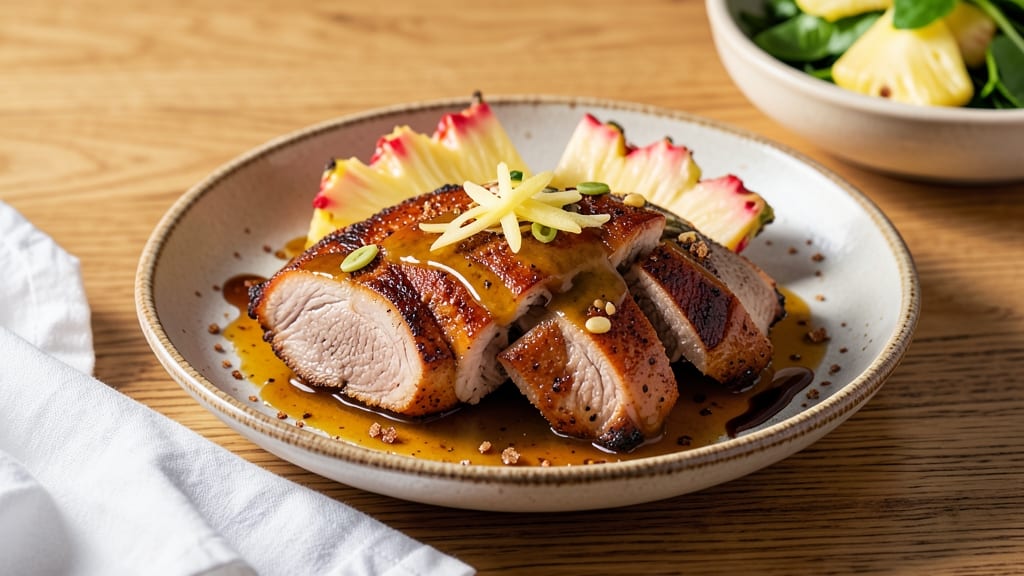
This pork braised in pineapple juice recipe transforms a simple cut into a dish that’s sweet, tangy, and deeply savory—like a vacation in every bite. 🌴 The secret lies in balancing the natural acidity of pineapple with slow-cooked pork, creating caramelized edges and tender meat that practically melts.
I perfected this technique after years of experimenting with tropical flavors in my Charleston kitchen, where fresh pineapple was always on hand. The process is straightforward: marinate the pork in pineapple juice overnight, then braise it until the liquid reduces to a glossy, syrupy glaze.
This method ensures the meat stays juicy while absorbing the vibrant flavors of the pineapple, garlic, and ginger. The result is a dish that’s rich enough for a dinner party but simple enough for a weeknight.
By the time you serve it, you’ll have golden-brown pork with a glossy, caramelized sheen, served over fluffy rice or alongside grilled vegetables. The aroma alone will have everyone at the table asking for seconds.
This recipe proves that a little acidity and patience can turn ordinary pork into something extraordinary. Pair it with a crisp cucumber salad or steamed greens to balance the richness, and you’ve got a meal that’s as impressive as it is delicious. Let’s get cooking!
Ingredients for pork in pineapple juice
Tropical flavors meet savory pork in this simple, flavor-packed recipe.
| Ingredient | Amount | Notes |
|---|---|---|
| Pork Shoulder 🐷 | 2 lb | Bone-in for flavor, cut into 1.5-inch chunks |
| Fresh Pineapple Juice 🍍 | 1 ½ cups | From 1 whole fresh pineapple, strained |
| Garlic Cloves 🧄 | 6 cloves | Minced, for depth of flavor |
| Fresh Ginger 🌿 | ½ cup | Finely grated, aromatic kick |
| Brown Sugar 🍚 | ¼ cup | Light or dark, for caramelization |
| Soy Sauce 🍶 | ¼ cup | For umami balance, low-sodium preferred |
| Olive Oil 🫒 | 2 tbsp | For searing, extra-virgin recommended |
| Red Wine Vinegar 🍷 | 2 tbsp | Brightens flavors, sub with apple cider vinegar |
| Salt 🧂 | 1 ½ tsp | Kosher or sea salt, to taste |
| Black Pepper 🌶️ | ½ tsp | Freshly ground for heat |
| Fresh Cilantro 🌿 | ¼ cup | Chopped, for garnish, stems removed |
| Fresh Lime 🍋 | 1 whole | Juiced, for final brightness |
| Honey 🍯 | 1 tbsp | Optional, for extra sweetness |
The pork shoulder is your secret weapon here—bone-in cuts stay juicier and pack more flavor. Grab one from the butcher counter if possible, as they often have better quality than pre-packaged. Look for marbled cuts with a nice pink hue, not grayish or overly dry. If you're using a pre-cut pork shoulder, pat it dry before searing to get that perfect crust. For pineapple juice, fresh is non-negotiable—canned juice lacks the bright acidity and depth. If you can't find fresh pineapple, blend and strain a whole pineapple yourself. The ginger should be freshly grated (not powdered) for that zesty punch—Trader Joe's usually has good organic ginger if you're in a pinch.
No fresh pineapple juice? Freshly squeezed orange juice with a splash of lime works in a bind, though it won't be identical. Swap the soy sauce for coconut aminos if you're avoiding sodium, but you'll lose some depth. The brown sugar can be substituted with coconut sugar for a more natural sweetness. If you're avoiding honey, maple syrup at the same amount keeps things vegan-friendly. The garlic and ginger are non-negotiable for flavor, but if you're short on time, garlic powder (1 tsp) and ground ginger (0.25 tsp) will get you close. The red wine vinegar adds a tangy brightness—apple cider vinegar is a great sub if you don't have it. For extra richness, add 1 tbsp of coconut milk to the braising liquid.
This dish tastes even better the next day as the flavors meld. Store leftovers in an airtight container in the fridge for up to 4 days. The braising liquid thickens as it cools, so add a splash of water or pineapple juice when reheating for a glossy finish. Freeze portions for up to 3 months—just thaw in the fridge overnight. The pork reheats beautifully in a skillet with a splash of pineapple juice or water. Garnish with fresh cilantro and lime juice right before serving to keep it vibrant. Double the batch if you're feeding a crowd—it's that good.
Why You'll Love This Recipe
- One-Pot Magic: I swear by this recipe when I’m too tired to wash a million dishes. The pork shoulder goes straight from the fridge to the pot, simmering in its own juices with pineapple juice—no extra pans, no stress.
- Sweet-Savory Balance: That ginger and garlic combo? It’s like a flavor hug. The brown sugar caramelizes just enough to make the pork tender and the pineapple juice cuts through the richness—bright, tangy, and impossible to resist.
- Meal Prep MVP: Between us, this is my go-to for busy weeks. Cook a big batch on Sunday, and you’ve got lunch or dinner covered for days. The flavors only get better as it sits, and reheating takes two minutes.
- Budget Stretch: Pork shoulder is cheap, and pineapple juice lasts forever. Honestly, I’ve made this for $10 and fed four people—plus leftovers for my picky teenager. (Yes, even on a Tuesday night.)
Step-by-step instructions for pork braised in pineapple juice
Here's how to transform simple ingredients into tender, caramelized pork with tropical brightness.
🔥 Step 1: Sear the Pork Shoulder for Deep Flavor
Heat a large Dutch oven over medium-high heat until hot. Add the 2 tablespoons olive oil and swirl to coat the bottom. Working in batches if needed, add the 2 lb pork shoulder cut into 1.5-inch chunks and sear undisturbed for 3-4 minutes per side until deep golden brown with crisp edges.
Resist the urge to move the pork too soon—this initial browning creates the Maillard reaction that builds rich, caramelized flavors. You'll know it's ready when it releases easily from the pan. Transfer the seared pork to a plate and set aside. Keep the Dutch oven on the heat for the next step.
👨🍳 Step 2: Build the Aromatic Braising Base
In the same Dutch oven, add the 6 cloves minced garlic cloves and 0.5 cup finely grated fresh ginger. Cook for 1 minute until fragrant and lightly golden—this releases their essential oils and maximizes flavor. Be careful not to burn them; they cook quickly.
Stir in the 0.25 cup brown sugar, 0.25 cup soy sauce, and 2 tablespoons red wine vinegar. Let the mixture bubble for 2 minutes until the sugar begins to caramelize slightly, creating a glossy, sticky base. This sweet-savory foundation will tenderize the pork beautifully during braising.
🥘 Step 3: Deglaze and Combine All Ingredients
Pour in the 1.5 cups fresh pineapple juice and scrape up any browned bits from the bottom of the pot with a wooden spoon. These flavorful bits are called fond, and they're packed with concentrated meaty taste. Add the seared pork back to the pot, making sure each piece is submerged in the liquid.
Bring the mixture to a gentle simmer over medium heat, then reduce to low heat. Add the 1.5 teaspoons salt and 0.5 teaspoon black pepper, then stir in the 1 tablespoon honey (if using). The liquid should coat the pork completely—if not, add ¼ cup water to help the braising process along.
⏰ Step 4: Braise Until Fork-Tender
Cover the Dutch oven with a tight-fitting lid and transfer to a 350°F preheated oven. Braise for 2.5-3 hours, turning the pork occasionally, until it's fork-tender and easily pulls apart. The pork should be falling off the bone with minimal resistance when pierced.
Here's the thing—don't peek or stir too often. Every time you open the lid, you lose heat and moisture, which can make the pork tough. If the liquid reduces too much and the pork isn't fully submerged, add 2-3 tablespoons water during the cooking process to maintain moisture.
🍽️ Step 5: Finish and Garnish for Freshness
Once the pork is tender, remove the lid and increase the heat to medium-high. Simmer uncovered for 5-7 minutes to reduce the sauce slightly and concentrate the flavors. The sauce should coat the back of a spoon and have a glossy sheen.
Transfer the pork to a serving platter and spoon the braising sauce over the top. Garnish with 0.25 cup chopped fresh cilantro and a squeeze of juice from 1 whole fresh lime. Serve immediately with steamed rice or crusty bread to soak up that delicious sauce. The contrast of tender pork with the bright, tangy sauce is pure magic!
Pro Tips For Making Pork In Pineapple Juice
- Sear the Pork First: After slicing the pork shoulder into chunks, hit them with a screaming-hot pan—no oil needed. The natural juices will release and brown in seconds, locking in flavor before the pineapple juice even touches them. I used to skip this, and the dish always tasted flat until I realized the difference a quick sear makes.
- Strain the Pineapple Juice: Fresh pineapple juice is full of fibrous bits that turn your sauce into a pulp. Strain it through a fine-mesh sieve or cheesecloth before adding it to the pot—it’s a little extra work, but your sauce will be silky smooth. I learned this the hard way after slurping through a chunky mess.
- Balance the Sweetness: Brown sugar is your friend here, but too much turns this into dessert. Start with half the recipe’s amount, taste after simmering, then adjust—pineapple juice is already sweet, and ginger/garlic can get overpowered. I was skeptical until I tried it: the pork stays savory, not cloying.
- Simmer Low and Slow: Rushing this braise? You’ll end up with tough, stringy pork. Keep the heat at a gentle simmer (small bubbles, occasional stirs) for at least 1.5 hours. The pineapple juice will reduce, deepening the flavor, and the pork will fall apart like it’s been cooked all day. (Yes, even if you’re impatient like me.)
Perfect pairings for this recipe
Tropical Rice Pairings
Serve your braised pork over jasmine or basmati rice cooked in pineapple juice for a cohesive flavor profile. Use 1 cup rice to 1.5 cups pineapple juice—simmer for 15 minutes after boiling to infuse the grains with tropical sweetness.
For extra richness, stir in 1 tablespoon butter at the end. 🌾
For a one-pot wonder, try coconut rice—sauté 1 cup jasmine rice in 2 tablespoons coconut oil, then add 2 cups coconut milk and 1 cup pineapple juice. Simmer covered for 20 minutes until tender. The creamy texture balances the tangy pork beautifully.
Fresh Vegetable Sides
Grilled pineapple slices make a stunning garnish and side—brush with 1 tablespoon honey and grill for 2 minutes per side until caramelized. Pair with steamed bok choy tossed in 1 teaspoon sesame oil and a pinch of salt for a light, crisp contrast. 🥭
For heartier sides, try charred long beans—toss 1 lb green beans with 1 tablespoon olive oil, 1 minced garlic clove, and ½ teaspoon chili flakes. Roast at 425°F for 12 minutes until blistered. The smoky flavor cuts through the pork’s richness.
Creamy Coconut Sauce
Drizzle the pork with a coconut-lime sauce for extra decadence. Blend ½ cup coconut milk, 2 tablespoons lime juice, 1 tablespoon honey, and 1 teaspoon grated ginger until smooth. Simmer for 3 minutes to thicken slightly, then drizzle over the pork before serving. 🥥
Crispy Garnishes
Add toasted coconut flakes for texture—heat ¼ cup flakes in a dry skillet over medium heat for 2 minutes until golden. Sprinkle over the pork just before serving. For a spicy kick, mix 1 teaspoon chili powder with 1 tablespoon lime zest and scatter on top.
Beverage Pairings
A light lager like Peroni or Corona complements the dish’s tropical notes without overpowering. For wine lovers, a dry Riesling from Germany offers crisp acidity that cleanses the palate. Serve chilled to balance the rich pork. 🍺
For a non-alcoholic option, sparkling pineapple juice (chilled) mirrors the dish’s flavors while keeping it refreshing. Add ice and mint leaves for a festive touch. The effervescence cuts through the sauce’s sweetness beautifully.
Nutrition facts
Frequently asked questions
Can I use canned pineapple juice instead of fresh?
Fresh pineapple juice is ideal for its bright acidity and vibrant flavor, but you can use canned juice in a pinch. Look for 100% pineapple juice with no added sugar—avoid brands with preservatives or artificial flavors. If using canned juice, add 1 extra tablespoon of lime juice to compensate for the lack of freshness and enhance the tropical notes.
How do I adjust the recipe for a slow cooker?
Transfer the seared pork and braising liquid to a 6-quart slow cooker and cook on low for 6-7 hours or high for 4-5 hours. Since slow cookers don’t caramelize as effectively, add 1 extra tablespoon of brown sugar to the sauce. Stir occasionally to prevent sticking, and finish by simmering the sauce in a skillet for 5 minutes to thicken it before serving.
Why did my pork turn out tough instead of tender?
Tough pork usually happens when the meat isn’t fully submerged in liquid or the cooking time is too short. Ensure the pork is fully covered by the braising liquid—add 2-3 tablespoons of water or pineapple juice if needed. Also, check your oven temperature—it should be 350°F for even cooking. If the pork still feels firm, extend the braising time by 30-60 minutes until it’s fork-tender.
Can I make this recipe with pork tenderloin instead of pork shoulder?
Yes, but the cooking time will be shorter. Cut the 1.5 lb pork tenderloin into 1-inch chunks and sear as directed. After searing, braise for only 1-1.5 hours (instead of 2.5-3 hours) since tenderloin cooks faster. The result will be juicier but slightly less flavorful than pork shoulder, as tenderloin has less connective tissue to break down during braising.
How can I store or reheat leftovers?
Store leftovers in an airtight container in the fridge for up to 4 days. Reheat gently in a skillet over medium-low heat, adding 1-2 tablespoons of pineapple juice or water to prevent drying. For the microwave, cover with a damp paper towel and heat in 30-second intervals, stirring between each interval. The sauce may thicken further—thin with extra pineapple juice if needed.