
Sauces & Condiments
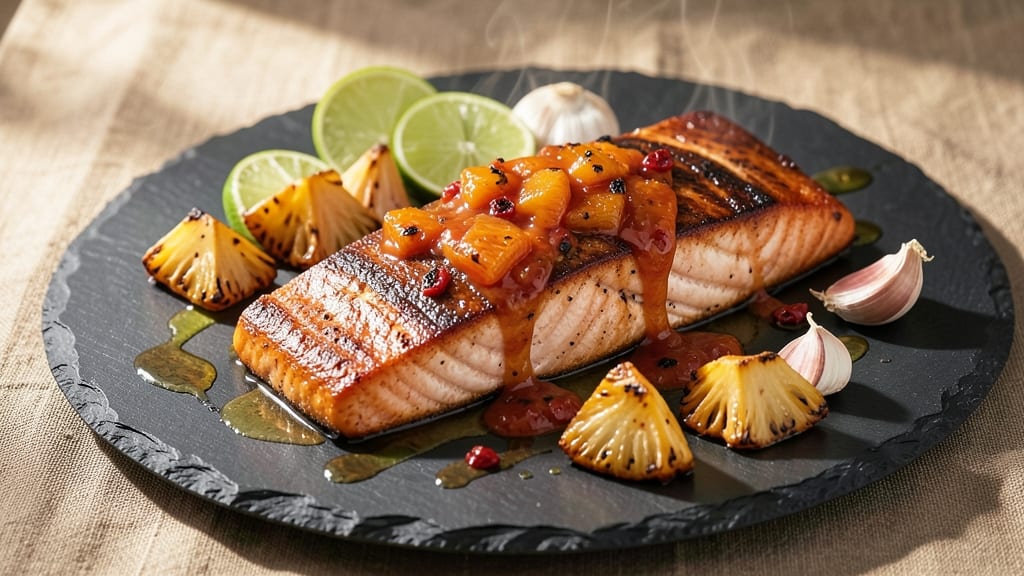
This roasted pineapple habanero sauce salmon recipe delivers a perfect balance of sweet, spicy, and savory flavors that transform simple salmon into a standout dish. The caramelized edges on the fish pair beautifully with the vibrant, tangy-sweet sauce made from fresh pineapple and habanero.
I developed this recipe after craving a dish that could handle bold flavors without overpowering the delicate salmon—now it’s my go-to for weeknight dinners that feel special.
The magic happens in two parts: the slow-roasted pineapple habanero sauce, which simmers until the sweetness deepens and the heat mellows into a complex, glossy glaze, and the perfectly cooked salmon, seared to a golden finish while staying tender inside.
The sauce’s natural sweetness from the pineapple cuts through the habanero’s heat, creating a harmonious bite that lingers. This method ensures the salmon reaches 125–145°F internal temperature every time, so it’s never dry or overcooked.
What you’ll end up with is a dish that’s restaurant-quality but simple to execute—crispy, caramelized salmon fillets swimming in a sticky, aromatic sauce that’s sweet, spicy, and just a little tangy.
The sauce clings to the fish, making every bite feel indulgent, while the bright acidity from the pineapple keeps the flavors fresh. Serve it over jasmine rice or quinoa, or pair it with a crisp green salad to balance the richness.
This recipe is designed for flexibility and flavor, so you can adjust the heat level by adding more or less habanero, or swap in mango for extra sweetness.
The sauce also works as a glaze for grilled chicken or shrimp, making it a versatile addition to your repertoire. Ready to elevate your salmon game? Let’s get cooking.
Ingredients for roasted pineapple habanero sauce salmon
Sweet, spicy, and perfectly balanced—these ingredients create a restaurant-worthy salmon dish with caramelized edges.
| Ingredient | Amount | Notes |
|---|---|---|
| Fresh Pineapple 🍍 | 1 cup | Diced, fresh or frozen |
| Habanero Peppers 🌶️ | 2 whole | Seeds removed for mild heat |
| Salmon Fillets 🐟 | 4 whole | Skin-on, 6-8 oz each |
| Extra-Virgin Olive Oil 🫒 | ½ cup | For roasting and searing |
| Lime Juice 🍋 | ¼ cup | Freshly squeezed |
| Fresh Garlic 🧄 | 4 cloves | Minced for sauce |
| Fresh Ginger 🌿 | 1 tbsp | Grated, finely |
| Brown Sugar 🍚 | 2 tbsp | Light or dark |
| Fish Sauce 🌊 | 1 tbsp | For umami depth |
| Diamond Crystal Kosher Salt 🧂 | 1 ½ tsp | For seasoning |
| Fresh Cilantro 🌿 | ¼ cup | Chopped, for garnish |
| Jasmine Rice 🍚 | 1 cup | Uncooked, for serving |
The habanero peppers are the flavor anchors here, so pick them fresh and vibrant—Mexican markets often carry the best. If you're sensitive to heat, remove all seeds and membranes before dicing. The pineapple should be ripe but firm; Costco's pre-cut Hawaiian pineapple works perfectly, but fresh is ideal. For the salmon, wild-caught Alaskan has the best texture, but any skin-on fillet will do. The ginger needs to be freshly grated—pre-grated loses its punch fast. If you're in a hurry, freeze it for 15 minutes to make grating easier.
No habanero? Substitute with 1/2 tsp cayenne plus 1 tbsp chopped jalapeño for a milder kick. Swap pineapple for mango or peach if you prefer, but the acidity helps balance the heat. Fish sauce can be tricky—Red Boat or Three Crabs are the gold standards, but any quality brand works. Short on lime? Substitute with lemon juice at the same amount. The brown sugar adds depth; if you're watching sugar, reduce by half and add 1/2 tsp cinnamon for warmth. For a vegetarian twist, use firm tofu or king oyster mushrooms instead of salmon.
The sauce keeps for 5 days in the fridge—store it in a sealed jar with a thin layer of olive oil on top to preserve freshness. The salmon is best served immediately after cooking, but leftovers reheat beautifully in a 350°F oven for 8-10 minutes. For meal prep, cook the rice ahead and store separately. The sauce freezes well for up to 3 months—just thaw overnight in the fridge before reheating. Garnish with cilantro right before serving to keep it vibrant.
Why You'll Love This Recipe
- Sweet Heat Magic: That roasted pineapple-habanero sauce is where things get interesting—caramelized fruit meets smoky chili heat, and the salmon soaks it up like a sponge. I’ll be real: the first time I tasted the way the lime juice brightens everything? I immediately made a second batch.
- One-Pan Wonder: Honestly, this is my lazy-day hero. Toss pineapple chunks on a sheet pan, roast them alongside the salmon, then blend the habanero and lime into a sauce—no extra pots, no fuss. The salmon finishes in the same pan, and cleanup is just a wipe-down. (Yes, even on a Tuesday night.)
- Leftovers That Don’t Suck: Between us, most salmon leftovers turn into sad, dry fish. Not this. The sauce clings to the flakes, and the sweetness keeps it from tasting stale. I’ll pack it for lunches or freeze it—reheated with a splash of water, it’s just as good as day one.
- Weeknight Crowd-Pleaser: This isn’t just a fancy dinner dish—it’s the one I pull out when friends drop by or my kid’s soccer team is starving. The habanero gives it a kick without being overwhelming, and the pineapple’s natural sweetness balances it perfectly. Even my mom, who hates spice, asks for seconds.
Step-by-step instructions for roasted pineapple habanero sauce salmon
Here's how to balance sweet tropical fruit with fiery habanero for a sauce that caramelizes salmon edges perfectly.
Roast the Pineapple and Habanero for Depth of Flavor
Preheat your oven to 425°F and line a baking sheet with parchment paper. Cut the 1 cup fresh pineapple into ½-inch chunks and halve the 2 whole habanero peppers lengthwise, removing seeds and membranes for milder heat. Toss the pineapple and habanero with 1 tablespoon of the 0.5 cup extra-virgin olive oil and 1 teaspoon of the 1.5 teaspoons diamond crystal kosher salt.
Spread evenly on the baking sheet and roast for 20-25 minutes until the pineapple is caramelized with golden edges and the habanero softens but doesn't burn. The aroma should be intoxicating—sweet pineapple with underlying smoky heat. Let cool slightly before transferring to a blender, but keep the oven on for the salmon.
Sear the Salmon Skin-Side Down for Crispy Edges
Pat the 4 whole salmon fillets dry with paper towels—this ensures maximum crispiness. Season both sides generously with the remaining 0.5 teaspoon diamond crystal kosher salt and black pepper to taste. Heat a separate baking sheet in the oven for 5 minutes to get it piping hot.
Place the salmon skin-side down on the hot sheet and return to the oven for 8-10 minutes at 425°F. You'll know it's ready when the skin is crispy and opaque, and the flesh flakes easily with a fork. Remove carefully and let rest on a plate while you make the sauce.
Blend the Sauce for Perfect Sweet-Heat Balance
In a blender, combine the roasted pineapple and habanero with 4 cloves minced fresh garlic, 1 tablespoon finely grated fresh ginger, 2 tablespoons brown sugar, 1 tablespoon fish sauce, and 0.25 cup lime juice. Blend until completely smooth, scraping down the sides as needed. Taste and adjust—you want a balance where the sweetness shines but the habanero's heat lingers.
Strain through a fine-mesh sieve to remove any fibrous bits, then return the sauce to the blender. With the motor running, slowly drizzle in 0.25 cup of the remaining extra-virgin olive oil to emulsify. The sauce should coat the back of a spoon but still flow easily—this ensures it clings beautifully to the salmon.
Finish the Salmon with the Sauce
Gently spoon the sauce over the rested salmon fillets, coating them evenly. Return to the oven for 3-4 minutes at 400°F to heat through and let the sauce caramelize slightly. The edges should be glossy and the salmon should reach an internal temperature of 145°F.
Garnish with 0.25 cup chopped fresh cilantro and serve immediately over 1 cup cooked jasmine rice. The contrast of fluffy rice with the crispy salmon and vibrant sauce creates the perfect balance—sweet, spicy, and umami-rich in every bite.
Pro Tips For Making Roasted Pineapple Habanero Sauce Salmon
- Char the Pineapple First: I learned this the hard way—roasting pineapple chunks straight away makes them mushy. Toss them in olive oil, then sear them 2-3 minutes on high heat in a dry skillet until blackened in spots. That caramelized edge is what ties the sauce together.
- Seed and Mince Habaneros: Cutting through habanero seeds with gloves on is a must—those things pack a punch. Mince them finely (smaller than you think) and let them sit in the sauce for at least 10 minutes before adding salmon. This lets the heat mellow slightly without losing its kick.
- Pat Salmon Dry Before Roasting: Wet salmon sticks to the pan and steams instead of searing. Use paper towels to dry the fillets thoroughly, then hit them with a pinch of salt and let them rest 5 minutes. This guarantees a crispy crust that holds up to the tangy sauce.
- Blanch Salmon First: I was skeptical until I tried it—blanching salmon in simmering water for 30 seconds before roasting locks in moisture. The sauce will still cling perfectly, but the flesh stays flaky instead of rubbery. Just pat it dry after blanching to avoid a soggy finish.
Common mistakes when making your roasted pineapple habanero sauce salmon
Overcooking Salmon
Salmon is delicate—once it hits 145°F internal temperature, it starts to flake and dry out. I’ve ruined perfectly good fillets by leaving them in the oven too long or checking doneness with a fork too aggressively.
Use a meat thermometer and pull the salmon when it reaches 125–145°F—this ensures it stays tender. Resting for 5 minutes after cooking helps redistribute juices, so don’t skip this step! 🌡️
Skipping the Rest
Rushing to plate the salmon immediately after cooking is a common mistake. The 5-minute rest ensures the juices settle back into the fish, preventing dryness. I’ve learned this the hard way—once, I sliced into salmon too soon and ended up with a sad, dry mess.
Let it rest on a wire rack or plate to maintain crispy skin.
Uneven Heat Distribution
Placing salmon directly on a cold baking sheet can lead to uneven cooking. Preheat your baking sheet in the oven for 5 minutes at 425°F before adding the salmon.
This ensures even heat transfer and crispy skin. I also recommend using a parchment-lined sheet for easier cleanup and better heat circulation.
Underestimating Habanero Heat
Habaneros pack serious heat, and their flavor can overpower the dish if not balanced properly. Remove seeds and membranes to reduce spice, and always taste the sauce before serving. If it’s too hot, stir in a splash of lime juice or a pinch of brown sugar to mellow the heat.
I keep a bowl of plain yogurt nearby as a quick heat neutralizer for guests who prefer milder flavors. 🌶️
Blending Too Long
Over-blending the sauce can turn it grainy or separate the oil. Pulse the ingredients until smooth but stop before it gets too thick. Strain through a fine-mesh sieve to remove any fibrous bits, then emulsify with olive oil while blending.
This keeps the sauce silky and ensures it clings beautifully to the salmon. I’ve had to start over when the sauce split—don’t let that happen to you!
Ignoring Sauce Consistency
The sauce should coat the back of a spoon but still flow easily. If it’s too thick, thin it with a splash of water or lime juice. If it’s too thin, simmer it for 2–3 minutes to reduce.
The perfect consistency ensures the sauce glides over the salmon without sliding off. I always taste-test the sauce mid-blending to adjust as needed—this is where the magic happens! ✨
Nutrition facts
Frequently asked questions
Can I use frozen pineapple instead of fresh?
Yes, but thaw and drain it thoroughly first to avoid a watery sauce. Use 1 cup thawed frozen chunks (no need to dice) and pat dry with paper towels before roasting. The texture will be slightly softer, but the flavor remains bright. For extra insurance, roast frozen pineapple for 5 extra minutes to caramelize properly.
How do I adjust the heat level if habaneros are too spicy?
Start by removing all seeds and membranes before roasting. For milder heat, use 1 habanero + 1 jalapeño instead of 2 habaneros. If the sauce is still too hot, balance it with 1 extra tablespoon lime juice or 1 teaspoon honey. Keep plain yogurt on hand as an emergency neutralizer for guests.
What’s the best way to store leftovers?
Store the sauce separately in an airtight container for 5 days in the fridge. For salmon, wrap tightly in foil and refrigerate for 2 days max—it reheats beautifully in a 350°F oven for 8 minutes. Freeze sauce alone for 3 months (thaw overnight). Never refreeze salmon after thawing.
Can I grill this instead of baking?
Grill the salmon skin-side down over medium-high heat for 4-5 minutes per side until crispy. For the sauce, reduce roasting time to 15 minutes (watch closely to avoid burning). The smoky grill flavor pairs perfectly with the sweet-spicy sauce. Just ensure your grill reaches 425°F for even cooking.
What sides complement this dish best?
Jasmine rice or quinoa balances the richness, while a mango avocado salad adds freshness. For contrast, try coconut rice or roasted sweet potatoes. The sauce also works as a glaze for grilled shrimp or chicken—double the recipe for a party dish!