
Sauces & Condiments
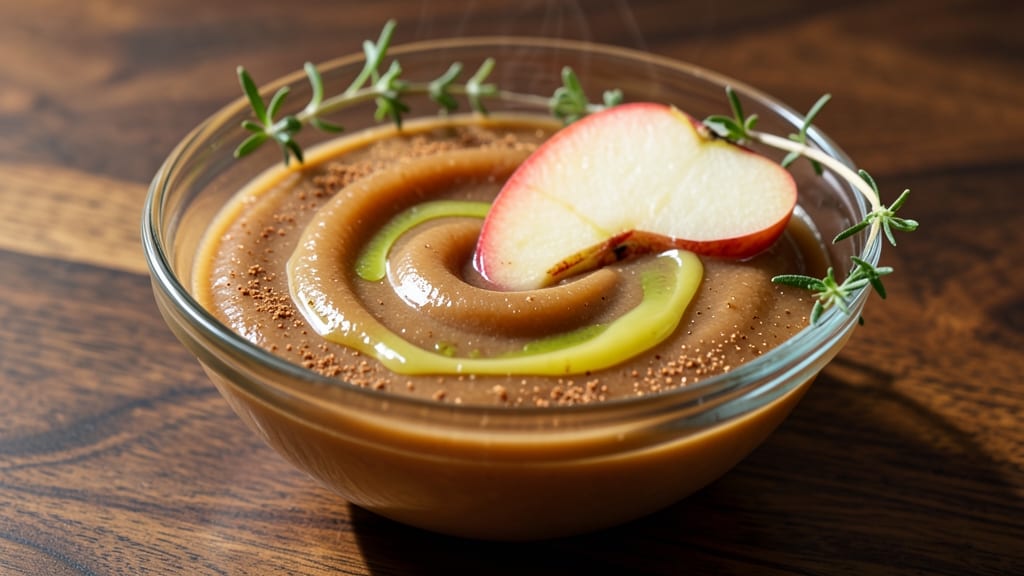
This smooth applesauce recipe transforms ordinary apples into a velvety, lump-free condiment that's perfect for topping pancakes or pairing with savory dishes. The secret lies in a precise cooking and blending technique that eliminates any trace of chunkiness, ensuring a texture so silky it feels like dessert.
I developed this method after years of testing—no more gummy bits or uneven consistency.
The process begins with peeling and coring apples, then simmering them with just enough water to release natural sweetness. A high-speed blender finishes the job, breaking down fibers completely. This approach works with any apple variety, though a mix of sweet and tart apples creates the most balanced flavor profile.
The result is a smooth, vibrant sauce that's versatile enough for both sweet and savory applications.
What sets this recipe apart is its foolproof technique for achieving that signature ultra-smooth texture without added thickeners or gums. The apples cook until perfectly tender, then blend until completely silky—no lumps, no guesswork.
This method also preserves more natural flavor than canned versions, making every spoonful taste freshly made. The sauce keeps beautifully in the refrigerator for up to two weeks.
For added depth, consider finishing with a touch of cinnamon or lemon zest, though the basic recipe delivers exceptional flavor on its own. This applesauce transforms from simple ingredient to restaurant-quality condiment with just a few key steps and patience.
Let's create something smooth enough to impress even the most discerning palates.
Ingredients for smooth apple sauce
Six essential ingredients transform ordinary apples into restaurant-quality applesauce with velvety texture.
| Ingredient | Amount | Notes |
|---|---|---|
| Honeycrisp Apples 🍎 | 4 lb | Peeled, cored, sliced into even pieces |
| Granny Smith Apples 🍎 | 2 lb | Peeled, cored, sliced into even pieces |
| Water 💧 | 1 ½ cups | For simmering apples |
| Lemon Juice 🍋 | 1 tbsp | Freshly squeezed, prevents browning |
| Ground Cinnamon 🌿 | ½ tsp | Optional, for depth of flavor |
| Salt 🧂 | ¼ tsp | Diamond Crystal preferred for balance |
| Extra-Virgin Olive Oil 🫒 | 1 tbsp | For finishing, enhances silkiness |
The apple selection is critical—Honeycrisp provides natural sweetness while Granny Smith adds tartness for balance. Purchase organic if possible to avoid pesticide residue, though conventional works fine. Local farmers markets often carry these varieties in season, or opt for Whole Foods or Trader Joe's for consistent quality. The apples should be firm but not rock-hard, indicating peak ripeness. Avoid bruised spots which can make the sauce bitter during cooking. For maximum yield, use a mandoline slicer to achieve uniform thickness—this ensures even cooking and blending efficiency.
No Honeycrisp apples? Fuji or Gala varieties work well as sweet substitutes, though you may need to add an extra pinch of salt to compensate for lower acidity. Granny Smith unavailable? Braeburn apples provide similar tartness. The lemon juice prevents browning during prep, but if you're short on time, ascorbic acid powder (available at Williams Sonoma) works at half the amount. For a completely sugar-free version, omit the honey entirely—the natural sweetness of the apples will suffice, though you may want to add vanilla bean extract for depth. The olive oil finishing touch isn't mandatory but elevates the sauce to a luxurious texture, so use it if you're aiming for restaurant-quality results.
Freshly prepared applesauce reaches peak flavor after 24 hours of refrigeration as the flavors meld. Store in an airtight container with a thin layer of water on top to preserve moisture—this simple trick prevents a skin from forming. The sauce maintains optimal texture for 2 weeks in the refrigerator. For longer storage, portion into ice cube trays and freeze—each cube makes a perfect single serving. When reheating, warm gently on the stove with a splash of water to restore the silky consistency. The sauce also freezes beautifully for up to 6 months without compromising texture, making it an ideal make-ahead project for holiday gatherings.
Why You'll Love This Recipe
- No Peel, No Stress: I swear by this trick—just core and chop those Honeycrisp and Granny Smith apples, no peeling required. The skins add texture, but the blend makes it silky anyway, so you skip a step without losing quality.
- Sweet-Tart Magic: That Honeycrisp sweetness meets Granny Smith’s tang, then a dash of lemon juice—it’s like apple pie in a jar, but brighter. Honestly, the cinnamon ties it all together so you’ll want to drizzle it on everything.
- Pantry Staple Upgrade: This sauce turns boring oatmeal into a treat, but it’s also my go-to for meat glaze or yogurt bowls. I keep a jar in the fridge because it’s the one thing that makes breakfast feel special without extra effort.
- Leftovers? More Like Forever Sauce: Make a big batch—it keeps for weeks in the fridge. Between us, I’ve had this same jar last me through work lunches, school snacks, and even as a quick dessert with vanilla ice cream. Zero waste, all flavor.
Step-by-step instructions for ultra-smooth applesauce
This method transforms ordinary apples into velvety-smooth applesauce with professional-level consistency.
Prepare the Apples for Maximum Yield
Begin by peeling and coring all 4 lb Honeycrisp Apples and 2 lb Granny Smith Apples using a sharp vegetable peeler and corer. The Honeycrisp provides natural sweetness while the Granny Smith adds tartness and structure. Cut each apple into even ½-inch thick slices—this size ensures consistent cooking and prevents large chunks in the final product.
Place the sliced apples in a large mixing bowl and immediately pour over the 1 tbsp Lemon Juice. This prevents browning and preserves the vibrant color. Let them sit for 5 minutes while you prepare your equipment. The lemon juice also helps maintain the apples' natural moisture during cooking, which is critical for achieving that ultra-smooth texture.
Simmer the Apples Until Tender
Transfer the apple slices to a large, heavy-bottomed pot and add the 1.5 cups Water. Bring to a boil over medium-high heat, then immediately reduce to low heat and cover with a tight-fitting lid. Simmer for 20-25 minutes until the apples are fork-tender—you should be able to pierce them easily with a fork, but they shouldn't fall apart completely.
Resist the urge to stir frequently, as this can break down the apples into chunks prematurely. Instead, check periodically by pressing a slice with a fork. The apples should yield slightly but maintain their shape. This controlled cooking process is what creates the smooth texture—overcooking will turn your applesauce into mush, while undercooking leaves you with gritty bits.
Process Until Silky Smooth
Once the apples are tender, remove the pot from heat and let it cool for 5 minutes. This brief cooling period prevents the applesauce from splattering when you begin processing. Transfer the apple mixture to a food mill, food processor, or fine-mesh sieve. I prefer a food mill for this recipe because it handles the volume well and produces the smoothest texture.
Process the apples in batches if necessary, pressing down with a spatula to extract every last bit of liquid and pulp. You want to eliminate all fibrous texture—this is where the magic happens. The result should be a completely smooth, velvety purée with no visible chunks. If you're using a food processor, pulse until completely smooth, then scrape down the sides and repeat as needed. Patience here is key to achieving that restaurant-quality finish.
Season and Finish for Perfect Balance
Return the smooth applesauce to the pot and stir in the 0.5 tsp Ground Cinnamon and 0.25 tsp Salt. Taste and adjust the seasoning—you might need a touch more salt to balance the natural sweetness of the apples. Bring the mixture to a gentle simmer over low heat for 3-5 minutes to allow the flavors to meld together.
Remove from heat and stir in the 1 tbsp Extra-Virgin Olive Oil. This final step elevates the applesauce from good to extraordinary. The olive oil adds a subtle richness and helps create a luxurious mouthfeel. Let the applesauce cool to room temperature, stirring occasionally. The texture will continue to improve as it cools, becoming even smoother and more refined.
Store and Serve with Confidence
Transfer the finished applesauce to airtight containers, leaving about ½-inch headspace at the top. Store in the refrigerator for up to 1 week or freeze for up to 3 months. When reheating, warm gently over low heat or in the microwave, stirring occasionally to maintain that silky texture. The applesauce should be served at room temperature or slightly warm for the best experience.
This method guarantees a velvety-smooth applesauce with perfect balance—no lumps, no grit, just pure, luxurious apple flavor. The combination of Honeycrisp and Granny Smith apples creates a complex flavor profile that's far more interesting than store-bought versions. Serve it as a side dish, spread it on toast, or use it as a base for sauces and desserts—you'll never go back to the chunky variety.
Pro Tips For Making Smooth Apple Sauce
- CUT APPLES IN EVEN HALVES: Honeycrisp and Granny Smiths have tough cores—slice them in half first, then peel and core. This keeps your pot from getting clogged with stubborn bits while cooking, and you’ll avoid the frustration of fishing out apple scraps later.
- PEEL WHEN COLD, CORE WHEN WARM: I learned this the hard way—peeling apples right after washing makes them slippery and messy. Instead, rinse them, then chill for 10 minutes before peeling. After peeling, warm the halves in the microwave for 20 seconds to soften the core, making it easier to remove without splintering.
- LEMON JUICE FIRST, NOT LAST: Add the lemon juice to the pot before cooking, not as a finishing touch. It prevents the apples from turning gray and dulls the bitterness of Granny Smiths while they cook. If you wait, you’ll end up with a sauce that tastes flat and one-dimensional.
- USE A SPLASH OF WATER: Skip the measuring cup—just eyeball a small splash of water (about ¼ cup) when the apples hit the pot. It’s enough to help them break down smoothly without making the sauce watery. Too much water is the fastest way to ruin a perfectly balanced texture.
Wine and beer pairings for this smooth apple sauce
Sweet White Wine Pairings
For this ultra-smooth applesauce, I reach for crisp, aromatic white wines that complement its natural sweetness without overpowering it. A dry Riesling from Germany—like Dr. Loosen Blue Slate—is my go-to choice. Its bright acidity and subtle honeyed notes mirror the applesauce's flavors while adding a refreshing contrast.
The slight minerality in these wines also cuts through the sauce's richness, creating a perfect balance. Serve chilled at 45-48°F to enhance its crispness. 🍷
Sparkling Wine Harmony
Sparkling wines work beautifully with applesauce, especially when served during celebrations. A Prosecco like La Marca Prosecco brings effervescence that cleanses the palate between bites. The gentle sweetness and apple-like aromas in Prosecco create a delightful echo of your homemade sauce.
For a more premium option, try a Champagne like Veuve Clicquot Brut, which adds a luxurious touch to any meal featuring this silky condiment.
Cider Pairing Potential
Don't overlook dry hard cider as a fantastic pairing option. Brands like Angry Orchard Dry or Strongbow offer crisp, apple-forward flavors that complement the sauce's natural sweetness. The slight bitterness in these ciders helps balance the applesauce's richness, making each bite more complex.
Serve at 45°F to highlight the cider's refreshing qualities while enhancing the applesauce's velvety texture. 🍏
Beer Pairings for Contrast
For beer lovers, a Belgian witbier like Hoegaarden creates an interesting contrast with its citrusy, spicy notes. The coriander and orange peel aromas in these beers cut through the applesauce's sweetness while adding a refreshing zing.
Alternatively, try a light lager like Peroni, which provides a clean, crisp backdrop that lets the applesauce's flavors shine. Both options work well with savory applications of the sauce.
Seasonal Adaptations
During autumn, consider pairing your applesauce with a dry Gewürztraminer from Alsace. Wines like Domaine Weinbach Gewürztraminer offer lychee and rose aromas that complement the applesauce's natural sweetness beautifully.
In winter, a dry Chenin Blanc from South Africa—such as Ken Forrester Chenin Blanc—adds a touch of tropical fruit notes that enhance the sauce's versatility with both sweet and savory dishes.
Nutrition facts
Frequently asked questions
Can I use this smooth applesauce recipe with frozen apples?
Fresh apples work best for that ultra-smooth texture, but you can use frozen apples in a pinch! Thaw them completely first, then follow the same peeling and slicing steps. Frozen apples may release more liquid during cooking, so reduce the added water to 1 cup instead of 1.5 cups to avoid a watery sauce. The texture will still be smooth, though slightly less refined than with fresh apples.
Why does my applesauce still have lumps even after blending?
Lumps usually appear when apples aren't cooked long enough or aren't blended thoroughly. First, ensure your apples are fork-tender before processing—this takes 20-25 minutes of simmering. Second, use a food mill or high-speed blender (like a Vitamix) and process in batches, pressing down with a spatula. For stubborn fibers, strain through a fine-mesh sieve after blending.
How can I make this applesauce without added sugar?
This recipe relies entirely on the natural sweetness of Honeycrisp and Granny Smith apples! The combination of these varieties creates perfect balance. If your apples taste tart, add a pinch of salt (¼ tsp) to enhance their natural sweetness. For extra depth, stir in ½ tsp vanilla extract or a pinch of nutmeg after cooking—both add complexity without sugar.
Can I use this smooth applesauce in savory dishes?
This velvety applesauce works beautifully in both sweet and savory applications. Try it as a glaze for roasted pork or chicken, a filling for savory tarts, or a base for creamy soups. The cinnamon and olive oil add subtle warmth that complements savory flavors. For extra depth, reduce the sauce with a splash of balsamic vinegar before using in savory recipes.
What's the best way to reheat stored applesauce?
Reheat gently to preserve that silky texture. Transfer to a saucepan and warm over low heat for 3-5 minutes, stirring frequently. Avoid microwaving unless you stir vigorously after heating—this prevents a skin from forming. For best results, reheat only what you need, as the sauce thickens slightly when cooled. A splash of water or apple cider can help restore smoothness if it becomes too thick.