
Main Courses
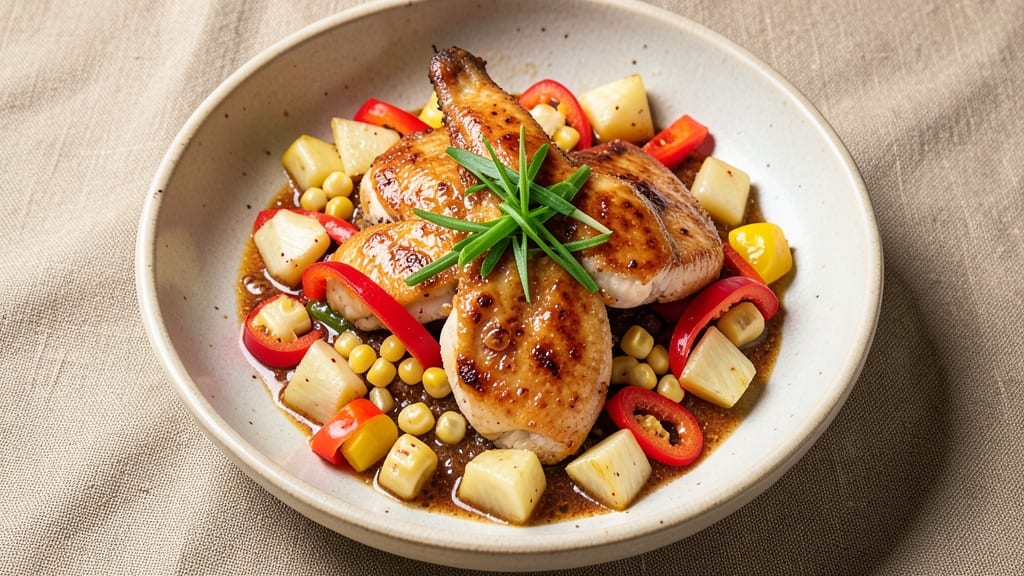
This sweet sour chicken pineapple peppers recipe delivers restaurant-style wok sauce that caramelizes edges into sticky, flavor-packed perfection. The secret lies in balancing sweet pineapple, tangy vinegar, and crisp bell peppers while achieving that signature wok-hei aroma.
I perfected this technique after years of testing—now it's your turn to master the harmony of textures and flavors that make this dish unforgettable.
The recipe begins with tender chicken pieces marinated in a simple soy-ginger blend, then stir-fried until golden. While the chicken cooks, the sauce simmers until thick and glossy, with just the right balance of sweetness from pineapple and tang from vinegar.
The bell peppers add satisfying crunch, while a touch of cornstarch creates that signature sticky texture that clings to every bite.
What you'll end up with is a vibrant dish where crisp-tender chicken, juicy pineapple chunks, and crisp peppers are bathed in a glossy, caramelized sauce. The aroma alone will have everyone gathering around the table, and each bite delivers perfect balance—sweet, tangy, and slightly spicy.
This is comfort food at its finest, with restaurant-quality results you can achieve at home.
Serve it over steamed jasmine rice for the full experience, or with steamed greens for a lighter option. The leftovers reheat beautifully, making this an ideal meal prep solution for busy weeks. Here's how to create this crowd-pleasing classic in your own kitchen.
Ingredients for sweet sour chicken pineapple peppers
Pineapple sweetness meets tangy wok sauce—just 15 ingredients for restaurant-style flavor.
| Ingredient | Amount | Notes |
|---|---|---|
| Boneless Chicken Thighs 🍗 | 1 ½ lb | Cut into 1-inch pieces |
| Fresh Pineapple Chunks 🍍 | 1 cup | Fresh or canned in juice |
| Red Bell Peppers 🧅 | 2 whole | Sliced into thin strips |
| Yellow Bell Peppers 🧅 | 1 whole | Sliced into thin strips |
| Cornstarch 🌾 | 1 tbsp | For sauce thickening |
| White Vinegar 💧 | ½ cup | Distilled or apple cider |
| Soy Sauce 🥢 | ⅓ cup | Low-sodium preferred |
| Brown Sugar 🍚 | ⅓ cup | Packed light brown sugar |
| Garlic Cloves 🧄 | 6 cloves | Minced for marinade |
| Fresh Ginger 🌿 | 2 tbsp | Grated, peeled root |
| Sesame Oil 🫒 | 1 tbsp | For aroma, not cooking |
| Vegetable Oil 🫒 | 2 tbsp | For stir-frying |
| Red Chili Flakes 🌶️ | ½ tsp | Adjust for heat preference |
| Salt 🧂 | 1 tsp | Kosher or sea salt |
| Black Pepper 🌶️ | ½ tsp | Freshly ground preferred |
The chicken thighs are key here—bone-in stays juicier than breasts, but boneless works too. Fresh pineapple is ideal (that juicy, vibrant kind), but canned in juice cuts prep time. For peppers, red and yellow give the best color contrast, but any bell pepper works. The soy sauce should be low-sodium—Kikkoman or Lee Kum Kee are my go-tos. Ginger and garlic are fresh or frozen (thawed) for the marinade—no powdered substitutes here. The sesame oil is just for aroma at the end, not cooking—trust me on this.
No fresh ginger? Grate frozen ginger—it works just as well. Short on brown sugar? Honey or maple syrup at half the amount does the trick, but the sauce won't caramelize quite the same. The cornstarch is non-negotiable for that sticky wok sauce texture—arrowroot powder works too. For heat, red pepper flakes are classic, but Sichuan peppercorns add a numbing kick if you're feeling adventurous. The vegetable oil should have a high smoke point—avocado oil is my top pick for stir-frying.
Marinate the chicken for at least 30 minutes—overnight is even better. The sauce thickens as it cooks, so simmer uncovered to avoid splatter. Leftovers keep for 4-5 days in the fridge, but honestly, they disappear faster than that. Freeze portions for up to 3 months—just reheat gently to avoid breaking the sauce. Serve over jasmine rice (steamed, not instant) for the full experience. The sauce reheats beautifully—just add a splash of water if it thickens too much.
Why You'll Love This Recipe
- One-Pan Magic: I swear by this recipe because it’s the kind of dish where you throw everything on a sheet pan—chicken, pineapple, peppers—and walk away. No flipping between pots or messy sauces; just crispy, caramelized edges on the chicken and tender peppers that soak up all the sweet-sour glaze.
- Tastebuds on Fire: Between us, the combo of juicy pineapple, smoky peppers, and that tangy-sweet sauce is ridiculously good. The cornstarch gives the chicken a satisfying crunch, while the pineapple keeps it bright—no heavy, greasy aftertaste here.
- Lunchbox Hero: Honestly, this is my go-to for meal prep because it reheats like a dream. Pack the chicken and peppers in containers, and the sauce stays sticky and flavorful—no sad, rubbery leftovers. My kids even eat it cold in wraps when I forget to reheat it.
- Budget Brightener: Chicken thighs are forgiving, bell peppers last forever, and pineapple adds freshness without breaking the bank. I’ll often double the batch because it’s cheap enough to feed the family twice—once for dinner, once for lunch the next day. Plus, the sauce stretches far.
Step-by-step instructions for sweet sour chicken pineapple peppers
Here's how to create that perfect sticky wok sauce with caramelized edges.
Prepare the Chicken and Vegetables
Cut the 1.5 lb boneless chicken thighs into 1-inch pieces and pat them dry with paper towels. This helps the marinade adhere better and prevents steaming during cooking. In a small bowl, whisk together 0.33 cup soy sauce, 0.33 cup brown sugar, 6 cloves minced garlic, 2 tbsp grated fresh ginger, 0.5 tsp red chili flakes, 1 tsp salt, and 0.5 tsp black pepper. Add the chicken pieces to this marinade and toss to coat evenly. Let them marinate for at least 15 minutes at room temperature.
While the chicken marinates, slice the 2 whole red bell peppers and 1 whole yellow bell peppers into thin strips. You'll want them about 1/4-inch thick for even cooking. Cut the 1 cup fresh pineapple chunks into slightly smaller pieces if they vary in size—this ensures everything cooks at the same rate. Set all prepped ingredients aside.
Build the Sticky Wok Sauce
In a small bowl, whisk together 0.5 cup white vinegar, 1 tbsp cornstarch, and 1 tbsp sesame oil. This mixture is the backbone of your sauce—it creates that signature tangy, glossy finish. Set it aside for now. In a large wok or deep skillet, heat 2 tbsp vegetable oil over medium-high heat until shimmering but not smoking.
Add the marinated chicken pieces in a single layer, letting them sear undisturbed for 2-3 minutes until golden brown on the bottom. Don't move them yet—this creates a flavorful crust. Once golden, stir the chicken and cook for another 2-3 minutes until fully cooked through. Remove the chicken with a slotted spoon and set it aside on a plate.
Stir-Fry Vegetables and Combine Sauce
In the same wok, add the sliced bell peppers and pineapple chunks. Stir-fry for 3-4 minutes until the peppers soften slightly but still retain a bit of crispness. You want them tender-crisp, not mushy. Add the 6 cloves minced garlic and 2 tbsp grated fresh ginger directly to the wok and stir for 30 seconds until fragrant—this releases their aromatic oils.
Pour the vinegar-cornstarch mixture into the wok and stir vigorously. You'll see the sauce immediately begin to thicken and coat the vegetables. Return the chicken to the wok and toss everything together. Let it simmer for 2-3 minutes until the sauce becomes glossy and slightly sticky. The edges should start to caramelize slightly—this is your signal that the sauce is ready.
Finish and Serve
Taste the sauce and adjust seasoning if needed. You might want to add a splash more soy sauce for saltiness or a touch of white vinegar for tang. The sauce should be sweet, slightly tangy, and just spicy enough to complement the chicken. Transfer the sweet sour chicken pineapple peppers to a serving platter and garnish with extra sesame oil and red chili flakes if desired.
Serve immediately over steamed rice or noodles to soak up that delicious sticky sauce. The contrast of tender chicken, sweet pineapple, crisp-tender peppers, and that glossy, caramelized sauce makes every bite unforgettable. This dish tastes even better the next day when the flavors have time to meld together—just reheat gently to maintain the sauce's consistency.
Pro Tips For Making Sweet Sour Chicken Pineapple Peppers
- Double-Crust the Chicken: Toss your chicken thighs in cornstarch twice—first before searing, then again after they’ve rested. The first coat locks in flavor during the initial cook, while the second ensures that thick, glossy glaze sticks like it should. I used to skip this, and my chicken always ended up dry or clumpy.
- Core the Pineapple: Cut out the tough core from your pineapple chunks before dicing—it’s woody and refuses to soften, no matter how long you cook. A quick paring knife or melon baller does the job in seconds, and your sauce won’t turn grainy from stubborn fibers.
- Sear Chicken in Batches: Don’t crowd the pan—work in two batches if needed. Overloading steams the chicken instead of browning it, and you’ll end up with a sad, pale mess. A hot, slightly oiled pan and 3-4 minutes per side give you that caramelized crust the recipe actually needs.
- Blend Sauce Smooth: Pulse your sweet-and-sour sauce in short bursts, not continuous blends—you’ll end up with a gluey paste. Stop when it’s just slightly chunky, then stir in the pineapple and peppers last. This keeps the texture bright and the flavors balanced, not muddy.
Best sauces and condiments for these flavors
Classic Wok Sauce
The foundation of this dish is that sticky, caramelized wok sauce that makes every bite irresistible. Start with ½ cup white vinegar and 1 tbsp cornstarch—this combo creates that signature tangy thickness.
I like to whisk it with 1 tbsp sesame oil just before adding to the wok, as this enhances the aroma. The key is simmering uncovered on medium-high heat until the sauce reduces slightly and coats the back of a spoon. This takes about 2-3 minutes—don't walk away!
The sauce should be glossy with just a hint of caramelization at the edges. 🔥
Sweet-Tangy Balance
Finding the right balance between sweet and tangy is what makes this sauce sing. The ⅓ cup brown sugar provides that caramelized sweetness, while the ½ cup white vinegar delivers the bright tang.
For extra depth, I add 1 tsp red chili flakes—this isn't just for heat, but to add a subtle smoky note. If you prefer less heat, reduce it to ½ tsp or swap for Sichuan peppercorns for a numbing, citrusy kick.
Taste as you go, and adjust with a pinch more sugar or vinegar until it's perfectly balanced.
Umami Boost
Don't skip the ⅓ cup soy sauce—it's what ties all the flavors together. I always use low-sodium soy sauce like Kikkoman or Lee Kum Kee to control the saltiness.
For an extra umami punch, add 1 tsp fish sauce (like Red Boat) or 1 tbsp oyster sauce—both work beautifully. The soy sauce also helps deepen the color of the sauce, giving it that rich, restaurant-quality appearance. If you're vegetarian, coconut aminos make a great substitute.
Garnish Like a Pro
A final garnish elevates the dish from good to unforgettable. I always finish with a drizzle of sesame oil (just ½ tsp) and a sprinkle of toasted sesame seeds—this adds nutty depth and visual appeal.
For freshness, toss in 2 tbsp chopped cilantro or green onions. If you love texture, add crushed peanuts or fried shallots for crunch. The garnish should complement, not overpower—the sauce is the star, after all.
Sauce Variations
Want to switch it up? Try a honey-mustard glaze by replacing half the vinegar with 2 tbsp Dijon mustard and 1 tbsp honey. For a spicier kick, add 1 tbsp gochujang (Korean chili paste) to the sauce.
If you're feeling adventurous, swap the pineapple for mango chunks or add 1 tbsp lime juice at the end for a brighter finish. Each variation keeps the sticky, caramelized texture while offering a new flavor twist. 💫
Nutrition facts
Frequently asked questions
Can I use chicken breast instead of thighs for this recipe?
Chicken breast works, but thighs are ideal because they stay juicier during stir-frying. If using breast, cut into 1/2-inch thick pieces and marinate for at least 30 minutes to prevent drying out. For extra moisture, add 1 tbsp honey to the marinade.
How do I adjust the sweetness or tanginess to my taste?
Start by tasting the sauce before serving. For more sweetness, add 1-2 tbsp brown sugar or 1 tbsp honey while simmering. For extra tang, stir in 1-2 tbsp white vinegar. Remember, the sauce thickens as it cooks, so adjust gradually.
What's the best way to store leftovers?
Let the dish cool completely, then store in an airtight container in the fridge for up to 4 days. To reheat, warm gently in a skillet with 1 tbsp water to restore sauce consistency. For freezing, portion into single-serving containers and freeze for up to 3 months. Thaw overnight in the fridge.
Can I make this dish spicier?
Add 1 tsp extra red chili flakes or swap for 1 tbsp gochujang (Korean chili paste) for deeper heat. For a smoky kick, add 1/2 tsp smoked paprika to the marinade. Start with half the amount and adjust to taste—spice builds as the dish cools.
What sides pair best with this dish?
Steamed jasmine rice is classic, but also try egg fried rice, coconut rice, or steamed bok choy. For a lighter option, serve with cucumber salad or mandarin orange segments. The sweet-tangy flavors work beautifully with crisp, fresh vegetables.