
Salads
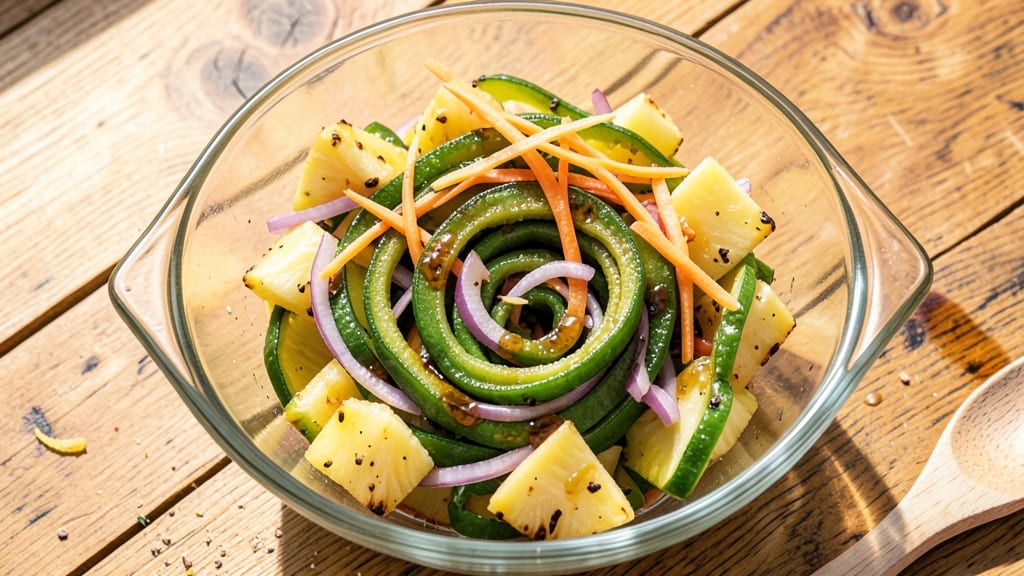
This ensaladang ampalaya salad with pineapple transforms bitter melon into a vibrant, refreshing dish that balances earthy flavors with tropical sweetness. The secret lies in properly preparing the ampalaya—peeling, desalting, and shredding it just right—to create a texture that’s tender yet crisp.
When tossed with juicy pineapple, tangy vinegar, and a touch of savory soy sauce, the salad becomes a symphony of contrasting flavors that’s both comforting and exciting.
The beauty of this recipe is its simplicity—just a handful of fresh ingredients come together in 15 minutes to create a dish that’s perfect for hot days or as a light lunch.
The ampalaya’s natural bitterness mellows when cooked gently, while the pineapple’s acidity brightens the salad, making every bite a refreshing contrast. For extra depth, you can add hard-boiled eggs or crumbled cheese, but the classic version shines on its own.
What makes this salad truly special is the harmony of textures: the slight crunch of the ampalaya, the juiciness of the pineapple, and the crispness of any added vegetables like cucumber or bell pepper.
The dressing—made with vinegar, soy sauce, and a hint of sugar—ties everything together, ensuring each bite is balanced and satisfying. It’s the kind of dish that feels both nostalgic and innovative, perfect for sharing with family or enjoying as a solo meal.
Best served chilled, this salad keeps well for up to 2 days, making it an ideal meal prep option. Whether you’re introducing someone to Filipino flavors or revisiting a childhood favorite, this recipe delivers a refreshing, flavorful experience that’s impossible to resist. Let’s get started!
Ingredients for ensaladang ampalaya salad with pineapple
Transform bitter melon and tropical sweetness into a vibrant salad with just these 13 ingredients.
| Ingredient | Amount | Notes |
|---|---|---|
| Ampalaya (Bitter Melon) 🍆 | 2 lb | Peeled, desalted, shredded thin |
| Fresh Pineapple 🍍 | 1 cup | Diced, ripe but firm |
| Red Onion 🧅 | 1 whole | Thinly sliced, outer layers removed |
| Carrots 🥕 | 2 medium | Julienned or matchstick-cut |
| Extra-Virgin Olive Oil 🫒 | ¼ cup | For light dressing |
| Cane Vinegar 🍶 | ¼ cup | White or apple cider |
| Soy Sauce 🍜 | 2 tbsp | Light or regular |
| Granulated Sugar 🍚 | 1 tbsp | White or brown |
| Salt 🧂 | 1 tsp | Diamond Crystal preferred |
| Black Pepper 🌶️ | ½ tsp | Freshly ground |
| Fresh Cilantro 🌿 | ¼ cup | Chopped, stems removed |
| Lime 🍋 | 1 whole | Juiced, seeds removed |
| Garlic Cloves 🧄 | 2 cloves | Minced, for optional depth |
The ampalaya is the star—fresh, firm bitter melon from an Asian market or specialty produce section makes all the difference. Look for ones with thick, glossy skin and minimal bruising. If you can’t find fresh, frozen ampalaya works too—thaw and drain well before using. The pineapple should be ripe but firm—cutting through the core ensures you get the juiciest pieces. For extra crunch, julienne the carrots yourself instead of using pre-shredded (it’s worth the 2 minutes).
No cane vinegar? Apple cider or white wine vinegar works just as well. Short on soy sauce? Substitute with coconut aminos or tamari for a slightly different depth. The dressing ratio is key—balance sweet, sour, and salty by tasting as you go. For a smoky twist, add a pinch of smoked paprika to the dressing. The garlic is optional but absolutely essential for that classic Filipino flavor—don’t skip it if you’ve got it!
Ampalaya keeps best in the fridge for 2 days if stored in an airtight container with a paper towel to absorb moisture. The dressing separates naturally—just whisk before using. For meal prep, store components separately and assemble when ready to eat. This salad tastes even better the next day as flavors meld—double the batch if you can! The lime juice will brighten everything up, so add it last minute for maximum zing.
Why You'll Love This Recipe
- No Fuss, No Mess: I swear by this recipe when I’m too tired to chop much—just spiralize the carrots, slice the pineapple into chunks, and dice the onion in five minutes. The ampalaya? Buy it pre-cut if you can, and you’re golden.
- Sweet-Meets-Bitter Magic: That first bite of crisp pineapple against the earthy, slightly bitter ampalaya is chef’s kiss. The olive oil dressing ties it all together—no heavy mayo, just bright, tangy, and refreshing. Honestly, it’s the kind of flavor combo that makes you want to eat it straight from the cutting board.
- Lunchbox Hero: Between us, this salad holds up better than any other in my fridge. Pack it for work, toss it in a bento box for the kids, or bring it to a potluck—it’s sturdy, colorful, and actually tastes better the next day. (Yes, even the pineapple stays juicy.)
- Pantry Staple Power: Ampalaya’s cheap at Asian markets, pineapple’s a seasonal steal, and onions/carrots? Always on sale. I’ve made this for under $8 and fed four people. Plus, the leftovers? Perfect for a quick stir-fry or soup base later in the week.
Step-by-step instructions for ensaladang ampalaya salad with pineapple
Here's how to balance bitter melon's unique texture with tropical sweetness in this vibrant Filipino salad.
Prepare the Ampalaya and Vegetable Base
Begin by thoroughly rinsing the 2 lb Ampalaya (Bitter Melon) under cold water to remove any lingering bitterness. Using a sharp chef's knife, carefully peel away the skin and deseed the melon, then slice it into thin strips—about ¼-inch thick. Place the slices in a colander and sprinkle generously with 1 tsp Salt, massaging gently for 5 minutes to draw out excess moisture. Rinse again under cold water and drain well.
While the bitter melon drains, peel the 2 medium Carrots and cut them into julienne strips. Thinly slice the 1 whole Red Onion, removing any outer layers. Dice the 1 cup Fresh Pineapple into small, even cubes—about ½-inch per piece. The goal is to create a textural contrast where the crisp vegetables and sweet pineapple complement the tender ampalaya. Arrange all prepared vegetables in a large mixing bowl and set aside.
Create the Signature Dressing
In a medium bowl, whisk together the 0.25 cup Extra-Virgin Olive Oil, 0.25 cup Cane Vinegar, 2 tbsp Soy Sauce, and 1 tbsp Granulated Sugar until the sugar fully dissolves. The mixture should look emulsified with a glossy sheen. Add the 1 tsp Salt and 0.5 tsp Black Pepper, then stir in the 2 cloves Garlic Cloves (minced) for depth. This dressing is the heart of the dish—its balance of acidity, umami, and subtle sweetness transforms the salad from ordinary to extraordinary.
For an optional but recommended touch, add the juice of the 1 whole Lime (about 3 tablespoons) and mix thoroughly. The lime brightens the entire salad, cutting through the richness of the olive oil while enhancing the tropical notes from the pineapple. Taste the dressing and adjust seasoning if needed—you might want to add a splash more vinegar for tang or a pinch of sugar to balance acidity.
Combine and Marinate the Salad
Pour the dressing over the vegetable mixture in the large bowl and toss gently but thoroughly to ensure every piece is coated. The bitter melon will begin to soften slightly as it absorbs the dressing, while the vegetables maintain their crisp texture. Let the salad marinate at room temperature for 15-20 minutes—this allows the flavors to meld and the ampalaya to develop a subtle sweetness from the sugar in the dressing.
After marinating, taste a piece of ampalaya—it should be tender but still hold its shape, with the bitterness mellowed by the dressing. If the salad tastes too sharp, add a pinch more sugar. If it needs more depth, stir in the 0.25 cup Fresh Cilantro (chopped) and let it sit for another 5 minutes to infuse its fresh, herbal notes throughout.
Serve Immediately for Best Texture
Gently toss the salad one final time just before serving to maintain the crispness of the vegetables and pineapple. The ampalaya should be tender but not mushy, with the pineapple adding a bright contrast. Serve immediately while the vegetables are at their peak texture—this salad doesn't keep well once dressed, as the bitter melon continues to soften over time.
For presentation, mound the salad on a large platter and garnish with additional cilantro and lime wedges. The vibrant colors—deep green ampalaya, orange carrots, purple onion, and golden pineapple—make this dish as visually stunning as it is delicious. Pair with grilled fish or shrimp for a complete meal that highlights the salad's balanced flavors.
Pro Tips For Making Ensaladang Ampalaya Salad With Pineapple
- Peel Ampalaya First: Ampalaya’s skin is tough and bitter—peel it before slicing, or you’ll spend 10 minutes fighting a rubbery texture. A sharp paring knife works best; just slice off the waxy outer layer, then rinse the flesh to remove any lingering bitterness. (Yes, even if you’re impatient like me.)
- Soak Pineapple in Vinegar: Fresh pineapple gets mushy fast in salads. Toss the chunks in ½ cup vinegar (white or apple cider) for 10 minutes before draining—it firms them up and cuts the sweetness just enough to balance the bitter melon. Works like a charm, even with overripe fruit.
- Sear Carrots, Don’t Boil: Raw carrots taste bland in this salad. Thinly slice them, then quickly sear in olive oil over high heat for 2–3 minutes until just tender and slightly caramelized. The heat brings out their natural sweetness without turning them to mush. (No, microwaving doesn’t count.)
- Dress Salad Last: Ampalaya releases bitterness when exposed to acid or oil too soon. Toss everything together except the olive oil and vinegar dressing until right before serving. This keeps the bitter melon crisp and the pineapple bright—no sad, wilted greens or overpowering flavors.
Perfect pairings for this dish
Filipino Side Dishes
Pair your ensaladang ampalaya salad with classic Filipino side dishes to create a full meal. Ginataang gulay (vegetables in coconut milk) adds creamy richness that contrasts beautifully with the salad's tangy brightness.
I love serving it with sinigang na baboy (pork in tamarind broth) for a savory-sour balance that complements the pineapple's sweetness. 🍛
Protein Pairings
Grilled or steamed white fish like tilapia or milkfish is a perfect match—its mild flavor lets the salad shine while adding protein. For a heartier option, try garlic shrimp sautéed in butter and garlic, which pairs wonderfully with the salad's citrus notes.
If you prefer vegetarian, tofu marinated in soy sauce and grilled works beautifully too.
Beverage Pairings
Cool down with calamansi juice—this Filipino citrus drink cuts through the salad's richness and enhances the pineapple's tropical notes. For something stronger, San Miguel Pale Pilsen offers a crisp, refreshing contrast. If you prefer non-alcoholic, hibiscus tea (tsokolate) with a hint of sweetness complements the salad's flavors perfectly. 🍹
Garnish Upgrades
Add crumbled queso de bola or edam cheese for a salty contrast that balances the salad's sweet and sour elements. Fresh mint leaves or thai basil add an aromatic touch that elevates the dish.
For extra crunch, sprinkle toasted sesame seeds or crushed peanuts on top before serving. These garnishes take your salad from simple to restaurant-worthy. 🌟
Meal Prep Add-Ons
Prep hard-boiled eggs (sliced) or crispy fried shallots ahead of time for easy assembly. Store them separately in airtight containers and add them fresh when serving.
For a complete meal prep, include steamed jasmine rice in a separate container—it pairs perfectly with the salad and keeps well for up to 3 days in the fridge. 📅
Seasonal Variations
In summer, add cucumber ribbons and cherry tomatoes for extra freshness. For winter, swap pineapple for persimmon or apple and use ginger in the dressing for warmth. These seasonal swaps keep the dish exciting year-round while maintaining the perfect balance of flavors. ❄️
Nutrition facts
Frequently asked questions
Why does ampalaya need to be desalted before using?
Desalting removes excess moisture and some of the bitterness from the bitter melon, making it more tender and palatable. The salt draws out water through osmosis, which also helps soften the texture. Skip this step and your salad will be watery and overly bitter.
Can I use canned pineapple instead of fresh?
Fresh pineapple is ideal for its juiciness and natural sweetness, but you can use canned pineapple in a pinch. Drain it well and pat dry to avoid making the salad soggy. For best results, choose pineapple packed in juice (not syrup) and add a squeeze of lime to brighten the flavor.
How do I know when the ampalaya is tender enough?
The ampalaya should be tender but still hold its shape—like al dente pasta. Test a piece after marinating: it should yield slightly when pressed with a fork but not fall apart. If it's still too firm, let it marinate 5-10 minutes longer or add a splash more vinegar to the dressing.
Can I make this salad ahead of time?
Prepare all ingredients separately and store them in airtight containers in the fridge for up to 2 days. Assemble the salad just before serving to maintain crispness. The dressing can be made ahead too—store it separately and whisk before using. The ampalaya will soften over time, so add it last.
What if my salad tastes too bitter?
Add more pineapple or a pinch of sugar to balance the bitterness. The dressing's vinegar and soy sauce should also help mellow the flavor. If it's still too strong, try adding a splash of coconut milk or a handful of shredded coconut to round out the taste.