
Sauces & Condiments
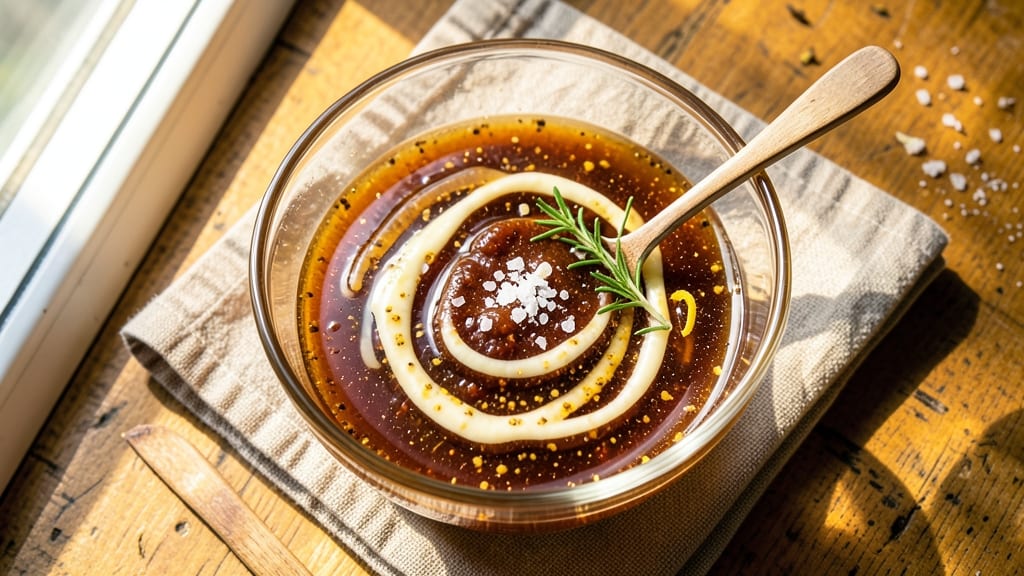
This honey mustard apple cider vinaigrette recipe transforms ordinary salads and grilled meats into standout dishes with its perfect sweet-tart balance. The combination of honey, Dijon mustard, and apple cider vinegar creates a dressing that's both complex and approachable, with just the right amount of tang to cut through richness.
I developed this recipe after years of experimenting with vinaigrettes, and it's become my go-to for everything from crisp green salads to seared chicken breasts.
The secret to this dressing lies in the emulsification process, which ensures a silky, clingy texture that coats every ingredient evenly. You'll use high-quality olive oil and a touch of Dijon mustard to stabilize the emulsion, while the apple cider vinegar adds depth that store-bought dressings simply can't match.
What makes this recipe particularly versatile is how easily it adapts—add a pinch of cayenne for heat, fresh herbs for brightness, or even a splash of hot sauce for extra kick.
What you'll end up with is a dressing that's rich enough to stand up to bold flavors while remaining light enough to enhance delicate greens.
The honey provides a subtle sweetness that rounds out the sharpness of the vinegar, while the mustard adds a tangy depth that makes this dressing more complex than it appears. This recipe yields about 1 cup of dressing, perfect for a family-sized salad or as a marinade for grilled proteins.
Best of all, this vinaigrette keeps well in the refrigerator for up to 10 days, making it an ideal make-ahead option for busy weeks. Shake or whisk before each use to restore its silky texture, and you'll have a dressing that's always ready to elevate your meals.
Let's get started on creating this flavorful staple for your kitchen.
Ingredients for honey mustard apple cider vinaigrette
Eight simple ingredients that create a dressing so versatile it works on salads, grilled meats, and roasted veggies alike.
| Ingredient | Amount | Notes |
|---|---|---|
| Extra-Virgin Olive Oil 🫒 | ¾ cup | High quality, fruity flavor preferred |
| Apple Cider Vinegar 🍏 | ¼ cup | Raw, unfiltered for best flavor |
| Local Honey 🍯 | ¼ cup | Wildflower or clover variety works |
| Dijon Mustard 🥫 | 1 tbsp | Mellow or strong, not prepared |
| Granulated Sugar 🍚 | 1 tbsp | Light brown sugar for depth |
| Salt 🧂 | ½ tsp | Diamond Crystal kosher preferred |
| Black Pepper 🌶️ | ¼ tsp | Freshly ground for best flavor |
| Fresh Lemon Juice 🍋 | 1 tbsp | Freshly squeezed, no bottled |
The olive oil is where you want to splurge—look for cold-pressed, extra-virgin with a fruity, peppery kick. Trader Joe's and Whole Foods usually have great options, or check the international aisle for Italian brands like Bertolli. Apple cider vinegar? Raw, unfiltered is key—it's got more flavor and texture than the clear stuff. The honey should be local if you can find it, but any good-quality honey works. I always grab a small jar of wildflower honey from the farmers market—it's worth the extra few bucks for that depth of flavor.
No Dijon mustard? Whole-grain mustard at half the amount works, though it'll be slightly grainier. Running low on honey? Maple syrup does the trick, but reduce other liquids slightly since it's thicker. The sugar can be swapped for agave nectar at one-to-one ratio, though it'll be less stable in the emulsion. Fresh lemon juice is non-negotiable here—bottled juice has no brightness. For extra tang, add another tablespoon of vinegar. Want heat? Cayenne pepper or hot sauce at the end lets you control the spice level perfectly.
This dressing keeps for up to 10 days in the fridge, but it's best within a week. Store it in a clean glass jar with a tight-sealing lid. Before using, give it a good shake or whisk—it'll separate slightly over time. Need to make a big batch? Double the recipe and store in smaller jars so you always have dressing ready. The emulsion is stable, but if it breaks, just whisk it back together. It's perfect for meal prep—toss it in your lunchbox or keep it on hand for last-minute salads.
Why You'll Love This Recipe
- Five-Ingredient Magic: I swear by this combo—just whisk together olive oil, apple cider vinegar, honey, Dijon, and a pinch of sugar. No fancy tools, no measuring cups (seriously, eyeball it), and you’ve got dressing in under five minutes.
- Sweet-Savory Balance: That honey and Dijon mustard team up for a tangy-sweet punch that doesn’t overpower. It’s the kind of dressing that makes greens taste like a dessert—crisp, bright, and just a little addictive.
- Salad Bar MVP: I keep a jar in my fridge for everything: grain bowls, charcuterie boards, even drizzled over roasted sweet potatoes. It’s the one dressing that works for breakfast (yes, on avocado toast) and dinner (hello, grilled chicken salad).
- Leftovers That Last: Between us, this dressing tastes better the next day—no waste, no fuss. I’ll make a big batch on Sunday, and it’s still my go-to by Friday. Plus, the ingredients cost less than a fancy bottle of store-bought.
Step-by-step instructions for honey mustard apple cider vinaigrette
This tangy-sweet dressing comes together in minutes with just a whisk and these simple ingredients.
Whisk Together the Sweet Components
In a medium bowl, combine the 0.25 cup local honey with the 1 tablespoon granulated sugar. Stir until the sugar dissolves completely, creating a smooth, syrupy base. This step ensures the sweet elements blend perfectly before adding the tangy components. The mixture should look glossy and uniform—no graininess should remain.
Next, add the 1 tablespoon Dijon mustard and mix until fully incorporated. The mustard will thicken the dressing slightly and add depth of flavor. If you're using a stronger Dijon, you might want to reduce the honey slightly to balance the intensity. This is where the magic happens—these three ingredients create the perfect sweet-tart foundation.
Add the Acidic Elements
Pour in the 0.25 cup apple cider vinegar and the 1 tablespoon fresh lemon juice, whisking continuously. You'll notice the mixture start to lighten in color as the acidity cuts through the sweetness. The vinegar should be raw and unfiltered for the best flavor—this adds complexity that bottled vinegar can't match. Keep whisking until everything is fully combined and smooth.
At this point, the dressing should have a balanced sweet-tart flavor. Taste it—it should be noticeably tangy with a touch of sweetness, but not cloying. If it tastes too sweet, add a little more vinegar or lemon juice. If it's too sharp, stir in a touch more honey. This is your chance to adjust before adding the oil.
Incorporate the Olive Oil
With the bowl tilted slightly and whisking steadily, slowly drizzle in the 0.75 cup extra-virgin olive oil. Start with a thin stream and gradually increase the flow as the dressing begins to emulsify. The key here is patience—adding the oil too quickly can cause the dressing to separate. You're looking for a smooth, creamy texture that coats the back of a spoon.
Continue whisking vigorously for about 1-2 minutes until the dressing thickens and becomes emulsified. It should look like a thick, glossy sauce rather than separated oil and vinegar. If it starts to break, add a teaspoon of warm water or a splash of vinegar to help re-emulsify it. The high-quality olive oil should add a fruity, peppery note that rounds out the flavors.
Season and Finish
Add the 0.5 teaspoon salt and 0.25 teaspoon black pepper, whisking until fully dissolved. The salt will enhance all the flavors, while the freshly ground pepper adds a subtle warmth. Taste again and make any final adjustments—maybe a touch more honey for sweetness or a splash of vinegar for tang. The dressing should be perfectly balanced, with none of the flavors overpowering.
Let the dressing sit for 5-10 minutes before using. This resting time allows the flavors to meld completely, resulting in a more cohesive taste. If you're using it immediately, give it a quick whisk to re-emulsify. This dressing keeps well in the refrigerator for up to 1 week, making it perfect for meal prep. It's ideal for drizzling over salads, grilled meats, or even as a marinade for chicken or pork.
Pro Tips For Making Honey Mustard Apple Cider Vinaigrette
- Whisk Like You Mean It: Mix the vinegar, honey, mustard, and sugar first—no oil—until the sugar dissolves completely. I learned this the hard way when my dressing separated like a sad salad bar experiment.
- Use Warm Honey: Dip your honey jar in warm water for 30 seconds to soften it before measuring. Cold honey pours like syrup and clumps, making your dressing lumpy instead of silky.
- Balance the Mustard: Start with 1 teaspoon of Dijon, taste, then adjust. Too much makes it bitter; too little leaves it flat. My first batch was a mustard disaster—now I add it gradually.
- Shake It Up: If you’re lazy (or impatient), toss everything in a jar and shake until emulsified. No whisk? No problem. Just don’t skip the shake—this isn’t a smoothie.
Flavor customization for this honey mustard apple cider vinaigrette
Spicy Kick Options
For those who love heat, stir in ½ teaspoon cayenne pepper or 1 teaspoon hot sauce like Cholula or Tabasco after emulsifying. This adds smoky depth without overpowering the sweet-tart balance.
I like to add it gradually—start with ¼ teaspoon and taste before committing. For a smoky twist, swap in ½ teaspoon smoked paprika instead. 🌶️
Herb-Infused Variations
Fresh herbs brighten this dressing beautifully. Try 1 tablespoon finely chopped fresh dill for a bright, tangy note that pairs perfectly with grilled salmon or chicken. For a Mediterranean touch, add 1 tablespoon chopped fresh parsley or thyme.
A pinch of fresh tarragon (about ½ teaspoon) adds an anise-like complexity that works well with roasted vegetables. Always add herbs after emulsifying to preserve their freshness.
Smoky Depth Addition
For a deeper, more complex flavor, add ½ teaspoon liquid smoke (like Liquid Smoke) or 1 teaspoon smoked salt (such as Morton Kosher Salt with Smoke). This works especially well with grilled meats or BBQ dishes.
I recommend adding it after emulsifying to avoid altering the texture. If using smoked salt, reduce regular salt to ¼ teaspoon to balance the flavor.
Citrus Brightness Boost
Swap out the lemon juice for orange juice (about 1 tablespoon) to add a sweeter citrus note that complements honey beautifully. For a zesty twist, add ½ teaspoon grated orange zest along with the lemon juice.
This variation shines on salads with citrusy ingredients like grapefruit or oranges. The zest adds an aromatic depth that makes the dressing even more vibrant.
Sweetness Adjustments
Need more sweetness? Swap the honey for maple syrup (use the same amount) or add 1 teaspoon jam (like raspberry or apricot) after emulsifying. For a caramelized note, stir in ½ teaspoon vanilla extract or a pinch of cinnamon.
These tweaks work especially well with savory dishes like roasted carrots or sweet potatoes. Always taste as you go—small adjustments make a big difference!
Savory Umami Twist
For an umami-rich dressing, add ½ teaspoon soy sauce or 1 teaspoon Worcestershire sauce after emulsifying. This pairs exceptionally well with Asian-inspired dishes or grilled proteins. Another option is ½ teaspoon fish sauce (use sparingly) for a deeper, more complex flavor.
These additions work best when balanced with a touch more honey to soften the intensity. 💫
Nutrition facts
Frequently asked questions
Can I make this vinaigrette without Dijon mustard?
Yes! Use 1.5 tablespoons whole-grain mustard instead, but expect a slightly grainier texture. For a smoother version, blend the whole-grain mustard with 1 teaspoon water first to create a paste. The flavor will be similar but slightly less refined.
Why did my dressing separate after storing?
This happens when oil and vinegar separate over time. Simply whisk or shake vigorously before using. For a more stable emulsion, add ½ teaspoon xanthan gum when whisking in the oil. Store in a tightly sealed jar to prevent future separation.
How can I use this dressing beyond salads?
This versatile vinaigrette works as a marinade for chicken or pork (use ½ cup per pound), a dip for crudités or fries, or a glaze for roasted vegetables. It also adds depth to sandwiches or wraps when used as a spread.
Can I substitute apple cider vinegar with white vinegar?
While it'll work, raw apple cider vinegar adds depth and complexity that white vinegar lacks. For a similar tang, use balsamic vinegar (reduce by 1 teaspoon to balance sweetness) or rice vinegar (add ½ teaspoon extra honey to compensate for mildness).
How do I adjust the sweetness for kids or health-conscious diets?
Reduce honey to 2 tablespoons and sugar to ½ teaspoon for a lighter version. For diabetic-friendly options, use stevia or monk fruit sweetener (adjust to taste). Kids often prefer it with a touch more honey—start with ¼ teaspoon extra and adjust.