
Main Courses
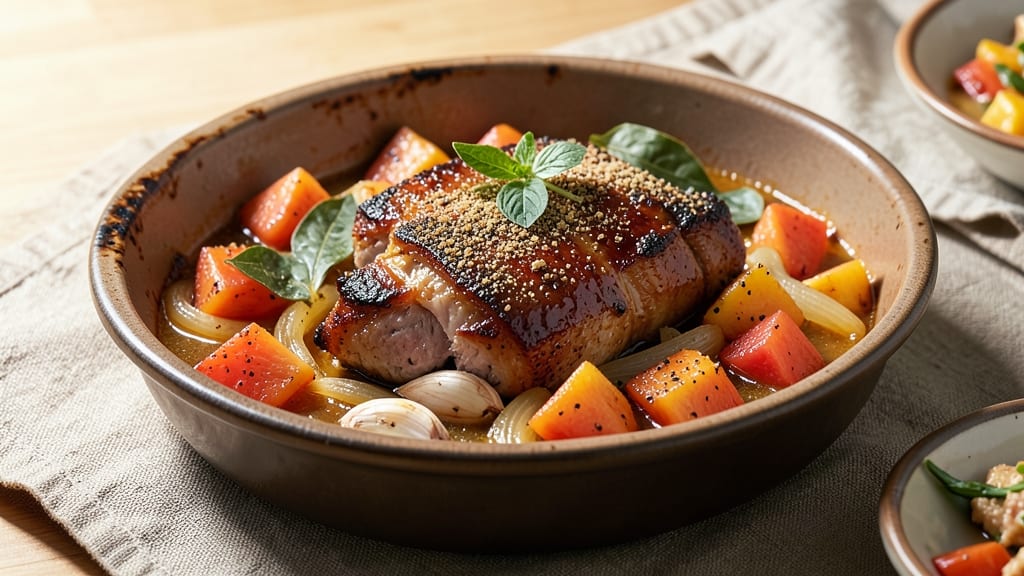
This pork estofado recipe with pineapple juice transforms tough pork shoulder into melt-in-your-mouth tenderness with a bright, tropical twist that feels like a Caribbean vacation on your plate. 🌴 The secret lies in slow braising with pineapple juice—its natural acidity tenderizes the meat while infusing it with a subtle sweetness that balances the rich, savory sauce.
I first discovered this technique while researching Portuguese and Brazilian influences, where estofado often gets that signature tang from citrus or tropical fruits.
The process is straightforward but requires patience: sear thick pork chops or shoulder until golden, then deglaze with pineapple juice and aromatics before simmering until fork-tender.
The sauce reduces into a glossy, slightly caramelized glaze that clings to every bite, while spices like cumin and bay leaves add depth without overpowering the natural flavors. This dish is perfect for feeding a crowd—it tastes even better the next day as the flavors meld.
What makes this version special is how the pineapple juice works its magic—it cuts through the richness of the pork while adding a refreshing brightness that keeps the dish from feeling heavy.
Serve it over fluffy rice, with crispy fried plantains, or alongside crusty bread to soak up every last drop of that velvety sauce. The contrast of textures and temperatures makes each bite unforgettable.
For those short on time, I’ve included a pressure cooker adaptation that delivers the same results in a fraction of the time, though purists will insist the slow-braised version is worth the wait.
This recipe bridges tradition and convenience, proving that restaurant-quality estofado is absolutely achievable at home. Let’s get cooking!
Ingredients for pork estofado recipe with pineapple juice
Sixteen ingredients for restaurant-quality pork estofado with that signature tropical brightness.
| Ingredient | Amount | Notes |
|---|---|---|
| Pork Shoulder (Bone-In) 🐖 | 3 lb | Cut into 1.5-inch chunks, skin removed |
| Pineapple Juice 🍍 | 1 ½ cups | Freshly squeezed, no pulp |
| Yellow Onion 🧅 | 1 whole | Sliced into 1/2-inch thick rounds |
| Garlic Cloves 🧄 | 6 cloves | Smashed with side of knife |
| Fresh Bay Leaves 🌿 | 2 whole | Dried works if fresh unavailable |
| Ground Cumin 🌶️ | 1 tsp | Toasted for deeper aroma |
| Ground Coriander 🌿 | 1 tsp | Freshly ground preferred |
| Smoked Paprika 🌶️ | 1 tsp | For subtle smokiness |
| Kosher Salt 🧂 | 1 ½ tsp | Diamond Crystal preferred |
| Ground Black Pepper 🌶️ | ½ tsp | Freshly cracked preferred |
| Olive Oil 🫒 | ½ cup | Extra-virgin for high heat |
| Tomato Paste 🍅 | 2 tbsp | Squeeze tube preferred |
| Fresh Cilantro 🌿 | ¼ cup | Chopped for garnish |
| Lime Juice 🍋 | 1 tbsp | Freshly squeezed |
| Dark Brown Sugar 🍬 | 1 tbsp | For subtle caramel depth |
The pork shoulder is the star here—look for well-marbled cuts at Whole Foods or your local butcher. A bone-in piece adds flavor, but boneless works too if you're in a hurry. The pineapple juice should be freshly squeezed (none of that canned stuff)—Trader Joe's sells great bottles, or grab a whole pineapple and juice it yourself. For the spices, Penzeys has the best toasted cumin, but any good grocery store will do. Just make sure it smells fresh, not dusty. The tomato paste? Grab the squeeze tube—it's foolproof and lasts forever.
No fresh bay leaves? Dried works at half the amount, but fresh is ideal. Running low on pineapple juice? Orange juice with a splash of lime gets you close, though it won't have quite the same tropical punch. The smoked paprika adds depth—if you can't find it, regular paprika plus a pinch of liquid smoke works. For the brown sugar, light or dark both work, but dark has more molasses flavor. The cilantro is optional but worth it—toss some in while the pork braises for extra brightness. And if you're short on time, pressure cooker adapts perfectly—just skip the initial sear.
This dish tastes even better the next day, so double the batch if you're feeding a crowd. Store leftovers in the fridge for up to 5 days or freeze for 3 months. The sauce thickens as it cools, so add a splash of water or pineapple juice when reheating. For serving, I love it over jasmine rice with a sprinkle of toasted coconut flakes—adds that extra tropical touch. The pork will be fork-tender, so let it rest 10 minutes before serving. Trust me, the wait is worth it.
Why You'll Love This Recipe
- One-Pan Magic: I swear by this for lazy nights—the bone-in pork shoulder practically cooks itself while you chop one onion and crush a few garlic cloves. No flipping pans, no fuss, just rich, falling-apart meat by the time the pineapple juice turns golden.
- Sweet-Savory Balance: That first sip of the sauce—tangy pineapple cutting through the deep pork flavor, bay leaves adding earthy warmth—makes me close my eyes. It’s the kind of dish where every bite surprises you with a new layer of taste.
- Leftovers I Actually Crave: Between us, this recipe makes way more than I need for one meal. The next day, I reheat slices straight from the fridge, and they’re just as tender, soaking up the sticky-sweet sauce like a dream. (Yes, even on a Tuesday.)
- Budget-Friendly Feast: A whole pork shoulder feeds my family for days, and the pineapple juice—often overlooked—stretches the sauce without breaking the bank. Honestly, it’s the kind of meal that makes grocery day feel like a win.
Step-by-step instructions for pork estofado with pineapple juice
Let's slow-cook this rich, tropical-infused pork until it's fall-apart tender.
🔥 Step 1: Sear the Pork Shoulder for Deep Flavor
Heat the 0.5 cup olive oil in a large Dutch oven over medium-high heat until shimmering. Working in batches, add the 3 lb pork shoulder cut into 1.5-inch chunks (skin removed) and sear for 3-4 minutes per side until deep golden brown. You want those Maillard reactions happening—this builds the foundation for all that rich flavor.
Don't overcrowd the pan or the temperature will drop. If needed, work in two batches. As you sear, season each piece generously with 1.5 tsp kosher salt and 0.5 tsp ground black pepper. The skinless chunks will release their juices beautifully during the braising process.
🍳 Step 2: Build the Aromatic Base
Once all pork is browned, remove it from the pot and set aside. In the same Dutch oven, add the 1 whole yellow onion sliced into ½-inch rounds and cook for 5 minutes until softened and just beginning to caramelize. Add the 6 smashed garlic cloves and cook for 30 seconds until fragrant—this is where the magic happens.
Stir in the 2 tbsp tomato paste, scraping up any browned bits from the bottom. Add the 1 tsp ground cumin, 1 tsp ground coriander, and 1 tsp smoked paprika. Cook for 1 minute until the spices are toasted and aromatic. This spice blend gives the dish that subtle earthy depth that balances the pineapple's sweetness.
🥘 Step 3: Braise with Pineapple Juice and Herbs
Return the pork to the pot. Pour in the 1.5 cups pineapple juice (freshly squeezed, no pulp) and add the 2 whole fresh bay leaves and 1 tbsp dark brown sugar. Bring to a gentle simmer over medium heat, then reduce heat to low and cover partially with a lid. This is where patience pays off—braise for 2.5-3 hours until the pork is fork-tender.
Here's the thing—you want the liquid to reduce but not completely evaporate. The pork should be swimming in about 1 cup of flavorful sauce by the end. Stir occasionally, but not too much—just enough to keep the pork submerged. The bay leaves will infuse the sauce with their piney aroma, while the pineapple juice keeps things bright and tangy.
🍽️ Step 4: Finish with Lime and Fresh Cilantro
Once the pork is fork-tender (it should pull apart easily), stir in the 1 tbsp lime juice. This final acidity brightens all the flavors and cuts through the richness. Remove the bay leaves and let the mixture simmer uncovered for 5-10 minutes to reduce the sauce slightly and concentrate the flavors.
Taste and adjust seasoning—you might need a pinch more salt or a squeeze of lime. Stir in the 0.25 cup chopped fresh cilantro just before serving. The cilantro adds a fresh, herbal note that contrasts beautifully with the rich pork and sweet-tangy sauce. Serve immediately with warm rice or crusty bread to soak up all that delicious sauce.
Pro Tips For Making Pork Estofado Recipe With Pineapple Juice
- Brown the Pork First: I learned this the hard way—skipping the sear means a pale, bland stew. Get that pork shoulder screaming hot in a heavy pot, skin-side down, for 8-10 minutes until the fat renders and the meat turns deep golden. The crust locks in flavor and prevents the pineapple juice from turning the dish into a sad, watery soup.
- Char the Onions Slow: Low and slow is your friend here. Once you’ve deglazed the pork with pineapple juice, add the onions and let them cook uncovered for 20-25 minutes at a gentle simmer. The edges should turn caramelized and slightly crispy—this isn’t just for looks, it builds depth that cuts through the pineapple’s sweetness. (Yes, even if you’re impatient like me.)
- Simmer, Don’t Boil: After adding the garlic, bay leaves, and enough water to just cover the pork, resist the urge to crank the heat. A steady simmer (tiny bubbles, occasional skimming of foam) keeps the meat tender and the sauce rich. I used to rush this, and the pork would turn tough—now I set the heat to medium-low and walk away for 2 hours. The pineapple juice will concentrate without curdling.
- Save the Pineapple Juice: Store-bought juice is fine, but fresh is better—if you’re using canned pineapple, reserve ½ cup of the juice after draining the fruit. The leftover pulp can be blended with a splash of water and strained to thicken the stew later. (Sounds weird, but it works: the extra fiber adds body without making the dish gloppy.)
Common mistakes when making perfect results
Overcrowding the Pan
This is my biggest rookie mistake when I first tried this recipe. If you pile all the pork chunks into the Dutch oven at once, the temperature will drop dramatically, and you'll end up with pale, steamed pork instead of beautifully browned sear.
Work in batches—I usually do two—so each piece gets that golden crust that builds so much flavor. 🔥
Skipping the Sear
Some shortcut recipes suggest skipping the sear and just tossing the raw pork into the braising liquid. Big mistake! That sear creates the Maillard reaction, which develops deep, complex flavors that you can't get any other way.
Even if you're in a hurry, take the extra 10 minutes to brown that pork—it makes all the difference in the final dish.
Using Canned Pineapple Juice
I learned this the hard way—canned pineapple juice just doesn't have the same bright, fresh quality as freshly squeezed. The pulp and preservatives can make the sauce taste flat or even slightly metallic.
If you absolutely must use canned, look for a no-sugar-added version and dilute it with a splash of fresh lime juice. But honestly, the effort to squeeze your own pineapple is worth it for that restaurant-quality taste.
Not Enough Liquid
The pork needs to be submerged in liquid during braising, but many recipes don't specify this clearly. If your pork isn't fully covered, it'll dry out instead of becoming tender. I usually add an extra ¼ cup water if needed during cooking to keep everything moist.
The sauce should reduce to about 1 cup by the end, but it should never fully evaporate.
Ignoring the Resting Time
After all that braising, the pork needs time to reabsorb its juices. If you cut into it immediately, you'll lose all that delicious moisture. Let the pork rest for at least 10 minutes before serving—this is especially important if you're serving it family-style.
I often rest mine for up to 20 minutes while I finish the rice or warm the bread.
Overcooking the Onions
Those onions should caramelize just enough to add sweetness, but if you let them cook too long, they'll turn bitter. Keep an eye on them and remove them from the pot once they're soft and just beginning to turn golden.
You can always add them back later if needed, but once they're overcooked, there's no fixing them. The perfect caramelization happens around 5 minutes of cooking time.
Nutrition facts
Frequently asked questions
Can I substitute chicken or beef for the pork in this recipe?
While pork is traditional for estofado, you can absolutely use chicken thighs (bone-in for best results) or beef chuck. For chicken, reduce braising time to 1.5-2 hours—it cooks faster than pork. Beef will need 3-4 hours and benefits from a longer, slower cook. The pineapple juice works beautifully with all three meats, but beef will need an extra 1 tbsp soy sauce to complement its richness.
How do I make this in a slow cooker or Instant Pot?
For a slow cooker: Sear the pork as directed, then transfer everything to your slow cooker and cook on low for 8 hours or high for 5 hours. For the Instant Pot: Sauté onions/garlic/spices, add pork, then pour in pineapple juice and brown sugar. Seal and cook on high pressure for 45 minutes, then natural release 10 minutes. Both methods work, but the stovetop version gives you more control over the sauce reduction.
What's the best way to store and reheat leftovers?
Store in an airtight container in the fridge for up to 5 days or freeze for 3 months. The sauce thickens when cold, so add 2-3 tbsp pineapple juice or water when reheating. For best texture, reheat gently on the stovetop over low heat until warmed through—microwaving can make the sauce watery. Leftovers actually taste better the next day as flavors meld!
Can I make this dish ahead of time for a party?
This is one of the best make-ahead dishes! Prepare it completely up to 2 days ahead and refrigerate. The flavors deepen overnight. Reheat gently before serving. For a party, I recommend making it 1 day ahead, then reheating and serving with warm rice and fried plantains. The tropical aroma alone will have guests asking for seconds!
What sides pair best with this tropical pork dish?
Classic pairings include fluffy jasmine rice, crispy fried plantains, or buttery mashed potatoes. For a lighter option, try a fresh mango salad or tropical slaw with lime dressing. The bright acidity of lime or pineapple in sides complements the rich pork beautifully. Don't forget warm crusty bread—it's perfect for soaking up that delicious sauce!