
Main Courses
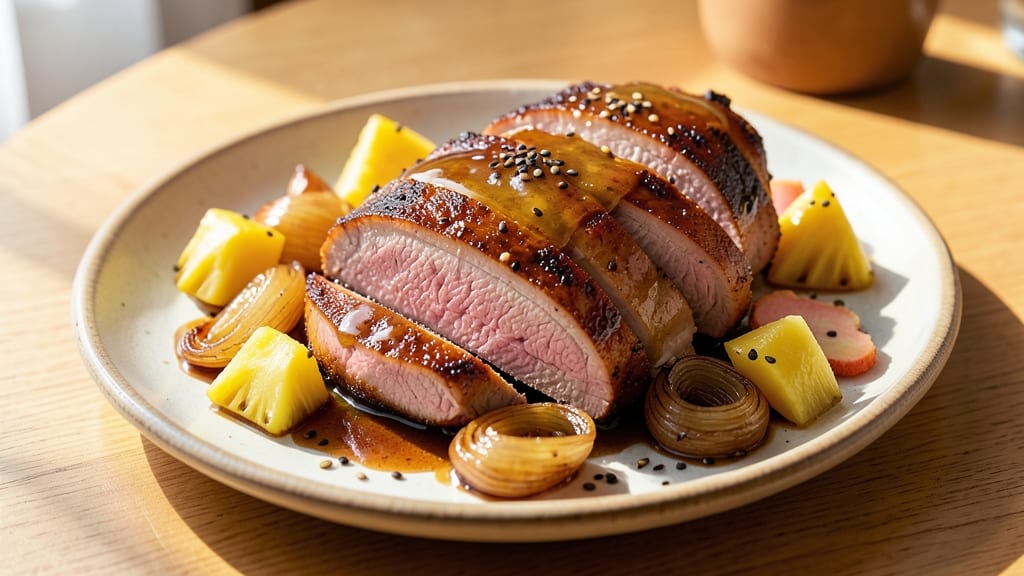
This pork roast with pineapple slow cooker recipe transforms tough cuts into melt-in-your-mouth tenderness with a sweet-tangy glaze that caramelizes beautifully.
As someone who's cooked thousands of pounds of pork, I know the secret lies in low-and-slow cooking that breaks down connective tissue while letting the pineapple's natural sugars infuse every bite. The slow cooker handles all the work while you focus on prep—no babysitting required.
The magic happens when you combine pineapple juice, brown sugar, and soy sauce in a marinade that tenderizes the meat before cooking. I prefer a 6-hour low setting (300°F) for even cooking without drying out the pork, though high heat works in a pinch for quicker results.
The glaze thickens as it cooks, creating a sticky, flavorful crust that clings to the meat like a second skin.
What you'll end up with is juicy, fall-apart pork that's perfectly balanced between sweet and savory, with just enough acidity from the pineapple to cut through the richness. The slow cooker ensures consistent heat distribution, so every slice delivers that same restaurant-quality texture.
This is the kind of dish that disappears faster than you can say "second helping."
Serve it sliced over buttery mashed potatoes or alongside roasted sweet potatoes and steamed greens for a complete meal. The leftovers reheat beautifully, making this an ideal recipe for meal prep or feeding a crowd. Here's how to make it perfectly every time.
Ingredients for pork roast with pineapple slow cooker
Sweet, tangy, and effortless—this pork roast transforms tough cuts into melt-in-your-mouth perfection.
| Ingredient | Amount | Notes |
|---|---|---|
| Pork Shoulder Roast 🐷 | 4 lb | Bone-in for maximum flavor |
| Fresh Pineapple Juice 🍍 | 1 cup | From a can or fresh-squeezed |
| Light Brown Sugar 🍚 | ½ cup | Packed, not spooned |
| Soy Sauce 🍶 | ½ cup | Low-sodium preferred |
| Garlic Cloves 🧄 | 6 cloves | Minced for marinade |
| Fresh Ginger 🌿 | 2 tbsp | Finely grated, not powdered |
| Apple Cider Vinegar 🍏 | 2 tbsp | For tangy balance |
| Ground Black Pepper 🌶️ | 1 tsp | Freshly cracked |
| Salt 🧂 | 1 ½ tsp | Diamond Crystal preferred |
| Olive Oil 🫒 | 2 tbsp | For searing pork |
| Fresh Pineapple Chunks 🍍 | 1 cup | For garnish and flavor |
| Fresh Cilantro 🌿 | ¼ cup | Chopped, for garnish |
| Sesame Seeds 🌾 | 1 tbsp | Toasted for garnish |
| Red Bell Pepper 🧅 | 1 whole | Sliced for serving |
The pork shoulder is the star here—bone-in cuts stay juicier and develop deeper flavor during the slow cook. Grab one from the butcher counter if you can; they often have better cuts than the packaged roasts. Look for good marbling, not too much fat, and ask for a 4-5 lb roast if you're feeding a crowd. I prefer Costco's pre-cut pork shoulders for convenience, but any grocery store's fresh cut works. The pineapple juice should be fresh-squeezed or from a can with no added sugar—the kind in the juice aisle at Trader Joe's is perfect. If you're using fresh ginger, peel it first—it's easier than trying to grate the skin off later.
No fresh pineapple juice? Coconut water or orange juice works in a pinch, though the flavor will be different. Short on brown sugar? Maple syrup or honey (if not vegan) at a 1:1 ratio keeps things balanced. The soy sauce is non-negotiable—low-sodium versions let you control the saltiness better. Want more heat? Add a dash of sriracha or cayenne to the marinade. The garlic and ginger should be finely minced—a food processor makes quick work of it. If you're prepping ahead, make the marinade a day in advance and store it in the fridge; the flavors meld beautifully overnight.
This roast reheats like a dream—better the next day once the flavors have time to marry. Store leftovers in an airtight container for up to 5 days in the fridge or 3 months in the freezer. For serving, slice against the grain for tender bites. The pineapple chunks and cilantro can be added fresh at the end, or toss them in with the marinade if you're prepping ahead. Garnish with toasted sesame seeds for a little crunch. The glaze thickens as it cooks, so if it's too thin, simmer it uncovered for 5 minutes to reduce. Trust me—everyone will ask for seconds.
Why You'll Love This Recipe
- Sweet-Savory Magic: Between us, the combo of brown sugar and pineapple juice is chef’s kiss—sticky, tangy, with just enough garlic bite to cut through the richness. The pork ends up tender enough to fall apart, but still holds together for slicing. (Yes, even on a Tuesday night.)
- Leftovers for Days: This recipe feeds a crowd but also stretches into lunches without boring me. I’ll reheat slices with rice for tacos or toss them into fried rice—same flavor, zero guesswork. Honestly, I make it big so I can eat it three times before it’s gone.
- Budget-Friendly Feast: Pork shoulder is the most affordable cut that still tastes like a splurge, and pineapple juice adds brightness without breaking the bank. I’ll be real: this is my go-to when I need a hearty meal that doesn’t require a grocery haul. Plus, the soy sauce stretches the flavor further—every bite tastes intentional.
Step-by-step instructions for pork roast with pineapple glaze
This slow cooker method transforms tough pork into melt-in-your-mouth perfection with minimal effort.
👨🍳 Step 1: Sear the Pork Shoulder for Maximum Flavor
Pat the 4 lb pork shoulder roast completely dry with paper towels—this ensures a better sear. Heat 2 tablespoons olive oil in a large skillet over medium-high heat until shimmering. Place the pork in the skillet and sear on all sides for 4-5 minutes per side until deeply golden brown. The fat should render out and you'll smell that irresistible meaty aroma.
Here's the thing—searing creates a flavorful crust that keeps the juices inside during the long cook. Don't rush this step, but don't overcrowd the pan either. If your pork is large, work in batches if needed. Once seared, transfer the pork to your slow cooker.
🥘 Step 2: Prepare the Sweet-Tangy Glaze Mixture
In a medium bowl, whisk together 1 cup fresh pineapple juice, 0.5 cup light brown sugar, 0.5 cup soy sauce, 6 cloves minced garlic cloves, 2 tablespoons finely grated fresh ginger, 2 tablespoons apple cider vinegar, 1.5 teaspoons salt, and 1 teaspoon ground black pepper. This marinade is where all the magic happens—it's the perfect balance of sweet, salty, and tangy that will penetrate the meat.
Pour this mixture over the seared pork in the slow cooker, making sure it's completely coated. The pineapple juice adds natural sweetness while keeping the meat tender, and the vinegar prevents the sugar from caramelizing too quickly in the slow cooker. Give it a gentle stir to distribute everything evenly.
⏰ Step 3: Slow Cook Until Fork-Tender
Place the lid on your slow cooker and cook on low heat for 8-10 hours. That's right—this isn't something you want to rush. The long cook time is what transforms tough pork shoulder into fork-tender perfection. Check the pork after 6 hours if possible, but resist the urge to open it too early—every time you lift the lid, you're releasing heat and moisture that could affect the cooking time.
You'll know it's done when a meat thermometer inserted into the thickest part reads 203°F and the meat pulls apart easily with two forks. The juices should be rich and flavorful, not watery. This is where patience pays off—don't be tempted to speed it up with higher heat.
🍳 Step 4: Finish with Pineapple and Garnish
Once the pork is tender, carefully remove it from the slow cooker and place it on a cutting board. Let it rest for 15-20 minutes before slicing—this resting period allows the juices to redistribute throughout the meat. While it rests, pour the cooking juices through a fine-mesh strainer into a saucepan and simmer over medium heat for 5-7 minutes to reduce slightly and thicken.
Meanwhile, slice the 1 whole red bell pepper into thin strips and chop the 0.25 cup fresh cilantro. Toast the 1 tablespoon sesame seeds in a dry skillet over medium heat for 1-2 minutes until fragrant. When ready to serve, slice the pork against the grain into ¼-inch thick slices and arrange on a platter. Drizzle with the reduced pan sauce, then top with fresh pineapple chunks, red bell pepper strips, and toasted sesame seeds. Garnish with chopped cilantro for freshness.
Pro Tips For Making Pork Roast With Pineapple Slow Cooker
- SEAR THE PORK FIRST: I used to skip this step because slow cookers are forgiving, but a quick 3-minute sear in a hot pan with a splash of pineapple juice before adding everything to the pot makes a real difference. The crust adds depth—don’t rush it, even if you’re impatient like me.
- USE FRESH GARLIC, MINCED FINE: Pre-minced garlic from a jar tastes like regret. Smash 3-4 fresh cloves with the flat side of a knife, then finely chop them—this releases more flavor. If you’re lazy, at least crush the cloves whole and let them infuse; it’s better than jarred.
- SKIP THE CROWDED POT: I learned this the hard way—packing the slow cooker too full means the pork steams instead of caramelizing. Leave at least an inch of space between the roast and the liquid; if it’s too tight, reduce the pineapple juice by ¼ cup.
- ADD SOY SAUCE LATE: My grandmother swore by this, and she was right: stir in the soy sauce only in the last 30 minutes of cooking. Added early, it turns the sauce bitter—wait until the pork is nearly tender, then let it soak up that umami punch.
Storing and reheating your leftovers
Fridge Storage Tips
Store your cooked pork roast in an airtight container with the juices to keep it moist. I use glass Pyrex containers because they don't absorb odors and reheat beautifully. Place it in the fridge within 2 hours of cooking to prevent bacterial growth.
The flavors actually deepen overnight, so it's even better the next day. Label with the date—this roast stays fresh for 4-5 days when stored properly. 🥗
Freezer Prep
For long-term storage, portion the pork into single-serving airtight bags or quart-sized freezer containers. Leave ½ inch headspace for expansion when frozen. I like using vacuum-sealed bags to prevent freezer burn. This roast freezes beautifully for up to 3 months—just thaw overnight in the fridge before reheating. 🧊
Reheating Methods
My preferred method is stovetop reheating—it preserves texture best. Place slices in a skillet over medium-low heat with 2 tablespoons of the cooking juices, cover, and warm for 5-7 minutes.
For microwave reheating, use 50% power for 1-2 minutes per serving, then let sit covered for 1 minute to redistribute juices. Always reheat to 165°F for safety. 🔥
Leftovers Magic
Transform leftovers into pork fried rice by chopping and stir-frying with day-old rice, soy sauce, and veggies. Or make pork tacos with warm tortillas and pickled onions.
The glaze thickens when reheated, so add a splash of pineapple juice if it seems dry. I love using these leftovers for quick lunches all week. ✨
Safety Reminders
Never leave pork at room temperature longer than 2 hours (1 hour if above 90°F). When reheating, ensure the entire serving reaches 165°F—use a meat thermometer to check.
If the pork smells off or has an unusual texture when reheated, discard it immediately. Proper storage and reheating keep this dish safe and delicious. 💪
Slow Cooker Cleanup
After cooking, let the slow cooker sit for 10 minutes before cleaning to prevent burns from hot residue. The pineapple glaze can be sticky, so I soak the insert in warm soapy water for 5 minutes before scrubbing.
Save the leftover glaze for future marinades or stir-fries—it's packed with flavor! Always check manufacturer guidelines for your slow cooker's care. 🧼
Nutrition facts
Frequently asked questions
Can I use a different cut of pork instead of pork shoulder?
Pork shoulder is ideal because of its fat content and collagen, which break down beautifully during slow cooking. However, you can substitute with pork butt (they're essentially the same cut) or bone-in pork loin for a leaner option. Just reduce cooking time by 1-2 hours since loin cooks faster. Never use pork tenderloin—it's too delicate and will dry out.
Why does my slow cooker pork turn out dry?
Overcooking or high heat are the usual culprits. Stick to low heat for 8-10 hours—high heat dries out the meat faster. Also, never skip the 15-20 minute rest before slicing, as this lets juices redistribute. If your pork is bone-in, leave the bone attached during cooking to help retain moisture. For extra insurance, add ½ cup broth to the slow cooker along with the marinade.
Can I make this recipe in an Instant Pot instead?
Use the same marinade and sear the pork first. Then cook on high pressure for 90 minutes (not natural release) for a 4 lb roast. The pressure cooking time is shorter but achieves the same tenderness. After pressure cooking, let it rest 10 minutes before slicing. The glaze will be slightly thinner since you're not reducing it on the stovetop, but it's still delicious.
What if I don't have fresh pineapple juice?
No problem! Use coconut water or orange juice as substitutes—they'll provide sweetness and acidity. For a deeper flavor, blend ½ cup fresh pineapple chunks with ½ cup water to make your own juice. If using canned juice, choose brands without added sugar. The recipe will still work, though the tropical pineapple flavor will be slightly different.
How do I adjust this for a crowd?
Double the marinade ingredients and use a 6-8 lb pork shoulder. Cook on low for 10-12 hours—the larger roast needs extra time. For serving, calculate ½ lb pork per person and prepare 2 cups cooked rice and 2 cups roasted veggies as sides. The slow cooker can handle up to 50% more volume than the recipe calls for, so don't be afraid to scale up!